Fishing Success Rate Calculator
Estimate your bite probability from target species, season, water temperature, weather trend, timing, location quality, and gear fit.
📌Scenario presets
⚙Success inputs
Fishing success forecast
Full breakdown
📊Factor weights
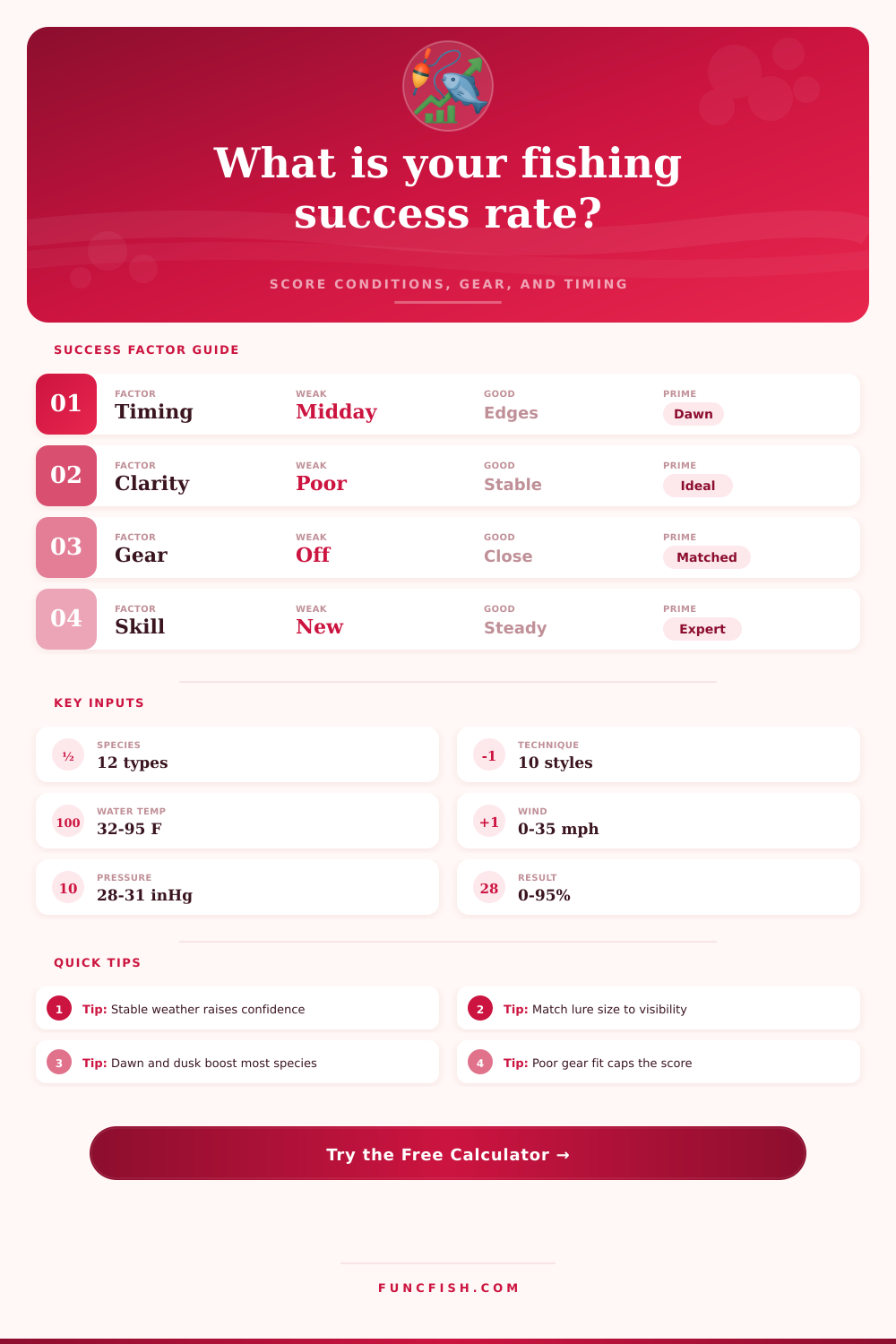
Temperature, wind, pressure, water clarity, weather trend, and season combine into the main condition score.
Known structure, bait presence, active feeding signs, depth fit, and water type determine access to fish.
Technique fit, gear match, lure speed, and line visibility push the score up or cap it down.
Angler skill, time window, planned effort, and recent bite information convert conditions into likely bites.
📋Species and condition reference
| Species | Prime temp | Best window | Base bite rate |
|---|---|---|---|
| Largemouth bass | 60-78 F / 16-26 C | Dawn or dusk | 1.3 bites/hr |
| Smallmouth bass | 55-72 F / 13-22 C | Morning | 1.2 bites/hr |
| Trout | 48-63 F / 9-17 C | Morning | 1.1 bites/hr |
| Walleye | 50-68 F / 10-20 C | Dusk or night | 1.0 bites/hr |
| Catfish | 68-84 F / 20-29 C | Night | 1.2 bites/hr |
| Panfish | 62-82 F / 17-28 C | Morning | 1.8 bites/hr |
| Crappie | 55-72 F / 13-22 C | Dawn or dusk | 1.4 bites/hr |
| Striped bass | 55-70 F / 13-21 C | Tide change | 0.8 bites/hr |
| Northern pike | 45-65 F / 7-18 C | Morning | 0.7 bites/hr |
| Redfish | 65-82 F / 18-28 C | Moving tide | 0.9 bites/hr |
| Snook | 70-84 F / 21-29 C | Dawn or night | 0.7 bites/hr |
| Tuna | 60-78 F / 16-26 C | Early light | 0.4 bites/hr |
| Technique | Best match | Weak match | Score effect |
|---|---|---|---|
| Finesse casting | Clear water, pressure | Muddy water, heavy cover | High precision |
| Jigging | Structure and depth breaks | Fast roaming fish | Depth control |
| Topwater | Low light and active fish | Cold front midday | Timing sensitive |
| Live bait | Neutral fish and current | Too much small bait | Steady floor |
| Bottom rig | Catfish, surf, current seams | Suspended fish | Location driven |
| Trolling | Open water search | Tight cover | Coverage boost |
| Fly fishing | Trout, flats, visible feeding | Heavy wind | Skill sensitive |
| Surf casting | Moving tide and bait | Flat surf, no bait | Window driven |
| Drift fishing | Current and scattered fish | Snag-heavy cover | Natural drift |
| Power fishing | Active fish and stained water | Clear cold water | Fast feedback |
💡Practical checks
Tip: Treat the success rate as a planning estimate, not a guarantee. The most useful number is often the lowest factor in the breakdown because that shows what to improve first.
Tip: If the score is low but recent reports are hot, fish shorter windows around dawn, dusk, tide movement, or wind changes instead of stretching the same plan all day.
Fishing success depend on many different factors. Fishing success can be measured by using a structured estimate. A structured estimate allows anglers to turn all of there observations about fishing into a single probability that they can use to plan their fishing trips.
The calculator allow anglers to input specific information about their fishing plan. Each of these different variables will impact the bite rate of the fish. The type of species that anglers are targeting is one of the first variables that anglers should consider.
How to Use a Fishing Success Calculator
Every type of fish species have a specific range of temperatures at which it will feed. For example, the behavior of largemouth bass will be different in water that measure seventy degrees as compared to water where walleye are found in fifty-degree water. The fishing technique to use is another of the main variables.
Some fishing techniques work more better in specific types of water conditions than in others. For instance, topwater techniques are better for waters where the fish are scanning the surface for prey while jigging techniques will work better for fish that are in an area of the water where prey is striking at the bottom of the water column. The type of water that will be fished and the current season in which the fishing will occur are also two of the main variables to consider.
For example, rivers move fish in different manners than ponds, and the behavior of fish during the pre-spawn fishing season will be different from the behavior of the same type of fish during the post-spawn fishing season. Weather variables and factors that relate to the time of day that fishing will occur will impact the baseline odds of catching fish. For example, stable barometric pressure will keep the fish in they locations, but a falling barometric pressure may result in a shorter period of time when the fish will be feeding.
Fishing during the dawn or dusk periods may allow anglers to succeed with their fishing efforts due to the reduced caution of the fish when visibility is low for prey species. The speed and direction of the wind will also have an impact on the fish behavior; lighter winds will stir up the bait fish in the fishing locations while strong winds may force the fish to travel to deeper waters within the fishing spot. The calculator considers each of these weather and time of day variables to determine if the timing of the fishing trip will help or hurt the odds of the angler catching fish.
The quality of the fishing location and fishing reports from others may also have an impact on the odds of success for the anglor. Fishing in an area with fishing structure will likely yield better results than scouting an area for fishing that does not contain structure. The presence of bait fish may also help the fish to take the baited lure.
Fishing reports that state that there is a slow bite at the location will impact the success rate calculations for that fishing spot. The slower the bites the reported at fishing spots, the lower the estimated chance that the angler will successfully catch fish. Fishing reports that indicate that the bite at a location is hot will increase the estimated chances of the angler catching fish at that location.
While fishing reports will not guarantee that the angler will catch any fish, they may help the angler to make decisions about fishing spots and reduce guesswork. The gear that the angler will use and the skill with which the angler fishes will also have an impact upon the estimated success rate for the fishing trip. Using gear that is most effective in the water conditions will cause the lure to remain in the strike zone of the fish for a longer period of time, however using gear that does not match the conditions may lead to the angler setting off errors in the water that reduce the chances of success.
Angler skill will also have an impact upon the success rate; an angler with above average skill may catch more fish than a beginner angler; expert anglers can quickly make changes to their fishing plan if their current method of fishing is not successful. The calculator will produce an output that displays the percentage of success that the angler will experience with the parameters that have been entered for their fishing trip; it will also provide an estimate of the number of fish that will bite the angler’s baited lures during the planned number of hours for fishing. This percentage and bite estimate is only an estimate; a high percentage indicates that the angler’s fishing plan is likely to succeed while a low percentage indicates that their fishing plan may need to be changed.
The angler should improve the factor that has the lowest score within the estimate to increase the likelihood of success with their fishing trip. Two reference tables are included in the calculator that show how each type of fish will behave within a range of water temperatures and which fishing techniques work best in different types of water conditions. These tables are not rules but provide the averages of fish behavior within these conditions.
While these reference tables can help to inform the angler of the information that is required to enter the calculator, they should never be ignored in favor of an angler’s existing knowledge of the water conditions. Many of the variables of fishing cannot be accounted for by the fishing success rate calculator. Variables like boat traffic in the area or sudden changes in the water temperature will have an impact upon the success of the fishing trip.
The calculator is a recommendation for anglers for their fishing trip; if an angler decides to change their fishing plan, or to go fishing regardless of the calculated success rate, they are making a decision; nothing in the calculator will guarantee that the angler will succeed in their attempt to catch fish. However, by understanding the outcome that the calculator will produce, anglors can influence their fishing success.