
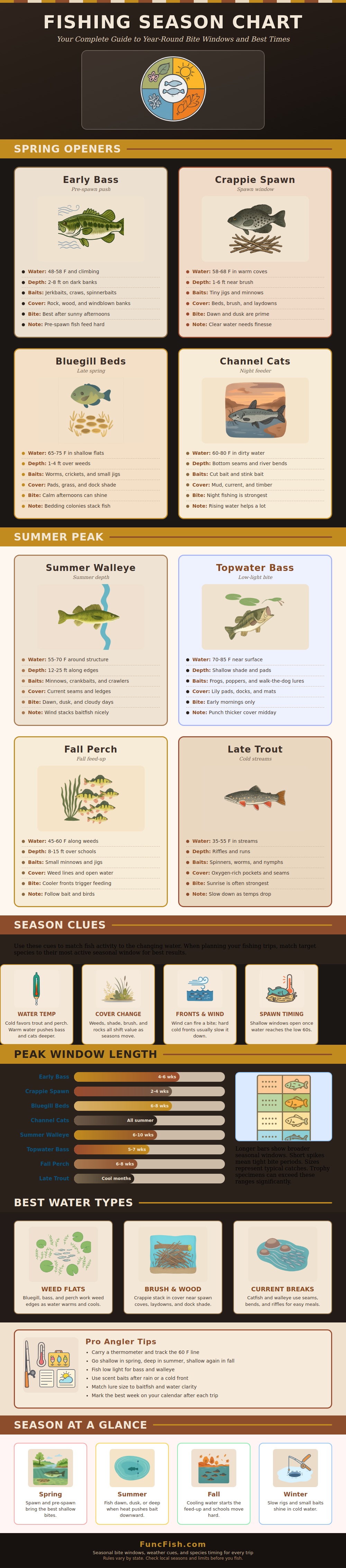
Fishing success is determine by the fishing season’s timing, which is based off the change in the water temperature and the availability of food for the fish species you are targeting. While many people believe that fishing success is based on luck, it is actualy based on know how to adjust the fishing methods to match the specific windows within the fishing season chart. The spring season is characterized by rise water temperatures.
Many fish will spawn in the spring. When the water temperatures rises from the forties to the fifties, bass are headed towards the shallow, windblown banks in there search for food. Bass head to shallow areas in search of food to produce egg or sperm.
When and Where to Fish
During this time of year, people can catch bass by fishing with jerkbaits or crawfish over rock and wood. Crappie also spawn in the spring and gather in warm cove near brush piles. During this time, people can catch crappie by fishing with tiny jig or minnows during the dawn and dusk hours.
If people miss this time by only one week, the crappie will move into deep water area and will be more difficult to find while fishing. During late spring, the water temperatures in the flats will reach the sixties or seventies. Bluegill often create circle in shallow areas during this time.
People can catch bluegill by use worms or crickets under a bobber in areas with lily pads or dock shade. Channel catfish begin to becoming active during the late spring. These catfish live in dirty area of the river that turn over, and they are active during the night due to the increased scent in the water that comes from the rising water level.
During this time frame indicated on the fishing season chart, these seasonal window will last for several week. Summer is the season that is characterized by high level of heat. Heat cause the fish to move to deeper waters areas with less light.
Walleye live near current seam and ledges where they feed. People who target walleye during this time of year will find success using minnows or crankbaits during the time of cloudy day. Bass during the summer move to different area.
In the early morning, there is a chance to find them using topwater lures in areas with lily pads. However, during the middle of the day the bass will have moved into areas with thick vegetation that provide them shade from the sun. During this time, people must use punching technique in order to catch the bass.
The time frame during which these summer fish will be in these locations can vary depending on the species of fish being targeted. When the water temperatures begin to cool in the fall, the perch will school up along the edge of the weed growth. People can catch perch in the fall by using small minnow that have been fitted with a jig and cast into depths of eight to fifteen feet.
During the cooler weathers, the fish will be engaged in feeding activity, therefore allowing anglers to catch more of these fish for consumption. The trout live in stream with colder temperatures. Trout will be found in the riffle within these streams where the water contain high levels of oxygen.
Due to their preference for cold water, trout can be found in streams during the winter when the pond fish have frozen over. Spinners and nymph can be used to catch trout at sunrise. If the water temperature begins to drop below fifty-five degrees, the retrieve rate for these line should be slowed.
Water temperature is a key factor in fishing and dictates where the various species of fish live in the water column. Cold water favours species like perch and trout while the warm water make bass move to shady spots in the lake. The habitat determine what kind of fish are located in specific areas of the lake.
For example, bluegill, bass, and perch live in flats with weed growth. Crappie live in areas with brush pile while channel catfish and walleye live in current break in the lake. Where you fish within the lake is dependent upon the fish season to increase the chance of catching fish.
The clarity of the water is another factor in fishing. During the spring, the water is clear and finesse fishing technique are required. During the summer months, dirty water require the use of scented bait when anglers fish for fish.
Improving fishing experience can be accomplished by using a thermometer to monitor the water temperatures. The sixty-degree temperature line in the water is important for the spawning of fish. Understanding the fishing season provides consistency to anglers.
Chasing bass to the top of the water column during the noon hours is something that should of be avoid due to the fact that bass are inactive during periods of high light. Deep water should be avoided during the spring fishing season as fish are active in the shallower area of the water during this time of year. Using a fishing season chart will allow angler to ensure that they are fishing in the correct depth and time of year.