
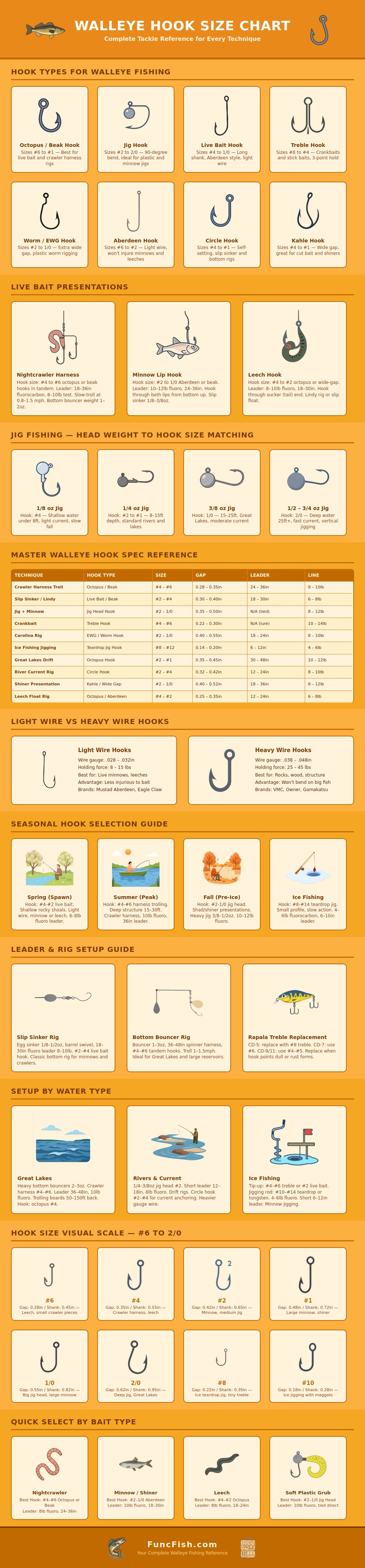
Selecting an correct hook size for walleye is a necessary step in the walleye fishing process. By selecting an correct hook size, you ensure that the hook stay in the mouth of the walleye. Walleye has bony mouths and rubbery lips.
Therefore, the angler should size the hook correct to avoid the hook tearing out of the walleyes mouth. If the hook is too small, it might tear out of the walleye’s mouth when reeling the fish in. However, if the hook is too large, the bait will not exhibit natural movements to attract the attention of the walleye.
How to Choose the Right Hook for Walleye
Depending on the type of fishing you will do, different hook styles will work more better than others. For example, octopus hooks has short and curved beaks that make them ideal for use with crawler harness and nightcrawlers. As walleye move, the pulsing of the nightcrawler will trigger a strike from the fish.
For jig heads, the best hooks have 90-degree bend that allow plastic baits to remain horizontal in the strike zone of walleye. Aberdeen hooks have long shanks that allow them to be light in weight so they doesnt injure live bait like leeches and shiners. For crankbaits, anglym use treble hook as they will grab the erratic movement of the crankbaits.
The type of bait you use require you to use the correct type of hook. If you use night Crawlers on tandem octopus hooks, you will be able to feel the tap of a walleye on the bait. If you use an Aberdeen hook with a slip sinker rig with a minnow, the minnow will mimic the movement of an injured baitfish in the water column.
If you use a wide-gap hook for a Lindy rig with a leech, the leech will undulate just above the bottom area. As the bait exhibit natural movement on the hook, it is more likely to attract a strike from the walleye. Jig fishing uses jig heads whose weight should match the size of the hook.
For shallow water areas under eight feet deep, use a 1/8 ounce jig head and a small hook. These will flutter the bait in shallow water. For the mid-depth water range, use a 3/8 ounce jig head and a larger hook gap to combat wind condition.
In deep water and fast moving rivers, use a heavy jig that is 1/2 ounce or more in weight. Use a stout 2/0 hook for the heavy jig. The weight of the jig will determine the fall rate of the jig.
The fall rate will determine how quickly the jig will reach the walleye’s hunting depth. The wire gauge of the hook is another important factor to consider when selecting a hook. Bait hooks with light wire gauges will bend under pressure.
This is useful for using with delicate live bait. However, if you encounter large fish or rocks in the water, the wire may bend or straighten from the pressure. Use heavy wire hooks that can stand 25 pound or more for river areas with wood and fishing structure.
The wire gauge will depend on the amount of cover in the water and the size of the walleye to target. Depending on the season and the type of water, the walleye will require certain types of hooks. For spring walleye fishing using live bait in shallow rocky flats, use light wire hooks.
For summer walleye fishing, use crawler harnesses with nightcrawlers for trolling over deep structure. In the fall, heavy jigging will attract the attention of the aggressive walleye. During winter, use tiny teardrop jig to fish through the ice holes in the lake.
Depending on the type of water, if you are using the Great Lakes, use long leaders for bottom bouncing baits. For rivers, use short stout rig that can withstand the force of the water. A mental model can be used to help with the decision of the type of hook to use.
The size of the gap of the hook will determine the bait that will hook onto the hook. The length of the shank of the hook will determine the action of the bait. The strength of the wire of the hook will determine the fight between the hook and the walleye.
For instance, a #4 octopus hook will have the correct gap size for a leech. However, a 1/0 jig hook will be better for a larger shiner. Make sure to replace the treble hook on your crankbaits when the point of the treble hook become dull.