
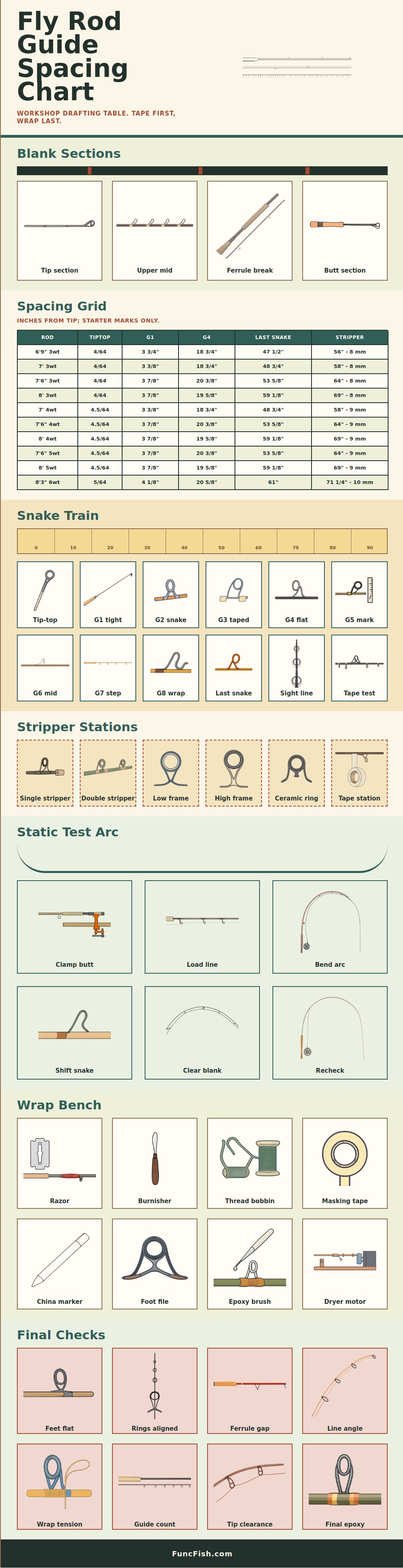
Wrapping guides on a graphite rod blank require following a specific guide spacing chart. A guide spacing chart provide the measurements for each guide on the graphite rod. Using the guide spacing chart is necessary because the placement of the guides determine how the fishing line move along the graphite rod.
If the placement isnt correctly, the fishing line will drag against the graphite rod and will not unroll from the reel proper. A graphite rod blank have several section with a specific arrangement of guides for each section. The tip section of a graphite rod is the thinnest section of the rod.
How to Place and Wrap Guides on a Graphite Rod
Therefore, the guides for the tip section has to be closer together. The upper midsection of the graphite rod have a thicker diameter than the tip section of the graphite rod. Therefore, there must be more spaces between the guides in this section of the graphite rod blank.
The butt section of the graphite rod is the thickest part of the graphite rod. This section hold a stripping guide for the fishing line that pull the fishing line from the fishing reel. The ferrule breaks on a graphite rod must also be accounted for in the placement of the guides.
If there is not enough clearance at the ferrule breaks, the fishing line will snag on the ferrule of the graphite rod blank. The placement of the guides will depend on the length of the graphite rod blank and the weight of the fishing line that you will use with the graphite rod. A lighter graphite rod blank will have a different placement of the guides than a heavy graphite rod.
For instance, the first snake guide on a lighter graphite rod can be placed more close to the tip of the graphite rod. For a longer graphite rod blank, the distance between the guides will be different because of the taper of the graphite rod blank. If the distance between the guides is too short, the graphite rod will bind when under load.
If the distance between the guides is too far, the graphite rod will not transfer the power from the rod to the line proper. Following the guide spacing chart will ensure the guides are place at the proper distance along the graphite rod blank. When wrapping the guides on a graphite rod blank, there is a specific sequence for wrapping the guides.
Masking tape should be used to mark the graphite rod where each guide will go. This allows the graphite rod blank to be test with the fishing line before the thread is committed to the graphite rod blank. First, you should lay the graphite rod blank on a workbench to mark each station where the guides will be placed.
The tiptop guide will be installed on the tip of the graphite rod and should be the same diameter as the tip of the graphite rod. The snake guides will then be installed in order from closest to the tip section to the butt section of the graphite rod. These guides must be in a straight line so that the fishing line move through the guides in a perfect tunnel.
To test the proper placement of the guides on the graphite rod, you must clamp the butt section of the graphite rod so that the graphite rod is level. The fishing line should be thread through each guide and pulled into an arc to mimic a cast with the graphite rod. While the line is under tension, the graphite rod should be observed.
The graphite rod should not touch the line between the guides. If the graphite rod do touch the fishing line, the guide need to be moved slightly and the graphite rod retested. Several tool must be used to properly wrap the guides on a graphite rod blank.
A razor will remove the masking tape once the guides are wrapped on the graphite rod blank. A burnisher will be used to pack the thread tight on the graphite rod. The bobbin will be loaded with fishing line, such as UTC 70 denier fishing line.
A file will be used to make sure the feet of the guides are flat. If the feet of the guides are not flat, the epoxy that bond the guides to the graphite rod will crack when the graphite rod is bent. Finally, a rod dryer will be used to spin the graphite rod to allow the epoxy to dry smooth.
The rod dryer will help the graphite rod to dry proper if the foundation of the guide placement is set up correctly. You should of used a better method to ensure the epoxy dries smooth. The rod dryer help the graphite rod to dry proper.
Its important to have a moddern setup. The rod blanks length matter alot.