
So, you stock your pond; it’s all clean and pretty clear. It stays that way for about three days. Then those darn algae come back, suck up all of oxygen, and make your pond a swamp again. So what can you do?
A lot of folks use grass carp as weed eaters. They’re like underwater lawnmowers…no batteries required…but here’s the thing: many people purchase wrong sized fish. Before you plop some in the water, you need to know something about there growth rate. Here is what you can expect.
How Grass Carp Grow
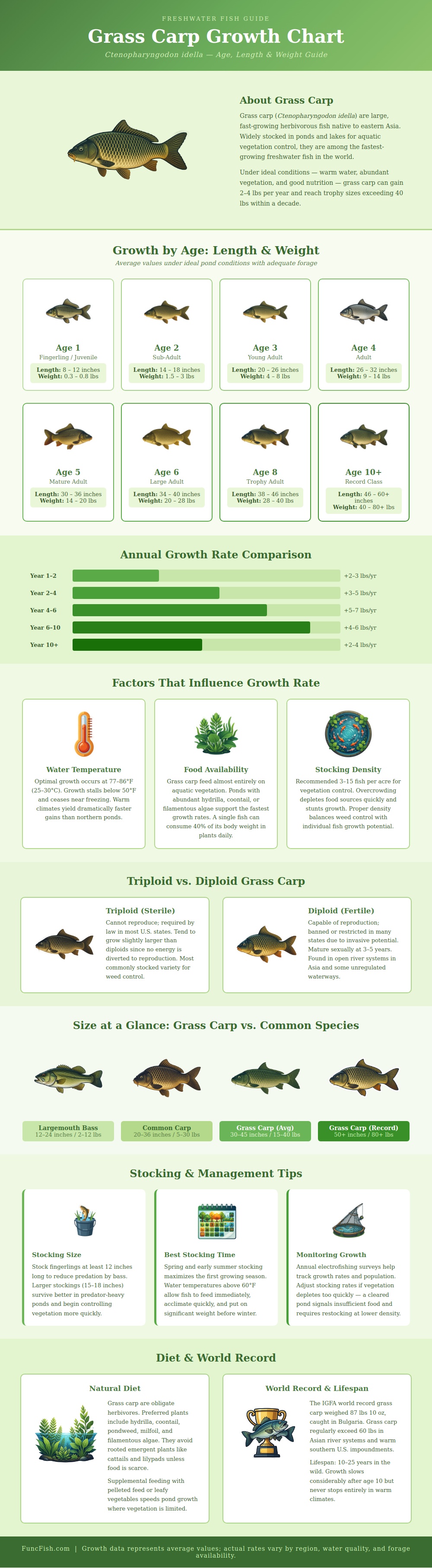
The visual guide shows expected size each year by focusing on weight and length, but more importantly, the timing. In the first two years, grass carp will adds modest amounts, maybe a couple of pounds a year. That’s when they get established. After about year four or five, they realy start growing. They’re at their prime eating years. From then on, they gains five to seven pounds a year. So it’s around these ages you have aggressive weed control. You’d be surprised how many folks don’t know they hit there peak gains at middle age.
The growth rate depend on water temperatures. Because grass carp are cold blooded fish, they like warm water. In colder parts of the country, their feeding period is shorter which slows progress down. They really like water between seventy-seven and eighty-six degrees Fahrenheit. Under 50 degrees and the fish do not move much at all. Over that temp and they go crazy eating.
When you compare ponds from warmer climates to colder ones, people forget about this variable. Your fish in Minnesota will grow slower then your fish in Texas simply because there are more days that is warm in Texas.
The other important part is food. Grass carp only eat plants. What does that mean? They don’t eat bait. They don’t eat worms. They like pondweed, coontail, and hydrilla. Stock them in a pond void of any of these plants and they won’t grow. Heck, they might die if not fed something else.
It’s a simple tradeoff. You can have a pond full of big carp with some weeds, or a weed-free pond with smallish fish. You seldom get the best of both worlds unless you manage for it.
Another mistake people make is stocking density. Depending on your objectives, they recommend 3-15 fish/acre (see chart). While it may appear logical that more fish will eat more plants, what happens is these fish will devour all vegetation in just a few months. When there’s no more food, there’s no more growth. Instead, try starting out light and see how it goes. If things are working well, go ahead and stock more. Just remember: clear water does not always mean good water. Sometimes it means youve got a bunch of starving carp waiting on fresh foliage.
And then there’s a bit about biology: Most states require sterile triploid grass carp to prevent uncontrolled breeding. These sterile triploids do not spawn, instead spending all of their available energy on gaining body mass. In fact, it’s common for them to be a little bigger than their fertile peers. That’s a physical edge that compounds over time. You get more bang for your buck because the fish are bigger, but you have no worries about an exploding invasive population.
These carp start off slow but hit there stride in middle age. In ideal conditions, they will weigh 40-80 pounds by age ten. They will eventually slow down, but as long as you provide heat and feed, they’ll continue growing larger. In ideal circumstances, they will weigh 40-80 pounds by age ten. They will eventually slow down, but as long as you provide heat and feed, they’ll continue growing larger.
It’s important to be patient. You’re not simply purchasing a fish. You’re investing in an ecosystem manager. Go small, maintain heat, and allow time. Those baby fish grows up to be the main way that balance is kept in your pond for many years.