
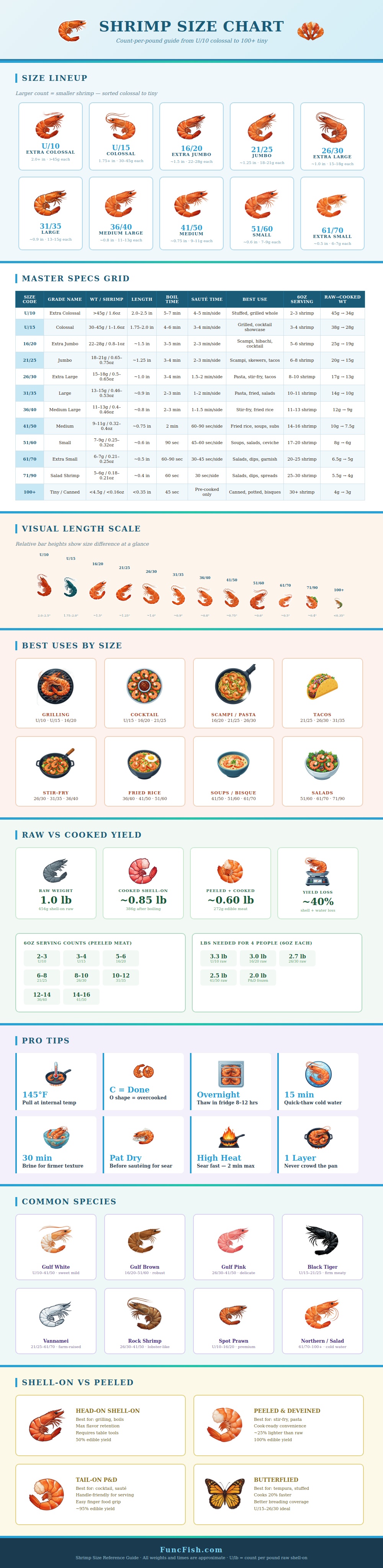
If you look at those shrimp bag numbers, they tells you how many individual shrimp equal one pound. There’s no need to learn all the information contained in size chart. Here’s the general guideline: the bigger the number, the smaller the animal. This makes sense, since there can’t be more than ten huge shrimp in a pound, but there could be a hundred shrimp small enough to fit into it.
Knowing this measure allow you to purchase the right amount of fish for whatever you’re cooking, whether it be big steaks for the grill or small bites for a delicate salad, without overpaying for either.
How to Choose the Right Shrimp Size
Different sizes cook differently: The thinner outer surface of a big shrimp cooks quickly but its thick center require more time. Overdo it on your heat and the exterior gets rubbery before the interior has a chance to cook through. Smaller ones has more room for error, as they’re cooked within seconds. Tiny ones are nice for things like fried rice, or soup where they can be mixed in with rest of the dish.
Many people make the mistake of getting shrimp that is too small, which can fall through the grill grate. They might also get shrimp that are to large, resulting in uneven stirfries where some pieces is overcooked and others is not done.
The other thing you’ll want to think about: Shell vs. Meat. When shrimp is cooked, it loses about 40% of its original raw weight, thanks to water loss and shells. So if a recipe asks for six ounces of shrimp, don’t simply weigh out six ounces of raw tails. Expect to buy more; the chart assumes servings of peeled meat, so you can better plan your trips to the store.
It sounds like you’re getting too much when you have to buy, say, three pounds of large shrimp for a meal for four. But once you factor in cooking shrinkage and shell weight, it begin to make sense.
Beyond size, origin matters. Some shrimp varieties is better for simple preparations like cocktails because they has a mild, sweet flavor. Other varieties have a meatier texture that can stands up to high-heat searing or heavy sauces. You can use this chart to determine what size shrimp is best suited for your dish by knowing which species produce what size. For instance, if you’re after something rich in flavor and a bit firm with a snap to it… Like a hibachi style shrimp, you’ll want to look specifically at certain size ranges within white or tiger shrimp varieties.
There are not really any hard-and-fast rules when it comes to cooking shrimp, it’s all about letting the ingredients be themselves. Proteins tightens up in heat. They squeeze themselves dry and become tough. Shrimp should of come off the heat just before they reach complete opacity, while they’re still translucent but have curled into a loose O-shape instead of a tight C-shape.
Once you’ve got the sizing chart down, there’s no guesswork anymore. There are only decisions based off personal taste, budget, and whatever your recipe calls for. The next time you’re at the market looking down the line at seafood selections, think about this: What do those numbers mean? Think about how to cook it, how much you will get from it, and how it will feel when you eat it.
Get the size right for the task and read the package. That’s a way to avoid buying shrimp that won’t work with your plan and to save money. Knowing what’s in the bag makes all the difference between a good dinner and a great one. It depends on whether you are tossing together a quick stir-fry or grilling a whole meal.