⛵ Boat Fuel Economy Calculator
Calculate MPG, range, fuel consumption, and trip planning data for any boat type
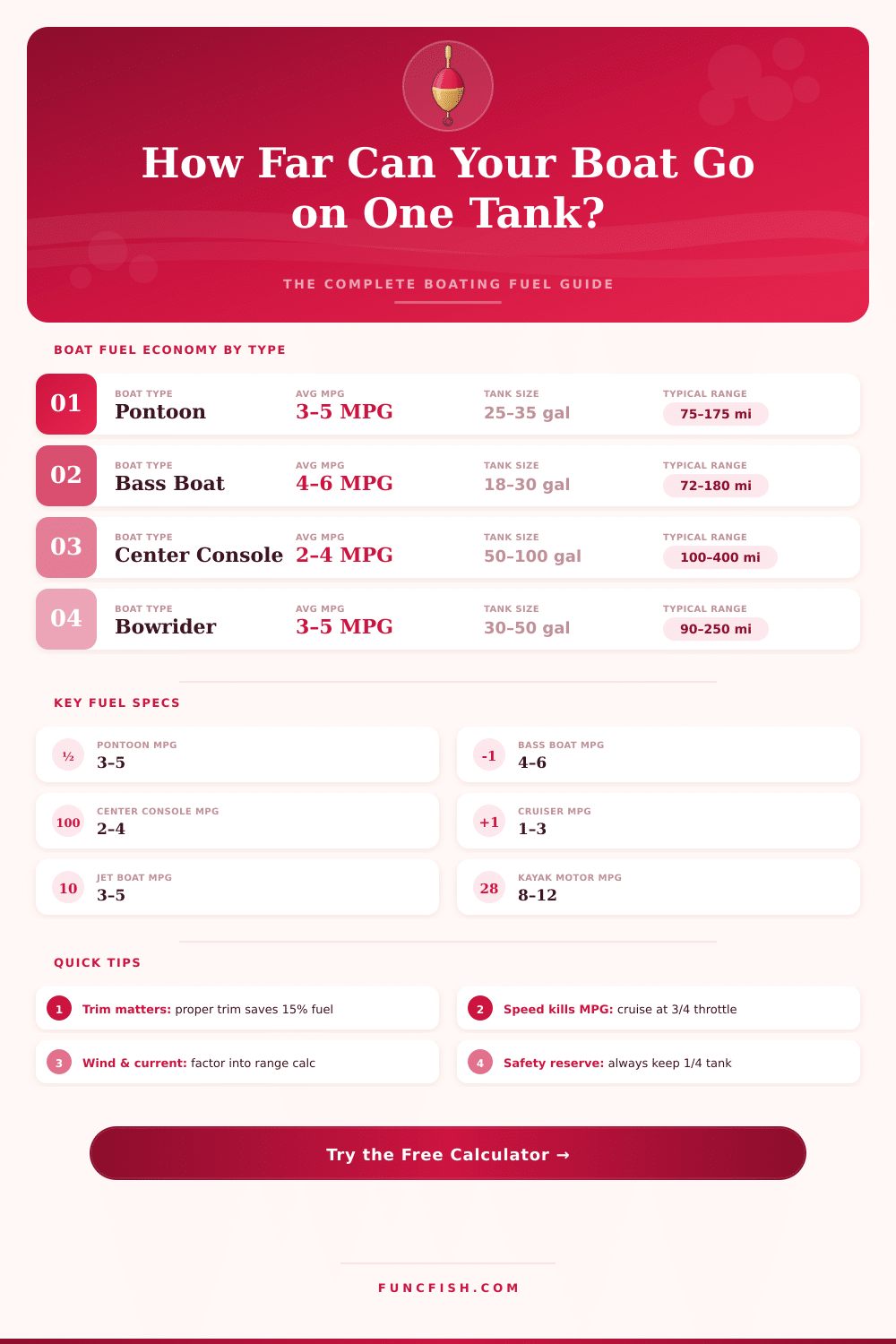
| Boat Type | Avg MPG (Imp) | L/100km (Metric) | Typical Tank (gal) | Typical Range (mi) | Engine HP Range |
|---|---|---|---|---|---|
| Pontoon (25 ft) | 3.0–5.0 | 47–79 | 25–35 | 75–175 | 60–150 HP |
| Bass Boat | 4.0–6.0 | 39–59 | 18–30 | 72–180 | 150–300 HP |
| Center Console (20–25 ft) | 2.0–4.0 | 59–118 | 50–100 | 100–400 | 150–350 HP |
| Bowrider / Runabout | 3.0–5.0 | 47–79 | 30–50 | 90–250 | 100–250 HP |
| Express Cruiser | 1.5–3.0 | 78–157 | 100–200 | 150–600 | 250–500 HP |
| Jet Boat | 3.0–5.0 | 47–79 | 40–70 | 120–350 | 200–350 HP |
| Kayak / Small Motor | 8.0–12.0 | 20–29 | 3–6 | 24–72 | 2–10 HP |
| Sport Fishing (30+ ft) | 0.8–2.0 | 118–295 | 200–400 | 200–800 | 400–1000 HP |
| Condition | MPG Adjustment | Fuel Use Change | Range Impact | Recommended Action |
|---|---|---|---|---|
| Calm / Flat Water | Baseline (0%) | Normal | Full rated range | Normal cruise speed |
| Light Chop (1–2 ft) | −8 to −12% | +10% fuel use | −10% range | Reduce speed 5–10% |
| Moderate Waves (2–4 ft) | −15 to −25% | +20% fuel use | −20% range | Reduce speed 15–20% |
| Rough Seas (4+ ft) | −30 to −45% | +40% fuel use | −35% range | Reduce speed significantly |
| Headwind 10–15 mph | −10 to −15% | +12% fuel use | −12% range | Trim bow down slightly |
| Tailwind 10–15 mph | +5 to +10% | −7% fuel use | +7% range | Maintain normal trim |
| Heavy Load (+20%) | −10 to −18% | +15% fuel use | −15% range | Reduce passengers / gear |
| Fouled Bottom (algae) | −10 to −20% | +15% fuel use | −15% range | Clean hull regularly |
| Throttle % | Typical Speed | Relative MPG | Best Use Case |
|---|---|---|---|
| 25% (Idle) | 5–8 mph | Low (slow trolling) | Docking, trolling, no-wake zones |
| 40–50% (Planing) | 12–18 mph | Moderate – improving | Getting on plane, short runs |
| 60–70% (Cruise) | 20–30 mph | Best MPG range | Fuel-efficient long cruises |
| 75–85% (WOT-1) | 30–45 mph | Good – slightly less | Sport cruising, time priority |
| 90–100% (WOT) | 45+ mph | Lowest MPG | Racing, short bursts only |
Know the fuel consumption of the boat before you go on the water Engine of 100 HP with gasoline probably uses around 30 liters of fuel each hour. Diesel engines usually are more efficient, using only 10% of their horsepower in liters each hour. Like this, if you want to save fuel, choose diesel.
Boat with small, fuel-saving engine burns less fuel in low speeds than one with big, strong engine. At high speeds however the strong engine can be more efficient, because it reaches its best revolutions sooner. That shows how important it is to know the ideal spot of the engine for good fuel consumption.
How to Save Fuel When Boating
100 HP engine in full gas uses less than 150 HP engine slowed to 70%. If the smaller engine gives enough powre, it will be cheaper.
Engines with electronic injection and direct injection reach higher fuel efficiency. At small gasoline outboard engines the direct injection improves the fuel saving compared to carburetors. Lean injection fixes the mix of fuel and air according to the load, which saves fuel during cruising.
Right trimming of the boat plays a big role. The right amount of trimming in various speeds and sea states can improve the fuel consumption a lot. It also helps to reach higher top speed and a more pleasant trip.
Test two or three different props, that usually makes a difference.
Heavy boat sits more low in the water, which increases the drag and fuel consumption. Catamaran body allows it to slip easily on the surface and requires less power to stay there, which usually gives better fuel saving. To judge the fuel efficiency of a boat, compare only same size models.
One engine usually has better fuel consumption than two with everything else the same. The handling and extra power of two are worth the bigger cost and maintenance for some, but not for all.
Gas-ethanol mixes commonly cause troubles. They give less power per liter than pure gasoline, so the fuel consumption is worse. Ethanol is one of the worst fuels for four- or two-stroke engines on a boat.
Better fuel saving means fewer trips to the fuel dock, fewer expenses for fuel and fewer fumes for the nature. Boats do not measure consumption in miles per gallon because of too many variables. Running against wind is 5 nautical miles each hour, while running with thewind allows 15.