🐟 Catch-to-Cleaning Time Calculator
Estimate total fish cleaning time based on species, quantity, technique & skill level
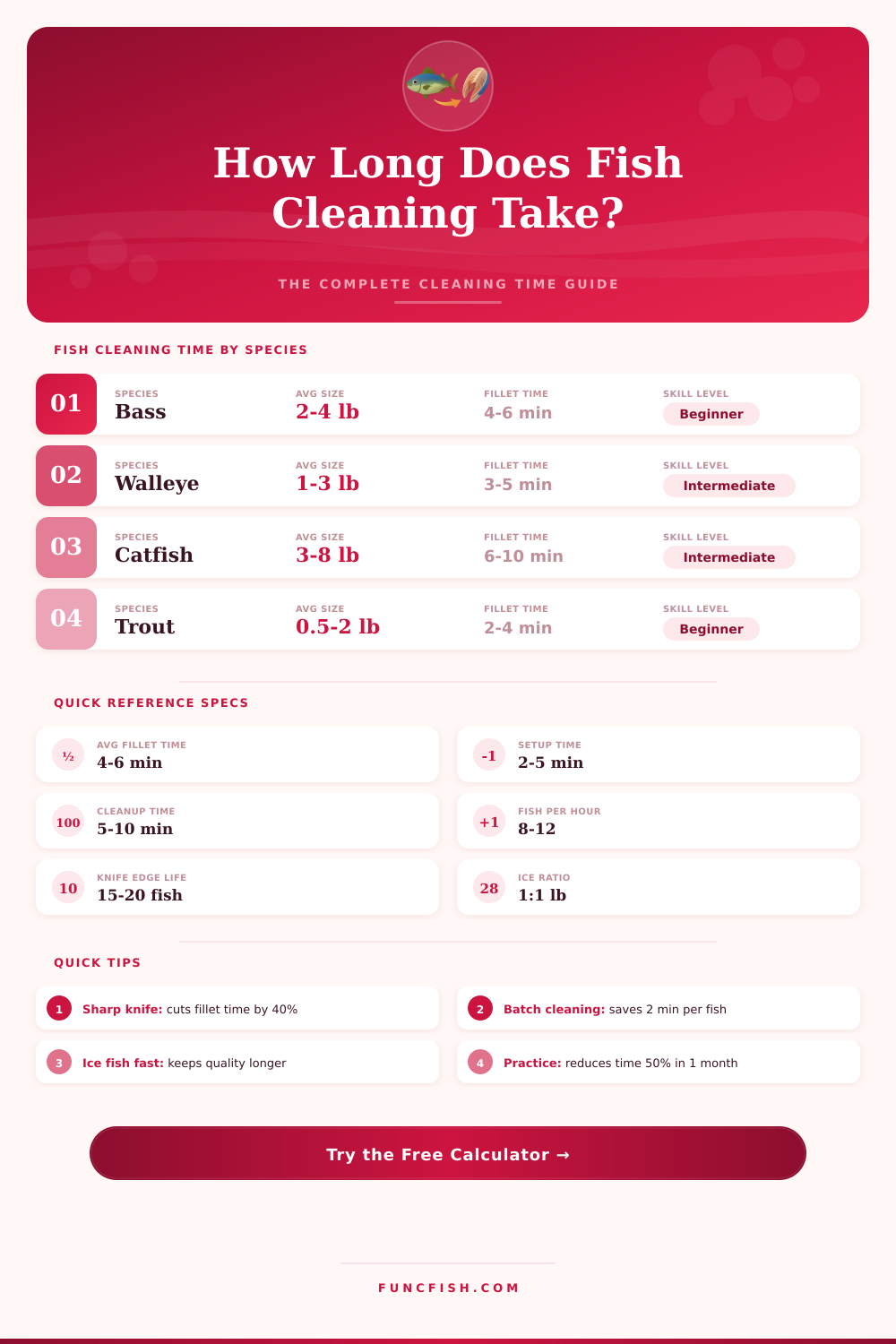
| Species | Typical Weight | Fillet Time (Beg) | Fillet Time (Adv) | Best Technique | Yield % |
|---|---|---|---|---|---|
| Largemouth Bass | 1.5–5 lb (0.7–2.3 kg) | 6–8 min | 3–4 min | Fillet | 35–40% |
| Walleye | 1–4 lb (0.5–1.8 kg) | 5–7 min | 2–3 min | Fillet | 40–45% |
| Rainbow Trout | 0.5–3 lb (0.2–1.4 kg) | 3–5 min | 1.5–2 min | Pan-Dress | 45–50% |
| Channel Catfish | 2–8 lb (0.9–3.6 kg) | 8–12 min | 4–6 min | Skin & Fillet | 38–42% |
| Bluegill / Panfish | 0.2–1 lb (0.1–0.5 kg) | 2–3 min | 1–1.5 min | Fillet / Scale | 25–30% |
| Chinook Salmon | 10–30 lb (4.5–13.6 kg) | 12–18 min | 6–9 min | Fillet / Steak | 55–60% |
| Northern Pike | 3–15 lb (1.4–6.8 kg) | 10–15 min | 5–8 min | 5-Piece Fillet | 40–45% |
| Crappie | 0.3–1.5 lb (0.1–0.7 kg) | 3–4 min | 1–2 min | Fillet | 30–35% |
| Flounder | 1–4 lb (0.5–1.8 kg) | 5–7 min | 2.5–4 min | 4-Piece Fillet | 35–42% |
| Yellow Perch | 0.3–1 lb (0.1–0.5 kg) | 2–3 min | 1–1.5 min | Fillet | 30–35% |
| Skill Level | Time Multiplier | Avg Sessions | Fish/Hour Rate | Notes |
|---|---|---|---|---|
| Beginner | 2.0x base time | 0–20 | 4–8 fish/hr | Learning cuts, frequent stops |
| Intermediate | 1.3x base time | 20–100 | 8–15 fish/hr | Consistent technique, some hesitation |
| Advanced | 1.0x base time | 100–500 | 15–25 fish/hr | Efficient, minimal waste |
| Expert | 0.65x base time | 500+ | 25–40+ fish/hr | Muscle memory, maximum yield |
| Technique | Time Factor | Best For | Fillet Yield | Skill Required |
|---|---|---|---|---|
| Filleting (boneless) | 1.0x | Bass, Walleye, Crappie | 35–45% | Intermediate+ |
| Pan-Dress (scale & gut) | 0.6x | Trout, Panfish | 65–75% | Beginner |
| Skin & Fillet | 1.4x | Catfish, Pike | 35–42% | Intermediate+ |
| Scale & Gut Only | 0.5x | Whole-cook species | 80–90% | Beginner |
| Steak Cut | 0.8x | Salmon, Large catfish | 70–80% | Intermediate |
| 5-Piece (Pike Y-Bone) | 2.0x | Northern Pike | 38–44% | Advanced |
An electric fillet knife reduces per-fish cleaning time by 25–35% compared to a standard fillet knife, especially for larger batches of 10+ fish. The biggest time savings are on medium-to-large fish (walleye, bass, catfish).
Don't forget that table setup, water access, bag prep, and final cleanup typically add 7–15 minutes to any cleaning session. For large catches (10+ fish), proper organization can save 20+ minutes of total session time.
When you catch a fish, you have to manage the temperature of the fish to ensure that the quality of the fish is maintained. The quality of the fish depend upon the way in which you handle the fish during the first hour after you remove the fish from the water. Many factors influence how long the fish will remain fresh including the water temperature, the air temperature, and the size of the fish.
Since the temperature of the fish can impact the texture and flavor of the fish, it is essential that you begin to cooling the fish as soon as possible. The temperature of the water will have a baseline for the temperature of the fish. When you first remove the fish from the water, the temperature of the fish will be similar to the water temperature.
How to Keep Fish Fresh After You Catch Them
However, if the water temperature are warm, the fish will warm up after it is removed from the water. The air temperature can also have an impact upon the temperature of the fish as well. Air temperatures is often warmer than the water temperatures.
Thus, when you remove the fish from the water, the air will warm the fish, again reducing its freshness. There are a few decisions that you can make to help manage the temperature of the fish. Bleed the fish will remove the blood from the fish, which can sour the flavor of the fish.
Additionally, if you gut the fish, the heat can escape from the fish. However, if you leave the fish whole to take photographs of the fish, you are essentially choosing to take longer to cool the fish. Using ice will help to pull the temperature of the fish down.
If you use hard ice, it will cool the fish quicker than if you used open air. The size of the fish can also impact the temperature of the fish that you catch. For instance, smaller fish will cool quicker than larger fish.
However, with small fish, you must be sure to manage the moisture of the small fish to avoid drying it out. For larger fish, such as tuna, due to the large thermal mass of the fish, you must blast chill the fish in order to lower the temperature of the fish. Additionally, the environment may also impact the temperature of the fish.
If the fish is exposed to full sun on a warm day, the time that you have to keep the fish fresh will be more less than if you kept the fish in the shade. There are some mistakes that many individuals makes when they are handling the fish. For instance, many may remain on the water for too long to catch more fish.
If they remain on the water for too long, the temperature of the fish will rise within the livewell. Additionally, they may not use enough ice within the livewell to ensure that the temperature of the fish are dropped. Air gaps will allow heat to reach the fish, reducing the quality of the fish.
To avoid these mistakes, bleed the fish on the stringer, apply ice to the fish upon landing the fish, and check the temperature of the fish while en route to the market. Depending upon the situation, there are a few different methods for cooling the fish. Using a wet towel to wrap the fish may help to cool the fish for a short period of time if you didnt catch a fish with a cooler.
However, if you plan on leaving the fish in it’s natural state for longer than 15 minutes, you should gut the fish. Using a slurry of ice and water will cool the fish quickly due to the ability of the mixture to coat the fish and eliminate air gap around the fish. Pre-chilled coolers with layered ice will help to maintain the temperature of the fish better than a cooler that is warming.
Overall, managing the temperature of the fish involve a matter of timing and sequence. You must account for the water temperature, the air temperature, the size of the fish, and in what method you manage to cool the fish. By following a sequence that bleeds, guts, and ices the fish, you will maintain the quality of the fish.
If you dont manage the temperature of the fish quick after you land it, the quality of the fish will decline.