🎣 Spey Rod Calculator
Match rod length, grain weight, line type & casting style for any spey fishing setup
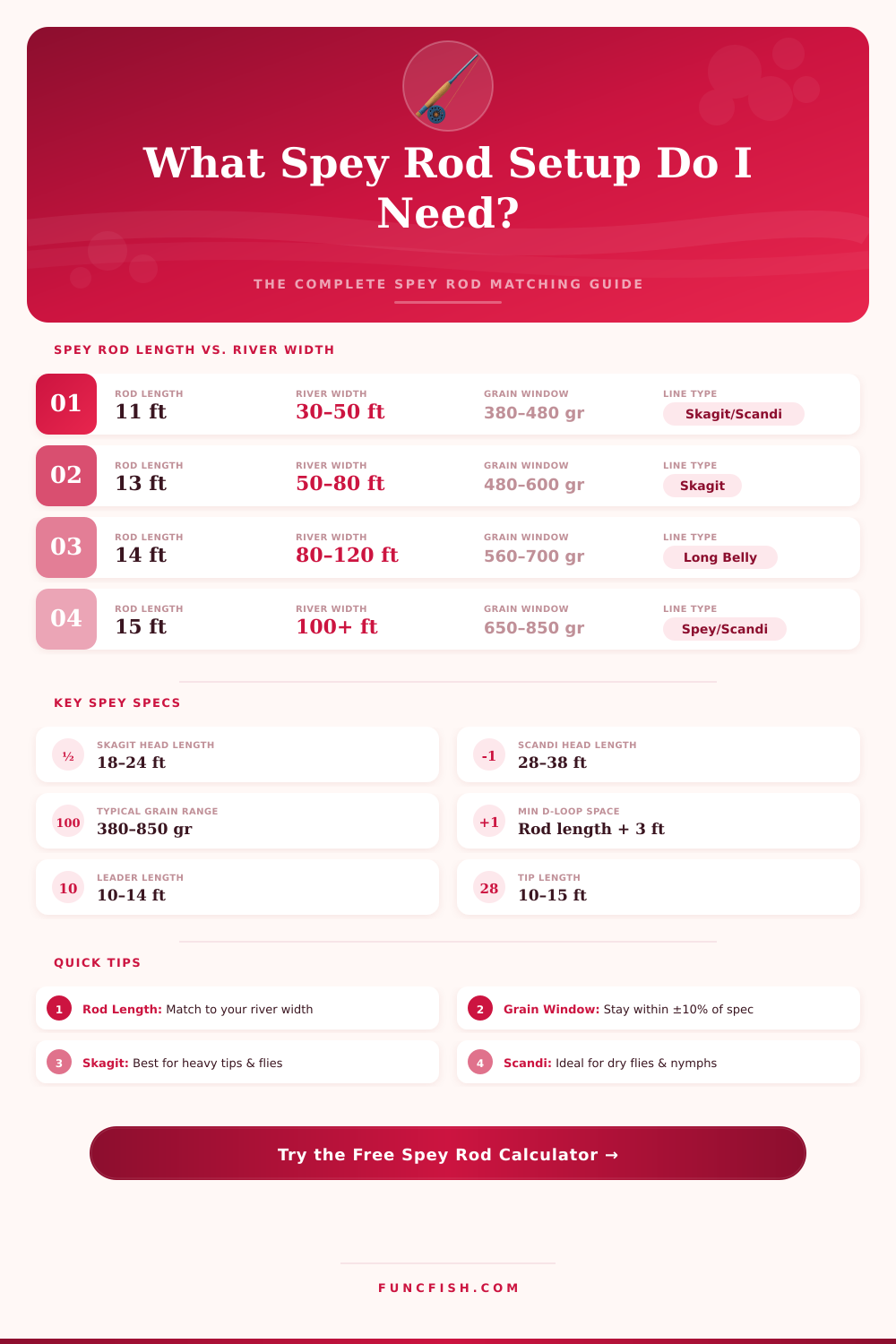
| Rod Length | Rod Length (m) | Ideal River Width | Grain Window | Best Line Type | Typical AFTMA |
|---|---|---|---|---|---|
| 11 ft | 3.35 m | 20–45 ft | 360–460 gr | Scandi / Compact | #5–#7 |
| 12 ft | 3.66 m | 35–60 ft | 420–520 gr | Scandi / Skagit | #6–#8 |
| 12.5 ft | 3.81 m | 40–65 ft | 440–540 gr | Skagit / Scandi | #7–#8 |
| 13 ft | 3.96 m | 50–80 ft | 480–600 gr | Skagit / Scandi | #7–#9 |
| 13.5 ft | 4.11 m | 55–90 ft | 520–640 gr | Skagit / Mid Belly | #8–#9 |
| 14 ft | 4.27 m | 65–110 ft | 560–700 gr | Skagit / Long Belly | #9–#10 |
| 15 ft | 4.57 m | 80–130 ft | 640–800 gr | Long Belly / Spey | #10–#11 |
| 16 ft | 4.88 m | 100+ ft | 720–900 gr | Long Belly / Dee | #11–#12 |
| Species | Typical Weight | Rod Length | Line Weight | Grain Range | Leader Strength |
|---|---|---|---|---|---|
| Atlantic Salmon | 8–30 lb (3.6–13.6 kg) | 13–15 ft | #8–#10 | 480–720 gr | 12–20 lb |
| Steelhead | 6–20 lb (2.7–9 kg) | 12–14 ft | #7–#9 | 440–650 gr | 10–16 lb |
| Trout (large) | 1–8 lb (0.45–3.6 kg) | 11–12.5 ft | #5–#7 | 360–480 gr | 6–12 lb |
| Sea Trout | 2–12 lb (0.9–5.4 kg) | 12–13.5 ft | #7–#8 | 420–560 gr | 8–14 lb |
| Chinook Salmon | 15–50 lb (6.8–22.7 kg) | 13–15 ft | #9–#11 | 580–800 gr | 20–30 lb |
| Line Type | Head Length | Best For | D-Loop Req. | Fly Size Range | Skill Level |
|---|---|---|---|---|---|
| Skagit Head | 18–24 ft | Heavy tips, large wet flies | Minimal | #2–4/0 | Beginner+ |
| Scandi Head | 28–38 ft | Dry flies, nymphs, light wets | Moderate | #8–#2 | Intermediate+ |
| Long Belly Spey | 55–80 ft | Big rivers, distance casting | Large | #6–2/0 | Advanced |
| Mid Belly Spey | 38–55 ft | Versatile all-round use | Moderate | #8–#1 | Intermediate+ |
| Integrated Shooting Head | 30–45 ft | Distance, varied rivers | Moderate | #6–#1/0 | Intermediate |
| Dee / Traditional Spey | 50–75 ft | Classic salmon, large rivers | Large | #4–3/0 | Advanced |
| Skandi Compact | 22–28 ft | Tight spaces, brushy banks | Small | #10–#2 | Beginner+ |
| Hybrid Shooting Head | 25–35 ft | Versatile, distance & feel | Moderate | #6–#1 | Intermediate |
Every spey rod has a recommended grain window (typically 널%). Loading your rod within this range ensures optimal load transfer and safe casting. A head too light won't load the rod; one too heavy risks breakage. Always factor in your sink tip weight — it adds to total system grain weight.
Your available D-loop space determines which line system is practical. A good rule: you need at least your rod length plus 3 ft of clear space behind you for Skagit, and rod length plus 6–8 ft for Scandi or Long Belly lines. On tight, brushy rivers, use Skagit or Skandi Compact heads for reliable anchoring.
Spey casting require a balance between the fishing rod, the line, and the condition of the water. To execute a successful Spey cast, the angler should match the fishing rod to the width of the river and the weight of the fishing line should be matched to the speed of the current in that river. If the fishing rod is too short for the width of the river, then the fishing rod will not be able to reach the necesary distance to cast effectively its line.
If the grain weight of the line is too light for the current in the river, the current will pull the fishing line away from the target location that the angler desire to fish. Lastly, if the grain weight of the line is too heavy for the fishing rod, then the fishing rod will be overloaded with the fishing line. The type of fish that you are targeting will determine the type of gear you need to use when Spey casting.
Choose the Right Rod and Line for the River and Fish
For instance, if you are after sea-run trout, you will need to use light fishing rods and lines. This is because trout tend to live in areas that contain overgrown banks, and the gear need to be light to move easy in these areas. For chinook salmon, you will need to use heavy Spey rods and heavy sink tips on the lines.
Chinook salmon live in deeper waters and are moved by the wind, so heavy gear are needed. Steelhead can use any gear, in any condition. Skagit line heads are compact and forceful, and are useful for fishing deep water with sink tips during the winter months.
Scandi line heads allow for a clean turnover of the bait, and are useful for fishing the surface lane of the water during the summer months. The length of the line head also indicates how the line will carry through the air. Short line heads load the fishing rod deep, but can easily stack up in the wind.
Long line heads will glide easy through the air, but require more space to cast. The grain weight of the fishing line should be matched to the fishing rod to ensure that the rod load correctly when using the line. A