
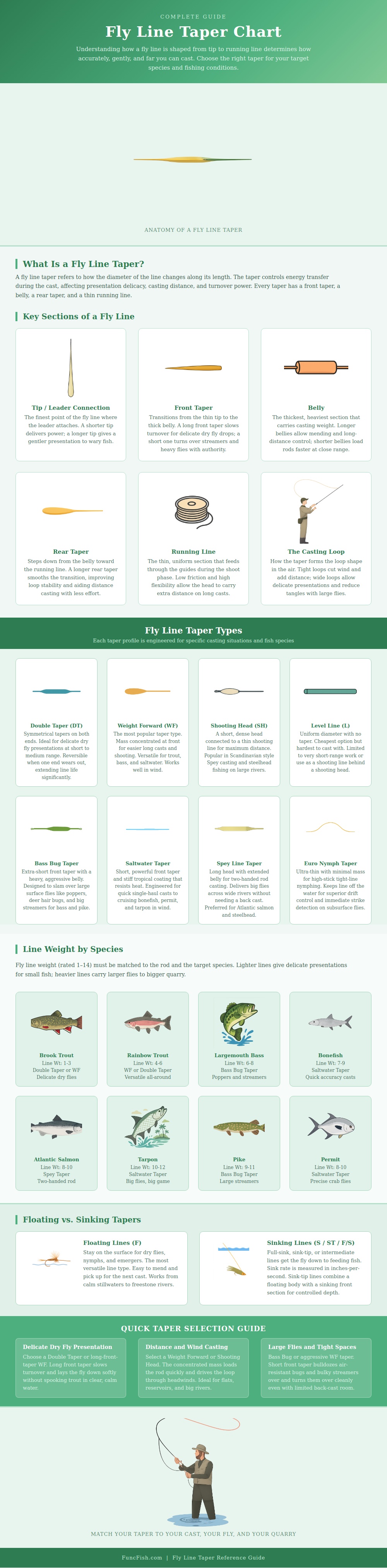
A fly line are a fishing implement that transfer energy from the rod tip to the fly. The way that the energy is transferred from the rod to the fly depend on the taper of the fly line. The taper of an fly line is the gradual change in the thickness of the line.
The taper impact the movement of the line through the air. A person will struggle to effect cast if the taper of the line dont match the type of cast that the person intend to make. However, if the taper of the line match the type of cast that a person intend to make, then the line will easily form a loop with the necessary precision.
How to Choose the Right Fly Line
A fly line isnt uniform in it’s construction. However, it is an object that feature a taper. The line is thin at the tip of the line but feature a thicker section of the line toward the middle of the fly line.
This central section of the line is called the belly of the line. The belly of the line feature the weights that load the fishing rod. Beyond the belly of the line is a taper that continue into the thin running line that passes through the guides on the fishing rod.
The different sections of the line allow for the line to create different types of loops. For example, the longer the front taper of the line, the more higher the lines running line will unroll slowly from the rod tip. This is helpful for soft landing the fly on the water.
Short taper on the front of the line provide more turnover power for the line. This is useful for casting a fly into the wind. There are many different type of fly lines.
Weight forward lines is common and people use them because they load the rod quick due to their weight. Double taper lines are constructed such that they are symmetrical and allow a person to utilize the other end of the line if one end of the line wear down. Shooting head lines feature a dense amount of weighted material concentrate into a short section of the line.
These are useful in situations where a person need to make a long cast, such as into a large river. Level lines are lines with the same thickness throughout the line. These lines is typically used as shooting lines or for short cast.
A person must also ensure that the taper of the line is matched to the type of fish that will be targeted. For instance, small trout may require a light double taper line, while larger trout may require a weight forward line. Additionally, if a person is fishing for bass, a heavier bass bug line will be required.
Similarly, a heavy saltwater profile line is used to catch bonefish in saltwater environment. Each type of fish require a specific weight of fly line. Therefore, ensuring that a person use the correct weight of fly line prevent the use of inappropriate fishing equipment in the fishery in which the fish is located.
Floating lines are used to keep the flies on the surface of the water while fishing. Additionally, because the fly remain on the surface of the water, mends can be made easy. Sink tip lines are used to cast the line below the surface of the water.
Sink tip lines has a section that allow the fly to remain on the surface but have a front section of the line that sink the fly below the waters surface. In these situations, the rate at which the fly sink must be matched to the speed of the water through which it will be casted. If the rates do not match, the fly will drag through the water in an incorrect fashion.
Finally, the environmental condition in which fishing will occur will impact the type of fly line that is used. For instance, if the fishing environment is windy, a weight forward line will be required due to the increased power of that type of line to fish through the wind. In contrast, in calm condition, long tapers of lines is best used to ensure that the line does not impact the fish.
Additionally, if the fishing will occur in saltwater environments, the line will have to be resistant to the heat in the water. Finally, the weight of the rod should always be check prior to selecting the type of fly line to use when fishing. You should of checked the rod weight first.
Youll need to be carefuler than most when choosing based off the environment. It is a actualy dificult task.