
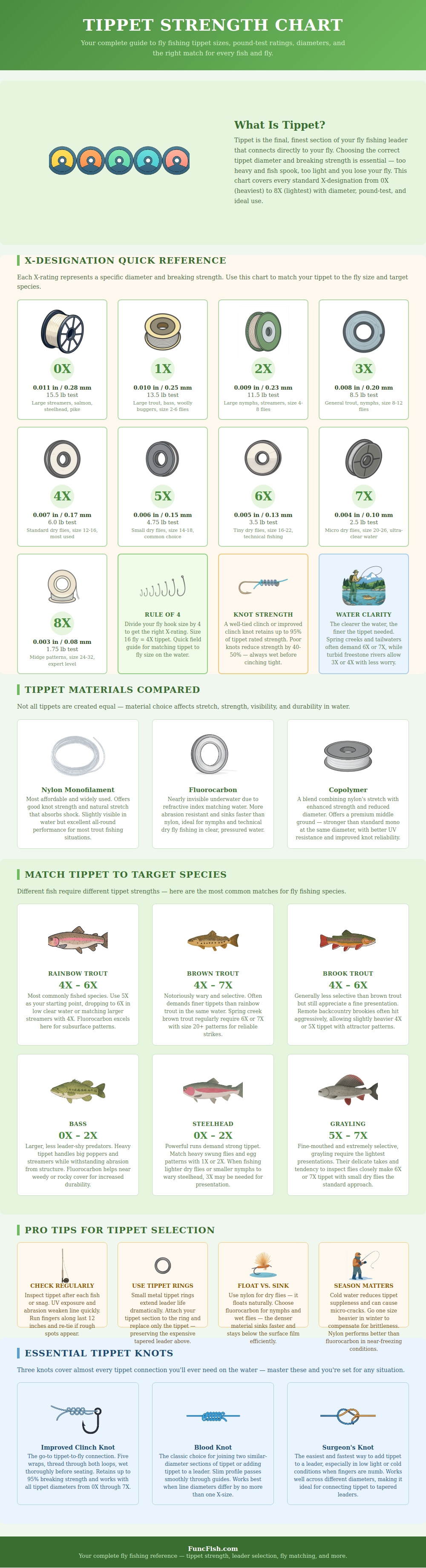
Tippet is an thin piece of line that connects a fly fishing leader to the fishing fly. The tippet is a critical component of the fly fishing equipments. If a person choose the incorrect size of tippet for the type of fly that they are fishing with, then the tippet will break when a fish pull on the line, and the person will lose the fish that they caught.
The tippet has to be strong enough to hold the fish, yet thin enough so that the fish dont see it. Many people use tippet that are too thick for the type of fish that they are fishing for. Using tippet that is too thick for the type of fish will make the fish suspicious of the fly line and cause the fish to avoid it.
How to Choose the Right Tippet for Fly Fishing
The size of the tippet that a person use is often selected from a chart that depicts the different thickness of tippet. Heavier tippets is used for larger flies and for catching large fish. Lighter tippets is used for smaller flies that are cast into water that is clear.
A person should select the size of tippet that is matched with the size of the fly that they are using because this make the fly look natural to the fish. To determine the size of tippet to use, some people divide the hook size of the fly by four. For instance, if a person is using a size 16 dry fly, they should use 4X tippet.
By dividing 16 by four, the result are four. Thus, using this equation, people can quickly determine the size of tippet that they should use for the types of flies that they are fishing with. This equation reduce the amount of guesswork that a person must do while fishing.
The tippet can be made out of a variety of materials. One material that people often use is nylon. Tippet that is made out of nylon have the advantage of being able to stretch.
This allow the tippet to cushion the fish if the fish shakes it’s head. Additionally, nylon tippet will not break as easy as tippet that does not have this stretch. Nylon tippet will also float on the water.
Thus, nylon tippet is often used for dry flies. Fluorocarbon is another material that is used to make tippet. Fluorocarbon tippet will sink in the water.
Additionally, fluorocarbon is difficult for fish to see. Thus, a person uses fluorocarbon when a person want to be stealthy when fishing. A third material that is used for tippet is copolymers.
These provides a balance between the properties of fluorocarbon and nylon. The type of fish that a person is fishing for will help to dictate the thickness of the tippet that they will use. For example, rainbow trout can be bold and will often accept a thicker tippet, such as 4X or 6X tippet.
Brown trout are often more suspicious of other fish in the water so a person should use a thinner tippet, such as 7X tippet. Brook trout and bass can also require different thickness of tippet depending on the environment in which they live. Additionally, each of these fish species will require a specific thickness of tippet in order to avoid the fish seeing the fishing line.
Each type of fish will have different behaviors and be more or less warily of other fish than others. Thus, a person should use a tippet that match the specific type of fish that they are fishing for. There are different types of knots that can be used to attach the tippet to the fishing leader.
If a person tie the tippet to the leader with a poor knot, the knot will break easy when the fish pulls on the line. Two knots that can be used to join the tippet to the leader are an improved clinch knot or a blood knot. These knots should be wet before they are tighten.
By wetting the knot before it is tightened, the person will preserve the strength of the knot. Additionally, if the person tightens the knot slowly, the knot will be secure. A person should maintain the tippet while fishing.
A person should inspect the tippet for any nick or damage after each fish that is caught. If the tippet is damaged, it will easily break while fishing for a fish. A person should also consider the weather and the water in which they are fishing when choosing the thickness of the tippet.
If the water is cloudy, a person can use a thicker tippet. However, if the water is clear, a person should use a lighter tippet. Thus, using the correct type of tippet while fishing will ensure that a person is successful in their fishing.
Additionally, if a person uses the correct type of tippet, they will not lose any of their caught fish due to the tippet breaking.