🎣 Jig Head Weight to Depth Calculator
Find the ideal jig weight for any depth, current speed, and fishing technique
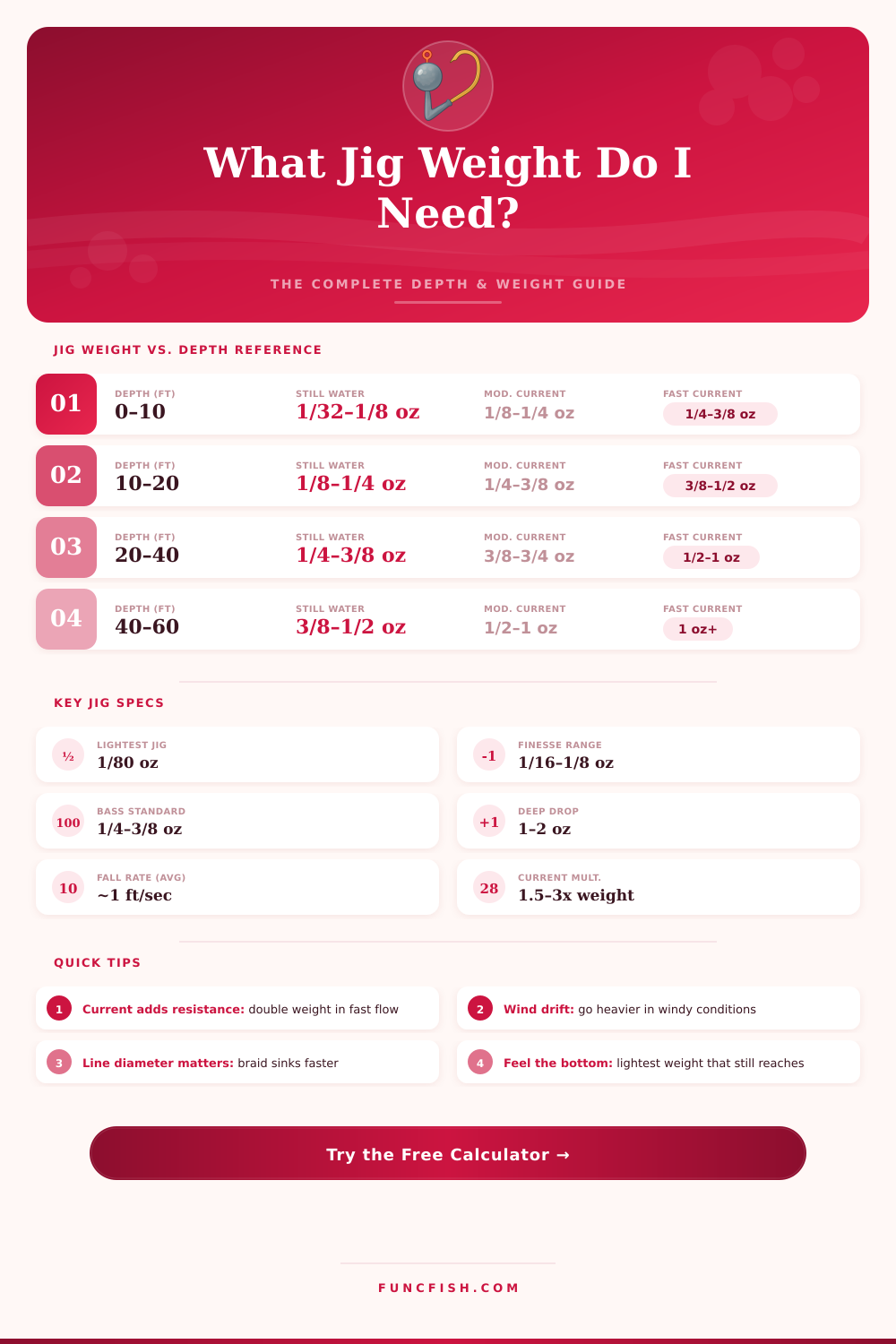
| Depth (ft) | Depth (m) | Still Water | Slow Current | Moderate Current | Fast Current |
|---|---|---|---|---|---|
| 0–5 | 0–1.5 | 1/32–1/16 oz | 1/16–1/8 oz | 1/8–3/16 oz | 3/16–1/4 oz |
| 5–10 | 1.5–3 | 1/16–1/8 oz | 1/8–3/16 oz | 3/16–3/8 oz | 3/8–1/2 oz |
| 10–15 | 3–4.6 | 1/8–1/4 oz | 1/4–3/8 oz | 3/8–1/2 oz | 1/2–3/4 oz |
| 15–20 | 4.6–6.1 | 3/16–3/8 oz | 3/8–1/2 oz | 1/2–3/4 oz | 3/4–1 oz |
| 20–30 | 6.1–9.1 | 1/4–1/2 oz | 1/2–3/4 oz | 3/4–1 oz | 1–1.5 oz |
| 30–45 | 9.1–13.7 | 3/8–3/4 oz | 3/4–1 oz | 1–1.5 oz | 1.5–2 oz |
| 45–60 | 13.7–18.3 | 1/2–1 oz | 1–1.5 oz | 1.5–2 oz | 2–3 oz |
| 60+ | 18.3+ | 1–2 oz | 1.5–2.5 oz | 2–3 oz | 3–4 oz |
| Species | Typical Depth | Recommended Jig | Jig Style | Line Lb Test |
|---|---|---|---|---|
| Largemouth Bass | 5–25 ft | 3/8–3/4 oz | Football / Flipping | 12–20 lb |
| Smallmouth Bass | 10–30 ft | 1/4–1/2 oz | Football / Round | 8–14 lb |
| Walleye | 15–40 ft | 1/4–1 oz | Round / Swim | 8–14 lb |
| Trout (Stream) | 2–10 ft | 1/32–1/4 oz | Tube / Finesse | 4–8 lb |
| Crappie / Panfish | 5–20 ft | 1/32–1/8 oz | Tube / Finesse | 4–8 lb |
| Pike / Muskie | 5–20 ft | 3/4–2 oz | Swim / Bucktail | 17–30 lb |
| Striped Bass | 10–60 ft | 1–4 oz | Bucktail / Swim | 20–50 lb |
| Redfish / Flounder | 3–20 ft | 1/4–1 oz | Round / Swim | 10–20 lb |
| Line Type | Sink Factor | Stretch | Visibility | Best Use |
|---|---|---|---|---|
| Monofilament | Baseline (1.0x) | 25–30% | High | Shallow, topwater |
| Fluorocarbon | Faster (1.1x) | 10–15% | Very Low | Clear water, finesse |
| Braided Line | Fastest (1.2x) | <5% | High | Deep water, heavy cover |
Jig head weight are an important variable in fishing because the weight of the jig head determine the jig heads sink rate. If the jig head is too light for the depth of the water, the jig head will not be able to reach the bottom of the water column during the countdown to the jig head contact the river or lake floor. If the weight of the jig head is correct, though, the jig head will contact the bottom of the water at the same time as the angler intend for the jig head to make contact with the lake or river floor.
A variety of factors can influence the sink rate of a jig head, including the current in which the angler is fishing, the fishing line being used, and the trailer attach to the jig head. The current in the water can push against the jig head, causing the fishing line to bow in such a way that slow the descent of the jig head. Additionally, different jig heads have different shape, and each of those shapes may allow the jig head to sink at a different rate; ball head jigs sink at a neutral rate, minnow profile heads sink more quick, and football head jigs sink slowly to allow for better contact with the bottom.
Jig Head Weight and Sink Rate
The materials out of which the angler makes the jig head can also affect the sink rate. Lead is the most common material for jig heads. However, anglers also use materials like tungsten; tungsten is a denser material than lead, which allow for the jig heads to have less of an impact on the fishing line and to provide anglers with a better feel while fishing in currents with the jig head.
Bismuth and tin are also materials that can be used in jig heads; bismuth is a softer material than lead, though, and tin based jig heads will fall more slow in water that is visible to the fish. Additionally, the type of fishing line that is used can influence the sink rate. Braided fishing lines are thin and dont bow out of the way easy, allowing jig heads to maintain their sinking path to the lake or river floor.
Monofilament lines are more elastic than braided lines, which can cause them to bow under the jig head and require a heavier jig head for the same sinking rate. Fluorocarbon lines are often used due to the property of invisibility of fluorocarbon to the fish; fluorocarbon lines do, however, exhibit some stretch in the line. Additionally, thicker fishing lines will act like a parachute to the jig head, and will slow the rate at which the jig head reach the lake or river floor.
Thin lines will allow the jig head to continue sinking at a faster rate. The type of trailer attach to the jig head also influence sink rates. Slim trailers will not slow the sinking of the jig head, but bulky trailers with large attachments will slow the sinking rate of the jig head; the jig head will appear to have less weight then it actualy does.
Bulky trailers, however, will require more weight for the jig head to sink at the same rate as if using a slim trailer. The speed at which the jig head drift in the water and the angle at which the angler casts the jig head can also influence sink rates. If the current in the water is moving at a high speed, the jig head will drift away from the target rate at which it is suppose to sink.
Additionally, if the angler casts the jig head a long distance from where they intend for it to land, the fishing line will arc in an arc that also slow the sink rate of the jig head. Vertical fishing with jigs is considered the best method, but many angler are required to fish with a drift. To effectively fish with a jig head, the angler must find a balance between the jig head weight, the depth of the water, the current, the type of fishing line, and the trailer.
If the angler observe that the jig head is not staying on the lake or river floor, for instance, it is likely that the jig head must be of a heavier weight. By understanding the relationship between jig head weight and sink rate, anglers can ensure that the jig head reach the areas in which the fish live.