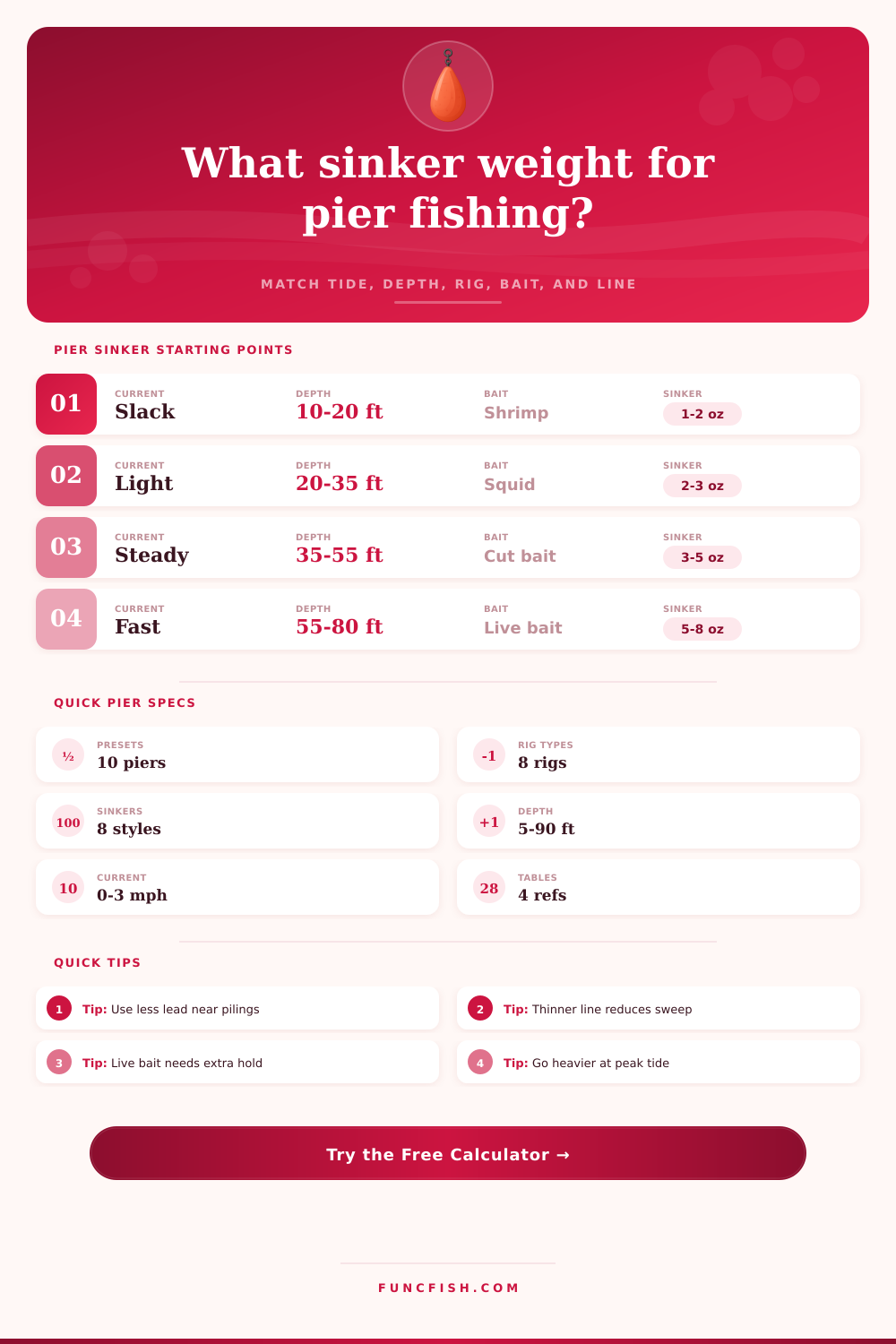
Pier Fishing Sinker Weight Calculator
Estimate pier sinker weight from rail height, tide speed, drop distance, depth, rig, bait profile, line diameter, target species, and snag risk.
📌Pier presets
⚙Pier sinker inputs
Pier sinker estimate
Full calculation breakdown
🧰Pier sinker data grid
Bank sinker
Pyramid sinker
Sputnik sinker
Egg sinker
📊Pier rig, sinker, and species grid
High-low plus bank
Best for croaker, spot, snapper, and baitfish when the drop is nearly vertical and pilings are close.
Fish-finder plus egg
Best for flounder, redfish, catfish, and drum when bait should move but stay near the bottom lane.
Pyramid for sand sweep
Best for pompano, whiting, and set baits where sand grip matters more than easy snag release.
Float rig plus split lead
Best for mackerel and suspended baits; keep the calculator weight low because the float carries the set.
📘Pier reference tables
| Current band | Typical pier depth | Starting sinker | Adjustment cue |
|---|---|---|---|
| Slack to 0.3 mph | 8-25 ft / 2.4-7.6 m | 1-2 oz / 28-57 g | Use the lightest weight that keeps contact. |
| 0.4-0.8 mph | 15-40 ft / 4.6-12.2 m | 2-4 oz / 57-113 g | Add weight if the rig swings under the pier. |
| 0.9-1.5 mph | 25-60 ft / 7.6-18.3 m | 4-6 oz / 113-170 g | Use thinner line or a stronger holding shape. |
| 1.6-2.4 mph | 35-80 ft / 10.7-24.4 m | 6-10 oz / 170-283 g | Favor sputnik, pyramid, or no-roll styles. |
| Rig type | Sinker match | Pier advantage | Calculator factor |
|---|---|---|---|
| High-low dropper | Bank, pyramid, bell | Keeps two baits separated on a vertical drop. | Moderate hold, low bait swing. |
| Fish-finder slide | Egg, no-roll, bank | Lets fish move before feeling the weight. | Slightly heavier to control sliding drag. |
| Short paternoster | Bank, drop, bell | Excellent around pilings and rocky pockets. | Lower weight to reduce wedge snags. |
| Live bait bottom rig | Bank, pyramid, sputnik | Controls large baits in moving tide. | Higher bait drag and lift reserve. |
| Bait profile | Drag behavior | Common pier targets | Weight effect |
|---|---|---|---|
| Small shrimp or clam | Compact and low lift | Croaker, spot, pompano | Usually subtracts a small amount. |
| Squid strip | Flutters in side current | Snapper, flounder, mackerel | Adds a light stability margin. |
| Cut bait chunk | Bulky with scent drift | Drum, catfish, striper | Adds moderate holding demand. |
| Live baitfish | Swims, rolls, and lifts | Redfish, striper, snapper | Adds the largest drag factor. |
| Target species | Common pier zone | Line test reference | Sinker note |
|---|---|---|---|
| Croaker, spot, baitfish | Close bottom drops | 8-15 lb / 4-7 kg | Use light bank or bell sinkers. |
| Flounder, pompano | Sand lanes and edges | 10-20 lb / 5-9 kg | Keep enough weight to hold bottom feel. |
| Sheepshead, snapper | Pilings, rock, reef | 15-30 lb / 7-14 kg | Use compact weights that lift clear quickly. |
| Redfish, striper, drum | Current seams and channels | 20-50 lb / 9-23 kg | Reserve extra hold for strong bait and tide. |
💡Pier sinker calculation tips
Vertical drop tip: If the sinker lands beside a piling, use the lowest weight that keeps touch and choose a compact bank or drop-shot style so it lifts cleanly.
Tide sweep tip: If the rig drifts under the pier before reaching bottom, increase sinker size one step or reduce line diameter before switching to a snaggy shape.
Pier fishing require that you manage many different physical force because many different physical forces act upon your fishing rig once your line enters the water. The height of the pier rail above the water surface is one force, the tide pull your fishing line sideways, and the movement of your bait also creates a force. Each of these forces work to pull your fishing rig away from your desired location, forcing you to use a sinker to hold your fishing line in place.
The weight of the sinker must balance the forces created by each of these factors so that your bait remain in the strike zone, but the sinker must also be light enough so that it does not get stuck in any rocks or pilings on an ocean floor. More than just the depth of the water determine the weight of the sinker. The other factors that plays a role in the determination of sinker weight are the speed of the current and the angle of the fishing line.
Choosing the Right Sinker Weight for Pier Fishing
For example, if the fishing depth is the same regardless of whether it is slack tide or peak tide, the peak tide will have a stronger current, therefore requiring a heavier sinker to hold the bait in the strike zone. Current cause the fishing line to move away from a vertical position, and anything that move away from vertical will act like a sail, catching more current. Thicker fishing lines will catch more current than thinner lines, but they will also create more movement in the bait.
You can use a calculator to determine the sinker weight required for a given set of conditions; the calculator takes into account the height of the rail, the depth of the water, the diameter of the fishing line, and the profile of the bait being used. The type of bait that you use can affect the amount of sinker weight that is required. For example, if the bait is a strip of squid, the strip will flutter in the water and create a small amount of lift against the sinker.
Live pinfish will roll and dart in the water; these types of movement will create a force that requires a heavier sinker to keep the fishing line on the ocean floor. The shape of the sinker is also dependent upon the type of fish that you are trying to catch and where those fish live. For instance, sheepshead and snapper fish eats near structures on the ocean floor, so a compact sinker will allow the sinker to release quickly if it becomes stuck on such a structure.
Pompano and whiting fish live in sand lanes on the ocean floor, so pyramid and sputnik sinkers can dig into the sand without getting stuck on an obstacle. The style of fishing rig that you use will also impact the amount of sinker weight that you need. For instance, high-low dropper rigs use two baits that are kept apart on the fishing line, and are typically used near pilings.
Fish finders allow the bait to slide along the fishing line, but require a heavier sinker to keep the sinker in the right location. Float rigs use a float to carry the bait, so sinker weight for these rigs is only needed to prevent the bait from spinning in the chop created by the water surface movement. The sinker weight calculator adjusts for these type of rigs.
Real-world fishing conditions are not often the same as those entered into the sinker weight calculator. For example, the strength of the wind can change while fishing, and the change in tide can move the fishing rig under the pier rail very quickly. You can use reference tables to determine the appropriate sinker size for given depths and current speeds, but relying upon only these tables will not provide the best fishing results.
If the fishing line is thin or the bait is very active, a heavier sinker will be required than those suggested by the reference tables. The calculator also provides a holding reserve for each set of conditions. The holding reserve is important in that it provides the sinker with the ability to hold in place if the tide movements increases.
However, using a sinker with a large holding reserve may make it more difficult to lift the sinker from the ocean floor if it becomes stuck. A middle ground between a small and large holding reserve may provide the best fishing results. Many people add too much sinker weight to their fishing lines to prevent the line from moving while fishing.
However, if the line moves too much, it can cause a fisherman to miss the strikes of fish that are biting at the bait. To prevent this from happening, it is best for anglers to start with the sinker weight that the calculator recommend. Then, a size lighter sinker should be tried.
If the sinker successfully remains in place on the ocean floor and the bait remain in the strike zone, you have successfully determined the size of the sinker. Using the correct amount of sinker weight will result in a fisherman losing fewer rig and spending more time fishing.