
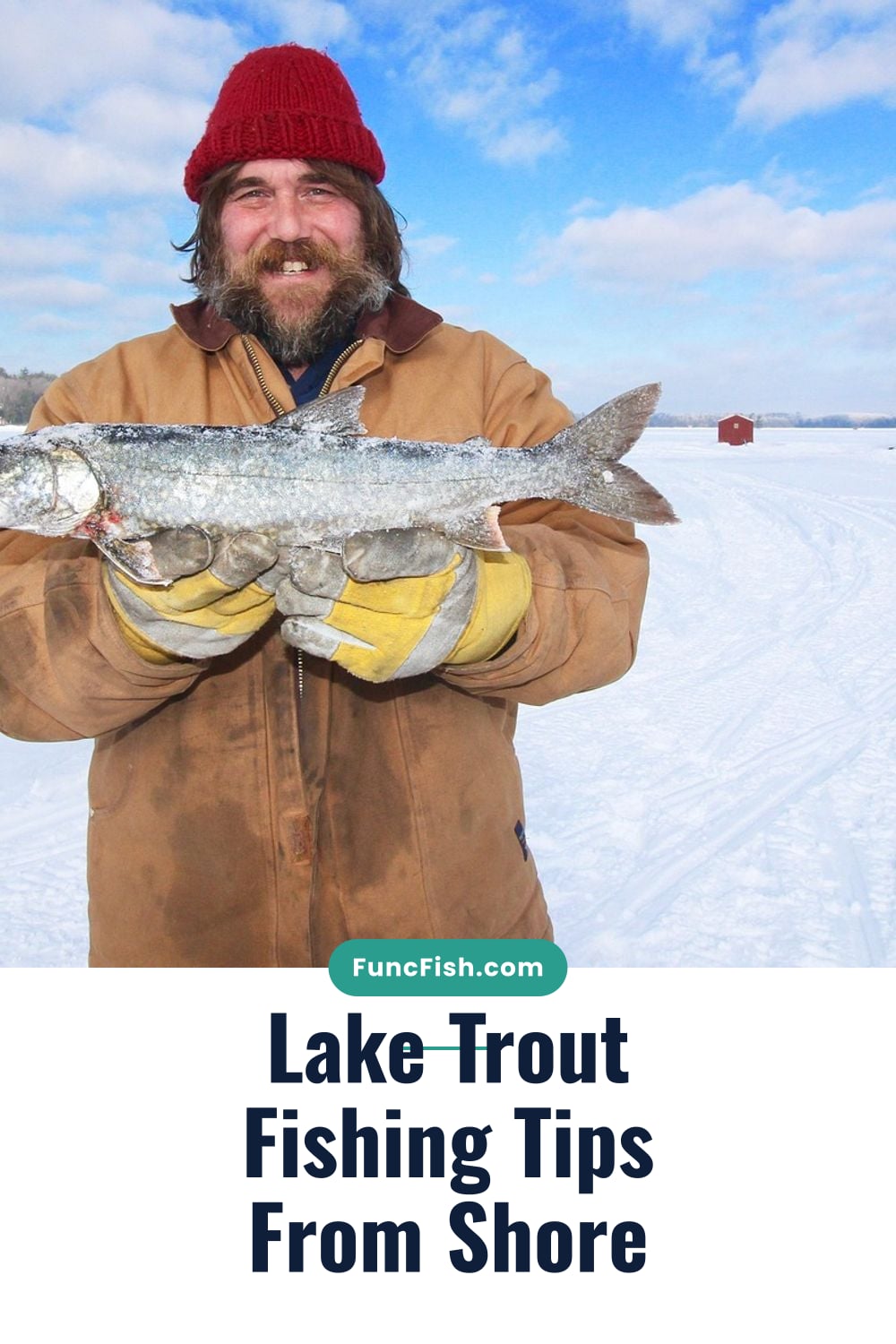
Shore fishing for lake trout allow a person to have direct contact with a challenge that is one of the most rewarding challenge in freshwater fishing. Lake trout can grow to large sizes. When angler pursue lake trout, lake trout battle with great strength.
Furthermore, lake trout often live in areas that are impossible to reach without use of a boat. Yet, many angler do catch lake trout from a bank or a pier by using the proper tactics and a little bit of patience. The secret to catching lake trout is understanding the movement of the cold-water predators and there feeding habits when within casting range.
Lake trout is very picky about the temperature of their water habitat and the light in which they are pursued. During the summer months, they reside in deeper waters during the day. Yet, they move to shallower waters near the evening or near the first glimpse of light of the morning.
Those who understands these times of the day find that it is easy to catch these fish. The methods described in this article have worked for numerous anglers, even those who dont own a boat. In order to catch lake trout, a person must find the correct shoreline to stand on.
Effective Techniques For Catching Lake Trout
1. Targeting Strategic Shoreline Locations
Lake trout cruise near rocky point along the shoreline. Additionally, the fish cruise near underwater humps that are within twenty feet of the water’s surface. Furthermore, the fish like to cruise near the edge of creek mouths where the baitfish live.
A long flat area of gravel might be a desirable spot to stand for other species of fish, but it is rarely where lake trout can be found. Instead, focus on spots where the lakebed drop from five feet to thirty feet within casting distance. The fish move along these areas during the critical times of the day when the light is low.
Study the lakebed contours or observe the water for the breaks in the current or changes in color of the water. These methods has served many anglers well in finding the best spots to pursue lake trout along a shoreline. Another effective method when the lake trout are particularly picky is to use live bait.
2. Using Live Bait Techniques
Using a big shiner or a smelt that is secured to a size 2 hook under a slip bobber will work well. Set the stop on the bobber to allow the bait to move two to five feet above the lakebed in depths of twenty feet. This depth will work best for those pursuing lake trout.
Allow the bait to swim natural and use the float to read what is happening beneath the bobber. When the lake trout take the bait and swim to deeper waters, the bobber will disappear quick. Do not rush and try to catch the lake trout when you see the bobber disappear.
Allow yourself to count to three before you attempt to set the hook. Often, the first few lake trout that you pursue will take your bait when you rush to secure them. Use patience to allow the lake trout to take your bait and you will find that you are catching more fish.
3. Casting Metal Spoons
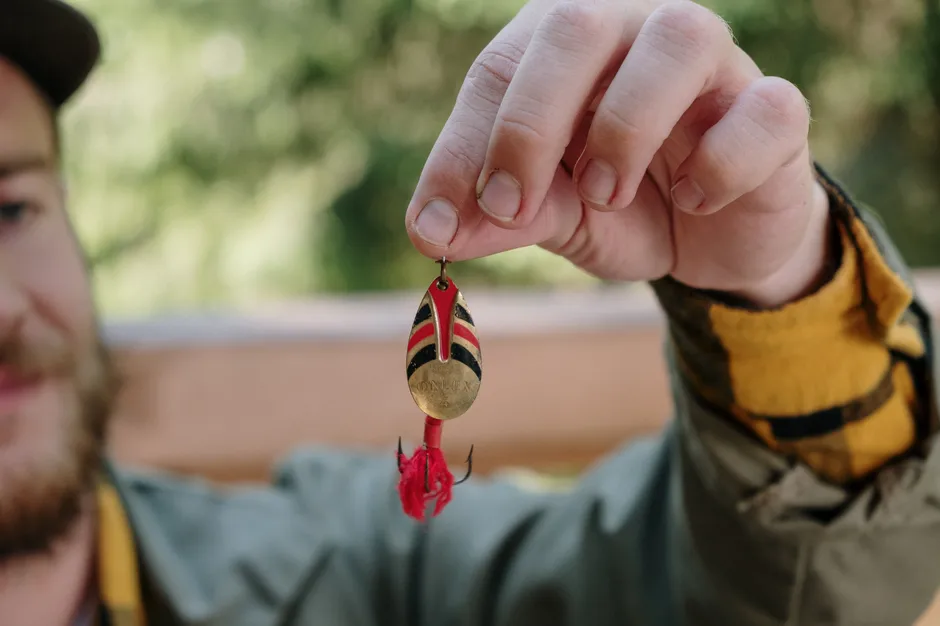
Another method is to cast metal spoons into the water from the shore. This method is the most active when pursuing lake trout and it is also one of the more exciting method. Use thin spoon, such as Swedish Pimples or those that are hammered silver and blue.
Allow the spoon to flutter when it is cast and use the retrieve to make the spoon flash like an injured baitfish. Cast as far into the lake as you can reach. Allow the spoon to sink to the lakebed and lift the rod to reel the spoon in on the drop.
This mimicry of a dying baitfish will get the attention of lake trout. Vary the retrieve speed until you find what works best for that particular stretch of shoreline. Count the number of seconds it takes for the spoon to drop to the lakebed after you cast.
Count to ten on one cast and count to fifteen on the next cast. When the spoon connect with a lake trout, note the number of seconds you counted after you cast the spoon into the water. This will be your starting point for the remainder of the day’s fishing effort.
4. Applying Jigging Methods
Use jigging methods when locating a rock or ledge where the lake trout like to cruise. Utilize a lead-head jig that weighs between a half-ounce and one ounce. Use a four-inch twister tail to add weight to the jig or use a piece of sucker meat.
Cast the jig into the area of the rock or ledge. Allow the jig to land on the lakebed and hop the jig by lifting the rod tip sharp. The jig will kick up small plume of sediment.
The lake trout live near the lakebed and will strike at the jig as it begins to flutter downward. This method works best in late spring after the lake trout’s spawning season. This method requires anglers to be close to the ledge.
Finding such spots require some scrambling on slippery rocks or walking into water that reaches the knees. Yet, when the five-pound lake trout hits the jig, the fishing rod will bend deeply with the force of the catch. Early in the morning and late in the evening is when the best fishing for lake trout can be found.
These fish have excellent vision in the low light of the predawn and dusky hours. During these times of the day, the lake trout are most active in pursuing their prey. When standing on the shoreline one hour before sunrise, anglers will encounter the lake trout as they move into shallow waters to perform their feeding activities.
The same can be said for the time near sunset. During the bright hours of the day in the summer, the lake trout are likely to be twenty to forty feet deep in the water column. In order to pursue these fish, anglers would have to utilize downriggers or lead-core fishing lines.
5. Planning Around Optimal Lighting and Times
Plan fishing trip for either the early morning or late evening hours. This will result in catching more lake trout than those who show up at ten o’clock in the morning with a cooler of fish and high expectation. Gear is one of the first considerations for those who pursue lake trout from the shore.
The fishing rod should be of sufficient length to cast spoons or jigs. Yet, the fishing rod should have sensitivity to feel the lake trout bite at the end of the line. For fishing from the shore, a seven-foot medium-heavy spinning fishing rod will suffice.
Use a 3000-series reel and ten-pound braided fishing line on the rod. Braid lines allow anglers to have a better feel of the line and to allow the line to set the hook at a distance. Add a two-foot ten-pound fluorocarbon fishing leader to the line.
Fluorocarbon fishing line will prevent the lake trout from biting off the line with their strong and sharp tooth. Do not use ultralight fishing gear because lake trout can weigh more than twenty pounds. Using a light rod will result in anglers’ disappointment when the big fish begin to run towards deeper waters.
Use gear appropriate for the task. When anglers use the appropriate gear, the fight with the lake trout will be a pleasure rather than a struggle. Pay attention to the water temperature with a simple thermometer.
6. Monitoring Water Temperature
When the temperature of the water is between forty-eight and fifty-five degrees, the lake trout are most active. If the water is too warm, the lake trout will remain deep in their habitat. Yet, if the water is too cold, the lake trout will not exhibit much interest in feeding.
The best time of year to pursue lake trout is early spring after the ice melt in the lakes. The entire depth of the lake will be in the ideal temperature for the lake trout. During the summer months, pursue areas deep from the shore on cloudy days or after a cold front passes through your area.
One of the biggest mistake for those who pursue lake trout from the shore is to remain in only one spot for an extended period. Because lake trout are considered to be nomadic fish, they tend to move from spot to spot in search of food. If you have fished one spot for thirty minutes and have not yet encountered any lake trout, move to another spot along the shoreline.
Explore the shoreline or try another point along the shoreline. Anglers that hike even half a mile out along the shoreline find the lake trout that others miss while standing shoulder to shoulder with others who seek to catch the fish. When you finally hook a lake trout from the shoreline, it is an experience that will stay with you for a lifetime.
The initial head shake of the lake trout will be heavy and possibly at first stubborn in its attempt to escape from the hook. Yet, there will be long and powerful runs of the fish towards deep waters. With every thump of the fish against the boat or shore, anglers will feel the effort required to secure the fight.
When a decently-sized lake trout is landed, all of the effort that was required to find the spot and to fish for the fish will be worth it. Yet, at that moment the angler will realize that the lake trout are within the capability of any angler who is willing to learn a few techniques and who is willing to devote time to finding the best spots to fish for these delicious freshwater fish. Use these techniques and find a spot along the shoreline to pursue the lake trout.
Make sure that you are on the shoreline before the sun clears the trees in the morning. By doing so, you will give the lake trout the best chance to make a mistake. The next big lake trout that you land will be the reason that you return to the same spot year after year.
Every time you find your spot along the shoreline to pursue the lake trout, you will think of the techniques you learned and remember how easy it is to catch these fish without needing to use a boat. The best fishing does not require a boat at all. All that is necessary is for an angler to show up at the right time and to have the right idea about how to catch the prized fish of freshwater lakes.