
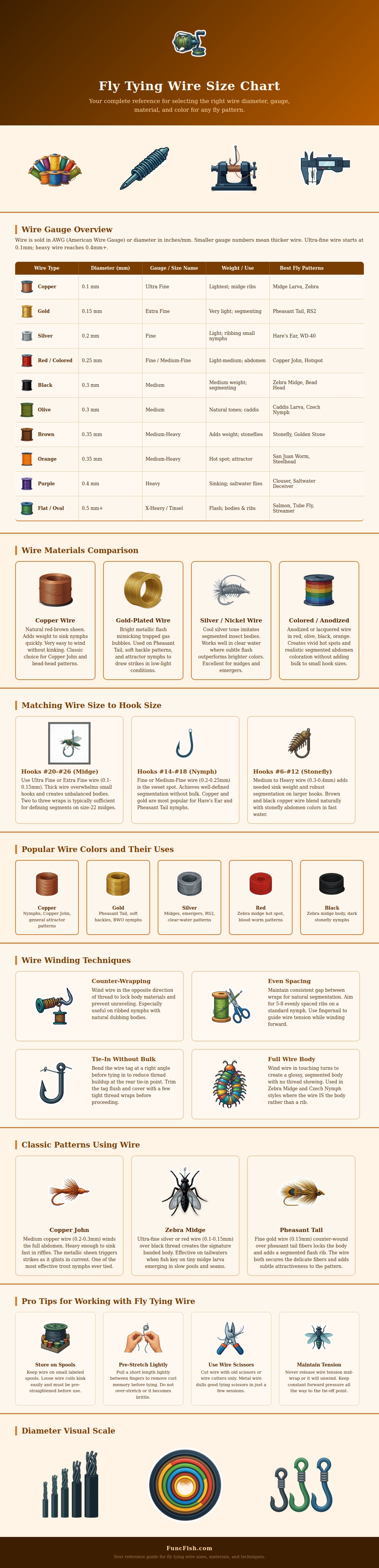
Wire perform several specific function when used to tie a fly. Wire serve to add weight to the fly so that it will sink through water column, wire create segmentation for the fly to look like an insect body, and the wire provide flash to the fly to make it visible to the fishes, even in low light condition. Because wire perform these function, it is important to choose the correct wire diameter in relation to the size of the hook that you are using.
If the wire is too thick for small sized hooks, the fly will look unnatural and may tilt incorrect in the water. Small hooks require the use of very thin wire. For hooks sized between #20 and #26, it is recommended that you use ultra-fine wire.
Choose the Right Wire for Tying Flies
If you use thick wire on these small hooks, the fly will not drift natural through the water. Only two or three wrap of the wire are needed on these small hooks to create the segmented look for the fly. Medium sized hooks allow for a variety of wire type to be used.
For medium sized hooks between #14 and #18, you can use fine and medium-fine wire. The medium-fine wire will not look too clumsily on these medium sized hooks. Additionally, medium-fine wire will add weight to the fly that allow the fly to reach the feeding lane in fast water.
Copper wire and gold wire are two of the most common type to use on medium sized hooks because they provide a metallic glint to the fly, as do the nymph that the fly is being mimicked by. Large hooks require the use of heavier wire. For stonefly and streamer hooks, you should use medium to heavy wire because the heavy wire will increase the sink rate of the fly.
For example, using heavy wire on a size-8 hook will allow the fly to reach the bottom of the river. Additionally, because heavy wire will create clear segmentation along the body of the fly. Using brown or black wire can be used if you want the wire to blend in with the body of the dark insect that you are imitating.
However, you can use orange wire if you would like to create a bright hotspot on your attractor pattern. The material of the wire can impact the way that the wire look and functions when used on a fly. Copper wire will develop a patina over time, and is, therefore, one of the most common material used to create classic nymph.
Additionally, using wire that is gold plated will create a flash in the fly that will be visible to the fish, and will mimic the flashing color of the nymphs. Silver wire will also create a subtle flash with the body of the fly, and is used in water that is clear and visible to the fish. Finally, using wire that has colored or anodized dye will allow you to create a hotspot on the fly, as with the natural insect that have a specific stage in their life cycle.
The way you tie the wire to the hook will impact the appearance of the finished fly. You should tie the wire in the opposite direction of the thread on the hook. This will ensure that the body material of the fly are locked in place.
Ensuring that the wire is even spacing around the hook will provide segmentation to the fly. Finally, the tag end of the wire should be bent at a right angle to the hook before tying the wire in place. This will prevent the development of a lump at the rear of the fly.
Many people makes mistakes when they tie in wire to the hooks that they are using. For example, they may use the same wire diameter for all size of hooks. Additionally, they may not straighten the wire prior to beginning to tie it to the hook.
You can avoid these mistake by using labeled spool of wire and dedicated cutter for the wire. Additionally, maintaining tension on the wire as you tie it to the hook will also avoid many of these problem. By using the correct size of wire for each size of hook, you will ensure that your fly will behave correct in the water.