🎣 Neko Rig Calculator
Calculate the perfect nail weight, hook size, and line setup for any finesse fishing scenario
| Soft Plastic Type | Typical Length | Weight Range | Fall Rate | Best Scenario |
|---|---|---|---|---|
| Straight Worm (Senko) | 4–7 in (10–18 cm) | Medium–Heavy | Medium | Open water, all depths |
| Finesse Worm | 4–6 in (10–15 cm) | Light | Slow | Pressured fish, clear water |
| Stick Bait (Tapered) | 5–7 in (13–18 cm) | Medium | Medium | Bass, weedless setups |
| Fluke / Shad Body | 4–5 in (10–13 cm) | Light–Medium | Slow | Suspended fish, open water |
| Magnum Worm | 8–12 in (20–30 cm) | Heavy | Fast | Big bass, deep structure |
| Minnow Style | 3–5 in (8–13 cm) | Ultralight | Very Slow | Trout, panfish, clear water |
| Bug / Craw | 2–4 in (5–10 cm) | Light | Slow | Smallmouth, rocky bottom |
| Ribbon Tail Worm | 6–10 in (15–25 cm) | Medium–Heavy | Medium | Largemouth, warm water |
| Species | Typical Weight | Line Strength | Nail Weight | Hook Size | Worm Length |
|---|---|---|---|---|---|
| Largemouth Bass | 1–8 lb (0.5–3.6 kg) | 10–15 lb | 1/16–3/16 oz | #1/0–#3/0 | 5–7 in |
| Smallmouth Bass | 0.5–5 lb (0.2–2.3 kg) | 8–12 lb | 1/32–1/8 oz | #1–#2/0 | 4–6 in |
| Spotted Bass | 0.5–4 lb (0.2–1.8 kg) | 8–12 lb | 1/32–1/8 oz | #1–#2/0 | 4–5 in |
| Trout (Lake) | 0.5–3 lb (0.2–1.4 kg) | 6–10 lb | 1/64–1/32 oz | #1–#1/0 | 3–5 in |
| Walleye | 1–8 lb (0.5–3.6 kg) | 8–12 lb | 1/16–1/8 oz | #1–#2/0 | 4–6 in |
| Bluegill / Panfish | 0.1–1 lb (0.05–0.5 kg) | 4–6 lb | 1/64–1/32 oz | #4–#1 | 2–3 in |
| Insertion Depth | Action | Best For | Fall Angle |
|---|---|---|---|
| Tip Only (0–5%) | Maximum wobble / flutter | Suspended & active fish | Near horizontal |
| Shallow (10–25%) | Slow, erratic fall | Pressured fish, clear water | 15°–30° |
| Mid Insert (50%) | Balanced fall with quiver | Standard finesse fishing | 45° |
| Full Insert (100%) | Nose-down vertical fall | Deep water, fast drop needed | 60°–75° |
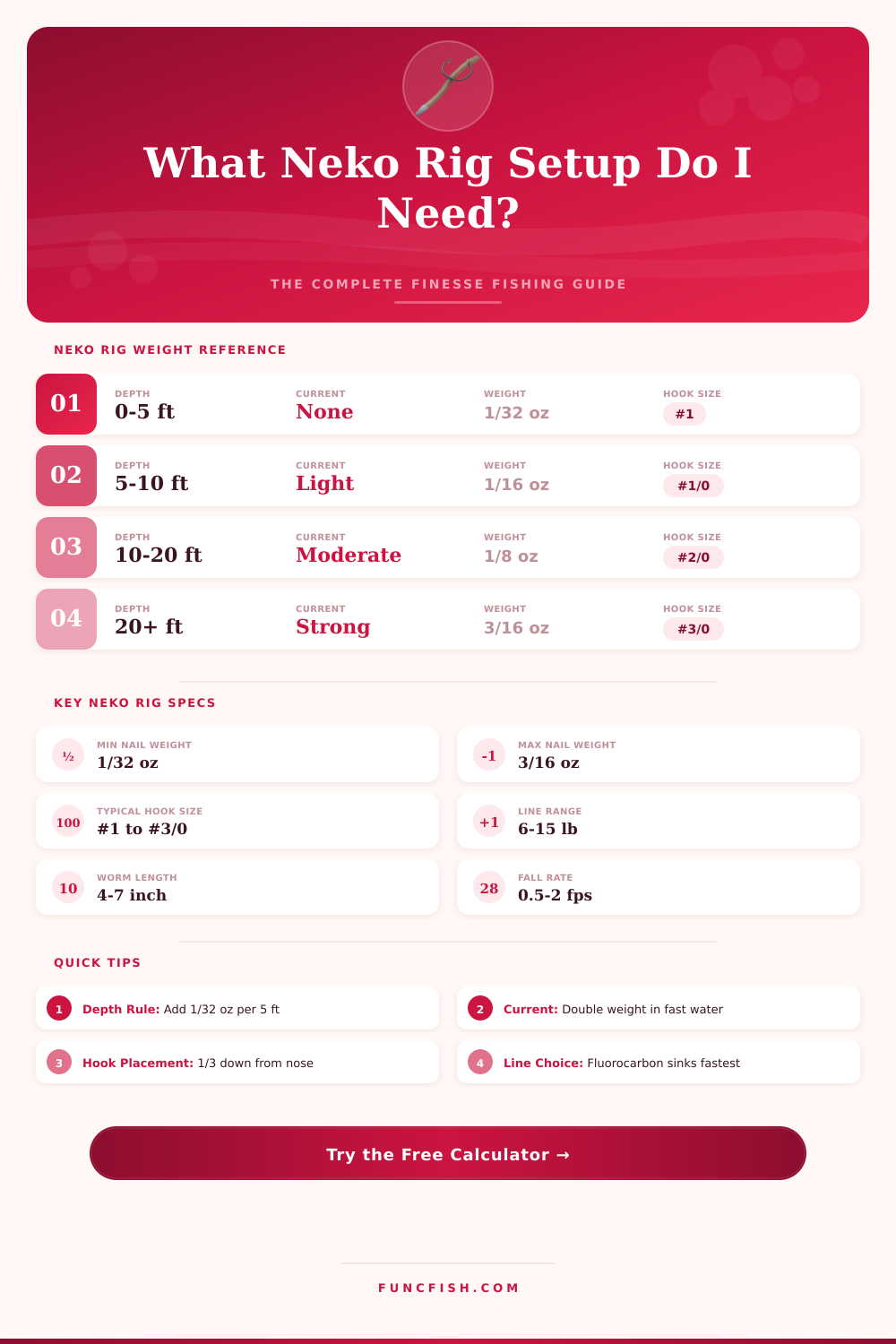
The neko rig is a fishing method using a soft plastic worm and a tungsten nail weight to control how the worm sinks through the water. When using the neko rig, you must find the right nail weight so that the plastic worm stands on the bottom of the water and quivers. If the water contains too many weight, the worm will not reach the bottom of the water.
If there is not enough weight on the worm, it will fall to the bottom of the water too quick or dive nose first into the silt. You must find the perfect balance of weight to suit the environment in which you are fishing. The depth of the water in which you are fishing are one of the first things to consider when choosing the right nail weight.
Pick the Right Nail Weight for a Neko Rig
In flats that are shallower than eight feet, use a light nail weight, such as a sixteenth ounce. In depths that is deeper than ten feet or where there is a current in the water, use a heavier nail weight to assist the plastic worm in reaching the bottom of the water. The density of the cover in which you are fishing also impacts the weight of the nail.
If you are fishing in open banks, use a light nail weight. If you are in grass mats or timber, use a heavier nail weight to help the plastic worm slice through the vegetation. The profile of the soft plastic worms you use for your neko rig can also affect the rigs operation.
Slimmer worms will move more easy through the water than bulkier worms. If you are using bulkier worms, use a wider hook to allow the hook to clear the body of the worm when the worm is hooked on to a fish. If the gap between the hook and the worm is too small, the hook will tear the plastic.
Another factor to consider is how to attach the nail weight to the worm. Using the free slide method will allow the nail weight to move independently of the worm. If you are fishing in areas with heavy cover, peg the nail weight to the worm to keep it compact.
The fishing line and fishing rod you use with your neko rig also affect it’s operation. Use braided fishing line to reduce the effect of the wind on the line and to easily feel the movement of your worm. Use fluorocarbon line to remain stealthily when fishing for more cautious fish.
Use a fishing rod with enough backbone to support the weight of the nail and the weight of the fish. A rod with too much backbone will buckle when using a heavy nail weight. Since you connect all the components of the neko rig, you must adjust each component to suit the fishing environment.
To determine the proper setup for your neko rig, observe the fall rate of the plastic worm. The fall rate is the amount of time it takes for the worm to reach the bottom of the water. In water that is calm, you want a slower fall rate.
In murky water, where the fish have trouble seeing the worm, a quicker fall rate will trigger more reaction strike from the fish. A common mistake when using a neko rig is using a too heavy of a nail weight. Begin with a light nail weight and only add more weight if the worm fail to reach the bottom.
By testing the fall rate of the worm and adjusting its profile and weight, you can ensure that your neko rig will perform correctly in any environment.