
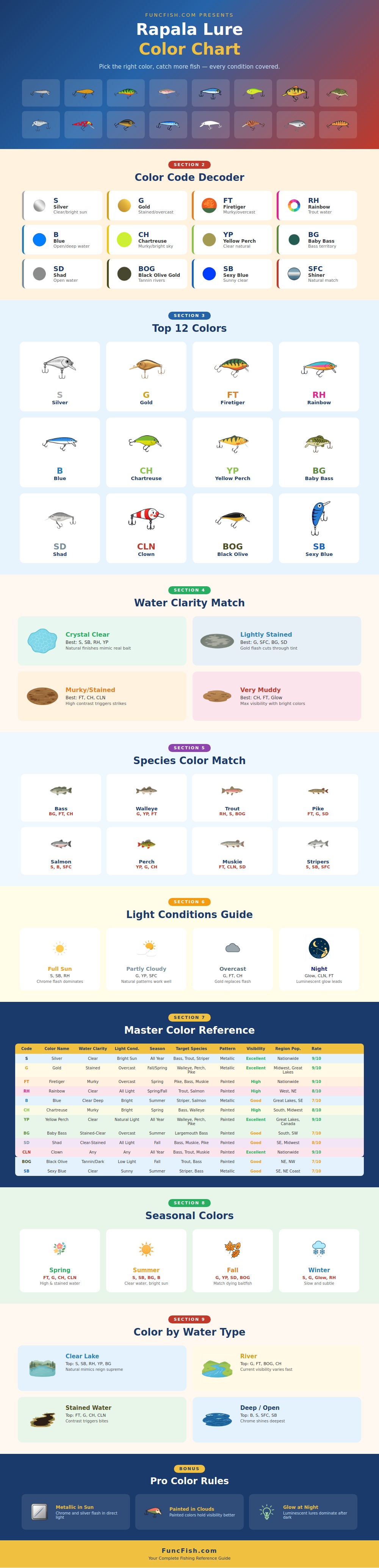
Selecting an correct color for a fishing lure require a systematic process because selecting the correct color for a fishing lure is necessary due to the fact that fishes can see light and contrast different than humans. By selecting the incorrect lure color, the fish may not be able to see the lure as it move through the water. However, by choosing the correct color for the lure relative to the environment in which the fish are being targeted, the fish will be more likely to strike at the lure.
One tool that can assist anglers with selecting the proper lure color is a Rapala color chart. The Rapala color chart provides a system for anglers to determine which lure colors will work best relative to the fishing conditions. The first factor that anglers must consider when using the color chart is the clarity of the water in which the fish live.
How to Pick the Right Fishing Lure Color
In water that is clear, fish has good visibility of the environment around them and subtle lure colors, such as silver or the colors of perch fishes, work best. In contrast, in water that is murky and contains particles that scatter the light from lures, bold colored lures, such as chartreuse or firetiger lure colors work best. In addition to the visibility of the water, water color can also impact lure color choices.
For example, silver lures work best in clear lakes, where silver lures mimics the colors of shad and shiner fish. In contrast, gold lures work best in rivers that is stained with natural color or in cloudy water conditions. Another factor in the color chart is the light conditions in the water, which can fluctuate with the weather and the time of day.
During the daytime and on sunny days, metallic lure colors work best. On overcast days, when there is little sunlight that can reflect off of lures, painted lure colors, such as clown or yellow perch colors work best. Finally, at night when the light levels in the water is low, luminescent white lures work best for targeting fish.
A third factor in the color chart is the time of year that the fishing is occurring. Each of the seasons contain different weather patterns that can change the color and clarity of the water in which the fish live. Spring seasons can feature murky water due to rainfall, so firetiger and chartreuse lure colors work best during this time of year.
Summer weather is typically hot and the water is relatively clear. Therefore, silver or blue lures work best during this season. In the fall, water levels is typically clear but fish begin to target dying shad fish, so yellow perch and shad gray lure colors will work best for anglers targeting fall fish.
Finally, during the winter, the water levels in lakes and rivers are typically relatively low due to frost and fish are relatively inactive. Glow lures or subdued colors, such as rainbow fish lure colors work best during this time of year. The species of fish that are targeted can also dictate the color of the fishing lure.
For instance, bass fish will respond to green or firetiger colored lures when they are living in areas that contain weeds and rocky areas while trout fish will respond best to rainbow or black olive colored lures, especially in streams with high levels of tannin. Because each species of fish can have different visual preference for lure colors, using a color chart to group lure colors according to the type of fish that is targeted will help anglers avoid only using a single color of fishing lure during a given season. Furthermore, using such a chart will assist anglers in understanding which lure colors to rotate during the fishing season according to the calendar and the fishing environment.
To use the color chart effectively, anglors must observe the water in which the fish live and the sky above the fishing location prior to casting lures into the water. Anglers can use these observations to determine the clarity of the water and decide whether subtle or bold colored lures are best used. Additionally, anglers can use the color of the sky to determine whether metallic or painted lures are best used.
For instance, if the water is clear but the water is murky, silver, rainbow and perch lure colors should of be used. However, if the water is murky in color and the water contains suspended particles that scatter light from the lures, then colors like chartreuse and firetiger will work best. By using the Rapala color chart to determine lure color according to the color of the water, the color of the sky, the time of year, and the species of fish that anglers will target, anglers will increase the frequency with which there fish strike the baited lures.