Snapper Lifespan Calculator
Estimate snapper age, likely lifespan, maturity stage, remaining growth window, and confidence from species, total or fork length, weight, girth, reef depth, growth zone, and body condition.
📌Snapper lifespan presets
⚙Snapper measurements and reef setting
Snapper lifespan estimate
Estimated age, lifespan, maturity, and confidence will appear here.
Calculation breakdown
📊Snapper species comparison grid
Red Snapper
Mangrove Snapper
Lane Snapper
Mutton Snapper
Yellowtail Snapper
📘Snapper lifespan reference tables
| Species | Model length ceiling | Typical adult age | Observed upper age used |
|---|---|---|---|
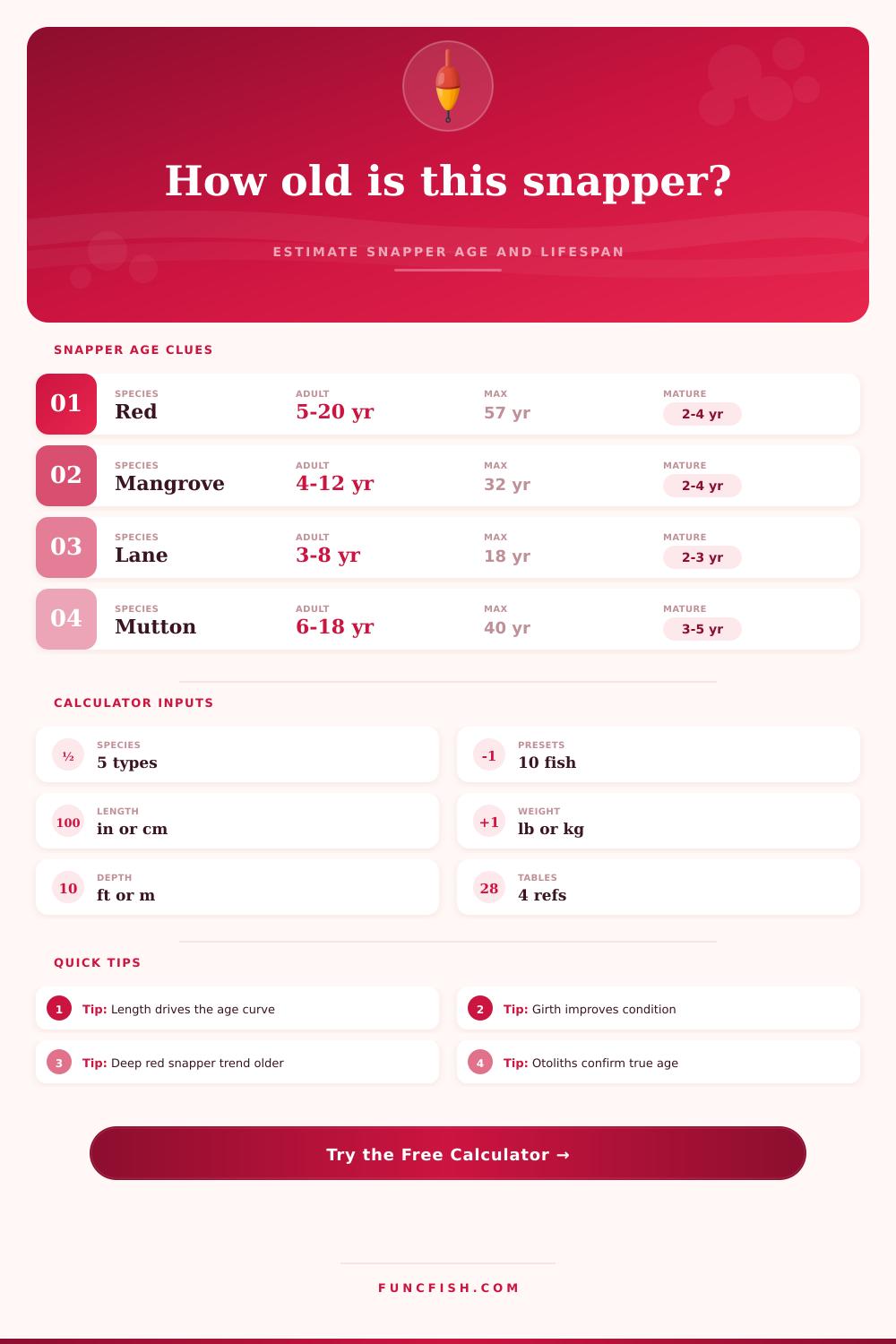
| Red snapper | 40 in / 102 cm total length | 5 to 20 years | Up to 57 years in reported age samples |
| Mangrove / gray snapper | 35 in / 89 cm total length | 4 to 12 years | About 21 to 32 years depending on region and sample |
| Lane snapper | 22 in / 56 cm total length | 3 to 8 years | Aged examples near 18 years |
| Mutton snapper | 37 in / 94 cm total length | 6 to 18 years | Upper references around 40 years |
| Yellowtail snapper | 28 in / 71 cm total length | 3 to 10 years | Common references 14 to 23 years |
| Total length band | Red / mutton read | Mangrove / lane / yellowtail read | Calculator use |
|---|---|---|---|
| Under 12 in / 30 cm | Juvenile or young subadult | Juvenile to early adult in small species | Age band is sensitive because early growth is fast. |
| 12 to 20 in / 30 to 51 cm | Subadult to young adult | Adult for lane and yellowtail, mixed for mangrove | Maturity stage can change the final read strongly. |
| 20 to 30 in / 51 to 76 cm | Prime adult for many reef snappers | Large adult in smaller snapper species | Weight and girth refine condition and confidence. |
| Over 30 in / 76 cm | Large older adult candidate | Exceptional size for most small snappers | Species selection controls the lifespan ceiling. |
| Reef depth or growth zone | Age tendency | Lifespan effect | Why it matters |
|---|---|---|---|
| Shallow inshore edge | Younger at a given length | Neutral to lower | Warm forage-rich habitat can support quick early growth. |
| Patch reef or rubble bottom | Baseline to slightly young | Baseline | Works well for lane, yellowtail, and smaller mangrove profiles. |
| Outer shelf reef | Baseline adult signal | Baseline to higher | Common adult setting for red, mutton, and mangrove snapper. |
| Deep ledge or wreck | Older at a given length | Higher upper age potential | Cooler deep habitat and older age structure widen the age band. |
| Warm tropical reef | Mixed: fast growth, shorter ceiling | Slightly lower | Fits smaller tropical reef snapper profiles when body size is modest. |
| Input clue | What it changes | Age influence | Confidence influence |
|---|---|---|---|
| Total or fork length | Core length-at-age curve | Largest age driver | High when measured straight |
| Whole weight | Condition ratio | Heavy fish read slightly older or richer | High if weighed accurately |
| Girth | Alternate weight estimate | Useful when scale weight is missing | Medium to high value |
| Maturity stage | Minimum age floor | Prevents mature fish from reading too young | Strong when observed directly |
| Otolith or tag age | Validation cue | Narrows the band rather than changing length | Highest confidence class |
💡Snapper estimate tips
Most snapper references report total length, while many field notes use fork length. Pick the matching length type so the calculator can convert the curve correctly.
A thick snapper is not automatically much older. Weight and girth mainly adjust body condition, confidence, and the width of the estimated age band.
Snapper fishing require patience due to the different lifespans that snapper species has. A red snapper can be ten years old, for example, even if it seem like another typical catch. A lane snapper of the same length could have only reached five year of age.
Due to these different lifespans, a person cannot determine the age of a snapper by its size alone. A person must take into consideration the species of snapper, the depth of the water where the snapper is caught, the body condition of the snapper, and the snapper’s growth zone to determine the age of the snapper. The age of a snapper can be calculated by taking several different input.
How to Tell the Age of a Snapper
The length of the snapper is the primary calculation of the age because the snapper slow in growth with maturity. The species of the snapper is another calculation of the age because a red snapper, for example, will live to be much older than a lane snapper or a yellowtail snapper. The weight and girth of the snapper are also calculated because a snapper with a heavy body condition may reach an older age than a snapper with a lean body condition.
The depth at which the snapper live is another calculation of age because the deeper the water, the cooler the temperature, and the slower the snapper will grow with that cooler water temperature. Snapper in deep water will be of a different age than a snapper of the same size but living in shallow water. The growth zone and the maturity stage of the snapper is also calculated in the age determining calculator.
These factors prevent the calculated age of the snapper from being too low for the species. These various calculations are important due to the different ages of snapper in different areas of the oceans. Snapper in shallow waters, for example, will be of a different age than those in deep water areas because the deeper snapper will be aging more slow than those in shallow areas.
The snapper age calculator will provide a more accurate estimate of the age of the snapper if length, depth, and the growth zone of the snapper is calculated. The snapper age calculator also provides the remaining lifespan of the snapper, which allows for individuals to understand if the snapper is still growing or if it is nearing the end of its life. The age of a snapper can never be perfectly calculated due to the fact that most reef do not match the moddern models that are published for the species.
An estimate will be more accurate if a person uses a tape and scale to determine the length and weight of the snapper rather than simply judging the size of the snapper. Otolith readings are the most accurate way of determining the age of a snapper, but most individuals will not have access to this method. The purpose of the snapper age calculator will reveal the age of the snapper as a range rather than an exact age.
Knowing the age of the snapper as a range will allow individuals to decide whether to keep or release the snapper. The maturity stage of the snapper is another important factor. After a snapper reaches maturity, the snapper utilize its energy to reproduce rather than grow in length.
Thus, the length of the snapper will grow more slowly after maturity is reached. The age calculator takes into consideration the maturity stage of the snapper so that the minimum age of the snapper increase when changing from juvenile to mature snapper. A snappers body condition will also impact the calculated age of the snapper.
The calculator also takes into consideration the body condition of the snapper to prevent a heavy snapper from being calculated to be of an older age than a lean snapper of the same size and species. A person cannot assume that a snapper with a longer length is an older snapper than one of the same species but of a different length. A twenty-inch mutton snapper, for example, can be of an older age than a twenty-inch lane snapper due to the different growth rates of these two species of snapper.
However, the age calculator will prevent this age from being calculated due to the use of the species-specific profile for the snapper. The calculator will also display the age of the snapper as a result of its depth and its growth zone. A mangrove snapper that lives inshore will age different than another of the same species but that lives in deeper reefs.
The reference tables on the page display the differences between each of the species of snapper. These tables will allow the person viewing the calculator to understand the differences between species before entering any measurements. These tables display the length of the snapper in relation to the life stages of the snapper.
These tables will allow the person to understand what kind of snapper they have caught. The tables exist for the purpose of giving individuals a realistic understanding of the snapper species when observed. Once individuals understand the typical age of the snapper of a certain length, they can determine whether the snapper they have caught is unusually old or young.
Over time, individuals will be able to determine the age of snapper species caught at different locations. This is due to the different types of snapper that live at each location. Snapper caught at certain ledges at reefs, for example, may be of a different age than snapper caught at other reefs nearby.
These age determinations match those calculated by the snapper age calculator. Every reef has its own species and history of the snapper that live at those reefs. While the snapper age calculator calculates the age of the snapper, individuals still have the knowledge of their local reefs and the different ages of the snapper that live at those locations.
Understanding the age of a snapper is the process of understanding the time that has passed in the body of the snapper. The different measurements of the snapper and the chosen settings will mathematically calculate the age of the snapper. The age of the snapper will be provided as a range to reflect the variation of snapper ages in the water.
The fact that the age is provided as a range indicates that each snapper caught is of a different age and lifespan than the next.