
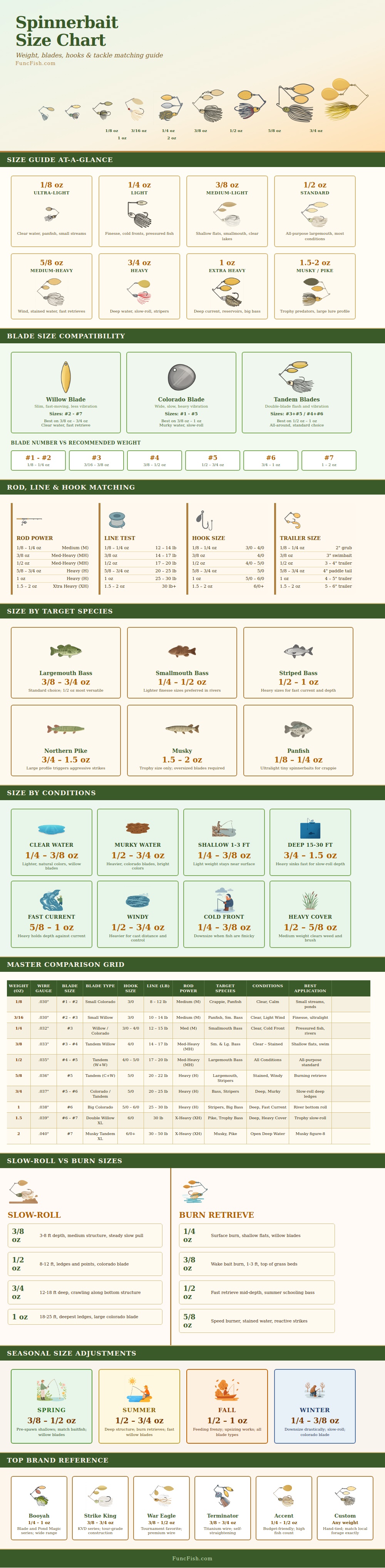
In order to effectively catching fish with a spinnerbait, it is necessary to perform the following three step: selecting the correct size for the spinnerbait, selecting the correct weight for the spinnerbait, and selecting the correct style for the spinnerbait. If you dont perform each of these steps effective, you will miss the fish that you can potential catch with proper equipment. If you choose the correct size for your spinnerbait, you will increase the chance of successfully catching multiple fish in the same location.
The size of the spinnerbait will dictate the way in which the spinnerbait move in the water, as well as the depth at which the spinnerbait will sink. Spinners that weigh less than a one-quarter ounce are referred to as finesse models, and are used in water that is clear and where the fish may easy be spooked by a heavy spinnerbait. Very small spinnerbaits are used to fish for panfish or in small stream.
How to Choose the Right Spinnerbait
Spinnerbaits that are heavier than finesse models are used in condition where there is wind or a current in the water. Spinners that weigh half an ounce is standard weights for bass fishery, as spinnerbaits of this weight are effective at both shallow grass areas as well as the mid-depth points of a fishing location. The type of blade that you use for the spinnerbait will change the function of the spinnerbait.
Willow leaf blade will allow the spinnerbait to move quick through the water, which makes them suitable for use in clear water. Colorado blades will create heavy wave with the spinning of the bait, which makes them suitable for use in areas that are murky in there water. If you select the wrong type of blade for the spinnerbait, the spinnerbait may stall or spin incorrect.
Finally, tandem blade will create more flash in the spinnerbait, but require a balanced weight of the spinnerbait, at least three-eighths ounce. In addition to selecting the correct type of spinnerbait and weight, you will also have to select the fishing tackle that is used to match the weight of the spinnerbait. If using light spinnerbaits with heavy fishing gear, the fisherman will feel numb when using the fishing gear, and will not be able to feel the spinning of the spinnerbait.
Light spinnerbaits should be paired with medium fishing rod and lines that test at twelve-pound. More heavy spinnerbaits, such as three-quarter ounce spinnerbaits, should be paired with heavy fishing setups and twenty-five-pound test line. Additionally, when using spinnerbaits that are heavy and deep fishing for fish, larger hook should be used.
Finally, ensure that the trailer for fishing equipment is the apropriate size for the type of spinnerbait that is being used. Small grub work well with light spinnerbaits, while large paddle tails work well with large spinnerbaits. The type of environmental condition where the fishing for spinnerbaits will occur will dictate the type of spinnerbait that should be used.
For instance, spinnerbaits that have lighter profile can be used in clear water and shallow water. Spinnerbaits that are heavier will be suitable for murky environment with wind. During a cold front, the fish will be less aggressive with their fishing effort, so a smaller spinnerbait should be used.
If fishing areas are covered in heavy grass, a medium-weight spinnerbait head will allow the head to deflect off of the grass strands without get the bait stuck in the grass. Finally, the species that are to be targeted with the spinnerbaits will change the type of spinnerbait that should be utilized. For instance, largemouth bass will accept half-ounce spinnerbaits, while smallmouth bass live in river and tend to take lighter spinnerbaits.
Finally, the style in which the spinnerbait is retrieved will change in relation to the type of spinnerbait that is being used. A slow-roll style when using a heavy spinnerbait will cause the heavy spinnerbait to remain at the bottom of the water and move the mud in the bottom area. Using a fast retrieval style with a light spinnerbait will cause the light spinnerbait to move in shallow water and create a wake in those area.
The size of the spinnerbait may also need to be adjusted based off the fishing season. During the spring, spinnerbaits of medium-light weight are used due to the size of the shad that live in those water during spring. During the summer, heavier spinnerbaits target deeper water.
During the fall, even larger spinnerbaits are used for targeting the fish. During the winter, when the fish are not as active as the other season, smaller spinnerbaits should be used. Finally, spinnerbaits of the same size should not be used in every season of the year.
Therefore, the type of spinnerbait that is used will change with the condition of the area and the time of year.