Fish Activity by Water Temp Calculator
Estimate fish activity, bite timing, retrieve speed, and likely holding depth from water temperature, oxygen, species, pressure, light, clarity, and presentation style.
📌Scenario presets
⚙Temperature activity inputs
Temperature activity forecast
Full breakdown
📋Species temperature data grid
Trout
Bass
Walleye
Catfish
🌡Species activity reference table
| Species | Cold slow band | Prime activity band | Warm stress band | Typical response |
|---|---|---|---|---|
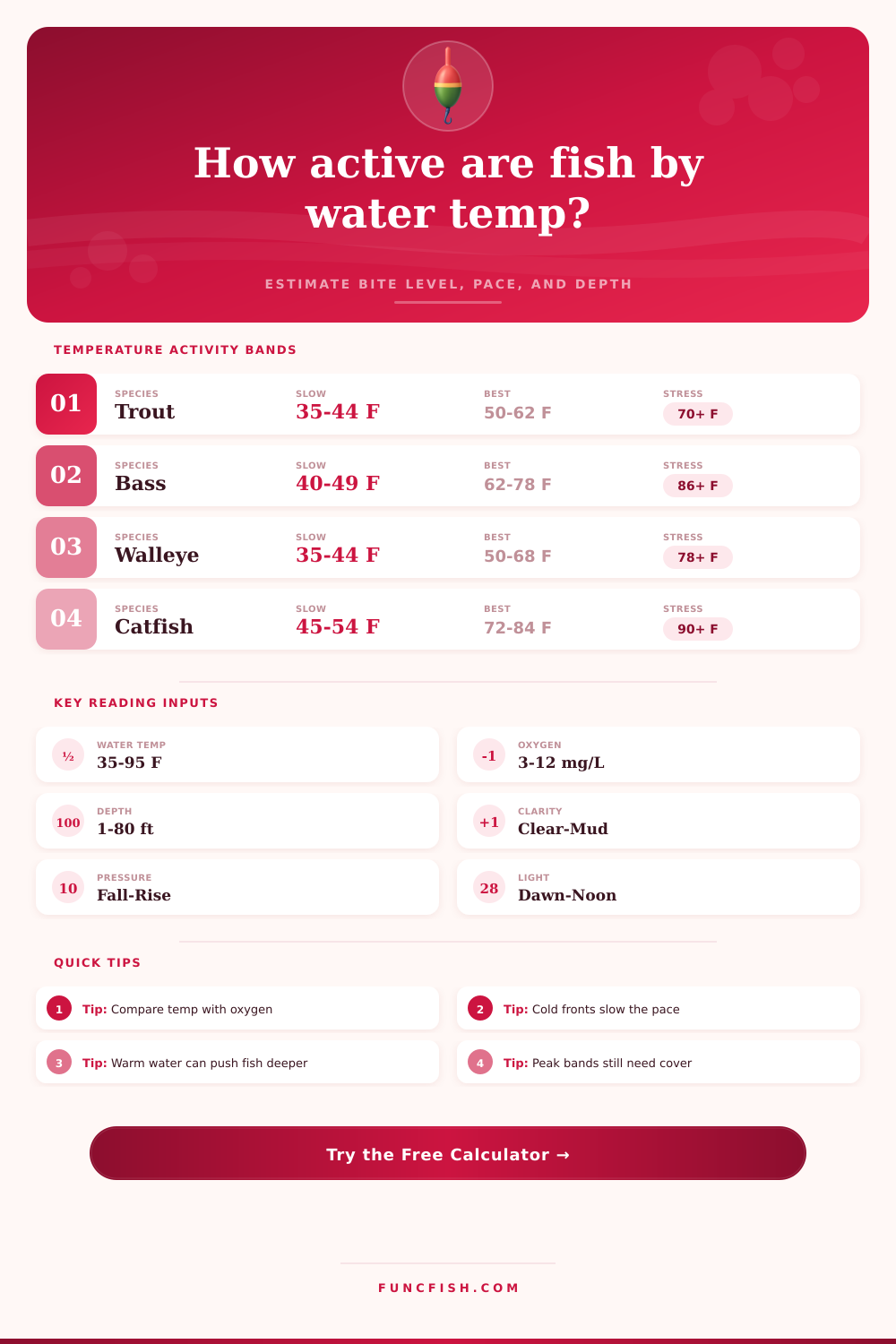
| Largemouth bass | 40-49°F / 4-9°C | 62-78°F / 17-26°C | 86°F+ / 30°C+ | Shade, cover, low light |
| Smallmouth bass | 38-48°F / 3-9°C | 58-72°F / 14-22°C | 82°F+ / 28°C+ | Rock, current, deeper edges |
| Trout | 34-43°F / 1-6°C | 50-62°F / 10-17°C | 70°F+ / 21°C+ | Seek cold oxygenated water |
| Walleye | 35-44°F / 2-7°C | 50-68°F / 10-20°C | 78°F+ / 26°C+ | Low light and breaks |
| Catfish | 45-54°F / 7-12°C | 72-84°F / 22-29°C | 90°F+ / 32°C+ | Night feeding, current seams |
| Panfish | 36-45°F / 2-7°C | 60-76°F / 16-24°C | 86°F+ / 30°C+ | Weeds, shade, suspended schools |
| Northern pike | 34-42°F / 1-6°C | 50-64°F / 10-18°C | 74°F+ / 23°C+ | Cool weed edges and ambush lanes |
| Striped bass | 42-50°F / 6-10°C | 55-72°F / 13-22°C | 80°F+ / 27°C+ | Bait schools, current, oxygen |
| Salmon | 36-43°F / 2-6°C | 44-58°F / 7-14°C | 66°F+ / 19°C+ | Cool lanes and migration routes |
💧Oxygen and condition modifiers
| Condition | Activity effect | Depth effect | Presentation match |
|---|---|---|---|
| Low oxygen near warm surface | -20 to -35 points | Move to inflow or shade | Live bait or slow finesse |
| Falling pressure before weather | +6 to +10 points | Fish may roam shallower | Moving baits and blades |
| Rising pressure after front | -8 to -14 points | Tighter to cover or bottom | Jigs, nymphs, compact baits |
| Dawn, dusk, or overcast ripple | +6 to +12 points | Shallower feeding lanes | Topwater, crankbait, spinner |
| Bright midday in clear water | -6 to -12 points | Deeper shade or grass edge | Finesse, jig, suspending bait |
| Turnover or heavy dirty mixing | -12 to -24 points | Find stable water nearby | Vibration, scent, slower pace |
| Presentation | Best temperature range | Cold adjustment | Warm adjustment | Useful speed cue |
|---|---|---|---|---|
| Finesse plastics | 42-78°F / 6-26°C | Deadstick pauses | Shade pockets | 18-32 sec per 10 ft |
| Jig / bottom contact | 38-82°F / 3-28°C | Short hops | Deeper contact | 14-30 sec per 10 ft |
| Crankbait | 52-80°F / 11-27°C | Wide wobble slow | Deflect cover | 6-14 sec per 10 ft |
| Spinner / blade | 50-82°F / 10-28°C | Slow roll | Wind lanes | 7-16 sec per 10 ft |
| Topwater | 62-84°F / 17-29°C | Long pauses | Low light only | 5-20 sec per 10 ft |
| Live bait | 36-86°F / 2-30°C | Small profile | Oxygen check | Drift or soak |
| Trolling plug | 44-74°F / 7-23°C | 1.0-1.8 mph | 2.0-3.2 mph | Track bait depth |
| Fly / nymph | 40-68°F / 4-20°C | Deep nymph | Terrestrials or shade | Match current speed |
💡Practical checks
Tip: Take the temperature where the lure or bait actually runs. A warm surface reading can exaggerate activity when fish are holding deeper.
Tip: If temperature looks ideal but the score falls, oxygen, pressure, clarity, or light is probably narrowing the bite window.
Water temperature have an effect upon the behavior of fish, and temperature also have an effect upon the metabolic processes of fish. The behavior of the fish change with changes in the temperature of the water due to the fact that the metabolism of the fish is directly related to the temperature of the water. When the water temperatures is warm, the metabolism of the fish increases.
However, if the water temperatures becomes too warm for the fish, the increased metabolism can lead to stress in the fish. With colder water temperature, the metabolism of the fish slow, leading to the fish consuming less energy and eating less often. To effectively use bait that will attract the fish, it is important to understand how water temperature affect the metabolism and behavior of the fish.
How Water Temperature and Oxygen Affect Fish Activity
Water temperature and the amount of dissolved oxygen that the water contains are the two main factor that influence the behavior of fish. Water temperature have an effect upon the amount of dissolved oxygen that is contained within the water. The amount of dissolved oxygen in the water determine the activity of the fish; if there is a low amount of dissolved oxygen in the water, the fish will not chase the moving bait, but if there is a high amount of dissolved oxygen in the water, the fish will be more likely to chase the moving bait.
In the summer, because the water temperatures are warm, there is less dissolved oxygen in the water. Because of this, the fish may move to areas with deeper water or with more shade. Using the calculator, you may enter the water temperature and the dissolved oxygen level in the water to determine whether the fish are likely to be active or inactive.
In addition to the effect of water temperature and dissolved oxygen, light condition and barometric pressure also affect the behavior of fish. For instance, light level tend to be lower during the early morning and late afternoon when the fish are often most active; lower levels of light allow the fish to move to shallow water without being exposed to the light. Changes in barometric pressure also affect fish behavior; fish begin to move with falling barometric pressure and remain near areas of cover with rising barometric pressure.
These two factor are also included in the final activity score that the calculator calculates. Lastly, different species of fish require different water temperature. For instance, trout require water temperatures to be low in temperature and contain high level of dissolved oxygen in the water; trout become stressed with increase in the water temperature.
Bass can tolerate warm water temperature but tend to become inactive at water temperatures of around the high eighties. Catfish can tolerate warm water temperatures better than most other species of fish and remain active in warm water temperature. To determine activity level of fish, it is important to measure the water temperature at the depth of where the bait is to be located.
Warm water temperatures may exist at the surface of the water yet in deep water waters the temperature may be cooler to the fish. By noting the temperature at the depth of the bait, you will know whether the water is comfortable or stressful to the fish. In addition to the factor that the calculator measures, it is important to also observe certain environmental factor, such as algae bloom and wind shift.
Algae bloom can affect the amount of light that enter the water. Additionally, shift in the wind may cause the fish to shift their location in the water relative to the movement of the baitfish. Based on the information from the calculator regarding the activity of the fish, you can adjust your fishing technique.
If the activity score indicate that the fish are active, you can adjust your fishing technique to use a faster pace and use bait that is more aggressive in its movement. However, if the activity score is lower for the water condition, you can adjust your fishing technique to use a slower pace and change the depth at which you are fishing. By utilizing this calculator, your observation of the water and the dissolved oxygen level in the water can be transformed into a technique that you can use when fishing to increase your chance of catching fish.
Water temperature have an effect upon the behavior of fish, and temperature also have an effect upon the metabolic processes of fish. The behavior of the fish change with changes in the temperature of the water due to the fact that the metabolism of the fish is directly related to the temperature of the water. When the water temperatures is warm, the metabolism of the fish increases.
However, if the water temperatures becomes too warm for the fish, the increased metabolism can lead to stress in the fish. With colder water temperature, the metabolism of the fish slow, leading to the fish consuming less energy and eating less often. To effectively use bait that will attract the fish, it is important to understand how water temperature affect the metabolism and behavior of the fish.
Water temperature and the amount of dissolved oxygen that the water contains are the two main factor that influence the behavior of fish. Water temperature have an effect upon the amount of dissolved oxygen that is contained within the water. The amount of dissolved oxygen in the water determine the activity of the fish; if there is a low amount of dissolved oxygen in the water, the fish will not chase the moving bait, but if there is a high amount of dissolved oxygen in the water, the fish will be more likely to chase the moving bait.
In the summer, because the water temperatures are warm, there is less dissolved oxygen in the water. Because of this, the fish may move to areas with deeper water or with more shade. Using the calculator, you may enter the water temperature and the dissolved oxygen level in the water to determine whether the fish are likely to be active or inactive.
In addition to the effect of water temperature and dissolved oxygen, light condition and barometric pressure also affect the behavior of fish. For instance, light level tend to be lower during the early morning and late afternoon when the fish are often most active; lower levels of light allow the fish to move to shallow water without being exposed to the light. Changes in barometric pressure also affect fish behavior; fish begin to move with falling barometric pressure and remain near areas of cover with rising barometric pressure.
These two factor are also included in the final activity score that the calculator calculates. Lastly, different species of fish require different water temperature. For instance, trout require water temperatures to be low in temperature and contain high level of dissolved oxygen in the water; trout become stressed with increase in the water temperature.
Bass can tolerate warm water temperature but tend to become inactive at water temperatures of around the high eighties. Catfish can tolerate warm water temperatures better than most other species of fish and remain active in warm water temperature. To determine activity level of fish, it is important to measure the water temperature at the depth of where the bait is to be located.
Warm water temperatures may exist at the surface of the water yet in deep water waters the temperature may be cooler to the fish. By noting the temperature at the depth of the bait, you will know whether the water is comfortable or stressful to the fish. In addition to the factor that the calculator measures, it is important to also observe certain environmental factor, such as algae bloom and wind shift.
Algae bloom can affect the amount of light that enter the water. Additionally, shift in the wind may cause the fish to shift their location in the water relative to the movement of the baitfish. Based on the information from the calculator regarding the activity of the fish, you can adjust your fishing technique.
If the activity score indicate that the fish are active, you can adjust your fishing technique to use a faster pace and use bait that is more aggressive in its movement. However, if the activity score is lower for the water condition, you can adjust your fishing technique to use a slower pace and change the depth at which you are fishing. By utilizing this calculator, your observation of the water and the dissolved oxygen level in the water can be transformed into a technique that you can use when fishing to increase your chance of catching fish.
Water temperature have an effect upon the behavior of fish, and temperature also have an effect upon the metabolic processes of fish. The behavior of the fish change with changes in the temperature of the water due to the fact that the metabolism of the fish is directly related to the temperature of the water. When the water temperatures is warm, the metabolism of the fish increases.
However, if the water temperatures becomes too warm for the fish, the increased metabolism can lead to stress in the fish. With colder water temperature, the metabolism of the fish slow, leading to the fish consuming less energy and eating less often. To effectively use bait that will attract the fish, it is important to understand how water temperature affect the metabolism and behavior of the fish.
Water temperature and the amount of dissolved oxygen that the water contains are the two main factor that influence the behavior of fish. Water temperature have an effect upon the amount of dissolved oxygen that is contained within the water. The amount of dissolved oxygen in the water determine the activity of the fish; if there is a low amount of dissolved oxygen in the water, the fish will not chase the moving bait, but if there is a high amount of dissolved oxygen in the water, the fish will be more likely to chase the moving bait.
In the summer, because the water temperatures are warm, there is less dissolved oxygen in the water. Because of this, the fish may move to areas with deeper water or with more shade. Using the calculator, you may enter the water temperature and the dissolved oxygen level in the water to determine whether the fish are likely to be active or inactive.
In addition to the effect of water temperature and dissolved oxygen, light condition and barometric pressure also affect the behavior of fish. For instance, light level tend to be lower during the early morning and late afternoon when the fish are often most active; lower levels of light allow the fish to move to shallow water without being exposed to the light. Changes in barometric pressure also affect fish behavior; fish begin to move with falling barometric pressure and remain near areas of cover with rising barometric pressure.
These two factor are also included in the final activity score that the calculator calculates. Lastly, different species of fish require different water temperature. For instance, trout require water temperatures to be low in temperature and contain high level of dissolved oxygen in the water; trout become stressed with increase in the water temperature.
Bass can tolerate warm water temperature but tend to become inactive at water temperatures of around the high eighties. Catfish can tolerate warm water temperatures better than most other species of fish and remain active in warm water temperature. To determine activity level of fish, it is important to measure the water temperature at the depth of where the bait is to be located.
Warm water temperatures may exist at the surface of the water yet in deep water waters the temperature may be cooler to the fish. By noting the temperature at the depth of the bait, you will know whether the water is comfortable or stressful to the fish. In addition to the factor that the calculator measures, it is important to also observe certain environmental factor, such as algae bloom and wind shift.
Algae bloom can affect the amount of light that enter the water. Additionally, shift in the wind may cause the fish to shift their location in the water relative to the movement of the baitfish. Based on the information from the calculator regarding the activity of the fish, you can adjust your fishing technique.
If the activity score indicate that the fish are active, you can adjust your fishing technique to use a faster pace and use bait that is more aggressive in its movement. However, if the activity score is lower for the water condition, you can adjust your fishing technique to use a slower pace and change the depth at which you are fishing. By utilizing this calculator, your observation of the water and the dissolved oxygen level in the water can be transformed into a technique that you can use when fishing to increase your chance of catching fish.
Water temperature have an effect upon the behavior of fish, and temperature also have an effect upon the metabolic processes of fish. The behavior of the fish change with changes in the temperature of the water due to the fact that the metabolism of the fish is directly related to the temperature of the water. When the water temperatures is warm, the metabolism of the fish increases.
However, if the water temperatures becomes too warm for the fish, the increased metabolism can lead to stress in the fish. With colder water temperature, the metabolism of the fish slow, leading to the fish consuming less energy and eating less often. To effectively use bait that will attract the fish, it is important to understand how water temperature affect the metabolism and behavior of the fish.
Water temperature and the amount of dissolved oxygen that the water contains are the two main factor that influence the behavior of fish. Water temperature have an effect upon the amount of dissolved oxygen that is contained within the water. The amount of dissolved oxygen in the water determine the activity of the fish; if there is a low amount of dissolved oxygen in the water, the fish will not chase the moving bait, but if there is a high amount of dissolved oxygen in the water, the fish will be more likely to chase the moving bait.
In the summer, because the water temperatures are warm, there is less dissolved oxygen in the water. Because of this, the fish may move to areas with deeper water or with more shade. Using the calculator, you may enter the water temperature and the dissolved oxygen level in the water to determine whether the fish are likely to be active or inactive.
In addition to the effect of water temperature and dissolved oxygen, light condition and barometric pressure also affect the behavior of fish. For instance, light level tend to be lower during the early morning and late afternoon when the fish are often most active; lower levels of light allow the fish to move to shallow water without being exposed to the light. Changes in barometric pressure also affect fish behavior; fish begin to move with falling barometric pressure and remain near areas of cover with rising barometric pressure.
These two factor are also included in the final activity score that the calculator calculates. Lastly, different species of fish require different water temperature. For instance, trout require water temperatures to be low in temperature and contain high level of dissolved oxygen in the water; trout become stressed with increase in the water temperature.
Bass can tolerate warm water temperature but tend to become inactive at water temperatures of around the high eighties. Catfish can tolerate warm water temperatures better than most other species of fish and remain active in warm water temperature. To determine activity level of fish, it is important to measure the water temperature at the depth of where the bait is to be located.
Warm water temperatures may exist at the surface of the water yet in deep water waters the temperature may be cooler to the fish. By noting the temperature at the depth of the bait, you will know whether the water is comfortable or stressful to the fish. In addition to the factor that the calculator measures, it is important to also observe certain environmental factor, such as algae bloom and wind shift.
Algae bloom can affect the amount of light that enter the water. Additionally, shift in the wind may cause the fish to shift their location in the water relative to the movement of the baitfish. Based on the information from the calculator regarding the activity of the fish, you can adjust your fishing technique.
If the activity score indicate that the fish are active, you can adjust your fishing technique to use a faster pace and use bait that is more aggressive in its movement. However, if the activity score is lower for the water condition, you can adjust your fishing technique to use a slower pace and change the depth at which you are fishing. By utilizing this calculator, your observation of the water and the dissolved oxygen level in the water can be transformed into a technique that you can use when fishing to increase your chance of catching fish.
Water temperature have an effect upon the behavior of fish, and temperature also have an effect upon the metabolic processes of fish. The behavior of the fish change with changes in the temperature of the water due to the fact that the metabolism of the fish is directly related to the temperature of the water. When the water temperatures is warm, the metabolism of the fish increases.
However, if the water temperatures becomes too warm for the fish, the increased metabolism can lead to stress in the fish. With colder water temperature, the metabolism of the fish slow, leading to the fish consuming less energy and eating less often. To effectively use bait that will attract the fish, it is important to understand how water temperature affect the metabolism and behavior of the fish.
Water temperature and the amount of dissolved oxygen that the water contains are the two main factor that influence the behavior of fish. Water temperature have an effect upon the amount of dissolved oxygen that is contained within the water. The amount of dissolved oxygen in the water determine the activity of the fish; if there is a low amount of dissolved oxygen in the water, the fish will not chase the moving bait, but if there is a high amount of dissolved oxygen in the water, the fish will be more likely to chase the moving bait.
In the summer, because the water temperatures are warm, there is less dissolved oxygen in the water. Because of this, the fish may move to areas with deeper water or with more shade. Using the calculator, you may enter the water temperature and the dissolved oxygen level in the water to determine whether the fish are likely to be active or inactive.
In addition to the effect of water temperature and dissolved oxygen, light condition and barometric pressure also affect the behavior of fish. For instance, light level tend to be lower during the early morning and late afternoon when the fish are often most active; lower levels of light allow the fish to move to shallow water without being exposed to the light. Changes in barometric pressure also affect fish behavior; fish begin to move with falling barometric pressure and remain near areas of cover with rising barometric pressure.
These two factor are also included in the final activity score that the calculator calculates. Lastly, different species of fish require different water temperature. For instance, trout require water temperatures to be low in temperature and contain high level of dissolved oxygen in the water; trout become stressed with increase in the water temperature.
Bass can tolerate warm water temperature but tend to become inactive at water temperatures of around the high eighties. Catfish can tolerate warm water temperatures better than most other species of fish and remain active in warm water temperature. To determine activity level of fish, it is important to measure the water temperature at the depth of where the bait is to be located.
Warm water temperatures may exist at the surface of the water yet in deep water waters the temperature may be cooler to the fish. By noting the temperature at the depth of the bait, you will know whether the water is comfortable or stressful to the fish. In addition to the factor that the calculator measures, it is important to also observe certain environmental factor, such as algae bloom and wind shift.
Algae bloom can affect the amount of light that enter the water. Additionally, shift in the wind may cause the fish to shift their location in the water relative to the movement of the baitfish. Based on the information from the calculator regarding the activity of the fish, you can adjust your fishing technique.
If the activity score indicate that the fish are active, you can adjust your fishing technique to use a faster pace and use bait that is more aggressive in its movement. However, if the activity score is lower for the water condition, you can adjust your fishing technique to use a slower pace and change the depth at which you are fishing. By utilizing this calculator, your observation of the water and the dissolved oxygen level in the water can be transformed into a technique that you can use when fishing to increase your chance of catching fish.
Water temperature have an effect upon the behavior of fish, and temperature also have an effect upon the metabolic processes of fish. The behavior of the fish change with changes in the temperature of the water due to the fact that the metabolism of the fish is directly related to the temperature of the water. When the water temperatures is warm, the metabolism of the fish increases.
However, if the water temperatures becomes too warm for the fish, the increased metabolism can lead to stress in the fish. With colder water temperature, the metabolism of the fish slow, leading to the fish consuming less energy and eating less often. To effectively use bait that will attract the fish, it is important to understand how water temperature affect the metabolism and behavior of the fish.
Water temperature and the amount of dissolved oxygen that the water contains are the two main factor that influence the behavior of fish. Water temperature have an effect upon the amount of dissolved oxygen that is contained within the water. The amount of dissolved oxygen in the water determine the activity of the fish; if there is a low amount of dissolved oxygen in the water, the fish will not chase the moving bait, but if there is a high amount of dissolved oxygen in the water, the fish will be more likely to chase the moving bait.
In the summer, because the water temperatures are warm, there is less dissolved oxygen in the water. Because of this, the fish may move to areas with deeper water or with more shade. Using the calculator, you may enter the water temperature and the dissolved oxygen level in the water to determine whether the fish are likely to be active or inactive.
In addition to the effect of water temperature and dissolved oxygen, light condition and barometric pressure also affect the behavior of fish. For instance, light level tend to be lower during the early morning and late afternoon when the fish are often most active; lower levels of light allow the fish to move to shallow water without being exposed to the light. Changes in barometric pressure also affect fish behavior; fish begin to move with falling barometric pressure and remain near areas of cover with rising barometric pressure.
These two factor are also included in the final activity score that the calculator calculates. Lastly, different species of fish require different water temperature. For instance, trout require water temperatures to be low in temperature and contain high level of dissolved oxygen in the water; trout become stressed with increase in the water temperature.
Bass can tolerate warm water temperature but tend to become inactive at water temperatures of around the high eighties. Catfish can tolerate warm water temperatures better than most other species of fish and remain active in warm water temperature. To determine activity level of fish, it is important to measure the water temperature at the depth of where the bait is to be located.
Warm water temperatures may exist at the surface of the water yet in deep water waters the temperature may be cooler to the fish. By noting the temperature at the depth of the bait, you will know whether the water is comfortable or stressful to the fish. In addition to the factor that the calculator measures, it is important to also observe certain environmental factor, such as algae bloom and wind shift.
Algae bloom can affect the amount of light that enter the water. Additionally, shift in the wind may cause the fish to shift their location in the water relative to the movement of the baitfish. Based on the information from the calculator regarding the activity of the fish, you can adjust your fishing technique.
If the activity score indicate that the fish are active, you can adjust your fishing technique to use a faster pace and use bait that is more aggressive in its movement. However, if the activity score is lower for the water condition, you can adjust your fishing technique to use a slower pace and change the depth at which you are fishing. By utilizing this calculator, your observation of the water and the dissolved oxygen level in the water can be transformed into a technique that you can use when fishing to increase your chance of catching fish.
Water temperature have an effect upon the behavior of fish, and temperature also have an effect upon the metabolic processes of fish. The behavior of the fish change with changes in the temperature of the water due to the fact that the metabolism of the fish is directly related to the temperature of the water. When the water temperatures is warm, the metabolism of the fish increases.
However, if the water temperatures becomes too warm for the fish, the increased metabolism can lead to stress in the fish. With colder water temperature, the metabolism of the fish slow, leading to the fish consuming less energy and eating less often. To effectively use bait that will attract the fish, it is important to understand how water temperature affect the metabolism and behavior of the fish.
Water temperature and the amount of dissolved oxygen that the water contains are the two main factor that influence the behavior of fish. Water temperature have an effect upon the amount of dissolved oxygen that is contained within the water. The amount of dissolved oxygen in the water determine the activity of the fish; if there is a low amount of dissolved oxygen in the water, the fish will not chase the moving bait, but if there is a high amount of dissolved oxygen in the water, the fish will be more likely to chase the moving bait.
In the summer, because the water temperatures are warm, there is less dissolved oxygen in the water. Because of this, the fish may move to areas with deeper water or with more shade. Using the calculator, you may enter the water temperature and the dissolved oxygen level in the water to determine whether the fish are likely to be active or inactive.
In addition to the effect of water temperature and dissolved oxygen, light condition and barometric pressure also affect the behavior of fish. For instance, light level tend to be lower during the early morning and late afternoon when the fish are often most active; lower levels of light allow the fish to move to shallow water without being exposed to the light. Changes in barometric pressure also affect fish behavior; fish begin to move with falling barometric pressure and remain near areas of cover with rising barometric pressure.
These two factor are also included in the final activity score that the calculator calculates. Lastly, different species of fish require different water temperature. For instance, trout require water temperatures to be low in temperature and contain high level of dissolved oxygen in the water; trout become stressed with increase in the water temperature.
Bass can tolerate warm water temperature but tend to become inactive at water temperatures of around the high eighties. Catfish can tolerate warm water temperatures better than most other species of fish and remain active in warm water temperature. To determine activity level of fish, it is important to measure the water temperature at the depth of where the bait is to be located.
Warm water temperatures may exist at the surface of the water yet in deep water waters the temperature may be cooler to the fish. By noting the temperature at the depth of the bait, you will know whether the water is comfortable or stressful to the fish. In addition to the factor that the calculator measures, it is important to also observe certain environmental factor, such as algae bloom and wind shift.
Algae bloom can affect the amount of light that enter the water. Additionally, shift in the wind may cause the fish to shift their location in the water relative to the movement of the baitfish. Based on the information from the calculator regarding the activity of the fish, you can adjust your fishing technique.
If the activity score indicate that the fish are active, you can adjust your fishing technique to use a faster pace and use bait that is more aggressive in its movement. However, if the activity score is lower for the water condition, you can adjust your fishing technique to use a slower pace and change the depth at which you are fishing. By utilizing this calculator, your observation of the water and the dissolved oxygen level in the water can be transformed into a technique that you can use when fishing to increase your chance of catching fish.
Water temperature have an effect upon the behavior of fish, and temperature also have an effect upon the metabolic processes of fish. The behavior of the fish change with changes in the temperature of the water due to the fact that the metabolism of the fish is directly related to the temperature of the water. When the water temperatures is warm, the metabolism of the fish increases.
However, if the water temperatures becomes too warm for the fish, the increased metabolism can lead to stress in the fish. With colder water temperature, the metabolism of the fish slow, leading to the fish consuming less energy and eating less often. To effectively use bait that will attract the fish, it is important to understand how water temperature affect the metabolism and behavior of the fish.
Water temperature and the amount of dissolved oxygen that the water contains are the two main factor that influence the behavior of fish. Water temperature have an effect upon the amount of dissolved oxygen that is contained within the water. The amount of dissolved oxygen in the water determine the activity of the fish; if there is a low amount of dissolved oxygen in the water, the fish will not chase the moving bait, but if there is a high amount of dissolved oxygen in the water, the fish will be more likely to chase the moving bait.
In the summer, because the water temperatures are warm, there is less dissolved oxygen in the water. Because of this, the fish may move to areas with deeper water or with more shade. Using the calculator, you may enter the water temperature and the dissolved oxygen level in the water to determine whether the fish are likely to be active or inactive.
In addition to the effect of water temperature and dissolved oxygen, light condition and barometric pressure also affect the behavior of fish. For instance, light level tend to be lower during the early morning and late afternoon when the fish are often most active; lower levels of light allow the fish to move to shallow water without being exposed to the light. Changes in barometric pressure also affect fish behavior; fish begin to move with falling barometric pressure and remain near areas of cover with rising barometric pressure.
These two factor are also included in the final activity score that the calculator calculates. Lastly, different species of fish require different water temperature. For instance, trout require water temperatures to be low in temperature and contain high level of dissolved oxygen in the water; trout become stressed with increase in the water temperature.
Bass can tolerate warm water temperature but tend to become inactive at water temperatures of around the high eighties. Catfish can tolerate warm water temperatures better than most other species of fish and remain active in warm water temperature. To determine activity level of fish, it is important to measure the water temperature at the depth of where the bait is to be located.
Warm water temperatures may exist at the surface of the water yet in deep water waters the temperature may be cooler to the fish. By noting the temperature at the depth of the bait, you will know whether the water is comfortable or stressful to the fish. In addition to the factor that the calculator measures, it is important to also observe certain environmental factor, such as algae bloom and wind shift.
Algae bloom can affect the amount of light that enter the water. Additionally, shift in the wind may cause the fish to shift their location in the water relative to the movement of the baitfish. Based on the information from the calculator regarding the activity of the fish, you can adjust your fishing technique.
If the activity score indicate that the fish are active, you can adjust your fishing technique to use a faster pace and use bait that is more aggressive in its movement. However, if the activity score is lower for the water condition, you can adjust your fishing technique to use a slower pace and change the depth at which you are fishing. By utilizing this calculator, your observation of the water and the dissolved oxygen level in the water can be transformed into a technique that you can use when fishing to increase your chance of catching fish.
Water temperature have an effect upon the behavior of fish, and temperature also have an effect upon the metabolic processes of fish. The behavior of the fish change with changes in the temperature of the water due to the fact that the metabolism of the fish is directly related to the temperature of the water. When the water temperatures is warm, the metabolism of the fish increases.
However, if the water temperatures becomes too warm for the fish, the increased metabolism can lead to stress in the fish. With colder water temperature, the metabolism of the fish slow, leading to the fish consuming less energy and eating less often. To effectively use bait that will attract the fish, it is important to understand how water temperature affect the metabolism and behavior of the fish.
Water temperature and the amount of dissolved oxygen that the water contains are the two main factor that influence the behavior of fish. Water temperature have an effect upon the amount of dissolved oxygen that is contained within the water. The amount of dissolved oxygen in the water determine the activity of the fish; if there is a low amount of dissolved oxygen in the water, the fish will not chase the moving bait, but if there is a high amount of dissolved oxygen in the water, the fish will be more likely to chase the moving bait.
In the summer, because the water temperatures are warm, there is less dissolved oxygen in the water. Because of this, the fish may move to areas with deeper water or with more shade. Using the calculator, you may enter the water temperature and the dissolved oxygen level in the water to determine whether the fish are likely to be active or inactive.
In addition to the effect of water temperature and dissolved oxygen, light condition and barometric pressure also affect the behavior of fish. For instance, light level tend to be lower during the early morning and late afternoon when the fish are often most active; lower levels of light allow the fish to move to shallow water without being exposed to the light. Changes in barometric pressure also affect fish behavior; fish begin to move with falling barometric pressure and remain near areas of cover with rising barometric pressure.
These two factor are also included in the final activity score that the calculator calculates. Lastly, different species of fish require different water temperature. For instance, trout require water temperatures to be low in temperature and contain high level of dissolved oxygen in the water; trout become stressed with increase in the water temperature.
Bass can tolerate warm water temperature but tend to become inactive at water temperatures of around the high eighties. Catfish can tolerate warm water temperatures better than most other species of fish and remain active in warm water temperature. To determine activity level of fish, it is important to measure the water temperature at the depth of where the bait is to be located.
Warm water temperatures may exist at the surface of the water yet in deep water waters the temperature may be cooler to the fish. By noting the temperature at the depth of the bait, you will know whether the water is comfortable or stressful to the fish. In addition to the factor that the calculator measures, it is important to also observe certain environmental factor, such as algae bloom and wind shift.
Algae bloom can affect the amount of light that enter the water. Additionally, shift in the wind may cause the fish to shift their location in the water relative to the movement of the baitfish. Based on the information from the calculator regarding the activity of the fish, you can adjust your fishing technique.
If the activity score indicate that the fish are active, you can adjust your fishing technique to use a faster pace and use bait that is more aggressive in its movement. However, if the activity score is lower for the water condition, you can adjust your fishing technique to use a slower pace and change the depth at which you are fishing. By utilizing this calculator, your observation of the water and the dissolved oxygen level in the water can be transformed into a technique that you can use when fishing to increase your chance of catching fish.
Water temperature have an effect upon the behavior of fish, and temperature also have an effect upon the metabolic processes of fish. The behavior of the fish change with changes in the temperature of the water due to the fact that the metabolism of the fish is directly related to the temperature of the water. When the water temperatures is warm, the metabolism of the fish increases.
However, if the water temperatures becomes too warm for the fish, the increased metabolism can lead to stress in the fish. With colder water temperature, the metabolism of the fish slow, leading to the fish consuming less energy and eating less often. To effectively use bait that will attract the fish, it is important to understand how water temperature affect the metabolism and behavior of the fish.
Water temperature and the amount of dissolved oxygen that the water contains are the two main factor that influence the behavior of fish. Water temperature have an effect upon the amount of dissolved oxygen that is contained within the water. The amount of dissolved oxygen in the water determine the activity of the fish; if there is a low amount of dissolved oxygen in the water, the fish will not chase the moving bait, but if there is a high amount of dissolved oxygen in the water, the fish will be more likely to chase the moving bait.
In the summer, because the water temperatures are warm, there is less dissolved oxygen in the water. Because of this, the fish may move to areas with deeper water or with more shade. Using the calculator, you may enter the water temperature and the dissolved oxygen level in the water to determine whether the fish are likely to be active or inactive.
In addition to the effect of water temperature and dissolved oxygen, light condition and barometric pressure also affect the behavior of fish. For instance, light level tend to be lower during the early morning and late afternoon when the fish are often most active; lower levels of light allow the fish to move to shallow water without being exposed to the light. Changes in barometric pressure also affect fish behavior; fish begin to move with falling barometric pressure and remain near areas of cover with rising barometric pressure.
These two factor are also included in the final activity score that the calculator calculates. Lastly, different species of fish require different water temperature. For instance, trout require water temperatures to be low in temperature and contain high level of dissolved oxygen in the water; trout become stressed with increase in the water temperature.
Bass can tolerate warm water temperature but tend to become inactive at water temperatures of around the high eighties. Catfish can tolerate warm water temperatures better than most other species of fish and remain active in warm water temperature. To determine activity level of fish, it is important to measure the water temperature at the depth of where the bait is to be located.
Warm water temperatures may exist at the surface of the water yet in deep water waters the temperature may be cooler to the fish. By noting the temperature at the depth of the bait, you will know whether the water is comfortable or stressful to the fish. In addition to the factor that the calculator measures, it is important to also observe certain environmental factor, such as algae bloom and wind shift.
Algae bloom can affect the amount of light that enter the water. Additionally, shift in the wind may cause the fish to shift their location in the water relative to the movement of the baitfish. Based on the information from the calculator regarding the activity of the fish, you can adjust your fishing technique.
If the activity score indicate that the fish are active, you can adjust your fishing technique to use a faster pace and use bait that is more aggressive in its movement. However, if the activity score is lower for the water condition, you can adjust your fishing technique to use a slower pace and change the depth at which you are fishing. By utilizing this calculator, your observation of the water and the dissolved oxygen level in the water can be transformed into a technique that you can use when fishing to increase your chance of catching fish.
Water temperature have an effect upon the behavior of fish, and temperature also have an effect upon the metabolic processes of fish. The behavior of the fish change with changes in the temperature of the water due to the fact that the metabolism of the fish is directly related to the temperature of the water. When the water temperatures is warm, the metabolism of the fish increases.
However, if the water temperatures becomes too warm for the fish, the increased metabolism can lead to stress in the fish. With colder water temperature, the metabolism of the fish slow, leading to the fish consuming less energy and eating less often. To effectively use bait that will attract the fish, it is important to understand how water temperature affect the metabolism and behavior of the fish.
Water temperature and the amount of dissolved oxygen that the water contains are the two main factor that influence the behavior of fish. Water temperature have an effect upon the amount of dissolved oxygen that is contained within the water. The amount of dissolved oxygen in the water determine the activity of the fish; if there is a low amount of dissolved oxygen in the water, the fish will not chase the moving bait, but if there is a high amount of dissolved oxygen in the water, the fish will be more likely to chase the moving bait.
In the summer, because the water temperatures are warm, there is less dissolved oxygen in the water. Because of this, the fish may move to areas with deeper water or with more shade. Using the calculator, you may enter the water temperature and the dissolved oxygen level in the water to determine whether the fish are likely to be active or inactive.
In addition to the effect of water temperature and dissolved oxygen, light condition and barometric pressure also affect the behavior of fish. For instance, light level tend to be lower during the early morning and late afternoon when the fish are often most active; lower levels of light allow the fish to move to shallow water without being exposed to the light. Changes in barometric pressure also affect fish behavior; fish begin to move with falling barometric pressure and remain near areas of cover with rising barometric pressure.
These two factor are also included in the final activity score that the calculator calculates. Lastly, different species of fish require different water temperature. For instance, trout require water temperatures to be low in temperature and contain high level of dissolved oxygen in the water; trout become stressed with increase in the water temperature.
Bass can tolerate warm water temperature but tend to become inactive at water temperatures of around the high eighties. Catfish can tolerate warm water temperatures better than most other species of fish and remain active in warm water temperature. To determine activity level of fish, it is important to measure the water temperature at the depth of where the bait is to be located.
Warm water temperatures may exist at the surface of the water yet in deep water waters the temperature may be cooler to the fish. By noting the temperature at the depth of the bait, you will know whether the water is comfortable or stressful to the fish. In addition to the factor that the calculator measures, it is important to also observe certain environmental factor, such as algae bloom and wind shift.
Algae bloom can affect the amount of light that enter the water. Additionally, shift in the wind may cause the fish to shift their location in the water relative to the movement of the baitfish. Based on the information from the calculator regarding the activity of the fish, you can adjust your fishing technique.
If the activity score indicate that the fish are active, you can adjust your fishing technique to use a faster pace and use bait that is more aggressive in its movement. However, if the activity score is lower for the water condition, you can adjust your fishing technique to use a slower pace and change the depth at which you are fishing. By utilizing this calculator, your observation of the water and the dissolved oxygen level in the water can be transformed into a technique that you can use when fishing to increase your chance of catching fish.
Water temperature have an effect upon the behavior of fish, and temperature also have an effect upon the metabolic processes of fish. The behavior of the fish change with changes in the temperature of the water due to the fact that the metabolism of the fish is directly related to the temperature of the water. When the water temperatures is warm, the metabolism of the fish increases.
However, if the water temperatures becomes too warm for the fish, the increased metabolism can lead to stress in the fish. With colder water temperature, the metabolism of the fish slow, leading to the fish consuming less energy and eating less often. To effectively use bait that will attract the fish, it is important to understand how water temperature affect the metabolism and behavior of the fish.
Water temperature and the amount of dissolved oxygen that the water contains are the two main factor that influence the behavior of fish. Water temperature have an effect upon the amount of dissolved oxygen that is contained within the water. The amount of dissolved oxygen in the water determine the activity of the fish; if there is a low amount of dissolved oxygen in the water, the fish will not chase the moving bait, but if there is a high amount of dissolved oxygen in the water, the fish will be more likely to chase the moving bait.
In the summer, because the water temperatures are warm, there is less dissolved oxygen in the water. Because of this, the fish may move to areas with deeper water or with more shade. Using the calculator, you may enter the water temperature and the dissolved oxygen level in the water to determine whether the fish are likely to be active or inactive.
In addition to the effect of water temperature and dissolved oxygen, light condition and barometric pressure also affect the behavior of fish. For instance, light level tend to be lower during the early morning and late afternoon when the fish are often most active; lower levels of light allow the fish to move to shallow water without being exposed to the light. Changes in barometric pressure also affect fish behavior; fish begin to move with falling barometric pressure and remain near areas of cover with rising barometric pressure.
These two factor are also included in the final activity score that the calculator calculates. Lastly, different species of fish require different water temperature. For instance, trout require water temperatures to be low in temperature and contain high level of dissolved oxygen in the water; trout become stressed with increase in the water temperature.
Bass can tolerate warm water temperature but tend to become inactive at water temperatures of around the high eighties. Catfish can tolerate warm water temperatures better than most other species of fish and remain active in warm water temperature. To determine activity level of fish, it is important to measure the water temperature at the depth of where the bait is to be located.
Warm water temperatures may exist at the surface of the water yet in deep water waters the temperature may be cooler to the fish. By noting the temperature at the depth of the bait, you will know whether the water is comfortable or stressful to the fish. In addition to the factor that the calculator measures, it is important to also observe certain environmental factor, such as algae bloom and wind shift.
Algae bloom can affect the amount of light that enter the water. Additionally, shift in the wind may cause the fish to shift their location in the water relative to the movement of the baitfish. Based on the information from the calculator regarding the activity of the fish, you can adjust your fishing technique.
If the activity score indicate that the fish are active, you can adjust your fishing technique to use a faster pace and use bait that is more aggressive in its movement. However, if the activity score is lower for the water condition, you can adjust your fishing technique to use a slower pace and change the depth at which you are fishing. By utilizing this calculator, your observation of the water and the dissolved oxygen level in the water can be transformed into a technique that you can use when fishing to increase your chance of catching fish.
Water temperature have an effect upon the behavior of fish, and temperature also have an effect upon the metabolic processes of fish. The behavior of the fish change with changes in the temperature of the water due to the fact that the metabolism of the fish is directly related to the temperature of the water. When the water temperatures is warm, the metabolism of the fish increases.
However, if the water temperatures becomes too warm for the fish, the increased metabolism can lead to stress in the fish. With colder water temperature, the metabolism of the fish slow, leading to the fish consuming less energy and eating less often. To effectively use bait that will attract the fish, it is important to understand how water temperature affect the metabolism and behavior of the fish.
Water temperature and the amount of dissolved oxygen that the water contains are the two main factor that influence the behavior of fish. Water temperature have an effect upon the amount of dissolved oxygen that is contained within the water. The amount of dissolved oxygen in the water determine the activity of the fish; if there is a low amount of dissolved oxygen in the water, the fish will not chase the moving bait, but if there is a high amount of dissolved oxygen in the water, the fish will be more likely to chase the moving bait.
In the summer, because the water temperatures are warm, there is less dissolved oxygen in the water. Because of this, the fish may move to areas with deeper water or with more shade. Using the calculator, you may enter the water temperature and the dissolved oxygen level in the water to determine whether the fish are likely to be active or inactive.
In addition to the effect of water temperature and dissolved oxygen, light condition and barometric pressure also affect the behavior of fish. For instance, light level tend to be lower during the early morning and late afternoon when the fish are often most active; lower levels of light allow the fish to move to shallow water without being exposed to the light. Changes in barometric pressure also affect fish behavior; fish begin to move with falling barometric pressure and remain near areas of cover with rising barometric pressure.
These two factor are also included in the final activity score that the calculator calculates. Lastly, different species of fish require different water temperature. For instance, trout require water temperatures to be low in temperature and contain high level of dissolved oxygen in the water; trout become stressed with increase in the water temperature.
Bass can tolerate warm water temperature but tend to become inactive at water temperatures of around the high eighties. Catfish can tolerate warm water temperatures better than most other species of fish and remain active in warm water temperature. To determine activity level of fish, it is important to measure the water temperature at the depth of where the bait is to be located.
Warm water temperatures may exist at the surface of the water yet in deep water waters the temperature may be cooler to the fish. By noting the temperature at the depth of the bait, you will know whether the water is comfortable or stressful to the fish. In addition to the factor that the calculator measures, it is important to also observe certain environmental factor, such as algae bloom and wind shift.
Algae bloom can affect the amount of light that enter the water. Additionally, shift in the wind may cause the fish to shift their location in the water relative to the movement of the baitfish. Based on the information from the calculator regarding the activity of the fish, you can adjust your fishing technique.
If the activity score indicate that the fish are active, you can adjust your fishing technique to use a faster pace and use bait that is more aggressive in its movement. However, if the activity score is lower for the water condition, you can adjust your fishing technique to use a slower pace and change the depth at which you are fishing. By utilizing this calculator, your observation of the water and the dissolved oxygen level in the water can be transformed into a technique that you can use when fishing to increase your chance of catching fish.
Water temperature have an effect upon the behavior of fish, and temperature also have an effect upon the metabolic processes of fish. The behavior of the fish change with changes in the temperature of the water due to the fact that the metabolism of the fish is directly related to the temperature of the water. When the water temperatures is warm, the metabolism of the fish increases.
However, if the water temperatures becomes too warm for the fish, the increased metabolism can lead to stress in the fish. With colder water temperature, the metabolism of the fish slow, leading to the fish consuming less energy and eating less often. To effectively use bait that will attract the fish, it is important to understand how water temperature affect the metabolism and behavior of the fish.
Water temperature and the amount of dissolved oxygen that the water contains are the two main factor that influence the behavior of fish. Water temperature have an effect upon the amount of dissolved oxygen that is contained within the water. The amount of dissolved oxygen in the water determine the activity of the fish; if there is a low amount of dissolved oxygen in the water, the fish will not chase the moving bait, but if there is a high amount of dissolved oxygen in the water, the fish will be more likely to chase the moving bait.
In the summer, because the water temperatures are warm, there is less dissolved oxygen in the water. Because of this, the fish may move to areas with deeper water or with more shade. Using the calculator, you may enter the water temperature and the dissolved oxygen level in the water to determine whether the fish are likely to be active or inactive.
In addition to the effect of water temperature and dissolved oxygen, light condition and barometric pressure also affect the behavior of fish. For instance, light level tend to be lower during the early morning and late afternoon when the fish are often most active; lower levels of light allow the fish to move to shallow water without being exposed to the light. Changes in barometric pressure also affect fish behavior; fish begin to move with falling barometric pressure and remain near areas of cover with rising barometric pressure.
These two factor are also included in the final activity score that the calculator calculates. Lastly, different species of fish require different water temperature. For instance, trout require water temperatures to be low in temperature and contain high level of dissolved oxygen in the water; trout become stressed with increase in the water temperature.
Bass can tolerate warm water temperature but tend to become inactive at water temperatures of around the high eighties. Catfish can tolerate warm water temperatures better than most other species of fish and remain active in warm water temperature. To determine activity level of fish, it is important to measure the water temperature at the depth of where the bait is to be located.
Warm water temperatures may exist at the surface of the water yet in deep water waters the temperature may be cooler to the fish. By noting the temperature at the depth of the bait, you will know whether the water is comfortable or stressful to the fish. In addition to the factor that the calculator measures, it is important to also observe certain environmental factor, such as algae bloom and wind shift.
Algae bloom can affect the amount of light that enter the water. Additionally, shift in the wind may cause the fish to shift their location in the water relative to the movement of the baitfish. Based on the information from the calculator regarding the activity of the fish, you can adjust your fishing technique.
If the activity score indicate that the fish are active, you can adjust your fishing technique to use a faster pace and use bait that is more aggressive in its movement. However, if the activity score is lower for the water condition, you can adjust your fishing technique to use a slower pace and change the depth at which you are fishing. By utilizing this calculator, your observation of the water and the dissolved oxygen level in the water can be transformed into a technique that you can use when fishing to increase your chance of catching fish.
Water temperature have an effect upon the behavior of fish, and temperature also have an effect upon the metabolic processes of fish. The behavior of the fish change with changes in the temperature of the water due to the fact that the metabolism of the fish is directly related to the temperature of the water. When the water temperatures is warm, the metabolism of the fish increases.
However, if the water temperatures becomes too warm for the fish, the increased metabolism can lead to stress in the fish. With colder water temperature, the metabolism of the fish slow, leading to the fish consuming less energy and eating less often. To effectively use bait that will attract the fish, it is important to understand how water temperature affect the metabolism and behavior of the fish.
Water temperature and the amount of dissolved oxygen that the water contains are the two main factor that influence the behavior of fish. Water temperature have an effect upon the amount of dissolved oxygen that is contained within the water. The amount of dissolved oxygen in the water determine the activity of the fish; if there is a low amount of dissolved oxygen in the water, the fish will not chase the moving bait, but if there is a high amount of dissolved oxygen in the water, the fish will be more likely to chase the moving bait.
In the summer, because the water temperatures are warm, there is less dissolved oxygen in the water. Because of this, the fish may move to areas with deeper water or with more shade. Using the calculator, you may enter the water temperature and the dissolved oxygen level in the water to determine whether the fish are likely to be active or inactive.
In addition to the effect of water temperature and dissolved oxygen, light condition and barometric pressure also affect the behavior of fish. For instance, light level tend to be lower during the early morning and late afternoon when the fish are often most active; lower levels of light allow the fish to move to shallow water without being exposed to the light. Changes in barometric pressure also affect fish behavior; fish begin to move with falling barometric pressure and remain near areas of cover with rising barometric pressure.
These two factor are also included in the final activity score that the calculator calculates. Lastly, different species of fish require different water temperature. For instance, trout require water temperatures to be low in temperature and contain high level of dissolved oxygen in the water; trout become stressed with increase in the water temperature.
Bass can tolerate warm water temperature but tend to become inactive at water temperatures of around the high eighties. Catfish can tolerate warm water temperatures better than most other species of fish and remain active in warm water temperature. To determine activity level of fish, it is important to measure the water temperature at the depth of where the bait is to be located.
Warm water temperatures may exist at the surface of the water yet in deep water waters the temperature may be cooler to the fish. By noting the temperature at the depth of the bait, you will know whether the water is comfortable or stressful to the fish. In addition to the factor that the calculator measures, it is important to also observe certain environmental factor, such as algae bloom and wind shift.
Algae bloom can affect the amount of light that enter the water. Additionally, shift in the wind may cause the fish to shift their location in the water relative to the movement of the baitfish. Based on the information from the calculator regarding the activity of the fish, you can adjust your fishing technique.
If the activity score indicate that the fish are active, you can adjust your fishing technique to use a faster pace and use bait that is more aggressive in its movement. However, if the activity score is lower for the water condition, you can adjust your fishing technique to use a slower pace and change the depth at which you are fishing. By utilizing this calculator, your observation of the water and the dissolved oxygen level in the water can be transformed into a technique that you can use when fishing to increase your chance of catching fish.
Water temperature have an effect upon the behavior of fish, and temperature also have an effect upon the metabolic processes of fish. The behavior of the fish change with changes in the temperature of the water due to the fact that the metabolism of the fish is directly related to the temperature of the water. When the water temperatures is warm, the metabolism of the fish increases.
However, if the water temperatures becomes too warm for the fish, the increased metabolism can lead to stress in the fish. With colder water temperature, the metabolism of the fish slow, leading to the fish consuming less energy and eating less often. To effectively use bait that will attract the fish, it is important to understand how water temperature affect the metabolism and behavior of the fish.
Water temperature and the amount of dissolved oxygen that the water contains are the two main factor that influence the behavior of fish. Water temperature have an effect upon the amount of dissolved oxygen that is contained within the water. The amount of dissolved oxygen in the water determine the activity of the fish; if there is a low amount of dissolved oxygen in the water, the fish will not chase the moving bait, but if there is a high amount of dissolved oxygen in the water, the fish will be more likely to chase the moving bait.
In the summer, because the water temperatures are warm, there is less dissolved oxygen in the water. Because of this, the fish may move to areas with deeper water or with more shade. Using the calculator, you may enter the water temperature and the dissolved oxygen level in the water to determine whether the fish are likely to be active or inactive.
In addition to the effect of water temperature and dissolved oxygen, light condition and barometric pressure also affect the behavior of fish. For instance, light level tend to be lower during the early morning and late afternoon when the fish are often most active; lower levels of light allow the fish to move to shallow water without being exposed to the light. Changes in barometric pressure also affect fish behavior; fish begin to move with falling barometric pressure and remain near areas of cover with rising barometric pressure.
These two factor are also included in the final activity score that the calculator calculates. Lastly, different species of fish require different water temperature. For instance, trout require water temperatures to be low in temperature and contain high level of dissolved oxygen in the water; trout become stressed with increase in the water temperature.
Bass can tolerate warm water temperature but tend to become inactive at water temperatures of around the high eighties. Catfish can tolerate warm water temperatures better than most other species of fish and remain active in warm water temperature. To determine activity level of fish, it is important to measure the water temperature at the depth of where the bait is to be located.
Warm water temperatures may exist at the surface of the water yet in deep water waters the temperature may be cooler to the fish. By noting the temperature at the depth of the bait, you will know whether the water is comfortable or stressful to the fish. In addition to the factor that the calculator measures, it is important to also observe certain environmental factor, such as algae bloom and wind shift.
Algae bloom can affect the amount of light that enter the water. Additionally, shift in the wind may cause the fish to shift their location in the water relative to the movement of the baitfish. Based on the information from the calculator regarding the activity of the fish, you can adjust your fishing technique.
If the activity score indicate that the fish are active, you can adjust your fishing technique to use a faster pace and use bait that is more aggressive in its movement. However, if the activity score is lower for the water condition, you can adjust your fishing technique to use a slower pace and change the depth at which you are fishing. By utilizing this calculator, your observation of the water and the dissolved oxygen level in the water can be transformed into a technique that you can use when fishing to increase your chance of catching fish.
Water temperature have an effect upon the behavior of fish, and temperature also have an effect upon the metabolic processes of fish. The behavior of the fish change with changes in the temperature of the water due to the fact that the metabolism of the fish is directly related to the temperature of the water. When the water temperatures is warm, the metabolism of the fish increases.
However, if the water temperatures becomes too warm for the fish, the increased metabolism can lead to stress in the fish. With colder water temperature, the metabolism of the fish slow, leading to the fish consuming less energy and eating less often. To effectively use bait that will attract the fish, it is important to understand how water temperature affect the metabolism and behavior of the fish.
Water temperature and the amount of dissolved oxygen that the water contains are the two main factor that influence the behavior of fish. Water temperature have an effect upon the amount of dissolved oxygen that is contained within the water. The amount of dissolved oxygen in the water determine the activity of the fish; if there is a low amount of dissolved oxygen in the water, the fish will not chase the moving bait, but if there is a high amount of dissolved oxygen in the water, the fish will be more likely to chase the moving bait.
In the summer, because the water temperatures are warm, there is less dissolved oxygen in the water. Because of this, the fish may move to areas with deeper water or with more shade. Using the calculator, you may enter the water temperature and the dissolved oxygen level in the water to determine whether the fish are likely to be active or inactive.
In addition to the effect of water temperature and dissolved oxygen, light condition and barometric pressure also affect the behavior of fish. For instance, light level tend to be lower during the early morning and late afternoon when the fish are often most active; lower levels of light allow the fish to move to shallow water without being exposed to the light. Changes in barometric pressure also affect fish behavior; fish begin to move with falling barometric pressure and remain near areas of cover with rising barometric pressure.
These two factor are also included in the final activity score that the calculator calculates. Lastly, different species of fish require different water temperature. For instance, trout require water temperatures to be low in temperature and contain high level of dissolved oxygen in the water; trout become stressed with increase in the water temperature.
Bass can tolerate warm water temperature but tend to become inactive at water temperatures of around the high eighties. Catfish can tolerate warm water temperatures better than most other species of fish and remain active in warm water temperature. To determine activity level of fish, it is important to measure the water temperature at the depth of where the bait is to be located.
Warm water temperatures may exist at the surface of the water yet in deep water waters the temperature may be cooler to the fish. By noting the temperature at the depth of the bait, you will know whether the water is comfortable or stressful to the fish. In addition to the factor that the calculator measures, it is important to also observe certain environmental factor, such as algae bloom and wind shift.
Algae bloom can affect the amount of light that enter the water. Additionally, shift in the wind may cause the fish to shift their location in the water relative to the movement of the baitfish. Based on the information from the calculator regarding the activity of the fish, you can adjust your fishing technique.
If the activity score indicate that the fish are active, you can adjust your fishing technique to use a faster pace and use bait that is more aggressive in its movement. However, if the activity score is lower for the water condition, you can adjust your fishing technique to use a slower pace and change the depth at which you are fishing. By utilizing this calculator, your observation of the water and the dissolved oxygen level in the water can be transformed into a technique that you can use when fishing to increase your chance of catching fish.
Water temperature have an effect upon the behavior of fish, and temperature also have an effect upon the metabolic processes of fish. The behavior of the fish change with changes in the temperature of the water due to the fact that the metabolism of the fish is directly related to the temperature of the water. When the water temperatures is warm, the metabolism of the fish increases.
However, if the water temperatures becomes too warm for the fish, the increased metabolism can lead to stress in the fish. With colder water temperature, the metabolism of the fish slow, leading to the fish consuming less energy and eating less often. To effectively use bait that will attract the fish, it is important to understand how water temperature affect the metabolism and behavior of the fish.
Water temperature and the amount of dissolved oxygen that the water contains are the two main factor that influence the behavior of fish. Water temperature have an effect upon the amount of dissolved oxygen that is contained within the water. The amount of dissolved oxygen in the water determine the activity of the fish; if there is a low amount of dissolved oxygen in the water, the fish will not chase the moving bait, but if there is a high amount of dissolved oxygen in the water, the fish will be more likely to chase the moving bait.
In the summer, because the water temperatures are warm, there is less dissolved oxygen in the water. Because of this, the fish may move to areas with deeper water or with more shade. Using the calculator, you may enter the water temperature and the dissolved oxygen level in the water to determine whether the fish are likely to be active or inactive.
In addition to the effect of water temperature and dissolved oxygen, light condition and barometric pressure also affect the behavior of fish. For instance, light level tend to be lower during the early morning and late afternoon when the fish are often most active; lower levels of light allow the fish to move to shallow water without being exposed to the light. Changes in barometric pressure also affect fish behavior; fish begin to move with falling barometric pressure and remain near areas of cover with rising barometric pressure.
These two factor are also included in the final activity score that the calculator calculates. Lastly, different species of fish require different water temperature. For instance, trout require water temperatures to be low in temperature and contain high level of dissolved oxygen in the water; trout become stressed with increase in the water temperature.
Bass can tolerate warm water temperature but tend to become inactive at water temperatures of around the high eighties. Catfish can tolerate warm water temperatures better than most other species of fish and remain active in warm water temperature. To determine activity level of fish, it is important to measure the water temperature at the depth of where the bait is to be located.
Warm water temperatures may exist at the surface of the water yet in deep water waters the temperature may be cooler to the fish. By noting the temperature at the depth of the bait, you will know whether the water is comfortable or stressful to the fish. In addition to the factor that the calculator measures, it is important to also observe certain environmental factor, such as algae bloom and wind shift.
Algae bloom can affect the amount of light that enter the water. Additionally, shift in the wind may cause the fish to shift their location in the water relative to the movement of the baitfish. Based on the information from the calculator regarding the activity of the fish, you can adjust your fishing technique.
If the activity score indicate that the fish are active, you can adjust your fishing technique to use a faster pace and use bait that is more aggressive in its movement. However, if the activity score is lower for the water condition, you can adjust your fishing technique to use a slower pace and change the depth at which you are fishing. By utilizing this calculator, your observation of the water and the dissolved oxygen level in the water can be transformed into a technique that you can use when fishing to increase your chance of catching fish.
Water temperature have an effect upon the behavior of fish, and temperature also have an effect upon the metabolic processes of fish. The behavior of the fish change with changes in the temperature of the water due to the fact that the metabolism of the fish is directly related to the temperature of the water. When the water temperatures is warm, the metabolism of the fish increases.
However, if the water temperatures becomes too warm for the fish, the increased metabolism can lead to stress in the fish. With colder water temperature, the metabolism of the fish slow, leading to the fish consuming less energy and eating less often. To effectively use bait that will attract the fish, it is important to understand how water temperature affect the metabolism and behavior of the fish.
Water temperature and the amount of dissolved oxygen that the water contains are the two main factor that influence the behavior of fish. Water temperature have an effect upon the amount of dissolved oxygen that is contained within the water. The amount of dissolved oxygen in the water determine the activity of the fish; if there is a low amount of dissolved oxygen in the water, the fish will not chase the moving bait, but if there is a high amount of dissolved oxygen in the water, the fish will be more likely to chase the moving bait.
In the summer, because the water temperatures are warm, there is less dissolved oxygen in the water. Because of this, the fish may move to areas with deeper water or with more shade. Using the calculator, you may enter the water temperature and the dissolved oxygen level in the water to determine whether the fish are likely to be active or inactive.
In addition to the effect of water temperature and dissolved oxygen, light condition and barometric pressure also affect the behavior of fish. For instance, light level tend to be lower during the early morning and late afternoon when the fish are often most active; lower levels of light allow the fish to move to shallow water without being exposed to the light. Changes in barometric pressure also affect fish behavior; fish begin to move with falling barometric pressure and remain near areas of cover with rising barometric pressure.
These two factor are also included in the final activity score that the calculator calculates. Lastly, different species of fish require different water temperature. For instance, trout require water temperatures to be low in temperature and contain high level of dissolved oxygen in the water; trout become stressed with increase in the water temperature.
Bass can tolerate warm water temperature but tend to become inactive at water temperatures of around the high eighties. Catfish can tolerate warm water temperatures better than most other species of fish and remain active in warm water temperature. To determine activity level of fish, it is important to measure the water temperature at the depth of where the bait is to be located.
Warm water temperatures may exist at the surface of the water yet in deep water waters the temperature may be cooler to the fish. By noting the temperature at the depth of the bait, you will know whether the water is comfortable or stressful to the fish. In addition to the factor that the calculator measures, it is important to also observe certain environmental factor, such as algae bloom and wind shift.
Algae bloom can affect the amount of light that enter the water. Additionally, shift in the wind may cause the fish to shift their location in the water relative to the movement of the baitfish. Based on the information from the calculator regarding the activity of the fish, you can adjust your fishing technique.
If the activity score indicate that the fish are active, you can adjust your fishing technique to use a faster pace and use bait that is more aggressive in its movement. However, if the activity score is lower for the water condition, you can adjust your fishing technique to use a slower pace and change the depth at which you are fishing. By utilizing this calculator, your observation of the water and the dissolved oxygen level in the water can be transformed into a technique that you can use when fishing to increase your chance of catching fish.
Water temperature have an effect upon the behavior of fish, and temperature also have an effect upon the metabolic processes of fish. The behavior of the fish change with changes in the temperature of the water due to the fact that the metabolism of the fish is directly related to the temperature of the water. When the water temperatures is warm, the metabolism of the fish increases.
However, if the water temperatures becomes too warm for the fish, the increased metabolism can lead to stress in the fish. With colder water temperature, the metabolism of the fish slow, leading to the fish consuming less energy and eating less often. To effectively use bait that will attract the fish, it is important to understand how water temperature affect the metabolism and behavior of the fish.
Water temperature and the amount of dissolved oxygen that the water contains are the two main factor that influence the behavior of fish. Water temperature have an effect upon the amount of dissolved oxygen that is contained within the water. The amount of dissolved oxygen in the water determine the activity of the fish; if there is a low amount of dissolved oxygen in the water, the fish will not chase the moving bait, but if there is a high amount of dissolved oxygen in the water, the fish will be more likely to chase the moving bait.
In the summer, because the water temperatures are warm, there is less dissolved oxygen in the water. Because of this, the fish may move to areas with deeper water or with more shade. Using the calculator, you may enter the water temperature and the dissolved oxygen level in the water to determine whether the fish are likely to be active or inactive.
In addition to the effect of water temperature and dissolved oxygen, light condition and barometric pressure also affect the behavior of fish. For instance, light level tend to be lower during the early morning and late afternoon when the fish are often most active; lower levels of light allow the fish to move to shallow water without being exposed to the light. Changes in barometric pressure also affect fish behavior; fish begin to move with falling barometric pressure and remain near areas of cover with rising barometric pressure.
These two factor are also included in the final activity score that the calculator calculates. Lastly, different species of fish require different water temperature. For instance, trout require water temperatures to be low in temperature and contain high level of dissolved oxygen in the water; trout become stressed with increase in the water temperature.
Bass can tolerate warm water temperature but tend to become inactive at water temperatures of around the high eighties. Catfish can tolerate warm water temperatures better than most other species of fish and remain active in warm water temperature. To determine activity level of fish, it is important to measure the water temperature at the depth of where the bait is to be located.
Warm water temperatures may exist at the surface of the water yet in deep water waters the temperature may be cooler to the fish. By noting the temperature at the depth of the bait, you will know whether the water is comfortable or stressful to the fish. In addition to the factor that the calculator measures, it is important to also observe certain environmental factor, such as algae bloom and wind shift.
Algae bloom can affect the amount of light that enter the water. Additionally, shift in the wind may cause the fish to shift their location in the water relative to the movement of the baitfish. Based on the information from the calculator regarding the activity of the fish, you can adjust your fishing technique.
If the activity score indicate that the fish are active, you can adjust your fishing technique to use a faster pace and use bait that is more aggressive in its movement. However, if the activity score is lower for the water condition, you can adjust your fishing technique to use a slower pace and change the depth at which you are fishing. By utilizing this calculator, your observation of the water and the dissolved oxygen level in the water can be transformed into a technique that you can use when fishing to increase your chance of catching fish.
Water temperature have an effect upon the behavior of fish, and temperature also have an effect upon the metabolic processes of fish. The behavior of the fish change with changes in the temperature of the water due to the fact that the metabolism of the fish is directly related to the temperature of the water. When the water temperatures is warm, the metabolism of the fish increases.
However, if the water temperatures becomes too warm for the fish, the increased metabolism can lead to stress in the fish. With colder water temperature, the metabolism of the fish slow, leading to the fish consuming less energy and eating less often. To effectively use bait that will attract the fish, it is important to understand how water temperature affect the metabolism and behavior of the fish.
Water temperature and the amount of dissolved oxygen that the water contains are the two main factor that influence the behavior of fish. Water temperature have an effect upon the amount of dissolved oxygen that is contained within the water. The amount of dissolved oxygen in the water determine the activity of the fish; if there is a low amount of dissolved oxygen in the water, the fish will not chase the moving bait, but if there is a high amount of dissolved oxygen in the water, the fish will be more likely to chase the moving bait.
In the summer, because the water temperatures are warm, there is less dissolved oxygen in the water. Because of this, the fish may move to areas with deeper water or with more shade. Using the calculator, you may enter the water temperature and the dissolved oxygen level in the water to determine whether the fish are likely to be active or inactive.
In addition to the effect of water temperature and dissolved oxygen, light condition and barometric pressure also affect the behavior of fish. For instance, light level tend to be lower during the early morning and late afternoon when the fish are often most active; lower levels of light allow the fish to move to shallow water without being exposed to the light. Changes in barometric pressure also affect fish behavior; fish begin to move with falling barometric pressure and remain near areas of cover with rising barometric pressure.
These two factor are also included in the final activity score that the calculator calculates. Lastly, different species of fish require different water temperature. For instance, trout require water temperatures to be low in temperature and contain high level of dissolved oxygen in the water; trout become stressed with increase in the water temperature.
Bass can tolerate warm water temperature but tend to become inactive at water temperatures of around the high eighties. Catfish can tolerate warm water temperatures better than most other species of fish and remain active in warm water temperature. To determine activity level of fish, it is important to measure the water temperature at the depth of where the bait is to be located.
Warm water temperatures may exist at the surface of the water yet in deep water waters the temperature may be cooler to the fish. By noting the temperature at the depth of the bait, you will know whether the water is comfortable or stressful to the fish. In addition to the factor that the calculator measures, it is important to also observe certain environmental factor, such as algae bloom and wind shift.
Algae bloom can affect the amount of light that enter the water. Additionally, shift in the wind may cause the fish to shift their location in the water relative to the movement of the baitfish. Based on the information from the calculator regarding the activity of the fish, you can adjust your fishing technique.
If the activity score indicate that the fish are active, you can adjust your fishing technique to use a faster pace and use bait that is more aggressive in its movement. However, if the activity score is lower for the water condition, you can adjust your fishing technique to use a slower pace and change the depth at which you are fishing. By utilizing this calculator, your observation of the water and the dissolved oxygen level in the water can be transformed into a technique that you can use when fishing to increase your chance of catching fish.
Water temperature have an effect upon the behavior of fish, and temperature also have an effect upon the metabolic processes of fish. The behavior of the fish change with changes in the temperature of the water due to the fact that the metabolism of the fish is directly related to the temperature of the water. When the water temperatures is warm, the metabolism of the fish increases.
However, if the water temperatures becomes too warm for the fish, the increased metabolism can lead to stress in the fish. With colder water temperature, the metabolism of the fish slow, leading to the fish consuming less energy and eating less often. To effectively use bait that will attract the fish, it is important to understand how water temperature affect the metabolism and behavior of the fish.
Water temperature and the amount of dissolved oxygen that the water contains are the two main factor that influence the behavior of fish. Water temperature have an effect upon the amount of dissolved oxygen that is contained within the water. The amount of dissolved oxygen in the water determine the activity of the fish; if there is a low amount of dissolved oxygen in the water, the fish will not chase the moving bait, but if there is a high amount of dissolved oxygen in the water, the fish will be more likely to chase the moving bait.
In the summer, because the water temperatures are warm, there is less dissolved oxygen in the water. Because of this, the fish may move to areas with deeper water or with more shade. Using the calculator, you may enter the water temperature and the dissolved oxygen level in the water to determine whether the fish are likely to be active or inactive.
In addition to the effect of water temperature and dissolved oxygen, light condition and barometric pressure also affect the behavior of fish. For instance, light level tend to be lower during the early morning and late afternoon when the fish are often most active; lower levels of light allow the fish to move to shallow water without being exposed to the light. Changes in barometric pressure also affect fish behavior; fish begin to move with falling barometric pressure and remain near areas of cover with rising barometric pressure.
These two factor are also included in the final activity score that the calculator calculates. Lastly, different species of fish require different water temperature. For instance, trout require water temperatures to be low in temperature and contain high level of dissolved oxygen in the water; trout become stressed with increase in the water temperature.
Bass can tolerate warm water temperature but tend to become inactive at water temperatures of around the high eighties. Catfish can tolerate warm water temperatures better than most other species of fish and remain active in warm water temperature. To determine activity level of fish, it is important to measure the water temperature at the depth of where the bait is to be located.
Warm water temperatures may exist at the surface of the water yet in deep water waters the temperature may be cooler to the fish. By noting the temperature at the depth of the bait, you will know whether the water is comfortable or stressful to the fish. In addition to the factor that the calculator measures, it is important to also observe certain environmental factor, such as algae bloom and wind shift.
Algae bloom can affect the amount of light that enter the water. Additionally, shift in the wind may cause the fish to shift their location in the water relative to the movement of the baitfish. Based on the information from the calculator regarding the activity of the fish, you can adjust your fishing technique.
If the activity score indicate that the fish are active, you can adjust your fishing technique to use a faster pace and use bait that is more aggressive in its movement. However, if the activity score is lower for the water condition, you can adjust your fishing technique to use a slower pace and change the depth at which you are fishing. By utilizing this calculator, your observation of the water and the dissolved oxygen level in the water can be transformed into a technique that you can use when fishing to increase your chance of catching fish.
Water temperature have an effect upon the behavior of fish, and temperature also have an effect upon the metabolic processes of fish. The behavior of the fish change with changes in the temperature of the water due to the fact that the metabolism of the fish is directly related to the temperature of the water. When the water temperatures is warm, the metabolism of the fish increases.
However, if the water temperatures becomes too warm for the fish, the increased metabolism can lead to stress in the fish. With colder water temperature, the metabolism of the fish slow, leading to the fish consuming less energy and eating less often. To effectively use bait that will attract the fish, it is important to understand how water temperature affect the metabolism and behavior of the fish.
Water temperature and the amount of dissolved oxygen that the water contains are the two main factor that influence the behavior of fish. Water temperature have an effect upon the amount of dissolved oxygen that is contained within the water. The amount of dissolved oxygen in the water determine the activity of the fish; if there is a low amount of dissolved oxygen in the water, the fish will not chase the moving bait, but if there is a high amount of dissolved oxygen in the water, the fish will be more likely to chase the moving bait.
In the summer, because the water temperatures are warm, there is less dissolved oxygen in the water. Because of this, the fish may move to areas with deeper water or with more shade. Using the calculator, you may enter the water temperature and the dissolved oxygen level in the water to determine whether the fish are likely to be active or inactive.
In addition to the effect of water temperature and dissolved oxygen, light condition and barometric pressure also affect the behavior of fish. For instance, light level tend to be lower during the early morning and late afternoon when the fish are often most active; lower levels of light allow the fish to move to shallow water without being exposed to the light. Changes in barometric pressure also affect fish behavior; fish begin to move with falling barometric pressure and remain near areas of cover with rising barometric pressure.
These two factor are also included in the final activity score that the calculator calculates. Lastly, different species of fish require different water temperature. For instance, trout require water temperatures to be low in temperature and contain high level of dissolved oxygen in the water; trout become stressed with increase in the water temperature.
Bass can tolerate warm water temperature but tend to become inactive at water temperatures of around the high eighties. Catfish can tolerate warm water temperatures better than most other species of fish and remain active in warm water temperature. To determine activity level of fish, it is important to measure the water temperature at the depth of where the bait is to be located.
Warm water temperatures may exist at the surface of the water yet in deep water waters the temperature may be cooler to the fish. By noting the temperature at the depth of the bait, you will know whether the water is comfortable or stressful to the fish. In addition to the factor that the calculator measures, it is important to also observe certain environmental factor, such as algae bloom and wind shift.
Algae bloom can affect the amount of light that enter the water. Additionally, shift in the wind may cause the fish to shift their location in the water relative to the movement of the baitfish. Based on the information from the calculator regarding the activity of the fish, you can adjust your fishing technique.
If the activity score indicate that the fish are active, you can adjust your fishing technique to use a faster pace and use bait that is more aggressive in its movement. However, if the activity score is lower for the water condition, you can adjust your fishing technique to use a slower pace and change the depth at which you are fishing. By utilizing this calculator, your observation of the water and the dissolved oxygen level in the water can be transformed into a technique that you can use when fishing to increase your chance of catching fish.
Water temperature have an effect upon the behavior of fish, and temperature also have an effect upon the metabolic processes of fish. The behavior of the fish change with changes in the temperature of the water due to the fact that the metabolism of the fish is directly related to the temperature of the water. When the water temperatures is warm, the metabolism of the fish increases.
However, if the water temperatures becomes too warm for the fish, the increased metabolism can lead to stress in the fish. With colder water temperature, the metabolism of the fish slow, leading to the fish consuming less energy and eating less often. To effectively use bait that will attract the fish, it is important to understand how water temperature affect the metabolism and behavior of the fish.
Water temperature and the amount of dissolved oxygen that the water contains are the two main factor that influence the behavior of fish. Water temperature have an effect upon the amount of dissolved oxygen that is contained within the water. The amount of dissolved oxygen in the water determine the activity of the fish; if there is a low amount of dissolved oxygen in the water, the fish will not chase the moving bait, but if there is a high amount of dissolved oxygen in the water, the fish will be more likely to chase the moving bait.
In the summer, because the water temperatures are warm, there is less dissolved oxygen in the water. Because of this, the fish may move to areas with deeper water or with more shade. Using the calculator, you may enter the water temperature and the dissolved oxygen level in the water to determine whether the fish are likely to be active or inactive.
In addition to the effect of water temperature and dissolved oxygen, light condition and barometric pressure also affect the behavior of fish. For instance, light level tend to be lower during the early morning and late afternoon when the fish are often most active; lower levels of light allow the fish to move to shallow water without being exposed to the light. Changes in barometric pressure also affect fish behavior; fish begin to move with falling barometric pressure and remain near areas of cover with rising barometric pressure.
These two factor are also included in the final activity score that the calculator calculates. Lastly, different species of fish require different water temperature. For instance, trout require water temperatures to be low in temperature and contain high level of dissolved oxygen in the water; trout become stressed with increase in the water temperature.
Bass can tolerate warm water temperature but tend to become inactive at water temperatures of around the high eighties. Catfish can tolerate warm water temperatures better than most other species of fish and remain active in warm water temperature. To determine activity level of fish, it is important to measure the water temperature at the depth of where the bait is to be located.
Warm water temperatures may exist at the surface of the water yet in deep water waters the temperature may be cooler to the fish. By noting the temperature at the depth of the bait, you will know whether the water is comfortable or stressful to the fish. In addition to the factor that the calculator measures, it is important to also observe certain environmental factor, such as algae bloom and wind shift.
Algae bloom can affect the amount of light that enter the water. Additionally, shift in the wind may cause the fish to shift their location in the water relative to the movement of the baitfish. Based on the information from the calculator regarding the activity of the fish, you can adjust your fishing technique.
If the activity score indicate that the fish are active, you can adjust your fishing technique to use a faster pace and use bait that is more aggressive in its movement. However, if the activity score is lower for the water condition, you can adjust your fishing technique to use a slower pace and change the depth at which you are fishing. By utilizing this calculator, your observation of the water and the dissolved oxygen level in the water can be transformed into a technique that you can use when fishing to increase your chance of catching fish.
Water temperature have an effect upon the behavior of fish, and temperature also have an effect upon the metabolic processes of fish. The behavior of the fish change with changes in the temperature of the water due to the fact that the metabolism of the fish is directly related to the temperature of the water. When the water temperatures is warm, the metabolism of the fish increases.
However, if the water temperatures becomes too warm for the fish, the increased metabolism can lead to stress in the fish. With colder water temperature, the metabolism of the fish slow, leading to the fish consuming less energy and eating less often. To effectively use bait that will attract the fish, it is important to understand how water temperature affect the metabolism and behavior of the fish.
Water temperature and the amount of dissolved oxygen that the water contains are the two main factor that influence the behavior of fish. Water temperature have an effect upon the amount of dissolved oxygen that is contained within the water. The amount of dissolved oxygen in the water determine the activity of the fish; if there is a low amount of dissolved oxygen in the water, the fish will not chase the moving bait, but if there is a high amount of dissolved oxygen in the water, the fish will be more likely to chase the moving bait.
In the summer, because the water temperatures are warm, there is less dissolved oxygen in the water. Because of this, the fish may move to areas with deeper water or with more shade. Using the calculator, you may enter the water temperature and the dissolved oxygen level in the water to determine whether the fish are likely to be active or inactive.
In addition to the effect of water temperature and dissolved oxygen, light condition and barometric pressure also affect the behavior of fish. For instance, light level tend to be lower during the early morning and late afternoon when the fish are often most active; lower levels of light allow the fish to move to shallow water without being exposed to the light. Changes in barometric pressure also affect fish behavior; fish begin to move with falling barometric pressure and remain near areas of cover with rising barometric pressure.
These two factor are also included in the final activity score that the calculator calculates. Lastly, different species of fish require different water temperature. For instance, trout require water temperatures to be low in temperature and contain high level of dissolved oxygen in the water; trout become stressed with increase in the water temperature.
Bass can tolerate warm water temperature but tend to become inactive at water temperatures of around the high eighties. Catfish can tolerate warm water temperatures better than most other species of fish and remain active in warm water temperature. To determine activity level of fish, it is important to measure the water temperature at the depth of where the bait is to be located.
Warm water temperatures may exist at the surface of the water yet in deep water waters the temperature may be cooler to the fish. By noting the temperature at the depth of the bait, you will know whether the water is comfortable or stressful to the fish. In addition to the factor that the calculator measures, it is important to also observe certain environmental factor, such as algae bloom and wind shift.
Algae bloom can affect the amount of light that enter the water. Additionally, shift in the wind may cause the fish to shift their location in the water relative to the movement of the baitfish. Based on the information from the calculator regarding the activity of the fish, you can adjust your fishing technique.
If the activity score indicate that the fish are active, you can adjust your fishing technique to use a faster pace and use bait that is more aggressive in its movement. However, if the activity score is lower for the water condition, you can adjust your fishing technique to use a slower pace and change the depth at which you are fishing. By utilizing this calculator, your observation of the water and the dissolved oxygen level in the water can be transformed into a technique that you can use when fishing to increase your chance of catching fish.
Water temperature have an effect upon the behavior of fish, and temperature also have an effect upon the metabolic processes of fish. The behavior of the fish change with changes in the temperature of the water due to the fact that the metabolism of the fish is directly related to the temperature of the water. When the water temperatures is warm, the metabolism of the fish increases.
However, if the water temperatures becomes too warm for the fish, the increased metabolism can lead to stress in the fish. With colder water temperature, the metabolism of the fish slow, leading to the fish consuming less energy and eating less often. To effectively use bait that will attract the fish, it is important to understand how water temperature affect the metabolism and behavior of the fish.
Water temperature and the amount of dissolved oxygen that the water contains are the two main factor that influence the behavior of fish. Water temperature have an effect upon the amount of dissolved oxygen that is contained within the water. The amount of dissolved oxygen in the water determine the activity of the fish; if there is a low amount of dissolved oxygen in the water, the fish will not chase the moving bait, but if there is a high amount of dissolved oxygen in the water, the fish will be more likely to chase the moving bait.
In the summer, because the water temperatures are warm, there is less dissolved oxygen in the water. Because of this, the fish may move to areas with deeper water or with more shade. Using the calculator, you may enter the water temperature and the dissolved oxygen level in the water to determine whether the fish are likely to be active or inactive.
In addition to the effect of water temperature and dissolved oxygen, light condition and barometric pressure also affect the behavior of fish. For instance, light level tend to be lower during the early morning and late afternoon when the fish are often most active; lower levels of light allow the fish to move to shallow water without being exposed to the light. Changes in barometric pressure also affect fish behavior; fish begin to move with falling barometric pressure and remain near areas of cover with rising barometric pressure.
These two factor are also included in the final activity score that the calculator calculates. Lastly, different species of fish require different water temperature. For instance, trout require water temperatures to be low in temperature and contain high level of dissolved oxygen in the water; trout become stressed with increase in the water temperature.
Bass can tolerate warm water temperature but tend to become inactive at water temperatures of around the high eighties. Catfish can tolerate warm water temperatures better than most other species of fish and remain active in warm water temperature. To determine activity level of fish, it is important to measure the water temperature at the depth of where the bait is to be located.
Warm water temperatures may exist at the surface of the water yet in deep water waters the temperature may be cooler to the fish. By noting the temperature at the depth of the bait, you will know whether the water is comfortable or stressful to the fish. In addition to the factor that the calculator measures, it is important to also observe certain environmental factor, such as algae bloom and wind shift.
Algae bloom can affect the amount of light that enter the water. Additionally, shift in the wind may cause the fish to shift their location in the water relative to the movement of the baitfish. Based on the information from the calculator regarding the activity of the fish, you can adjust your fishing technique.
If the activity score indicate that the fish are active, you can adjust your fishing technique to use a faster pace and use bait that is more aggressive in its movement. However, if the activity score is lower for the water condition, you can adjust your fishing technique to use a slower pace and change the depth at which you are fishing. By utilizing this calculator, your observation of the water and the dissolved oxygen level in the water can be transformed into a technique that you can use when fishing to increase your chance of catching fish.
Water temperature have an effect upon the behavior of fish, and temperature also have an effect upon the metabolic processes of fish. The behavior of the fish change with changes in the temperature of the water due to the fact that the metabolism of the fish is directly related to the temperature of the water. When the water temperatures is warm, the metabolism of the fish increases.
However, if the water temperatures becomes too warm for the fish, the increased metabolism can lead to stress in the fish. With colder water temperature, the metabolism of the fish slow, leading to the fish consuming less energy and eating less often. To effectively use bait that will attract the fish, it is important to understand how water temperature affect the metabolism and behavior of the fish.
Water temperature and the amount of dissolved oxygen that the water contains are the two main factor that influence the behavior of fish. Water temperature have an effect upon the amount of dissolved oxygen that is contained within the water. The amount of dissolved oxygen in the water determine the activity of the fish; if there is a low amount of dissolved oxygen in the water, the fish will not chase the moving bait, but if there is a high amount of dissolved oxygen in the water, the fish will be more likely to chase the moving bait.
In the summer, because the water temperatures are warm, there is less dissolved oxygen in the water. Because of this, the fish may move to areas with deeper water or with more shade. Using the calculator, you may enter the water temperature and the dissolved oxygen level in the water to determine whether the fish are likely to be active or inactive.
In addition to the effect of water temperature and dissolved oxygen, light condition and barometric pressure also affect the behavior of fish. For instance, light level tend to be lower during the early morning and late afternoon when the fish are often most active; lower levels of light allow the fish to move to shallow water without being exposed to the light. Changes in barometric pressure also affect fish behavior; fish begin to move with falling barometric pressure and remain near areas of cover with rising barometric pressure.
These two factor are also included in the final activity score that the calculator calculates. Lastly, different species of fish require different water temperature. For instance, trout require water temperatures to be low in temperature and contain high level of dissolved oxygen in the water; trout become stressed with increase in the water temperature.
Bass can tolerate warm water temperature but tend to become inactive at water temperatures of around the high eighties. Catfish can tolerate warm water temperatures better than most other species of fish and remain active in warm water temperature. To determine activity level of fish, it is important to measure the water temperature at the depth of where the bait is to be located.
Warm water temperatures may exist at the surface of the water yet in deep water waters the temperature may be cooler to the fish. By noting the temperature at the depth of the bait, you will know whether the water is comfortable or stressful to the fish. In addition to the factor that the calculator measures, it is important to also observe certain environmental factor, such as algae bloom and wind shift.
Algae bloom can affect the amount of light that enter the water. Additionally, shift in the wind may cause the fish to shift their location in the water relative to the movement of the baitfish. Based on the information from the calculator regarding the activity of the fish, you can adjust your fishing technique.
If the activity score indicate that the fish are active, you can adjust your fishing technique to use a faster pace and use bait that is more aggressive in its movement. However, if the activity score is lower for the water condition, you can adjust your fishing technique to use a slower pace and change the depth at which you are fishing. By utilizing this calculator, your observation of the water and the dissolved oxygen level in the water can be transformed into a technique that you can use when fishing to increase your chance of catching fish.
Water temperature have an effect upon the behavior of fish, and temperature also have an effect upon the metabolic processes of fish. The behavior of the fish change with changes in the temperature of the water due to the fact that the metabolism of the fish is directly related to the temperature of the water. When the water temperatures is warm, the metabolism of the fish increases.
However, if the water temperatures becomes too warm for the fish, the increased metabolism can lead to stress in the fish. With colder water temperature, the metabolism of the fish slow, leading to the fish consuming less energy and eating less often. To effectively use bait that will attract the fish, it is important to understand how water temperature affect the metabolism and behavior of the fish.
Water temperature and the amount of dissolved oxygen that the water contains are the two main factor that influence the behavior of fish. Water temperature have an effect upon the amount of dissolved oxygen that is contained within the water. The amount of dissolved oxygen in the water determine the activity of the fish; if there is a low amount of dissolved oxygen in the water, the fish will not chase the moving bait, but if there is a high amount of dissolved oxygen in the water, the fish will be more likely to chase the moving bait.
In the summer, because the water temperatures are warm, there is less dissolved oxygen in the water. Because of this, the fish may move to areas with deeper water or with more shade. Using the calculator, you may enter the water temperature and the dissolved oxygen level in the water to determine whether the fish are likely to be active or inactive.
In addition to the effect of water temperature and dissolved oxygen, light condition and barometric pressure also affect the behavior of fish. For instance, light level tend to be lower during the early morning and late afternoon when the fish are often most active; lower levels of light allow the fish to move to shallow water without being exposed to the light. Changes in barometric pressure also affect fish behavior; fish begin to move with falling barometric pressure and remain near areas of cover with rising barometric pressure.
These two factor are also included in the final activity score that the calculator calculates. Lastly, different species of fish require different water temperature. For instance, trout require water temperatures to be low in temperature and contain high level of dissolved oxygen in the water; trout become stressed with increase in the water temperature.
Bass can tolerate warm water temperature but tend to become inactive at water temperatures of around the high eighties. Catfish can tolerate warm water temperatures better than most other species of fish and remain active in warm water temperature. To determine activity level of fish, it is important to measure the water temperature at the depth of where the bait is to be located.
Warm water temperatures may exist at the surface of the water yet in deep water waters the temperature may be cooler to the fish. By noting the temperature at the depth of the bait, you will know whether the water is comfortable or stressful to the fish. In addition to the factor that the calculator measures, it is important to also observe certain environmental factor, such as algae bloom and wind shift.
Algae bloom can affect the amount of light that enter the water. Additionally, shift in the wind may cause the fish to shift their location in the water relative to the movement of the baitfish. Based on the information from the calculator regarding the activity of the fish, you can adjust your fishing technique.
If the activity score indicate that the fish are active, you can adjust your fishing technique to use a faster pace and use bait that is more aggressive in its movement. However, if the activity score is lower for the water condition, you can adjust your fishing technique to use a slower pace and change the depth at which you are fishing. By utilizing this calculator, your observation of the water and the dissolved oxygen level in the water can be transformed into a technique that you can use when fishing to increase your chance of catching fish.
Water temperature have an effect upon the behavior of fish, and temperature also have an effect upon the metabolic processes of fish. The behavior of the fish change with changes in the temperature of the water due to the fact that the metabolism of the fish is directly related to the temperature of the water. When the water temperatures is warm, the metabolism of the fish increases.
However, if the water temperatures becomes too warm for the fish, the increased metabolism can lead to stress in the fish. With colder water temperature, the metabolism of the fish slow, leading to the fish consuming less energy and eating less often. To effectively use bait that will attract the fish, it is important to understand how water temperature affect the metabolism and behavior of the fish.
Water temperature and the amount of dissolved oxygen that the water contains are the two main factor that influence the behavior of fish. Water temperature have an effect upon the amount of dissolved oxygen that is contained within the water. The amount of dissolved oxygen in the water determine the activity of the fish; if there is a low amount of dissolved oxygen in the water, the fish will not chase the moving bait, but if there is a high amount of dissolved oxygen in the water, the fish will be more likely to chase the moving bait.
In the summer, because the water temperatures are warm, there is less dissolved oxygen in the water. Because of this, the fish may move to areas with deeper water or with more shade. Using the calculator, you may enter the water temperature and the dissolved oxygen level in the water to determine whether the fish are likely to be active or inactive.
In addition to the effect of water temperature and dissolved oxygen, light condition and barometric pressure also affect the behavior of fish. For instance, light level tend to be lower during the early morning and late afternoon when the fish are often most active; lower levels of light allow the fish to move to shallow water without being exposed to the light. Changes in barometric pressure also affect fish behavior; fish begin to move with falling barometric pressure and remain near areas of cover with rising barometric pressure.
These two factor are also included in the final activity score that the calculator calculates. Lastly, different species of fish require different water temperature. For instance, trout require water temperatures to be low in temperature and contain high level of dissolved oxygen in the water; trout become stressed with increase in the water temperature.
Bass can tolerate warm water temperature but tend to become inactive at water temperatures of around the high eighties. Catfish can tolerate warm water temperatures better than most other species of fish and remain active in warm water temperature. To determine activity level of fish, it is important to measure the water temperature at the depth of where the bait is to be located.
Warm water temperatures may exist at the surface of the water yet in deep water waters the temperature may be cooler to the fish. By noting the temperature at the depth of the bait, you will know whether the water is comfortable or stressful to the fish. In addition to the factor that the calculator measures, it is important to also observe certain environmental factor, such as algae bloom and wind shift.
Algae bloom can affect the amount of light that enter the water. Additionally, shift in the wind may cause the fish to shift their location in the water relative to the movement of the baitfish. Based on the information from the calculator regarding the activity of the fish, you can adjust your fishing technique.
If the activity score indicate that the fish are active, you can adjust your fishing technique to use a faster pace and use bait that is more aggressive in its movement. However, if the activity score is lower for the water condition, you can adjust your fishing technique to use a slower pace and change the depth at which you are fishing. By utilizing this calculator, your observation of the water and the dissolved oxygen level in the water can be transformed into a technique that you can use when fishing to increase your chance of catching fish.
Water temperature have an effect upon the behavior of fish, and temperature also have an effect upon the metabolic processes of fish. The behavior of the fish change with changes in the temperature of the water due to the fact that the metabolism of the fish is directly related to the temperature of the water. When the water temperatures is warm, the metabolism of the fish increases.
However, if the water temperatures becomes too warm for the fish, the increased metabolism can lead to stress in the fish. With colder water temperature, the metabolism of the fish slow, leading to the fish consuming less energy and eating less often. To effectively use bait that will attract the fish, it is important to understand how water temperature affect the metabolism and behavior of the fish.
Water temperature and the amount of dissolved oxygen that the water contains are the two main factor that influence the behavior of fish. Water temperature have an effect upon the amount of dissolved oxygen that is contained within the water. The amount of dissolved oxygen in the water determine the activity of the fish; if there is a low amount of dissolved oxygen in the water, the fish will not chase the moving bait, but if there is a high amount of dissolved oxygen in the water, the fish will be more likely to chase the moving bait.
In the summer, because the water temperatures are warm, there is less dissolved oxygen in the water. Because of this, the fish may move to areas with deeper water or with more shade. Using the calculator, you may enter the water temperature and the dissolved oxygen level in the water to determine whether the fish are likely to be active or inactive.
In addition to the effect of water temperature and dissolved oxygen, light condition and barometric pressure also affect the behavior of fish. For instance, light level tend to be lower during the early morning and late afternoon when the fish are often most active; lower levels of light allow the fish to move to shallow water without being exposed to the light. Changes in barometric pressure also affect fish behavior; fish begin to move with falling barometric pressure and remain near areas of cover with rising barometric pressure.
These two factor are also included in the final activity score that the calculator calculates. Lastly, different species of fish require different water temperature. For instance, trout require water temperatures to be low in temperature and contain high level of dissolved oxygen in the water; trout become stressed with increase in the water temperature.
Bass can tolerate warm water temperature but tend to become inactive at water temperatures of around the high eighties. Catfish can tolerate warm water temperatures better than most other species of fish and remain active in warm water temperature. To determine activity level of fish, it is important to measure the water temperature at the depth of where the bait is to be located.
Warm water temperatures may exist at the surface of the water yet in deep water waters the temperature may be cooler to the fish. By noting the temperature at the depth of the bait, you will know whether the water is comfortable or stressful to the fish. In addition to the factor that the calculator measures, it is important to also observe certain environmental factor, such as algae bloom and wind shift.
Algae bloom can affect the amount of light that enter the water. Additionally, shift in the wind may cause the fish to shift their location in the water relative to the movement of the baitfish. Based on the information from the calculator regarding the activity of the fish, you can adjust your fishing technique.
If the activity score indicate that the fish are active, you can adjust your fishing technique to use a faster pace and use bait that is more aggressive in its movement. However, if the activity score is lower for the water condition, you can adjust your fishing technique to use a slower pace and change the depth at which you are fishing. By utilizing this calculator, your observation of the water and the dissolved oxygen level in the water can be transformed into a technique that you can use when fishing to increase your chance of catching fish.
Water temperature have an effect upon the behavior of fish, and temperature also have an effect upon the metabolic processes of fish. The behavior of the fish change with changes in the temperature of the water due to the fact that the metabolism of the fish is directly related to the temperature of the water. When the water temperatures is warm, the metabolism of the fish increases.
However, if the water temperatures becomes too warm for the fish, the increased metabolism can lead to stress in the fish. With colder water temperature, the metabolism of the fish slow, leading to the fish consuming less energy and eating less often. To effectively use bait that will attract the fish, it is important to understand how water temperature affect the metabolism and behavior of the fish.
Water temperature and the amount of dissolved oxygen that the water contains are the two main factor that influence the behavior of fish. Water temperature have an effect upon the amount of dissolved oxygen that is contained within the water. The amount of dissolved oxygen in the water determine the activity of the fish; if there is a low amount of dissolved oxygen in the water, the fish will not chase the moving bait, but if there is a high amount of dissolved oxygen in the water, the fish will be more likely to chase the moving bait.
In the summer, because the water temperatures are warm, there is less dissolved oxygen in the water. Because of this, the fish may move to areas with deeper water or with more shade. Using the calculator, you may enter the water temperature and the dissolved oxygen level in the water to determine whether the fish are likely to be active or inactive.
In addition to the effect of water temperature and dissolved oxygen, light condition and barometric pressure also affect the behavior of fish. For instance, light level tend to be lower during the early morning and late afternoon when the fish are often most active; lower levels of light allow the fish to move to shallow water without being exposed to the light. Changes in barometric pressure also affect fish behavior; fish begin to move with falling barometric pressure and remain near areas of cover with rising barometric pressure.
These two factor are also included in the final activity score that the calculator calculates. Lastly, different species of fish require different water temperature. For instance, trout require water temperatures to be low in temperature and contain high level of dissolved oxygen in the water; trout become stressed with increase in the water temperature.
Bass can tolerate warm water temperature but tend to become inactive at water temperatures of around the high eighties. Catfish can tolerate warm water temperatures better than most other species of fish and remain active in warm water temperature. To determine activity level of fish, it is important to measure the water temperature at the depth of where the bait is to be located.
Warm water temperatures may exist at the surface of the water yet in deep water waters the temperature may be cooler to the fish. By noting the temperature at the depth of the bait, you will know whether the water is comfortable or stressful to the fish. In addition to the factor that the calculator measures, it is important to also observe certain environmental factor, such as algae bloom and wind shift.
Algae bloom can affect the amount of light that enter the water. Additionally, shift in the wind may cause the fish to shift their location in the water relative to the movement of the baitfish. Based on the information from the calculator regarding the activity of the fish, you can adjust your fishing technique.
If the activity score indicate that the fish are active, you can adjust your fishing technique to use a faster pace and use bait that is more aggressive in its movement. However, if the activity score is lower for the water condition, you can adjust your fishing technique to use a slower pace and change the depth at which you are fishing. By utilizing this calculator, your observation of the water and the dissolved oxygen level in the water can be transformed into a technique that you can use when fishing to increase your chance of catching fish.
Water temperature have an effect upon the behavior of fish, and temperature also have an effect upon the metabolic processes of fish. The behavior of the fish change with changes in the temperature of the water due to the fact that the metabolism of the fish is directly related to the temperature of the water. When the water temperatures is warm, the metabolism of the fish increases.
However, if the water temperatures becomes too warm for the fish, the increased metabolism can lead to stress in the fish. With colder water temperature, the metabolism of the fish slow, leading to the fish consuming less energy and eating less often. To effectively use bait that will attract the fish, it is important to understand how water temperature affect the metabolism and behavior of the fish.
Water temperature and the amount of dissolved oxygen that the water contains are the two main factor that influence the behavior of fish. Water temperature have an effect upon the amount of dissolved oxygen that is contained within the water. The amount of dissolved oxygen in the water determine the activity of the fish; if there is a low amount of dissolved oxygen in the water, the fish will not chase the moving bait, but if there is a high amount of dissolved oxygen in the water, the fish will be more likely to chase the moving bait.
In the summer, because the water temperatures are warm, there is less dissolved oxygen in the water. Because of this, the fish may move to areas with deeper water or with more shade. Using the calculator, you may enter the water temperature and the dissolved oxygen level in the water to determine whether the fish are likely to be active or inactive.
In addition to the effect of water temperature and dissolved oxygen, light condition and barometric pressure also affect the behavior of fish. For instance, light level tend to be lower during the early morning and late afternoon when the fish are often most active; lower levels of light allow the fish to move to shallow water without being exposed to the light. Changes in barometric pressure also affect fish behavior; fish begin to move with falling barometric pressure and remain near areas of cover with rising barometric pressure.
These two factor are also included in the final activity score that the calculator calculates. Lastly, different species of fish require different water temperature. For instance, trout require water temperatures to be low in temperature and contain high level of dissolved oxygen in the water; trout become stressed with increase in the water temperature.
Bass can tolerate warm water temperature but tend to become inactive at water temperatures of around the high eighties. Catfish can tolerate warm water temperatures better than most other species of fish and remain active in warm water temperature. To determine activity level of fish, it is important to measure the water temperature at the depth of where the bait is to be located.
Warm water temperatures may exist at the surface of the water yet in deep water waters the temperature may be cooler to the fish. By noting the temperature at the depth of the bait, you will know whether the water is comfortable or stressful to the fish. In addition to the factor that the calculator measures, it is important to also observe certain environmental factor, such as algae bloom and wind shift.
Algae bloom can affect the amount of light that enter the water. Additionally, shift in the wind may cause the fish to shift their location in the water relative to the movement of the baitfish. Based on the information from the calculator regarding the activity of the fish, you can adjust your fishing technique.
If the activity score indicate that the fish are active, you can adjust your fishing technique to use a faster pace and use bait that is more aggressive in its movement. However, if the activity score is lower for the water condition, you can adjust your fishing technique to use a slower pace and change the depth at which you are fishing. By utilizing this calculator, your observation of the water and the dissolved oxygen level in the water can be transformed into a technique that you can use when fishing to increase your chance of catching fish.
Water temperature have an effect upon the behavior of fish, and temperature also have an effect upon the metabolic processes of fish. The behavior of the fish change with changes in the temperature of the water due to the fact that the metabolism of the fish is directly related to the temperature of the water. When the water temperatures is warm, the metabolism of the fish increases.
However, if the water temperatures becomes too warm for the fish, the increased metabolism can lead to stress in the fish. With colder water temperature, the metabolism of the fish slow, leading to the fish consuming less energy and eating less often. To effectively use bait that will attract the fish, it is important to understand how water temperature affect the metabolism and behavior of the fish.
Water temperature and the amount of dissolved oxygen that the water contains are the two main factor that influence the behavior of fish. Water temperature have an effect upon the amount of dissolved oxygen that is contained within the water. The amount of dissolved oxygen in the water determine the activity of the fish; if there is a low amount of dissolved oxygen in the water, the fish will not chase the moving bait, but if there is a high amount of dissolved oxygen in the water, the fish will be more likely to chase the moving bait.
In the summer, because the water temperatures are warm, there is less dissolved oxygen in the water. Because of this, the fish may move to areas with deeper water or with more shade. Using the calculator, you may enter the water temperature and the dissolved oxygen level in the water to determine whether the fish are likely to be active or inactive.
In addition to the effect of water temperature and dissolved oxygen, light condition and barometric pressure also affect the behavior of fish. For instance, light level tend to be lower during the early morning and late afternoon when the fish are often most active; lower levels of light allow the fish to move to shallow water without being exposed to the light. Changes in barometric pressure also affect fish behavior; fish begin to move with falling barometric pressure and remain near areas of cover with rising barometric pressure.
These two factor are also included in the final activity score that the calculator calculates. Lastly, different species of fish require different water temperature. For instance, trout require water temperatures to be low in temperature and contain high level of dissolved oxygen in the water; trout become stressed with increase in the water temperature.
Bass can tolerate warm water temperature but tend to become inactive at water temperatures of around the high eighties. Catfish can tolerate warm water temperatures better than most other species of fish and remain active in warm water temperature. To determine activity level of fish, it is important to measure the water temperature at the depth of where the bait is to be located.
Warm water temperatures may exist at the surface of the water yet in deep water waters the temperature may be cooler to the fish. By noting the temperature at the depth of the bait, you will know whether the water is comfortable or stressful to the fish. In addition to the factor that the calculator measures, it is important to also observe certain environmental factor, such as algae bloom and wind shift.
Algae bloom can affect the amount of light that enter the water. Additionally, shift in the wind may cause the fish to shift their location in the water relative to the movement of the baitfish. Based on the information from the calculator regarding the activity of the fish, you can adjust your fishing technique.
If the activity score indicate that the fish are active, you can adjust your fishing technique to use a faster pace and use bait that is more aggressive in its movement. However, if the activity score is lower for the water condition, you can adjust your fishing technique to use a slower pace and change the depth at which you are fishing. By utilizing this calculator, your observation of the water and the dissolved oxygen level in the water can be transformed into a technique that you can use when fishing to increase your chance of catching fish.
Water temperature have an effect upon the behavior of fish, and temperature also have an effect upon the metabolic processes of fish. The behavior of the fish change with changes in the temperature of the water due to the fact that the metabolism of the fish is directly related to the temperature of the water. When the water temperatures is warm, the metabolism of the fish increases.
However, if the water temperatures becomes too warm for the fish, the increased metabolism can lead to stress in the fish. With colder water temperature, the metabolism of the fish slow, leading to the fish consuming less energy and eating less often. To effectively use bait that will attract the fish, it is important to understand how water temperature affect the metabolism and behavior of the fish.
Water temperature and the amount of dissolved oxygen that the water contains are the two main factor that influence the behavior of fish. Water temperature have an effect upon the amount of dissolved oxygen that is contained within the water. The amount of dissolved oxygen in the water determine the activity of the fish; if there is a low amount of dissolved oxygen in the water, the fish will not chase the moving bait, but if there is a high amount of dissolved oxygen in the water, the fish will be more likely to chase the moving bait.
In the summer, because the water temperatures are warm, there is less dissolved oxygen in the water. Because of this, the fish may move to areas with deeper water or with more shade. Using the calculator, you may enter the water temperature and the dissolved oxygen level in the water to determine whether the fish are likely to be active or inactive.
In addition to the effect of water temperature and dissolved oxygen, light condition and barometric pressure also affect the behavior of fish. For instance, light level tend to be lower during the early morning and late afternoon when the fish are often most active; lower levels of light allow the fish to move to shallow water without being exposed to the light. Changes in barometric pressure also