
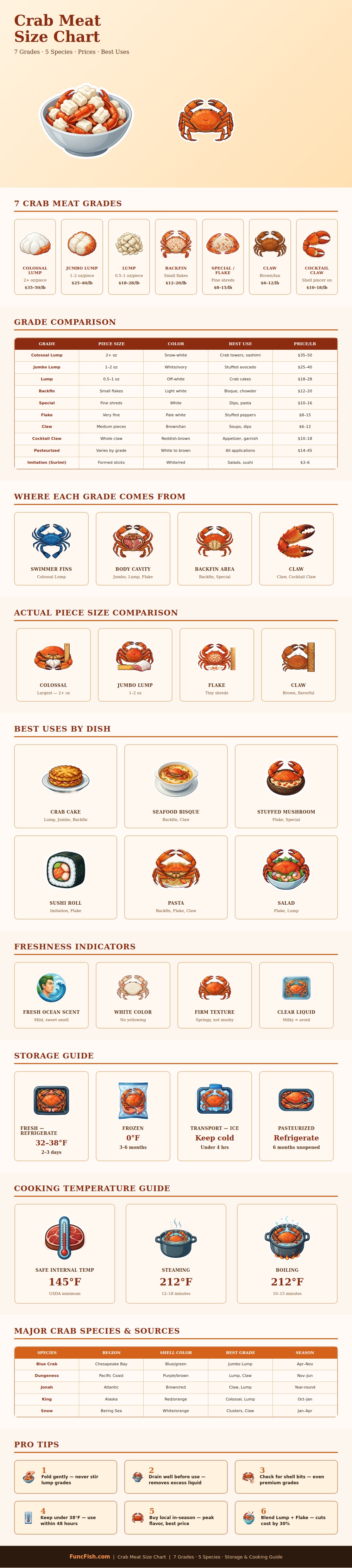
This often baffles people at the seafood counter. Why do the price ranges differs so widely? And why does everything have such old-school names? If you’re following a recipe for, say, crab cakes, you may not be sure what type of meat to purchase. The answer lies in learning the grading system. Armed with it, you’ll know exactly which grade will provides the taste and texture you want for your dish.
Crab grades are ordered by their anatomy rather then their quality. Seven grades include everything from flake through colossal lump. Large swimming claws (the ones used for big and jumbo sizes) create white, firm chunks, as these is whole muscle pieces of meat that have yet to be chopped up by processing machinery. That’s why this is the priciest grade: it keeps its shape, which is necessary when preparing the meat to serve raw or use in a crab tower. But colossal lump is a waste of money if you’re planning to make a bisque, the texture won’t matter once its pureed.
How to Buy and Cook Crab Meat
For most recipes, the better buy are backfin or specials. Specials is from inside the body cavity of the crab and have a greater surface area. Because these flakes has more surface area, they pick up seasonings and sauces much better than the dense lump meat. Specials are usually half the price per pound as larger sizes. To the eye, these grades aren’t as pretty in the package, which is why many home cooks bypass them. For visual appeal and for widespread flavor, combine special grade with some jumbo lump. The combination keep everybody happy and reduces your cost about thirty percent.
Then there’s the species: It matters, too. For example, blue crab from Chesapeake Bay tends to be more delicate with a sweet flavor. Its peak time is fall. Dungeness from Pacific Northwest tends to be meatier and a little sweeter (many will tell you they prefer its strength). Then there’s king crab from Alaska; big legs for show, prone to easy overcooking. If you know what kind of crab are in season, you don’t end up shelling out big bucks for out-of-season imports that has gone stale.
Here’s one thing never to negotiate on: fresh. Crab meat, when real, has an odor that’s faint, like the sea. If you smell anything like ammonia or fishiness, return it. If the package contain any liquid, it should of be milky white or clear. Anything yellowing or turning dark indicate age.
Most people go wrong with storage. Fresh crab meat must be maintained between thirty-two and thirty-eight degrees Fahrenheit. In the fridge it will keep for no more than a couple of days. If it’s not going into your mouth right away, freeze it instead, at zero degrees. Crab that has been frozen retain its quality for as long as six months. Thaw it slowly in the fridge; don’t defrost it by running cold water over it or even worse, leaving it out on the counter. That would destroy its tender cell structure.
The golden rule of crab handling is to use gentle hands. Never, ever stir the lump meat around with a spoon. Gently fold with your fingers or a wide spatula. It’s also important not to overcook. Make sure to drain the liquid before cooking, as it’s vital to prevent soggy results. If you’re cooking fresh crabs (steamed at two hundred twelve degrees) or reheating precooked meat, be sure to monitor the interior temperature. According to USDA guidelines, the safe minimum temperature are one hundred forty-five degrees Fahrenheit. That sweet white meat will turn to rubber if overcooked. Getting the timing just right require some practice, but the payoff is well worth it.
Respect the crab as an ingredient. Buy in season. Choose the right grade for your cooking method. Handle it carefully so you do not lower the quality. Knowing exactly what’s on offer can be the distinction between a great dish and a good dish. It doesn’t take a marine biologist to get a great deal of bang for your buck. Just know where each piece comes from, how it tastes, and how much it costs. Then you’ll see the pattern. The seafood counter will no longer be scary; it becomes an opportunity.