
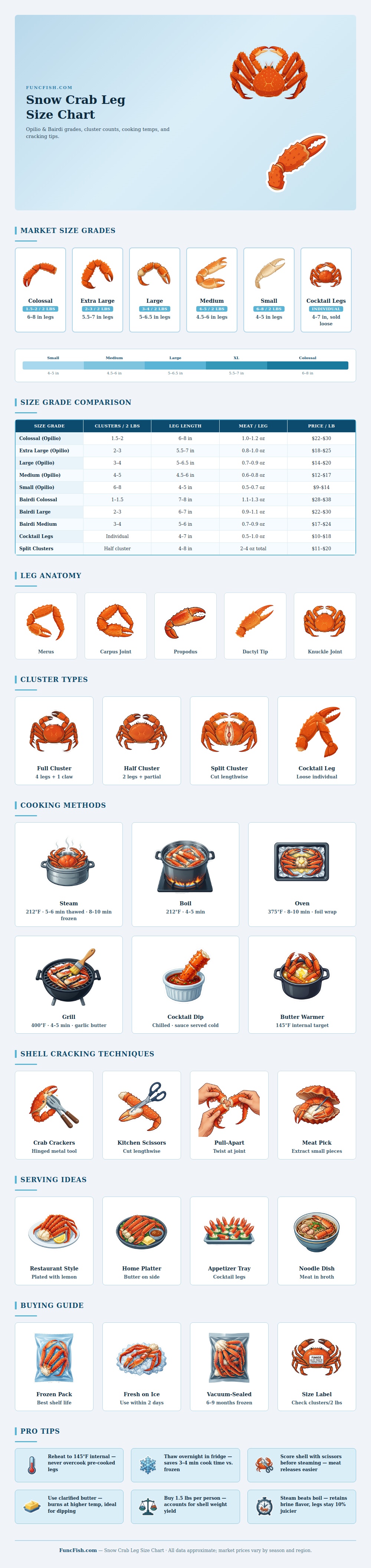
Snow crab legs can be confusing. Often at the seafood counter, you are presented with small leg clusters on toothpicks and massive cluster that weigh more than your hand. Each one will have different price. There isn’t a good reference to help consumers decide what to purchase. You don’t want an expensive bill but you want something memorable. And you definitely don’t want to end up with a plate full of shell and dissapears.
If you understand the grading system by size then it all makes sense. And that translates into purchasing, preparation, serving, and ultimatey eating the crab. That’s why this chart of cluster size per pound by grade is helpful. You’ll see which size is best value: Are you buying shell weight, or meat?
How to Choose, Cook, and Eat Snow Crab
Colossal has more meat, so they costs more then small ones. It’s an indulgence when you pull long strands of white flesh from sturdy shells. Most consumers don’t notice the yield difference, assuming that all crab legs is created equal in terms of weight. They’re not. Mediums appear large in packaging due to thickness of their shells. Inside, however, the cavities is snug. The meat is packed tightly; it require more effort to get out.
For entertaining occasions when time is precious, go up a size. Big legs minimizes “food friction” throughout the evening. Guests don’t want to wrestle with food conversation.
Cracking snow crab becomes less of a shot in the dark and more of a technique when you understand the anatomy. A snow crab leg are essentially a segmented tube connected by joints that act as natural hinges. Working through the cluster relies on the bodys natural design (not blindly pulverizing some hard bits). After making a long cut along the shell to score it, cook it so that heat can gets inside, which will make the meat come out faster and easier. It’s a slight tweak from a mechanical perspective, but translates into much-improved platter presentation. No shell shards to contend with while you’re dunking.
Snow crab is typically frozen pre-cooked. Because of that, the cooking method and heat intensity is just as important as selection. The idea is to reheat the crab gently, so you don’t dry out the flesh. Boiling leaches flavor into water and steaming holds onto more of that briny sweetness. In general, steamed legs will be slightly (10 percent or so) juicier then boiled ones.
If you’re pressed for time, wrapping things well in foil with a splash of water then baking them in the oven is not bad either. That traps some steam inside package. And people assume that “the hotter, the better”, wrong! For pre-cooked seafood, gentler heat help preserve its texture. Too aggressive, and the crab gets all tough pretty quick. Crucially, thawing in the fridge overnight also saves active cook time. Thawed crabs won’t overcook on their outside while waiting for their insides to heat through. And purchasing them frozen keeps the cold chain tight, ensuring both safety and longer shelf life.
Buy about a pound and a half per person; keep in mind that those are the shells alone. Buy frozen packs; more often than not they’re better different than fresh-on-ice. Using clarified butter as a dip avoids burning in the fondue pot because it have a high smoke point. That’s your reward: with little effort you’ll be pulling off hunks of sweet meat into golden fat.
Snow crab strikes a great balance between practical and luxurius. Pick the correct size from the start and you has a celebratory meal without the fuss.