
In the online catalog or freezer aisle, you are faced with many different king crab legs. There is little cocktail ones. There are also big, cluster-looking ones that look like they would be to much trouble and expense. There’s more to it than size, though. You also has to consider the value and how easy they are to prepare. You also want to get your money’s worth in terms of meat. How do you know which one is best? Grading systems makes all the difference. What was once a guessing game becomes a matter of calculation.
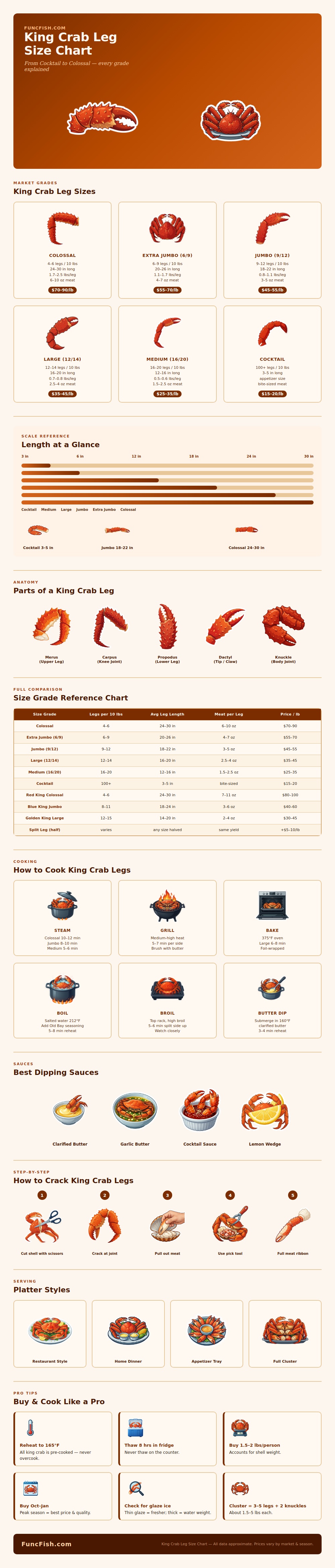
Don’t be fooled by price per pound. While ninety dollars a pound might look misleading, a colossal leg is actualy a good value because you’re paying for substance rather than shell weight. And don’t forget about meat yield: a big leg will yield somewhere between six and ten ounces of pure meat which is a better deal for the amount you get. On the other hand, cocktail grade legs comes cheap (fifteenish dollars a pound) but expect to work hard to extract tiny morsel of meat. For the home cook, consider Jumbo or Extra Jumbo grades. You’ll still have enough meat for a meal without going broke on the biggest specimen.
How to Choose King Crab Legs
“Many folks don’t realize that size matter when cooking crab. A twelve-inch medium leg isn’t cooked in the same manner as a thirty-inch colossal leg. Thermal mass increases with size, meaning larger legs retains heat. Colossal legs requires up to ten to twelve minutes of cooking. Smaller legs will reach desired temperatures in five to six minutes. This may not sound like much, but remember: Overcooked, sweet crab meat becomes dry rubber. Remember, all king crab is frozen and pre-cooked before being packaged. You’re basically warming it back up. The idea is to bring the inside to temperature without hardening the outside strands. Because steaming provides indirect heat, it’s easy to control. Broiling and grilling apply direct flame to the shell. If rushed, this can burn away butter and leave center cold.”
When it comes to buying legs: Clusters vs. Single legs. Typically, a cluster will weigh one to five pounds (three to five legs plus two knuckles). Clusters has a sense of wholeness with the crab body attached. This makes them look good on a platter and they make up for any lack of wholeness by being impressive. And don’t forget the knuckles. Those can be easy to pass over but are chock-full of tender, sweet meat in neat little chunks. When entertaining guests at a dinner party, the visual is worth the money. When it’s just a casual weeknight supper, buy Jumbo individual legs, which save on time and waste (shells you may or may not get all cleaned off).
There’s another secret factor here: Seasonality affects both price and quality. If you buy during the months of October through January (the peak), there will be plenty of supply, everything will be super-fresh, and you’ll get it at its lowest price. Out-of-season, quality can suffer (distributors sell off older frozen product) and prices rises. Seek packages with a very light frosting of ice. Any thicker, and the packer has applied additional water weight to “inflate” the poundage (you’re paying for ice), not crab.
To prepare, keep things simple when sitting down to enjoy it. A little bit of clarified butter or melt infused with garlic brings out the sweetness but doesn’t hide it. Remove the meat in one long strip (you can use kitchen shears to remove the shell) and dig in. There’s not much more to it than that (most of it lies in your hands). Treat the crab gently and confidently and it will pay you back handsomely. When you go big, get the huge legs for something special; otherwise stick to Jumbo for every day fare so you always know exactly what you’re getting. That way, you never feel like the money (or the work!) should of been worth it.