
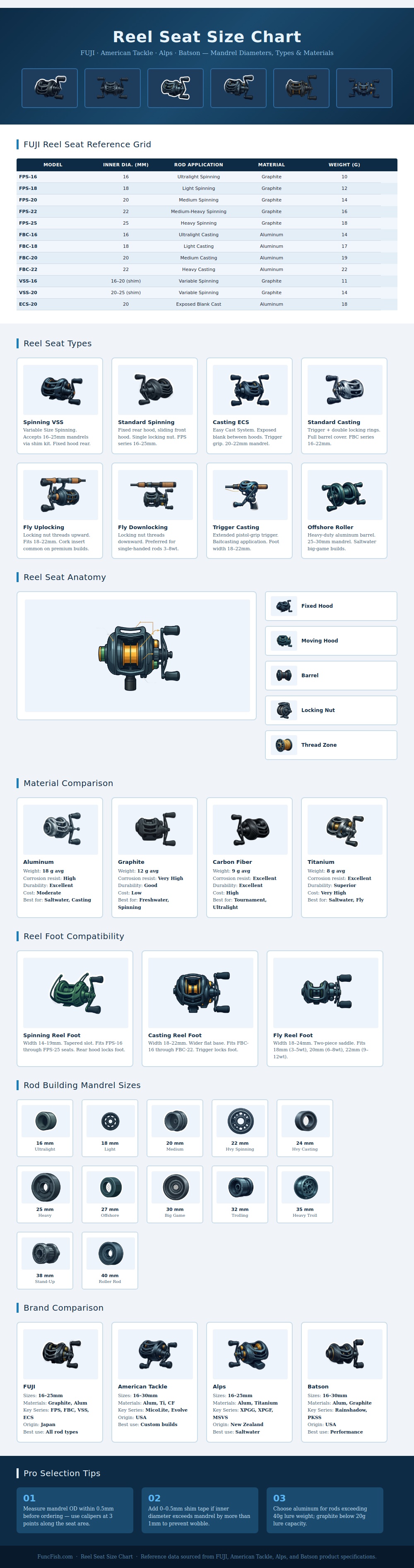
The reel seat is what links the rod blank with the reel. When it doesn’t fit properly, the whole thing rattle around. Balance is thrown off and it’s just plain hard to fish. Typicaly the cause of this is using a reel seat that’s too big for the rod. You want one that fits the structure of rod.
A chart like the one above that shows mandrel diameter in relationship to action provide a good illustration about what size seat might be best on a rod (i.e., whether a sixteen-millimeter seat belongs on your ultralight trout stick or if you should of reached for the twenty-two). By making the table material and model based, it keep things organized. And yes, size does matter.
How to Choose the Right Reel Seat
Size is about more than just fitting the reel foot; its about matching the seat’s structural integrity to your specific application. But the seat’s structure should matches the strength needed to fish the way you want to use it. The weight of the seat depend on the material selected.
For example, graphite seats tend to average about twelve grams and do fine on more sensitive spinning applications where weight reduction can increase sensitivity. Aluminum weighs slightly heavier (around eighteen grams), but that extra mass provide corrosion resistance and durability that graphite simply cannot match in harsh saltwater environments. Carbon fiber provides strength for a little extra money. Lastly titanium is tops in performance but comes with the highest price tag. Metals outlast other materials because they can withstands harsh environments. You pay more for this.
So that’s how we sort things out. A graphite seat provide sensitivity and a lower profile for light lures and smallmouth bass. A metal seat resist corrosion and stays rigid when casting heavy weight or pursuing snapper. So they have the infograph which puts the materials where they’re best used so you don’t put something delicate that is made for fresh water on a beefy rod.
New builders can run into trouble with installation details. For spinning, a sliding front attached to a fixed hood are normally locked with one locking nut. With casting reels there are double locking rings and trigger grips because these reels requires additional support and will not shift under a hard cast. With fly rods, the type of handle determines whether it’s an uplocking or downlocking nut. A downlocking nut is preferred for ergonomic reasons with single-handed rods weighing between three-and-eight. The larger setups may use cork inserts for grip.
The difference between something you built as a hobby and something a pro build is in the measuring. Order your parts based off your mandrel’s outer diameter measurement, accurate to within half a millimeter. Measure it with calipers in 3 places. Rods aren’t perfect circles so measuring several times give you a better reading. Then if your reel seat inner diameter exceed the mandrel by more than a millimeter, make sure to add some shim tape. Adding some Shim tape here will help it run true for life of the rod as well.
Choosing the right rod is key to comfort. What are you going to do with it? How hard is the rod going to be fished? What type of material should I get? And what size reel seat should you get? A tight fitting seat and a reel positioned correctly make the rod feel like part of you. The whole package work smoothly and is worth all the time spent on install and selection.