🎣 Fishing Rod Guide Spacing Calculator
Calculate precise guide placement for any rod build — spinning, casting, fly, or surf
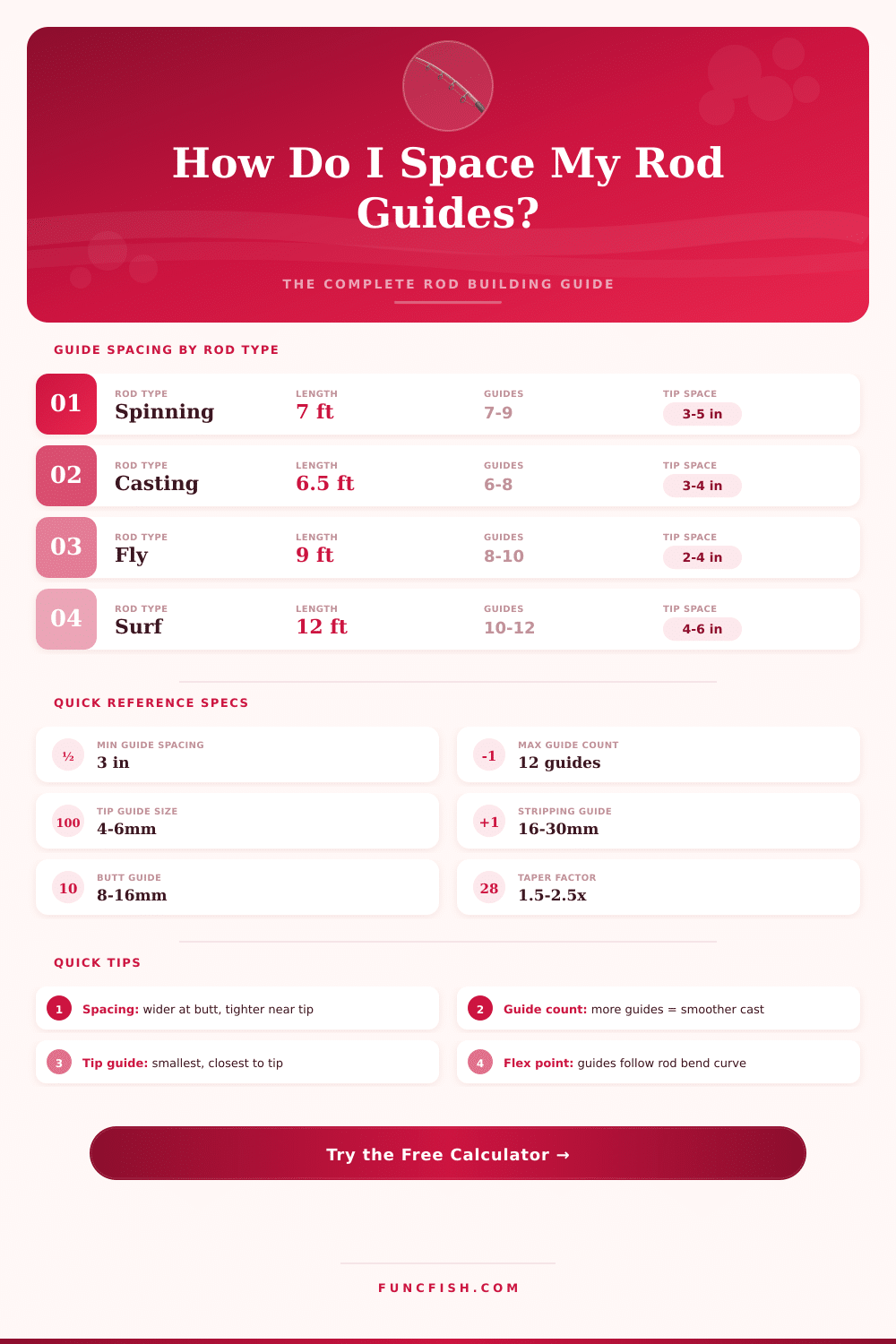
| Rod Type | Length (ft) | Recommended Guides | Tip Spacing (in) | Butt Spacing (in) | Taper Factor |
|---|---|---|---|---|---|
| Ultralight Spinning | 5–6 | 5–6 | 3–4 | 14–18 | 1.5 |
| Light Spinning | 6–7 | 6–8 | 3–5 | 16–20 | 1.7 |
| Medium Spinning | 7–7.5 | 7–9 | 4–5 | 18–22 | 1.8 |
| Baitcasting | 6–7.5 | 6–8 | 3–4 | 14–18 | 1.7 |
| Fly Rod (5-6wt) | 8.5–9 | 8–10 | 2–4 | 16–22 | 2.0 |
| Fly Rod (8wt+) | 9–10 | 9–11 | 3–4 | 18–24 | 2.1 |
| Surf / Shore | 10–14 | 9–12 | 4–6 | 24–36 | 2.0 |
| Trolling / Offshore | 6–8 | 5–7 | 5–8 | 18–26 | 1.5 |
| Species | Typical Weight | Rod Length | Guides | Line Weight | Guide Frame |
|---|---|---|---|---|---|
| Largemouth Bass | 2–8 lb | 6.5–7.5 ft | 7–9 | 10–20 lb | SIC Single Foot |
| Trout (Stream) | 0.5–3 lb | 6–7 ft | 6–7 | 4–10 lb | Single Foot |
| Walleye | 1–6 lb | 6.5–7.5 ft | 7–9 | 8–15 lb | Single Foot |
| Northern Pike | 5–20 lb | 7–8 ft | 7–9 | 15–30 lb | Double Foot SIC |
| Panfish / Crappie | 0.25–1.5 lb | 5–6.5 ft | 5–7 | 2–6 lb | Wire Single |
| Striped Bass (Surf) | 5–40 lb | 10–13 ft | 9–12 | 20–50 lb | Double Foot SIC |
| Catfish | 5–30+ lb | 7–9 ft | 7–10 | 20–50 lb | Double Foot |
| Tuna / Offshore | 20–200+ lb | 6–8 ft | 5–7 | 50–130 lb | Roller / Heavy SIC |
| Frame Type | Best For | Ring Material | Weight | Durability |
|---|---|---|---|---|
| Single Foot | Light / ultralight rods | SIC, Alconite | Very Light | Good |
| Double Foot | Heavy / surf / offshore | SIC, Zirconia | Medium | Excellent |
| Snake (Fly) | Fly rods | Chrome wire | Ultra light | Moderate |
| Stripper / Ring | Fly rod butt guide | SIC, Hard Chrome | Light | Very Good |
| Roller Guide | Big game / trolling | Metal roller | Heavy | Exceptional |
| K-Frame SIC | Modern spinning / casting | SIC | Light | Excellent |
Get the right spacing for guides on home-made Fishing Rod. That is one of those things that can help or ruin the whole work. The basic idea is quite simple: the guides must be set up so that the line slips freely along the blank of the rod without ever touching it.
As a rough point to start one commonly takes the length of the rod in feet and adds one guide for each of them. For fly rods, one considers the rod length, so two guides or maybe add one extra, if it deals with a rod that, say, has a foot and some inches of length.
How to Place Guides on a Homemade Fishing Rod
Most suppliers of rod-building materials offer patterns that show exactly how many guides you need and where to place them, sorted by the length of the rod. Those charts are specific to certain brands and full of technical info to help in your work. Companies like American St. Croix, G. Loomis, Rainshadow or Lamiglas each issue their own guide about Guide Spacing.
Also, the makers of the blanks themselves usually have tips about lengths and guides that they want to share, so contacting them directly is worth the efofrt.
Here is the main point, even so. Those patterns are only a start. Every blank has its own traits, even if two of them seem the same on paper.
That means you need to fit the total number of guides to your specific rod. The best way? Set the guides on the blank wear they feel right, pass line through them and bend the rod to check what happens.
If the line curves flat without touching the blank anywhere, you did it. If something seems bad, simply change the positions until it looks and feels right.
Place your first guide about three to three and a half inches from the upper end of the handle. On fast blanks, most of the action happens in that upper third, so you will need more guides in that area to follow the curve. The sizes of guides usually shrink as you go down to the top end.
Bigger guides do not really help the line (they commonly let the line bounce more), which reduces your casting power.
For spinning setups, every guide is turned down and the reel sits below. On baitcasting rods, the guides are up with the reel. A good rod must have at least five guides.
If you have less than that, you risk that the line will rub against the blank, which will damage your line.
Modern building uses more guides than before. Rods of ten feet that once got only ten or eleven guides in the old days, now usually have thirteen or fourteen. The bottom guide on a fly rod sits between twenty-eight and thirty-two inches from the handle.
More advanced Guide Spacing, and here is the point: avoid placing guides right at the ferrule spots. If one position lines up with the ferrule, move it a bit so that it does not sit there, because that does not change much the action of your rod. Sometimes a little shiftaway from the ferrule edge helps nicely.