⚓ Boat Paint Calculator
Calculate exactly how much paint you need for your hull — antifouling, topside, primer & more
sq ft / gal
sq ft / gal
sq ft / gal
sq ft / gal
sq ft / gal
sq ft / gal
sq ft / gal
sq ft / gal
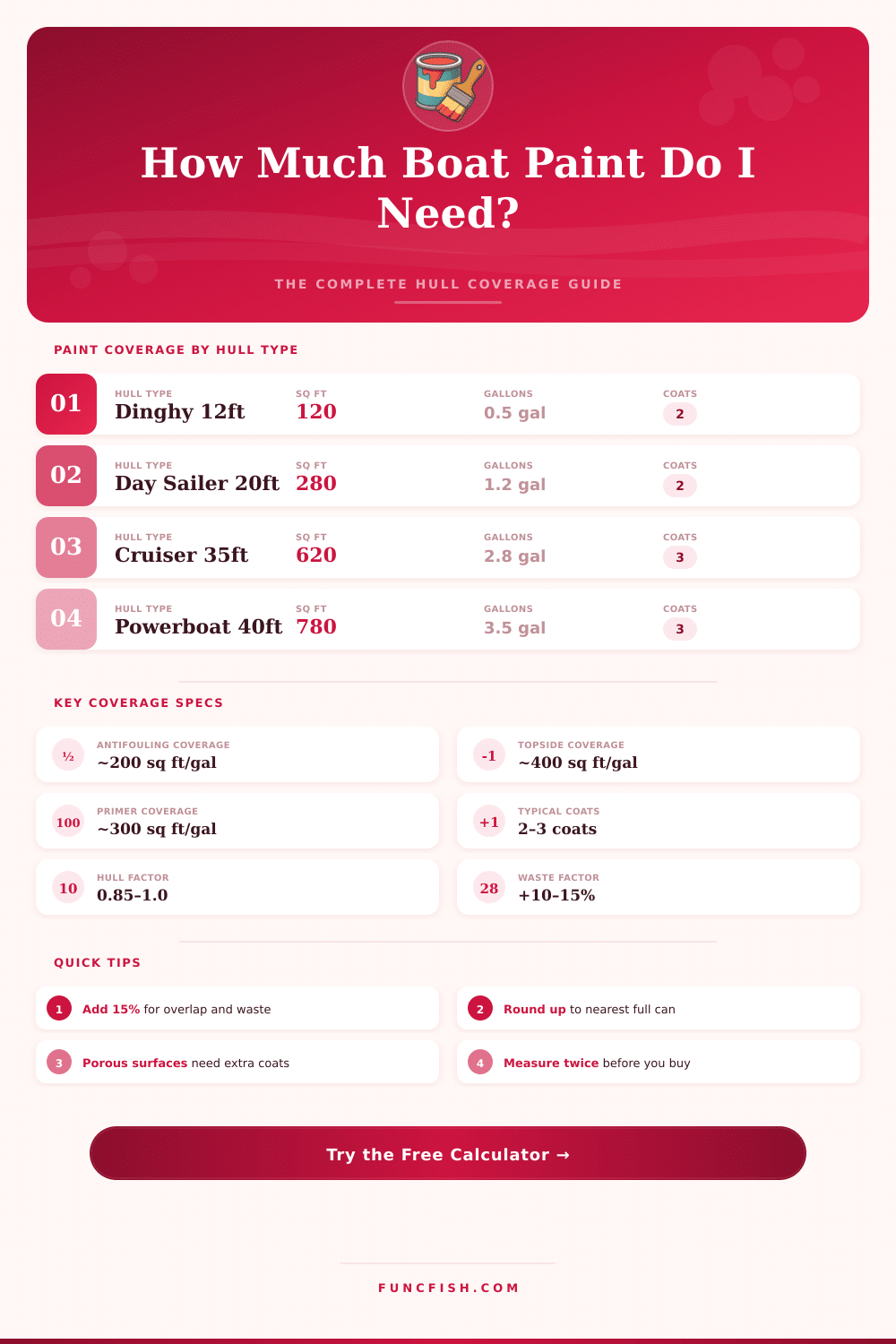
| Boat Length | Hull Type | Approx Area (sq ft) | Approx Area (m²) |
|---|---|---|---|
| 10–14 ft | Dinghy / Kayak | 80–140 | 7.4–13.0 |
| 15–20 ft | Day Sailer / Runabout | 160–280 | 14.9–26.0 |
| 21–26 ft | Trailerable Cruiser | 300–450 | 27.9–41.8 |
| 27–34 ft | Offshore Sailer / Powerboat | 480–650 | 44.6–60.4 |
| 35–45 ft | Ocean Cruiser | 700–1000 | 65.0–92.9 |
| 46–60 ft | Large Yacht | 1050–1600 | 97.5–148.6 |
| Surface Condition | Area Multiplier | Extra Coats Recommended | Notes |
|---|---|---|---|
| Smooth / Previously Painted | 1.00 | 0 | Best adhesion base |
| Lightly Sanded | 1.05 | 0 | Minor extra absorption |
| Rough / Porous | 1.15 | +1 | Consider priming first |
| Stripped / Bare Hull | 1.20 | +1–2 | Always prime bare GRP or metal |
| Hull Material | Recommended Primer | Best Antifouling | Special Notes |
|---|---|---|---|
| Fiberglass (GRP) | Epoxy barrier coat | Hard or soft ablative | Sand between coats |
| Aluminum | Etch primer + epoxy | Copper-free antifouling | Avoid copper-based paints |
| Steel | Zinc primer + epoxy | Hard antifouling | Rust-inhibiting primer essential |
| Wood | Oil-based primer | Soft ablative preferred | Grain filler may be needed |
| Ferro-Cement | Epoxy filler + primer | Hybrid or hard | Very porous — add 20% volume |
For DIY application by brush or roller, add 10–15% to your calculated amount for overlaps, drips, and uneven surfaces. For spray application, add 20–25%.
For antifouling calculations, always use the waterline length (LWL), not the overall length (LOA). Using LOA will significantly overestimate paint needed for the underwater hull area.
Marine paint helps to protect boats against all bad stuff they meet on and under the water. It protects against burning sun, salt water, sea spray and barnacles that stick to the bottom. Different kinds of boat paint go above and below the waterline where water touches the hull
Topside paint protects all parts of the boat that stay above the waterline. From the strong sun boats risk UV damage. Covering the upper hull and deck with right topside paint matters to get the most from your boat.
Types of Boat Paint
There are many types of topside paint based on the budget and the wanted color or finish. Normal hardware stores probably will not have the right stuff, so marine stores are a safer choice.
Paint for boat engines defends metal parts against rust and corrosion. Non-skid deck paint not only protects the surface, but also stops the crew from slipping into the water. Most topside paints and some bottom paints need marine primer to ensure that the paint sticks well.
When a boat stays long in water, good bottom paint with anti-fouling chemicals breaks the growth of marine life below. But if you take it out after every use, there is no reason to paint the bottom always. For aluminum hulls in water you need special anti-fouling paint for aluminum, which requires the right method and safety gear.
Ablative paint goes above hard paint, but before you put hard paint on, you must entirely remove the ablative. That is worth remembering during repainting.
Some boat owners succeeded with porch or deck paint, or even latex house paint as a cheap option. Problem with house paint is that it must be “self-cleaning,” which causes chalking over time. Exterior paint can last years on cheap plywood boats.
Rust-Oleum topside paint is easy to use, easy to store and much cheaper than others.
For inside painting, good quality acrylic latex enamel in semi-gloss works well. Sanding the boat before painting removes dirt, wax, polish, scratches and damages, so the new paint has a good base to stick to. Using the recommended primer before painting is a smart move.
Gelcoat is like hard paint and you spray it in molds before laying the fiberglass, so the outside of new fiberglass boats is not actually painted.
Results of bottom paints vary. Some products last six months, others until two years. It depends on what it says on the tin.
At trailer boats the surface suffers strong stress during launch and recovery above the rollers, so tougher paint matters here.