
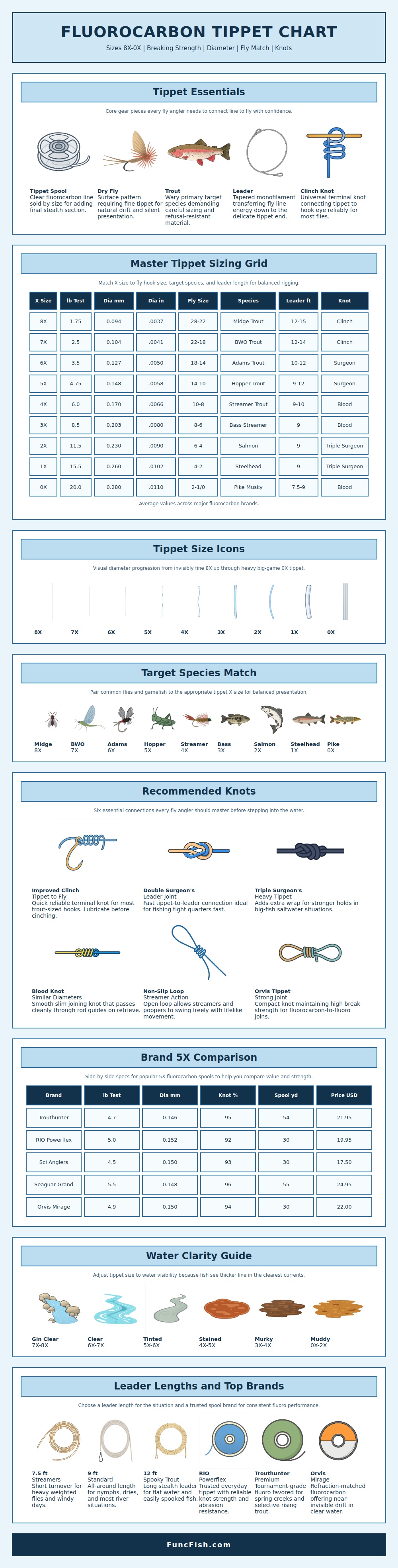
Tippet is a specific section of fishing line that connect the leader to the fly. The tippet section are critical to the fishing rig because the tippet determine whether the fish will see the fishing gear or not. If the tippet is too thick or visible to the fish, the fish will likely seeing it and refuse to eat the fly.
If the tippet is too thin, it may snap when the fish pull on the line. Fluorocarbon tippet is popular among anglers because fluorocarbon tippet will sink more faster then monofilament tippet. Fluorocarbon tippet is also more difficult for fish to see underwaterly.
How to Choose the Right Tippet for Fishing
Additionally, fluorocarbon tippet is more resistant to abrasion from rocks than monofilament tippet. Anglers use the X system to determine the size of tippet to use in there fishing rig. The X system go from 8X to 0X. Numbers closer to 8X is thinner than numbers closer to 0X. For example, if using tiny fly in clear water, use thinner tippet such as 6X or 7X. For large flies or large fish, use 2X or 3X tippet.
The size of the tippet should match the size of the fly and the type of fish being target. For example, for trout, use thin tippet to match the size of small midge flies. For large streamer fly, use thicker tippet to provide more strength to help pulling the large fly through the water.
The behaviors of fish also affect the choice of tippet size. For example, trout must be fished with a tippet size that account for the size of the fish and the type of fly. The leader works in conjunction with the tippet to form a fishing rig.
Short leader of seven or eight feet work best for heavy flies when there is wind. A long leader of twelve feet help keep the fly line from the fish so the fish will not see the line. Two common knot are the surgeon’s knot and the blood knot, and the tippet must be secured to the leader with a strong knot.
The surgeon’s knot is a quick knot used with light tippet. The blood knot allow for a slim profile in the fly line when casting the line. The clarity of the water dictate the type of tippet to use.
For example, for clear water, use thin tippet so the fish cannot see it easy. For murky water with low visibility, use thicker tippet to allow for more strength in the fight between the fish and the angler. For stained water, use tippet size in the mid-range because the color of the water will provide some flexibility for the angler.
Knots is necessary to secure the flies to the tippet and the tippet to the leader. Use the improved clinch knot to secure the fly to the tippet. Ensure the tippet is wet before tighten the knot so you dont weaken the tippet.
For large streamer flies use a non-slip loop to allow for movement in the water. If a fishing knot is weak, it will break. A broken knot will result in the loss of the fishing fly and the caught fish.
Common mistake when selecting the proper tippet size for fishing include using a tippet that is too thin for the type of large fly being used. Thin tippet will bow under the force of the fish and prevent the proper turning of the fly. Using tippet that do not have abrasion resistance can be problematic when fishing in area with rocks or gravel.
Using the same size of tippet for all fishing trips is another mistake. For example, carry three size of tippet on a fishing trip such as 6X, 5X, and 4X to accommodate for different water conditions and types of fly. You should of carried more variety of tippets for teh different situations.