
There are several different species of bass that exist in North America. Each of these species of bass has specific characteristic that you will have to understand about each of them. By understanding each of these different species and their characteristic, you will be able to determine where to find the species, what type of bait to use on these species, and what your mindset should be while you are catching these fish.
Common Species of Bass in North America
1. Largemouth Bass
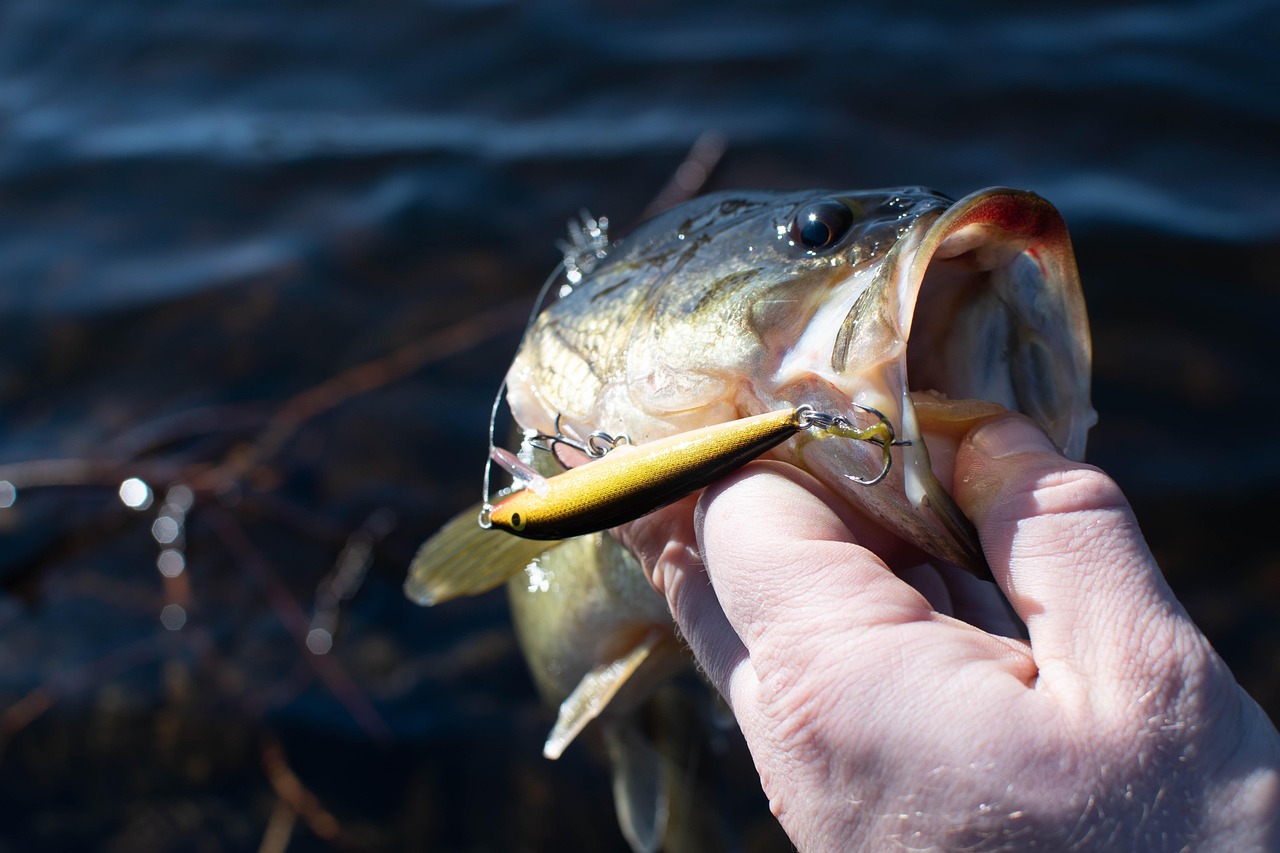
Largemouth bass is one of the most common species of bass. The defining characteristic of largemouth bass is that the upper jaw of the fish extend beyond the rear edge of its eye; thus providing the species its name. These fish typically weigh between two and six pound, but can weigh more in the southern regions of North America where their growing seasons are longer and where the food source is more plentiful.
Largemouth bass prefer to live in waters that are relatively shallow and that contain abundant weeds. These fish are often located near lily pads, submerged timber, or docks. These fish typically catch their prey rather than chasing them over longer distance.
These fish are very adaptable to different types of habitats. However, they can become wary of areas where there are many angler. Thus, the anglers have to change the bait that they use to catch these fish.
2. Smallmouth Bass
Smallmouth bass is a different species of bass than largemouth bass. The jaw of the smallmouth bass does not extend past the eye like largemouth bass, and the body of the smallmouth bass is more streamlined than largemouth bass. Smallmouth bass have a golden bronze color to their bodies and exhibit vertical bar along their bodies.
These fish prefer to live in areas that contain rocks, in areas with current moving through them, and in waters that are more cooler in temperature. Smallmouth bass are often located in the more northern lakes of North America, or in the tailrace of a dam. Smallmouth bass will use their strong tail to fight against other smallmouth bass.
Smallmouth bass exhibit a different type of fight than largemouth bass. Smallmouth bass forage for food along the bottom of their lakes or rivers. Therefore, they can be caught using finesse fishing technique.
The presence of healthy populations of smallmouth bass indicates that the quality of the water in which they live is good.
3. Striped Bass
Striped bass is a large species of bass. These fish tend to live in schools.
Striped bass have silver bodies with dark horizontal line along their bodies. Their size can exceed twenty pounds. Unlike black bass species, striped bass live in schools and chase baitfish.
Some of these fish are anadromous, which means that they live in saltwater areas and freshwater areas. To catch these fish, anglers can use technique that are used to chase fish schools, such as trolling or using topwater lures. The fight between the striper bass and the angler requires endurance from the angler due to the long and powerful runs that these fish can make.
4. Spotted Bass
However, the angler has to cover alot of water in order to find these fish, as they move in response to the seasonal movement of baitfish. Spotted bass is a species of bass that has a physical resemblance to largemouth bass. However, spotted bass have rows of small dark spot along the fish beneath its lateral line.
Additionally, spotted bass have a tooth patch on the tongue of the fish. Spotted bass prefer to live in water that is clear of suspended solids and that contains steeper areas in those bodies of water. These fish live in areas like the main-lake points of their reservoirs or humps in the lakes.
In some cases, spotted bass will school together in these areas and chase shad fish. Therefore, spotted bass can be caught in these locations using small swimbaits or spoons. Because spotted bass live in areas that are also home to largemouth bass, manager of these fisheries often introduce spotted bass to areas that already contain largemouth bass.
5. White Bass
White bass is a smaller species of bass. These fish tend to live in schools of bass. The body color of white bass is silver with faint stripe along their bodies.
Additionally, their mouths are smaller than striped bass species. Because of their small mouths, compact lure are used to catch white bass. These fish rarely weigh more than three pounds.
However, it is possible to catch many white bass if the angler can find a school of white bass. Techniques that can be used to catch white bass include vertical jigging or slab spoons. However, the bite on white bass can quickly dissapears if the angler does not take precautions to find these fish because they tend to move frequent.
6. Peacock Bass
Peacock bass is one of the rare species of bass to live in North America. However, it does live in some location in the continent. Peacock bass are part of the cichlid family and are thus not a true bass species.
Their bodies are brightly colored blue and gold. These fish live in the canals of southern Florida and parts of Texas. They are extremely aggressive in their attacks on baitfish or lures that are large relative to the size of the fish.
Peacock bass live in dense areas like the banks or pilings of the canals where they live. Thus, anglers will need stout fishing tackle to catch these fish. The survival of these species in their native area of North America is dependent upon warm water since they do not like cold water.
As a result, severe winters may lead to a reduction of the number of peacock bass species in these areas. Each species of bass will have a preferred water temperature and behavior. By knowing each of these species and their specific characteristic, anglers can target these species, use the appropriate bait, and have a more focused fishing experience.