
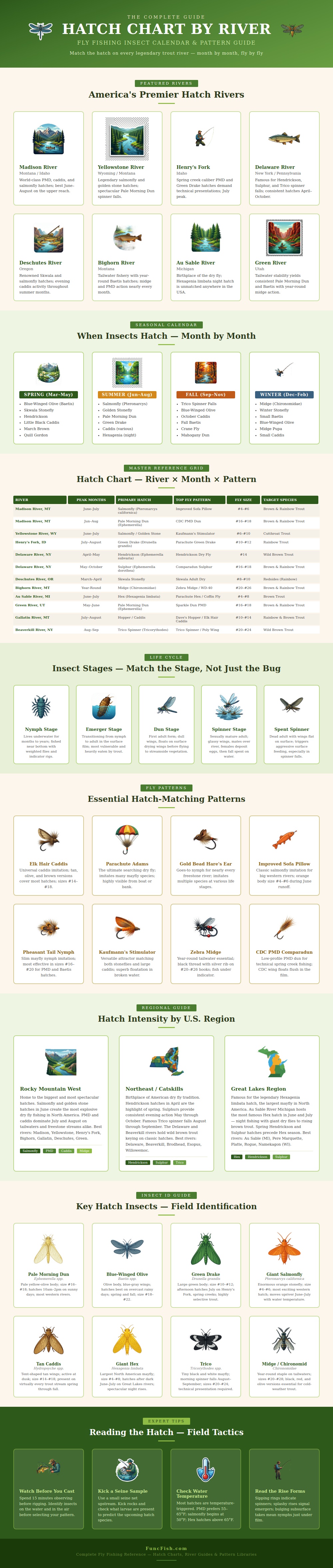
Hatch charts exists because trout dont have the same insects to eat every single month. Trout will change their feeding habit according to the seasons of the year, the water temperature of the rivers in which they live, and the characteristics of those specific rivers. By understanding the insects that is living on the water in the rivers where you plan to fish, you can make decisions about the type of flies that you will use when you go into the river to fish for trout.
Thus, hatch charts prove to be useful to trout fishermen in that they help to indicate which insects to use when fishing for trout, rather than requiring fishermen to guess at which type of flies to use in their fly boxes. The chart depicts the rivers in part due to the fact that those specific rivers experiences hatches of the insects that are depicted within the chart. For instance, the Madison River experiences salmonflies every June, the Bighorn River experiences midge in its tailwater during the winter months, and the Au Sable River experiences an large population of Hexagenia mayflies after dark.
Using a Hatch Chart to Fish for Trout
Each of these rivers are included within the hatch chart in part due to the fact that their calendars of insects relate to the conditions of the water within the rivers. During the spring months, trout will tend to eat small population of mayflies and stoneflies. Blue-winged olives and skwalas are typically the first insect to appear in the rivers throughout the spring, and Hendrickson and March Brown mayflies will follow as the water temperatures begin to rise.
Each of these insects are present in different region of the United States during the spring months. For instance, the Hendrickson mayfly hatch may occur in late April along the Delaware River, but may appear in streams in the Western regions of the United States several weeks later. By understanding these different hatches throughout the spring, fishermen can plan their trips to the rivers that they wish to fish for trout.
Additionally, understanding these different types of flies will prevent the fishermen from showing up more early or too late at their destinations. Summer features large insects in the rivers. In the western regions of the United States, salmonflies and golden stones are the dominant insects that can be found in the rivers, while green drakes and pale morning dun mayflies are the most prominent insects in the spring creeks in the technical area of the East.
Additionally, there are caddisflies that live in nearly every watershed during the summer months. Each of these insects are represented in the hatch chart. Additionally, it is important to note that during the summer months the trout will eat the most abundant food source; thus, anglers should pay attention to the insects that is prompting the trout to rise out of the water, as this would be far more effective than simply using the largest fly in your fishing fly box.
During the fall months, the insects that live in the rivers again become smaller in size. In the mornings, people can see Trico spinner mayflies in both eastern and western regions of the United States, while October caddis and mahogany duns begin to appear in the afternoons. These types of hatches produce some of the best dry fly fishing experience in the trout rivers in the fall months, as the water levels in these rivers are stable and the trout are eating aggressive in the time periods before the winter months set in.
Each of these insects are represented in the chart according to the regions in which they can be found. In the winter months, the trout eat midges and small mayflies. Though it may seem that these rivers would not be fishable during the winter months, there are still some rivers that feature tailwater and spring creek area that remain fishable throughout the winter months, even if the freestone rivers in which the trout live are covered in ice.
In the winter months, trout will eat small flies so as to mimic the size of the insects that are active in those rivers. Thus, understanding the different types of trout habit during the winter will allow the fisherman to plan accordingly. In the life cycle of the insects featured in the hatch chart, trout will consume the insects at every stage of their life cycle.
Trout will eat the nymphs of the insects while they live underwater for several months, they will eat the emergers of the insects while they are in the film of the water, and they will eat the spent spinners of the insects after they fall from the water after they complete their mating process. For instance, a pheasant tail nymph represents different mayflies, but any of the sizes of the nymphs will indicate the species of mayfly that is represented by that fly pattern, and thus the use of this type of fly pattern allows for trout fishermen to use one pattern in a variety of different areas and different seasons of the year. In addition to the inclusion of the insects that reside in the rivers throughout the year, the hatch chart features certain types of fishing flies.
For instance, flies like elk hair caddis and parachute Adams flies will work in almost any of the rivers included in the hatch chart, but anglers can use more specific types of flies like the Improved Sofa Pillow or the CDC PMD comparadun once the trout have become accustomed to seeing these specific insects. Each of the rivers in the chart include their specific types of flies that have worked in each region, which saves the fishermen from having to carry every type of fly that may be needed within the rivers. Some of the different regional features of the trout in the country are visible within the hatch chart.
For instance, the western regions of the United States contain larger populations of stoneflies and other flies that hatch dramatically within the rivers due to the climate and geology of that area of the United States. The streams in the northeast feature classic mayflies in various locations in the region, and there are even giant Hex mayflies that can be fished in the Great Lakes regions of the country. Each of these features indicate the type of trout and fishing that may be present in each region of the country.
Finally, there are additional sections of the hatch chart that feature information regarding skills for trout fishermen. For instance, fisherman should always watch the water prior to beginning to cast their lines into the rivers, they should check the water temperature in the rivers, and they should read the rise forms of the trout in the water. Each of these habits will allow the fishermen to utilize the hatch chart to make decisions while on the rivers, and to understand the feeding habits of the trout.
Thus, the hatch chart provides trout fishermen with the information and skills that are necessary to succeed when fishing for trout in the United States. By utilizing the information included in this chart, trout fishermen can find success in their efforts to observe the insects that live in the rivers and fish for the trout that live in those same rivers.