
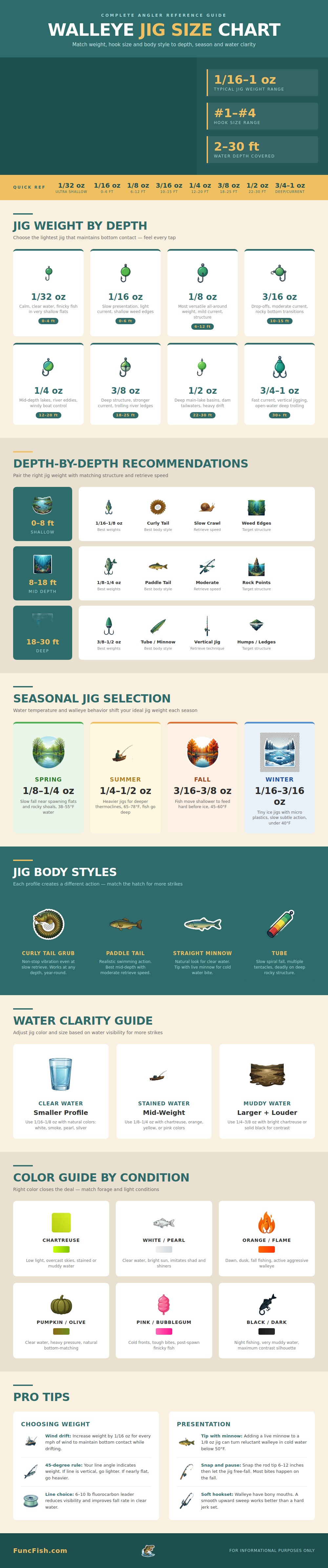
Choosing an correct jig size for walleye will determine whether or not you are able to catch the fish. Using a jig that is to light wont allow the jig to reach the walleye. However, using a jig that is too heavy can cause the jig to move too fastly for the fish to notice.
With the jig size charts, you can determine the correct jig weight for your situation without having to guess. Many people uses a jig that is too heavy for there situation because they want to maintain contact with the lake floor. However, walleye do not likes to be on the lake floor too much.
How to Choose the Right Jig Size for Walleye
Using the lightest jig weight allow you to feel the lake floor. Once you feel the lake floor with your jig, you can begin to fishing for walleye in your area. The depth of the area where you are fishing will affect which jig you use.
In areas that is less than eight feet deep, you will want to use a light jig to allow it to move slow through the area. In the middle depths of the lake, you will want to use a heavier jig to allow it to stay on the lake floor. In deep area of lakes, you will want to use a jig that will fall into the strike zone without moving too quick.
You can determine the correct jig size based off the angle of your fishing lines. If the fishing line is vertical, you can use a lighter jig. If the fishing line is slanting, you will want to use a heavier jig to allow the jig to work proper in your fishing line.
Walleye will move with the change of the season, and they will require a change in the jig you use. During the spring, walleye will be in shallow water and will move slow. Thus, you will want to use a jig that will fall slowly into these areas.
During the summer, walleye will begin to move to the deeper parts of the lake. You will want to use a heavier jig during this time of year. During the fall, walleye will return to shallower area of the lake.
The jig that you used in the summer months may be too heavy for fall walleye. During the winter, walleye will live under the ice. To fish for these walleye, you will want to use a very small jig.
Walleye will also use the clarity of the water to determine when to chase the falling jig. In clear waters, walleye will be able to see the jig close, so smaller jigs in natural color will be best. In stained waters, the visibility will be more worse for the walleye.
Bright colors and larger jigs will be more visible to the fish. In muddy waters, you will want to use the most visible jigs so that the walleye can see the jig against the lake floor. Walleye will always want the jig to match what they can see.
The body style for the jig also affects the movement of the jig in the water. Curly tail jig will vibrate when you pause the jig. This vibration will entice the walleye to bite at the jig.
Paddle tail jigs will allow the jig to move in a swimming movement that works well in the middle range of jig speed. Straight minnow profiles will look most natural in the clear waters. If walleye are picky with the food that they eat, straight minnow profiles will be most useful.
Tube jigs will spiral in their movement through the water. These are helpful for fishing deep and rocky area. Use the 45-degree rule to determine whether or not your jig weight is correct.
If the fishing line is vertical, the jig might fall too fast for the depth of the water. If the fishing line is flat, the current or the wind might be moving the jig away from the lake floor. By adjusting for the angle of your fishing line, you can ensure that the jig works in your favor.
Walleye will begin to bite when the jig is falling into the water rather then when you begin to lift the jig out of the water. Because walleye have bony mouth, jerking the jig will pull the hook out of their mouths. Allow the fish to take the jig for a second before you begin to set the hook.
By understanding the depth of the water, the clarity of the lake, and the current season, you will be able to determine the best jig weight for your situation.