
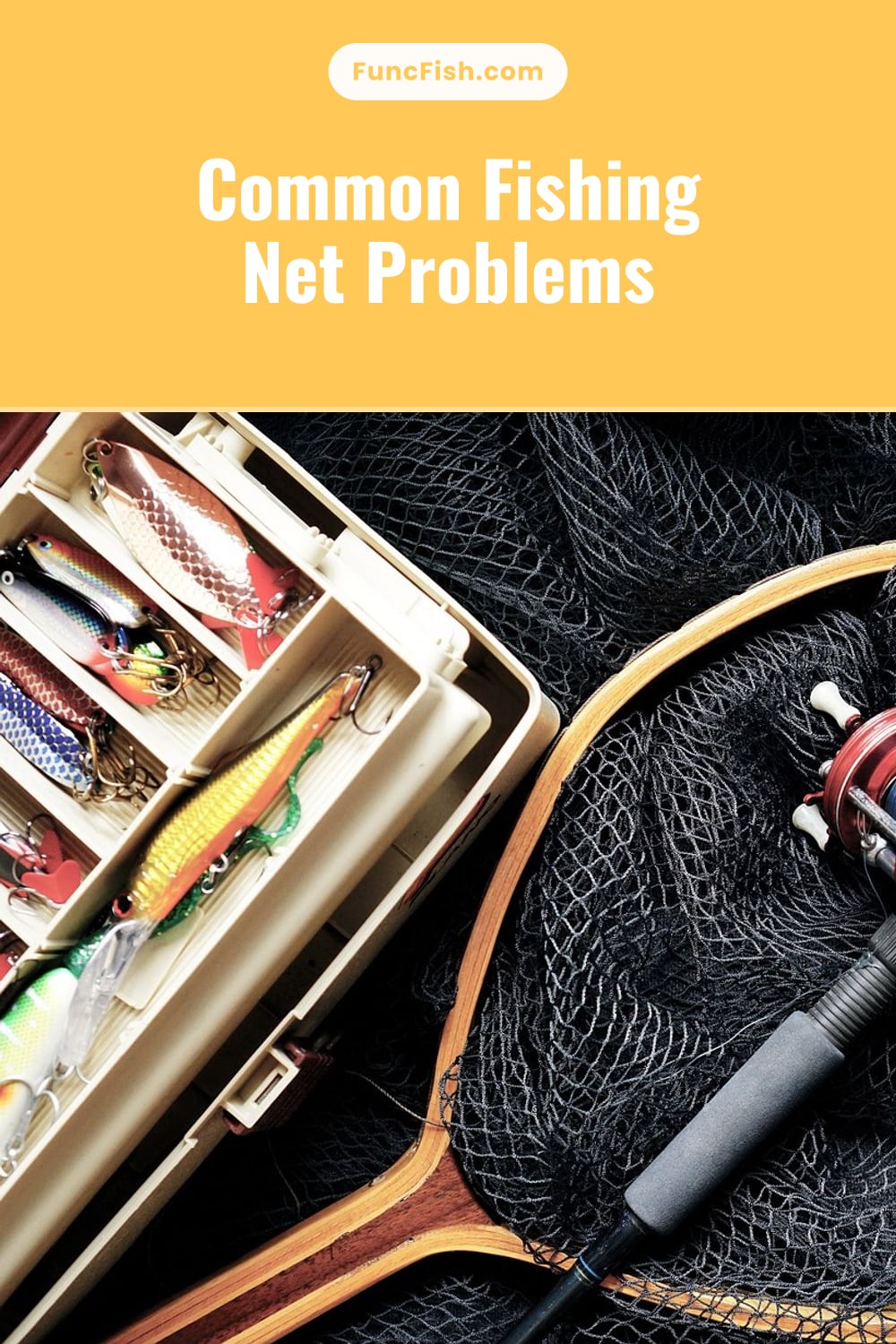
Beyond the sight of a fishing net resting on a dock or coiled within the bottom of a fishing boat, there are inherent problem associated with the use of fishing nets. The problems that may be encountered in the use of a fishing net can be categorized into five main problem that all anglers should be aware of. If anglers can recognize these five problems early in the fishing process, they will be able to spend more time with there bend fishing rod and less time repairing their fishing net.
Common Problems With Your Fishing Net
1. Mesh Tangling
The first problem that anglers encounter with their fishing nets is the issue of mesh getting tangle. Anglers often shake their fishing net to loosen the meshes, but it is possible that half of the net will end up in a ball that cant be opened. This occurs when the meshes of the net tend to fall in on themselves when the net is stored, especially if the net was stored while it was still wet or pushed into a tight compartment within the boat.
To avoid this problem, rinsing the net with fresh water after each fishing trip, allowing it to drip dry and be stored in a way that does not allow the net to become compressed will help prevent the tangling of the meshes. One small trick is to run a length of flexible PVC pipe through the hoop of the net and allow the net to hang vertically from the pipe; this will prevent the meshes from falling in on themselves. Using this simple trick will result in fewer instances of mesh getting tangled in the fishing net.
2. Mesh Tears
The second most common problem with fishing nets is the development of mesh tears. These tears can happen quick and often due to encountering a rocky area of the lake, a large striped bass, or even dropped pliers. Small holes in the mesh will eventually develop into full tears in the mesh; the small holes tend to open up when the net is in use.
In order to avoid losing fish due to these tears, anglers can carry a small repair kit with them when they are fishing. The repair kit will contain thread that matches the fishing net, a curved needle, and a pair of snips. In the case of a tear in the mesh, stopping fishing and laying the net flat, anglers can use the kit to stitch the tear in the mesh.
This takes five minutes but will prevent the loss of any additional fish that may be caught in the same fishing trip. Anglers should never leave a one-inch hole unattended in their fishing net.
3. Weight Distribution Issues
A third problem that may occur in the use of fishing nets is with the weight distribution of the net.
When the fishing net lands on the water, it often acts like a parachute and fish will swim underneath the net. This problem can be caused by the lead lines becoming missing or sliding along the fishing net due to improperly crimp stops. To prevent the slippage of the lead lines, before the beginning of each fishing season the angler can lay the net on a dock and the lead lines can be even spaced out along the fishing net.
Additionally, the stops can be crimped with copper or aluminum sleeves in order to prevent the weights from sliding out of position. The foam floats that sit on the net should also be inspected; cracked or waterloged floats will cause the net to fall short of its fishing purpose.
4. Incorrect Mesh Size
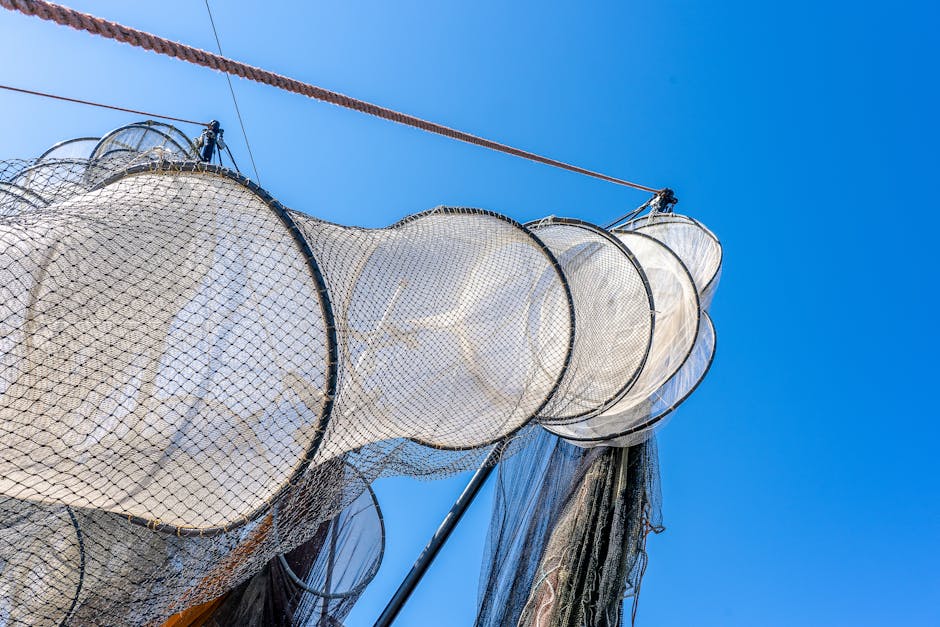
A fourth problem with fishing nets is the use of the wrong mesh size for the water that is being fished in.
For instance, using a fishing net with a two-inch mesh size in a river that contains panfish will allow bluegills and crappies to pass through the mesh. Using a half-inch mesh size will create problems when fishing for striped bass. The mesh size for the fishing net should be selected based off the girth of the fish that are targeted.
For most freshwater fish, the mesh size should be between one and one-and-a-half inches. For saltwater areas where larger fish are targeted a two-inch mesh size will allow the net to move more easy through the water. For these reasons, anglers who plan to fish for multiple species can purchase two nets; one with fine mesh and one with coarse mesh.
5. Hoop and Handle Problems
Finally, there are two issues with the hoop and handle of the net. The first issue with the hoop is that if the net has a flimsy aluminum hoop it can bend when a fish is attempted to be caught with the net. Additionally, if the handle of the net is too short it can be uncomfortable for anglers to use while fishing.
Modern fishing nets have both of these issues addressed; they use reinforced composite hoops and telescoping fishing handles that can be adjusted to the proper length. For freshwater fish an eighteen-inch hoop will work; however, if muskie or pike are targeted, the hoop should be twenty-four inches in size. Additionally, the handle should be long enough to allow the angler to reach at least three feet beyond their body.
When purchasing a fishing net from a store, anglers should test the strength of the hoop; if the hoop flexes with a strong pressure with both of their hands, they should continue shopping for another brand of net. These five problems are the issues that account for nearly all of the frustrations that anglers may have when using a fishing net. Anglers can recognize these problems and act to stop them before they cause frustration during their fishing trip.
While the fishing net does not catch the fish, it is the last link in the fight between the fish and the angler. Providing the fishing net with the care that it deserves will allow it to perform its essential job for the angler for many years.