

Despite the simplicity of the tool, many people experience problems with their dip nets while chasing baitfish, scooping shrimp, or netting minnows for there home aquarium. It happens to the best of anglers when they are using their dip net; they have just netted a minute’s worth of fishes, but the next minute, the catch has spilled back into the water because the mesh of the net tore, the handle snapped, or the frame of the net began to twist. Such frustrations are typical when using a dip net in ways that the designers of the tool did not consider.
However, if a person understands the seven most common issues with a dip net, a person can avoiding those problems altogether. The seven issues that commonly plague peoples dip nets include mesh tears, handle problems, frame problems, attachment problems, depth control problems, mesh clogging, and improper storage of a tool. Each of these problems has specific signs, causes, and ways to avoid them.
If a person can pay attention to the details described in these issues, a person will have a much smoother trip the following time they use there trusty tool.
The Seven Most Common Dip Net Problems
1. Mesh Tears
The most common complaint about the performance of a dip net is the tearing of a mesh. Many people will dip their net into a school of baitfish, successfully lift the net out of the water with the desired load of fish, and then notice that the fish are dropping out of a net because the mesh tore.
The mesh typically tears at the point where it meets the hoop. Additionally, if the mesh is made of cheap nylon, it will degrade over time due to ultraviolet light and constant contact with rocks or boats. If the mesh tears at the seam, the thread is typically not the issue.
Instead, fatigue in the mesh at the point where it was stitched or heat-sealed to the hoop can result in a mesh ripping at a small spot. When this happens, it is almost a certainty that the net will tear if additional weight are added to it. To avoid this problem, people should use a mesh that is rated for the specific type of the net that they use.
Rather than using the lightweight mesh that is sold for children, people should use heavy-duty mesh for commercial use. If the mesh does tear, people can use mend tape or dental floss to temporarily patch it. However, instead of patching it, people should simply replace the net with a new one.
By replacing a mesh, a person will waste less baitfish and spend less time scooping them with the damaged net.
2. Handle Problems
Another problem with dip nets is that the handle of the net can bend or break. People are surprised when this happens on the second or third pull of the net.
Budget nets use aluminum or fiberglass for the handle. These materials may look strong to the untrained eye when the net is sitting on the dock, but they tend to fail when encountering resistance in a water. These materials can also be damaged if the net is used to lever against submerged branches.
Additionally, aluminum handles can suffer a kink if they are suddenly pulled sideways, and fiberglass can break at the joint. The cause of these handle failures is the way that it attaches to the hoop of the net. Cheap fasteners will loosen after several cycles of being wet and dry.
Each time the net is scooped, the handle joint is stressed until it eventually fails. The solution to this problem is to buy a net whose handle is one-piece or reinforced. Some nets use carbon fiber or thick-walled aluminum for their handle.
These nets may cost more money upfront, but they will survive several years of use. For those who use their net from a weaker handle, they should learn to use it only in straight pulls; this will extend the life of the handle.
3. Hoop Distortion
Another problem with dip nets is the distortion of the hoop. The hoop may be round when new, but after encountering dock pilings, submerged logs, or after use, a hoop will become oval. This will cause the mesh to be tight on one side and loose on the other. Most wire hoops are lightweight and do not have cross bracing on them to reinforce the hoop.
Once a hoop distorts, the net will never be able to properly track through the water again. The distortion can sometimes be fixed using a rubber mallet to the metal hoop. However, preventing this problem is the better solution.
People should use a stout stainless steel hoop or a reinforced composite material for there net. These materials will hold their shape even when the net is pressed against the bottom of the water to search for crayfish or shrimp that only move sideways through a water.
4. Attachment Point Failures
One problem with dip nets is the failure of the attachment points of a net to the hoop. These often fail in the middle of a trip when a person has a full net of bait. These attachment points can fail due to vibration, corrosion, or because the net was used to perform tasks that are much heavier than a net was intended for. Additionally, if the bait being netted is from the sea, a salt will damage the attachment points.
These attachment points should be treated as a wear item for the net. Prior to every trip, the bolts and other metal hardware should be inspected. The use of thread locker will secure these points and prevent them from loosening over time.
If a net uses plastic clips to attach the mesh to the hoop, those plastic attachments should be inspected after every use for hairline cracks caused by the impacts against baitfish. Swapping the ten-cent bolt on dry land is better than losing thirty dollars of live bait in six feet of water. Some people will even replace the factory-made attachment hardware with marine-grade hardware in the first week after purchasing a net.
This small upgrade will increase the life of the net.
5. Depth Control Issues
Another issue with some dip nets is the problem of depth control. This usually occurs when the handle of a net is too short or too flexible for the depth of the water where the bait fish are located.
People will watch as the baitfish of interest remain two feet from the water’s surface while the net will only reach eighteen inches into the water with a handle that bends with every scoop of the net into the water. Using a longer handle will fix the problem of reach into the water. However, longer handles cause other problems.
They can catch more wind, weigh more, and become unwieldy when maneuvering around docks. The length of the handle will depend on where the person intends to fish with the net. Anglers on the bank who are chasing minnows will use a four-foot net. Those who are using a dip net from a pier to collect shrimp when the water is at high tide may use a handle that is eight feet in length. Telescoping handles may save money because they come in several lengths, but the locking collars will become filled with sand and will refuse to extend. Instead, buying a fixed length for pole for the net is the preference of many experienced anglers. A length of the handle should be chosen based on the conditions for where the person will fish, not what the manufacturer decides is the longest handle for the net.
6. Mesh Clogging
Fine mesh that collects silt and other fine particulates will cause a problem for those who use a dip net with a short handle. Most of the mesh that is manufactured for dip nets has very fine mesh to catch tiny organisms. This fine mesh will become clogged with silt, algae, and fish scales. This causes the dip net to be a pain to use, as the arms of the person will tire from fighting the drag of a net.
The fix for mesh clogging is to use a mesh that has larger openings if a person is trying to catch larger prey. If people are interested in catching minnows or shrimp, using a mesh with openings of a quarter-inch or three-eighths-inch will allow the water to pass through the net at a faster rate. Additionally, the larger the mesh openings, the lighter the net and the less that the baitfish will become stuck in the mesh openings. For those interested in catching microscopic creatures, the mesh will need to be finer, but the baitfish will have to fight the drag of the net, and the net will have to be rinsed of the caught organisms after each few uses.
Swishing the net in fresh water before and after use will reduce the amount of silt that gets stuck to the mesh. Some manufacturers make nets with a hydrophobic coating that causes the net to shed a silt, sand, or other debris faster. These features are worth the extra cost for those who use their dip net in murky water.
7. Improper Storage and Transport
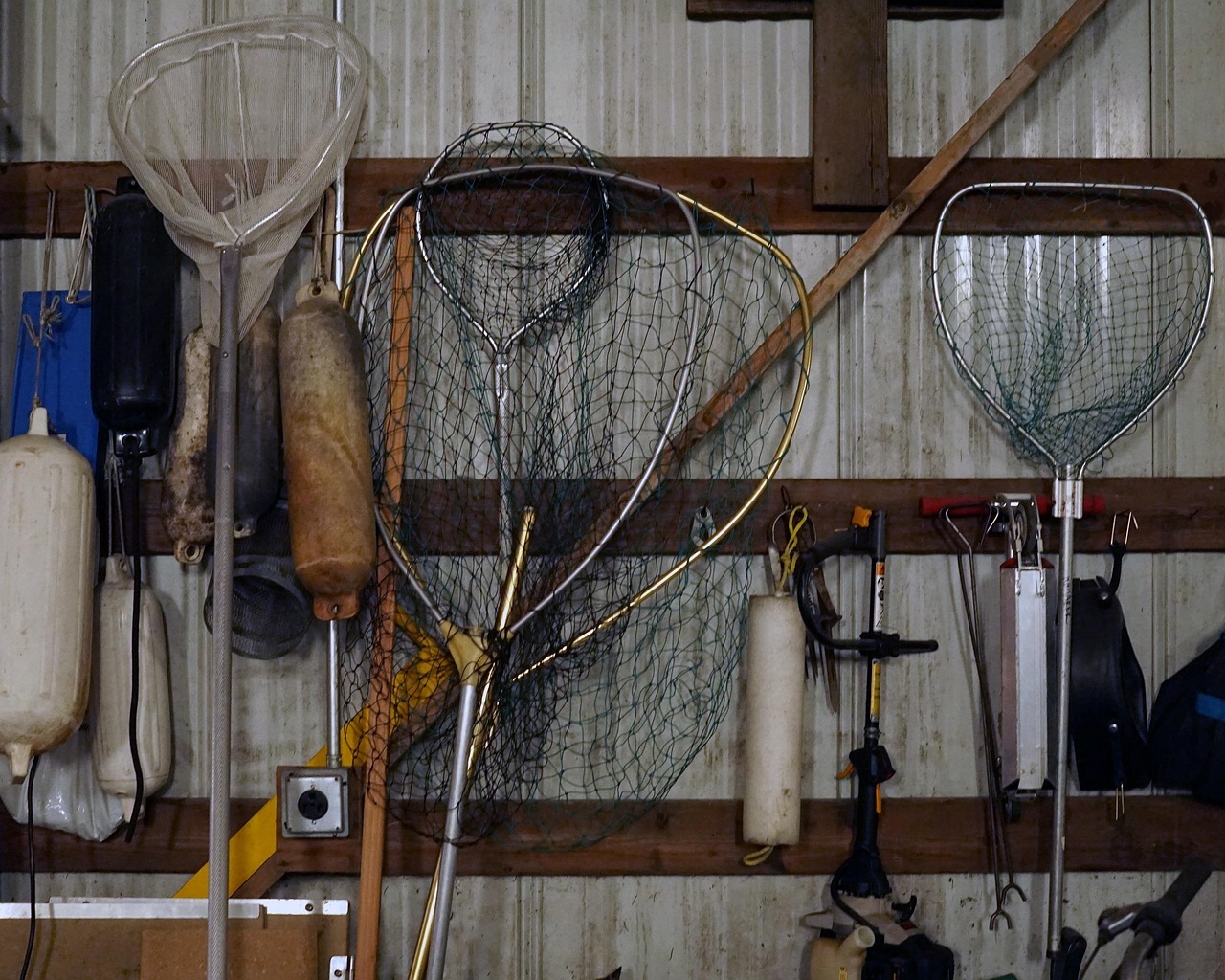
Improper storage and transport of a dip net is a problem that will show up in the best of cases after several months of using the net. A dip net may be tossed into the truck bed with other fishing gear, may be exposed to the sun while the truck is in transit, or may be stored in a damp garage while the person is resting after a long day of fishing. In order to ensure that the net produces the best results for the angler, the net should be rinsed with fresh water after each use.
If the net was used to catch sea life, the water should be rinsed with freshwater. The net should then be allowed to dry in a vertical position in the shade so that water does not remain trapped in the mesh. The net should be stored in a cloth bag or a dedicated tube so that the hoop does not get crushed or the mesh does not get punctured.
Additionally, before the fishing season begins, the net should be inspected for any problems. Any problem spotted in the garage is easily fixed before heading out onto the water where the angler may get frustrated by the problem that was spotted. By understanding these seven problems with a dip net, a person can ensure that the tool performs as required of it.
These tools become more than just disposable gadgets that people use once and then discard. Instead, these tools become reliable fishing tools. Before heading out to the water, a person can take a minute to inspect the mesh, the handle, and the hardware.
Additionally, the person should pay attention to how a net tracks through the water and the condition of the handle. These observations will become habitual with time. A person will still lose some of the shrimp to the net over the rim, and some baitfish will escape the net.
This is a nature of the activity. However, the frustrating situations caused by the seven described problems will eventually dissapears from a person’s fishing trips. All that will remain is the satisfaction of having successfully used one’s dip net and knowing that it will be ready to work again in the future.