
A fly line is an tool that is used to facilitate the casts that occur when a person is fishing with a fly line. The fly line is a critical component of fishing with flies. If a person use a fly line that does not match there fly fishing rod, the fly line will not perform correct.
If a person uses a mismatched fly line, the fly line may pile up during a cast, or the fly line may not be able to turn over the fly that is being cast. Airflo manufacture many different types of fly lines. Airflo manufactures fly lines to match specific environment and fishing applications.
How to Choose the Right Fly Line
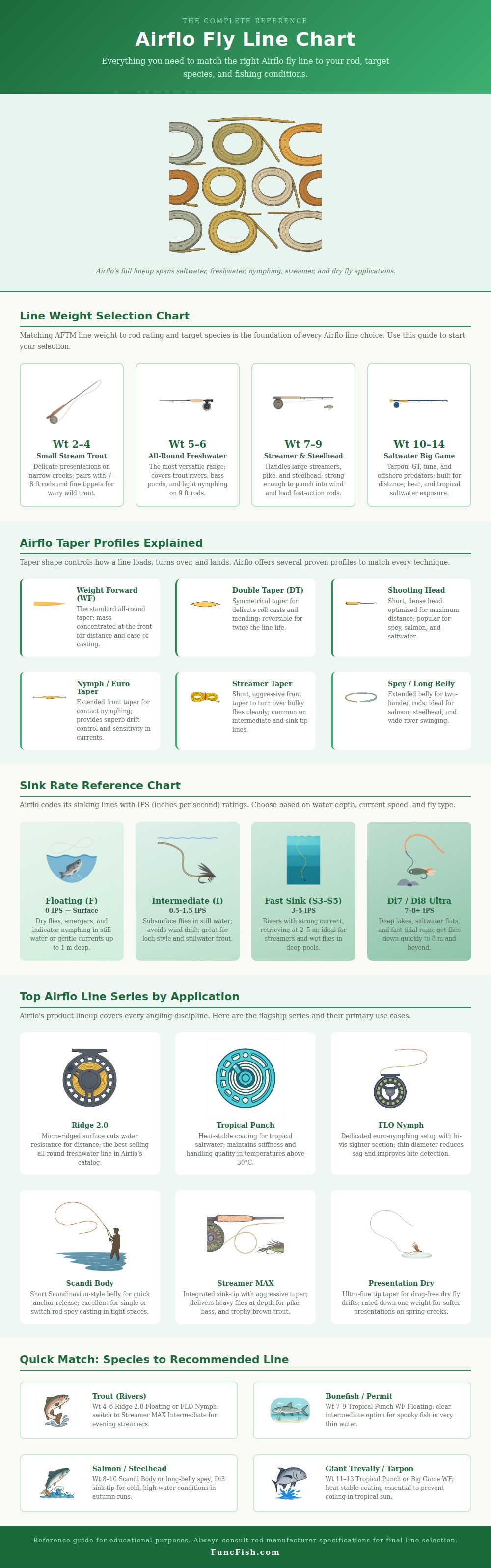
One of the first steps in selecting a fly line is to select the correct weight for the line. The weight of the line should match the fly fishing rod that is being used, as well as the type of fish that are being targeted. For instance, when fishing in narrow creeks, where small flies need to be cast, using a lighter type of fly line will allow for the necessary precision in the fishing.
For those fishing in rivers or ponds, however, a heavier fly line is required to cast against the wind or to cast heavy fly. Additionally, using a very heavy type of fly line allows for the casting of large streamer or for offshore fishing. Maintaining a balance in the weight of the line is critical to the fishing process; if a person overloads the fly fishing rod with too heavy of a line, the fisherman will feel as if the fishing rod is too heavy to efficiently fish with.
Additionally, if a person selects a fly line that is too light for their fishing rod, they will not be able to properly load the tip of their fishing rod. Another factor to consider in the selection of a fly line is the taper of the line. There are many different types of taper for fly lines.
For instance, lines with a weight forward taper will have more of their mass located along the first portion of the line, and these types of lines is helpful for distance casts. For those who wish to perform roll casts or mend their lines, a double taper that is symmetrical along the line will enable the line to be easily flipped end to end to extend its lifespan. Other specialized tapers include short heads for distance on spey rods, as well as long front sections to assist with the drift of nymph flies.
If a person select the incorrect type of taper for the fishing tasks that they will perform with their line, the fly will land in a poor spot on the water. However, if the individual chose the correct taper, the individual will find it easier to perform their casts with the line. The sink rate of the line is another factor to consider.
Sink rates indicate the rate at which the line will sink into the water, and are measured in inches per second. Floater lines will remain on the surface of the water and are used for dry flies or using indicator in shallow waters. Intermediate lines will slowly sink into the water and are used in still water environments.
Faster rates of sink, such as three to five inches per second, allow streamers to be cast into deeper water. Finally, ultra fast rates of sink allow the line to sink to the bottom of reservoirs or tidal rips. Considerations of the depth of the water and the rate of the current in the water are required prior to selecting a line; if the sink rate is set too slow, the fly may get too high above the fish in the water.
Conversely, if the sink rate is too fast, the line may become entangled in any weeds in the area. Airflo also manufactures several different series of fly lines. For instance, manufacturers produce textured lines to reduce drag while fishing in trout streams.
Heat proof tropical lines are manufactured for high temperatures, as these types of lines will not coil when exposed to high temperatures. Additionally, there are line designs with high visibility sections for nymph fishing. Manufacturers produce Spey lines to allow the line to quickly release from tight positions, and sink tip lines are used to cast heavy flies to great depths in the water.
Match the weight of the line to the fish species. For instance, river trout can be targeted using a mid weight floater line or a nymph line. Bonefish live on flats, so an accurate floater line will catch these fish.
For salmon in high flows, spey gear with sink options is required. Finally, for the large predators that live in the offshore waters, using heavy tropical lines will be effective. Air fly fishermen makes many mistakes when they select a line or maintain it.
For instance, environmental condition are often ignored. A new line should of been stretched prior to load it onto the reel. Additionally, fly lines should be cleaned regular.
Finally, fishermen often dont understand the tradeoffs of line designs. For instance, a manufacturer may manufacture a line for distance, or it may be manufactured for delicacy when fishing for specific types of fish.