
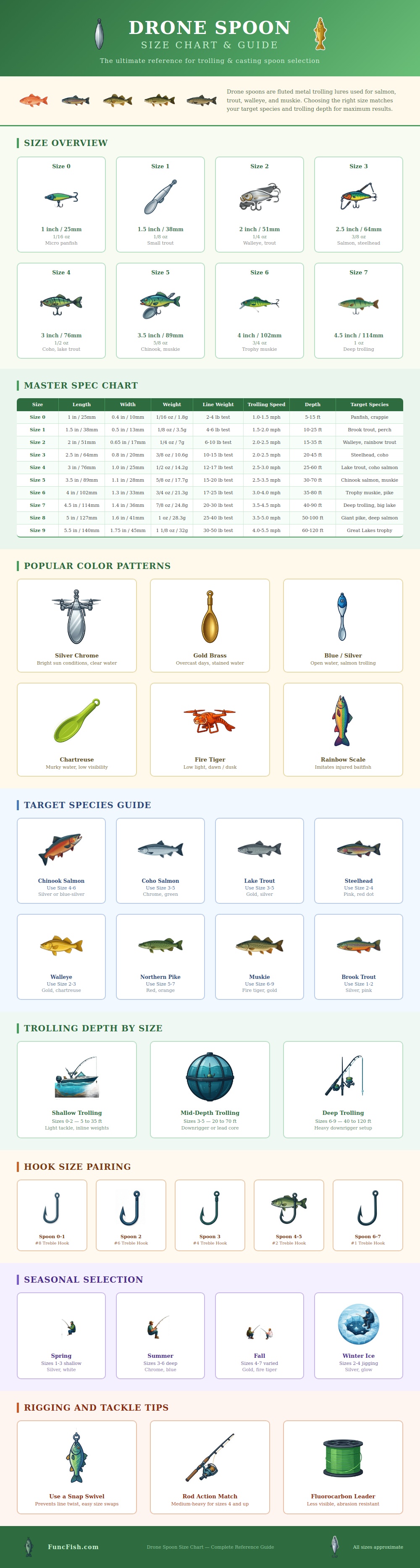
When you are fishing with a spoon, the size of the spoon is one of the most critical factors in determining whether the fish will strike the spoon. The size of the spoon will determine if the spoon will get enough strike to provide you with the fish that you need. If the spoon that you use is too small for the fish that you are target, then the spoon may remain too shallowly in the water.
Additionally, if the spoon is too large for the fish species that you are targeting, then the spoon will be too big for the fish to eat. The chart provided explain the different size of spoons that should be used for different species of fish in different conditions. This is helpful for anglers in that it removes the guesswork regarding the size of a spoon to use.
How to Pick the Right Spoon Size for Fishing
For instance, the size of the spoon that should be used for brook trout in a stream will be different than that which should be used for chinook salmon in a large lake. This information is provided in the chart so that anglers is made aware of these differences without having to memorize them. Many anglers will opt for a spoon that is of the middle-sized range in terms of size because it is the easiest to select.
However, spoons in this size may not necessarily be the best choice for all fishing situation. Smaller spoons will require anglors to use lighter fishing lines and to fish at slower speed on the boat. In contrast, larger spoons will require the use of heavier fishing gear and faster speeds on the boat when trolling the spoon.
In addition to the size of the spoon, the color of the spoon is another choice that anglors must make. If the water that is being fished in is clear and bright with sunlight shine down upon it, then bright chrome colors will work best for spoons. However, if the water is stained or there is less light shining into the water, then gold colors or darker patterns for spoons will be more effective in enticing the fish to strike at the spoon.
This information is provided in the chart according to the type of water where the fishing will occur. If the fish dont see the spoon, then the spoon will not strike the fish. The time of year when fishing is performed will also have an impact on the size of spoons that are used.
For instance, during the spring, when the fish tend to remain in the shallower area of there environments, smaller spoons is required. However, during the midsummer time of the year, the fish will move to deeper waters, which will require larger spoon to be used. Additionally, during the fall, when the baitfish grow in size and the predatory fish become more aggressively in their attempts to consume the baitfish of their environments, the size of the spoon will change again.
These seasonal changes is accounted for in the chart provided. Another factor that must be considered is the size of the hook for the spoon. Using a hook that is too small for the spoon will make it difficult to secure the fish when using a large spoon.
In contrast, using a hook that is too large for a spoon of small size will cause the large hook to interfere with the spoons wobble motion. The size of the hook must be matched to the size of the spoon and the size of the fish that are being target. It is also common for anglers to purchase only one type of spoon size to use in all situation.
While anglers can use spoons of the middle size in a variety of situations, they may not necessarily be the best choice for situations at the extremes of either depth or type of fish species. Anglers who wish to fish for multiple species of fish or who wish to fish at different depths will benefit from having two or three size of spoons available for fishing trips. Additionally, using the chart to determine which size of spoon to use will allow anglors to select a spoon according to the type of water that will be fished in and the time of year when fishing occur, instead of relying on luck to catch the fish.
You should of used the chart more often to recieve better results.