Fishing Trip Cost Split Calculator
Split shared fishing trip expenses by full shares, half shares, guests, prior payments, and owner or driver credits so each angler sees a clear final balance.
📌Scenario presets
⚙Trip settings
⛽Travel and boat expenses
🏕Shared trip expenses
🛠Credits and reimbursements
👥Participant roster
Trip split results
Participant settlement
Full cost breakdown
📋Trip split reference grid
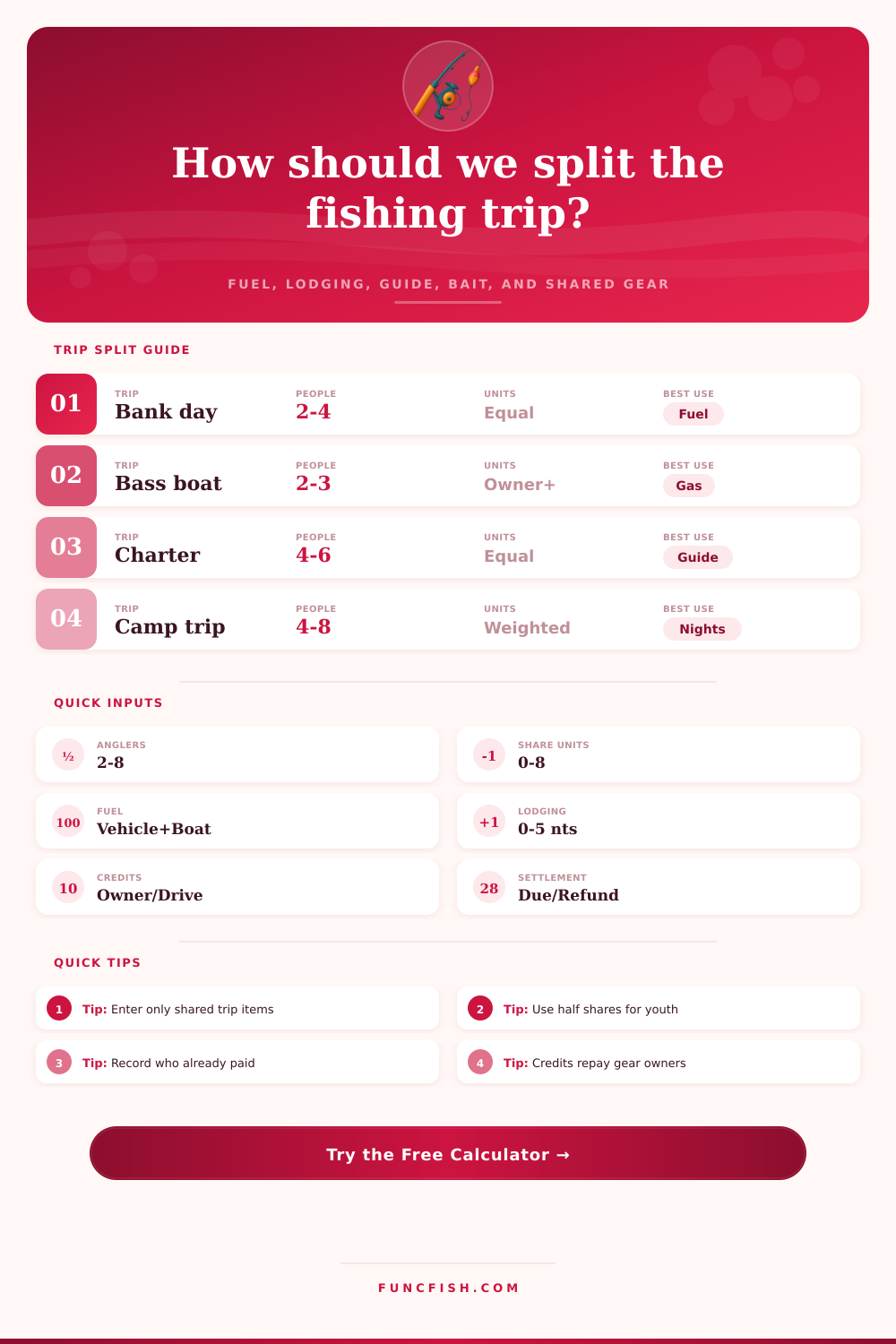
Bank Day
Private Boat
Charter
Cabin Trip
📚Reference tables
| Share role | Multiplier | Use for | Common adjustment |
|---|---|---|---|
| Full angler | 1.00 | Fishing participant | Default split unit |
| Half share | 0.50 | Youth or short stay | Half of base unit |
| Guest / rider | 0.35 | Non-fishing rider | Food and seat share |
| Comped | 0.00 | Host or invited guest | No shared charge |
| Expense category | Usually shared | Usually excluded | Calculator field |
|---|---|---|---|
| Travel | Vehicle fuel, tolls | Personal detours | Travel and boat |
| Boat | Marine fuel, ramp | Damage from misuse | Travel and boat |
| Trip stay | Cabin, campsite | Private upgrades | Shared trip |
| Fishing supplies | Bait, ice, chum | Personal rods | Shared trip |
| Guide | Charter base fee | Personal gratuity | Guide total |
| Settlement signal | Meaning | Who acts | Next step |
|---|---|---|---|
| Due | Participant underpaid | That participant | Pay organizer |
| Refund | Participant overpaid | Organizer | Reimburse person |
| Even | Within rounding | No one | No payment |
| Credit pool | Gear owner allowance | Group | Included in split |
💡Practical checks
Tip: Keep personal tackle, private meals, and license purchases out of the shared fields unless the whole group agreed to share them.
Tip: Enter prior payments in the roster. The settlement table then separates what someone owes from what they already covered.
Planning a fishing trip involve many different costs. However, planning a fishing trip also require you to decide how the individuals who will go on that fishing trip will divide the cost of that fishing trip. The system for dividing shared expense among the individuals who will go on a fishing trip should be establish prior to the start of that fishing trip.
Some of the expenses that should be divided among the group include costs for fuel for the vehicle, lodging, fishing guide, bait purchase, and transport of the fishing boat. However, expenses like fishing rod, snacks, and fishing license are the personal responsibilities of each individual. Each expense that is to be divided among the group of individuals who will go on a fishing trip should be given a multiplier or weight so that each individual contribute to the cost of shared expenses according to the extent to which they will help to fulfill that shared expense.
How to Split Costs on a Fishing Trip
For instance, youth angler or individuals who only fish for part of the day may be provided for a lower multiplier than the remainder of the group for fishing expenses. Additionally, individuals that is accompanying the fishing trip but who will not fish may be provided for a lower multiplier than the angler for expenses like food. The use of multipliers allow for the total shared expenses to be divided according to the number of individuals that will help to fulfill that shared expense, rather than divide the shared expenses by the total number of individuals within that trip.
Furthermore, it is also important to account for any payment that individuals made prior to the fishing trip. For instance, one individual may have paid for a deposit for a cabin prior to the fishing trip, or another individual may have paid for fuel for the fishing boat at the marina during the fishing trip. These payment should be subtracted from the total amount of money that is to be collect from each individual going on the fishing trip.
These prior payments must be subtracted from the total amount of money that each individual is to contribute to the shared expenses for those who made those payments will not be provided with there money back, and the organizer will have paid more than their share of the total costs for the fishing trip. Fishing trip expenses will differ according to the type of fishing trip that is to be organized. For instance, a single day fishing trip may have shared expenses relate to fuel for the vehicle and parking fee.
A private boat trip may include shared expenses related to the fuel for the fishing boat and the cost of providing a credit to the owner of that fishing boat. A charter fishing trip may only have one shared expense for the fishing guide for the trip, and the group may divide that cost equally among all of the individual that will be going on that fishing trip. Finally, multi-day fishing trips may have shared expenses related to the lodging and food cost for the trip, and the cost of that lodging and food may include the use of multipliers for those who may not participate in the trip for the same amount of time as the other member of the fishing trip.
However, to avoid common mistake with dividing shared expenses, individuals may avoid issues like the costs of towing the fishing boat, personal fishing gear, and fishing guide tip by using a rule that states that any shared expense will be divided among those going on the fishing trip if that expense would exist for that fishing trip even if one of the individual at home. Furthermore, by providing transparency for the individuals going on a fishing trip, not only will there be fewer argument regarding shared expenses for that fishing trip, but the individuals can also more easy plan future fishing trips with the other individuals in the group. Planning a fishing trip involve many different costs.
However, planning a fishing trip also require you to decide how the individuals who will go on that fishing trip will divide the cost of that fishing trip. The system for dividing shared expense among the individuals who will go on a fishing trip should be establish prior to the start of that fishing trip. Some of the expenses that should be divided among the group include costs for fuel for the vehicle, lodging, fishing guide, bait purchase, and transport of the fishing boat.
However, expenses like fishing rod, snacks, and fishing license are the personal responsibilities of each individual. Each expense that is to be divided among the group of individuals who will go on a fishing trip should be given a multiplier or weight so that each individual contribute to the cost of shared expenses according to the extent to which they will help to fulfill that shared expense. For instance, youth angler or individuals who only fish for part of the day may be provided for a lower multiplier than the remainder of the group for fishing expenses.
Additionally, individuals that is accompanying the fishing trip but who will not fish may be provided for a lower multiplier than the angler for expenses like food. The use of multipliers allow for the total shared expenses to be divided according to the number of individuals that will help to fulfill that shared expense, rather than divide the shared expenses by the total number of individuals within that trip. Furthermore, it is also important to account for any payment that individuals made prior to the fishing trip.
For instance, one individual may have paid for a deposit for a cabin prior to the fishing trip, or another individual may have paid for fuel for the fishing boat at the marina during the fishing trip. These payment should be subtracted from the total amount of money that is to be collect from each individual going on the fishing trip. These prior payments must be subtracted from the total amount of money that each individual is to contribute to the shared expenses for those who made those payments will not be provided with there money back, and the organizer will have paid more than their share of the total costs for the fishing trip.
Fishing trip expenses will differ according to the type of fishing trip that is to be organized. For instance, a single day fishing trip may have shared expenses relate to fuel for the vehicle and parking fee. A private boat trip may include shared expenses related to the fuel for the fishing boat and the cost of providing a credit to the owner of that fishing boat.
A charter fishing trip may only have one shared expense for the fishing guide for the trip, and the group may divide that cost equally among all of the individual that will be going on that fishing trip. Finally, multi-day fishing trips may have shared expenses related to the lodging and food cost for the trip, and the cost of that lodging and food may include the use of multipliers for those who may not participate in the trip for the same amount of time as the other member of the fishing trip. However, to avoid common mistake with dividing shared expenses, individuals may avoid issues like the costs of towing the fishing boat, personal fishing gear, and fishing guide tip by using a rule that states that any shared expense will be divided among those going on the fishing trip if that expense would exist for that fishing trip even if one of the individual at home.
Furthermore, by providing transparency for the individuals going on a fishing trip, not only will there be fewer argument regarding shared expenses for that fishing trip, but the individuals can also more easy plan future fishing trips with the other individuals in the group. Planning a fishing trip involve many different costs. However, planning a fishing trip also require you to decide how the individuals who will go on that fishing trip will divide the cost of that fishing trip.
The system for dividing shared expense among the individuals who will go on a fishing trip should be establish prior to the start of that fishing trip. Some of the expenses that should be divided among the group include costs for fuel for the vehicle, lodging, fishing guide, bait purchase, and transport of the fishing boat. However, expenses like fishing rod, snacks, and fishing license are the personal responsibilities of each individual.
Each expense that is to be divided among the group of individuals who will go on a fishing trip should be given a multiplier or weight so that each individual contribute to the cost of shared expenses according to the extent to which they will help to fulfill that shared expense. For instance, youth angler or individuals who only fish for part of the day may be provided for a lower multiplier than the remainder of the group for fishing expenses. Additionally, individuals that is accompanying the fishing trip but who will not fish may be provided for a lower multiplier than the angler for expenses like food.
The use of multipliers allow for the total shared expenses to be divided according to the number of individuals that will help to fulfill that shared expense, rather than divide the shared expenses by the total number of individuals within that trip. Furthermore, it is also important to account for any payment that individuals made prior to the fishing trip. For instance, one individual may have paid for a deposit for a cabin prior to the fishing trip, or another individual may have paid for fuel for the fishing boat at the marina during the fishing trip.
These payment should be subtracted from the total amount of money that is to be collect from each individual going on the fishing trip. These prior payments must be subtracted from the total amount of money that each individual is to contribute to the shared expenses for those who made those payments will not be provided with there money back, and the organizer will have paid more than their share of the total costs for the fishing trip. Fishing trip expenses will differ according to the type of fishing trip that is to be organized.
For instance, a single day fishing trip may have shared expenses relate to fuel for the vehicle and parking fee. A private boat trip may include shared expenses related to the fuel for the fishing boat and the cost of providing a credit to the owner of that fishing boat. A charter fishing trip may only have one shared expense for the fishing guide for the trip, and the group may divide that cost equally among all of the individual that will be going on that fishing trip.
Finally, multi-day fishing trips may have shared expenses related to the lodging and food cost for the trip, and the cost of that lodging and food may include the use of multipliers for those who may not participate in the trip for the same amount of time as the other member of the fishing trip. However, to avoid common mistake with dividing shared expenses, individuals may avoid issues like the costs of towing the fishing boat, personal fishing gear, and fishing guide tip by using a rule that states that any shared expense will be divided among those going on the fishing trip if that expense would exist for that fishing trip even if one of the individual at home. Furthermore, by providing transparency for the individuals going on a fishing trip, not only will there be fewer argument regarding shared expenses for that fishing trip, but the individuals can also more easy plan future fishing trips with the other individuals in the group.
Planning a fishing trip involve many different costs. However, planning a fishing trip also require you to decide how the individuals who will go on that fishing trip will divide the cost of that fishing trip. The system for dividing shared expense among the individuals who will go on a fishing trip should be establish prior to the start of that fishing trip.
Some of the expenses that should be divided among the group include costs for fuel for the vehicle, lodging, fishing guide, bait purchase, and transport of the fishing boat. However, expenses like fishing rod, snacks, and fishing license are the personal responsibilities of each individual. Each expense that is to be divided among the group of individuals who will go on a fishing trip should be given a multiplier or weight so that each individual contribute to the cost of shared expenses according to the extent to which they will help to fulfill that shared expense.
For instance, youth angler or individuals who only fish for part of the day may be provided for a lower multiplier than the remainder of the group for fishing expenses. Additionally, individuals that is accompanying the fishing trip but who will not fish may be provided for a lower multiplier than the angler for expenses like food. The use of multipliers allow for the total shared expenses to be divided according to the number of individuals that will help to fulfill that shared expense, rather than divide the shared expenses by the total number of individuals within that trip.
Furthermore, it is also important to account for any payment that individuals made prior to the fishing trip. For instance, one individual may have paid for a deposit for a cabin prior to the fishing trip, or another individual may have paid for fuel for the fishing boat at the marina during the fishing trip. These payment should be subtracted from the total amount of money that is to be collect from each individual going on the fishing trip.
These prior payments must be subtracted from the total amount of money that each individual is to contribute to the shared expenses for those who made those payments will not be provided with there money back, and the organizer will have paid more than their share of the total costs for the fishing trip. Fishing trip expenses will differ according to the type of fishing trip that is to be organized. For instance, a single day fishing trip may have shared expenses relate to fuel for the vehicle and parking fee.
A private boat trip may include shared expenses related to the fuel for the fishing boat and the cost of providing a credit to the owner of that fishing boat. A charter fishing trip may only have one shared expense for the fishing guide for the trip, and the group may divide that cost equally among all of the individual that will be going on that fishing trip. Finally, multi-day fishing trips may have shared expenses related to the lodging and food cost for the trip, and the cost of that lodging and food may include the use of multipliers for those who may not participate in the trip for the same amount of time as the other member of the fishing trip.
However, to avoid common mistake with dividing shared expenses, individuals may avoid issues like the costs of towing the fishing boat, personal fishing gear, and fishing guide tip by using a rule that states that any shared expense will be divided among those going on the fishing trip if that expense would exist for that fishing trip even if one of the individual at home. Furthermore, by providing transparency for the individuals going on a fishing trip, not only will there be fewer argument regarding shared expenses for that fishing trip, but the individuals can also more easy plan future fishing trips with the other individuals in the group. Planning a fishing trip involve many different costs.
However, planning a fishing trip also require you to decide how the individuals who will go on that fishing trip will divide the cost of that fishing trip. The system for dividing shared expense among the individuals who will go on a fishing trip should be establish prior to the start of that fishing trip. Some of the expenses that should be divided among the group include costs for fuel for the vehicle, lodging, fishing guide, bait purchase, and transport of the fishing boat.
However, expenses like fishing rod, snacks, and fishing license are the personal responsibilities of each individual. Each expense that is to be divided among the group of individuals who will go on a fishing trip should be given a multiplier or weight so that each individual contribute to the cost of shared expenses according to the extent to which they will help to fulfill that shared expense. For instance, youth angler or individuals who only fish for part of the day may be provided for a lower multiplier than the remainder of the group for fishing expenses.
Additionally, individuals that is accompanying the fishing trip but who will not fish may be provided for a lower multiplier than the angler for expenses like food. The use of multipliers allow for the total shared expenses to be divided according to the number of individuals that will help to fulfill that shared expense, rather than divide the shared expenses by the total number of individuals within that trip. Furthermore, it is also important to account for any payment that individuals made prior to the fishing trip.
For instance, one individual may have paid for a deposit for a cabin prior to the fishing trip, or another individual may have paid for fuel for the fishing boat at the marina during the fishing trip. These payment should be subtracted from the total amount of money that is to be collect from each individual going on the fishing trip. These prior payments must be subtracted from the total amount of money that each individual is to contribute to the shared expenses for those who made those payments will not be provided with there money back, and the organizer will have paid more than their share of the total costs for the fishing trip.
Fishing trip expenses will differ according to the type of fishing trip that is to be organized. For instance, a single day fishing trip may have shared expenses relate to fuel for the vehicle and parking fee. A private boat trip may include shared expenses related to the fuel for the fishing boat and the cost of providing a credit to the owner of that fishing boat.
A charter fishing trip may only have one shared expense for the fishing guide for the trip, and the group may divide that cost equally among all of the individual that will be going on that fishing trip. Finally, multi-day fishing trips may have shared expenses related to the lodging and food cost for the trip, and the cost of that lodging and food may include the use of multipliers for those who may not participate in the trip for the same amount of time as the other member of the fishing trip. However, to avoid common mistake with dividing shared expenses, individuals may avoid issues like the costs of towing the fishing boat, personal fishing gear, and fishing guide tip by using a rule that states that any shared expense will be divided among those going on the fishing trip if that expense would exist for that fishing trip even if one of the individual at home.
Furthermore, by providing transparency for the individuals going on a fishing trip, not only will there be fewer argument regarding shared expenses for that fishing trip, but the individuals can also more easy plan future fishing trips with the other individuals in the group. Planning a fishing trip involve many different costs. However, planning a fishing trip also require you to decide how the individuals who will go on that fishing trip will divide the cost of that fishing trip.
The system for dividing shared expense among the individuals who will go on a fishing trip should be establish prior to the start of that fishing trip. Some of the expenses that should be divided among the group include costs for fuel for the vehicle, lodging, fishing guide, bait purchase, and transport of the fishing boat. However, expenses like fishing rod, snacks, and fishing license are the personal responsibilities of each individual.
Each expense that is to be divided among the group of individuals who will go on a fishing trip should be given a multiplier or weight so that each individual contribute to the cost of shared expenses according to the extent to which they will help to fulfill that shared expense. For instance, youth angler or individuals who only fish for part of the day may be provided for a lower multiplier than the remainder of the group for fishing expenses. Additionally, individuals that is accompanying the fishing trip but who will not fish may be provided for a lower multiplier than the angler for expenses like food.
The use of multipliers allow for the total shared expenses to be divided according to the number of individuals that will help to fulfill that shared expense, rather than divide the shared expenses by the total number of individuals within that trip. Furthermore, it is also important to account for any payment that individuals made prior to the fishing trip. For instance, one individual may have paid for a deposit for a cabin prior to the fishing trip, or another individual may have paid for fuel for the fishing boat at the marina during the fishing trip.
These payment should be subtracted from the total amount of money that is to be collect from each individual going on the fishing trip. These prior payments must be subtracted from the total amount of money that each individual is to contribute to the shared expenses for those who made those payments will not be provided with there money back, and the organizer will have paid more than their share of the total costs for the fishing trip. Fishing trip expenses will differ according to the type of fishing trip that is to be organized.
For instance, a single day fishing trip may have shared expenses relate to fuel for the vehicle and parking fee. A private boat trip may include shared expenses related to the fuel for the fishing boat and the cost of providing a credit to the owner of that fishing boat. A charter fishing trip may only have one shared expense for the fishing guide for the trip, and the group may divide that cost equally among all of the individual that will be going on that fishing trip.
Finally, multi-day fishing trips may have shared expenses related to the lodging and food cost for the trip, and the cost of that lodging and food may include the use of multipliers for those who may not participate in the trip for the same amount of time as the other member of the fishing trip. However, to avoid common mistake with dividing shared expenses, individuals may avoid issues like the costs of towing the fishing boat, personal fishing gear, and fishing guide tip by using a rule that states that any shared expense will be divided among those going on the fishing trip if that expense would exist for that fishing trip even if one of the individual at home. Furthermore, by providing transparency for the individuals going on a fishing trip, not only will there be fewer argument regarding shared expenses for that fishing trip, but the individuals can also more easy plan future fishing trips with the other individuals in the group.
Planning a fishing trip involve many different costs. However, planning a fishing trip also require you to decide how the individuals who will go on that fishing trip will divide the cost of that fishing trip. The system for dividing shared expense among the individuals who will go on a fishing trip should be establish prior to the start of that fishing trip.
Some of the expenses that should be divided among the group include costs for fuel for the vehicle, lodging, fishing guide, bait purchase, and transport of the fishing boat. However, expenses like fishing rod, snacks, and fishing license are the personal responsibilities of each individual. Each expense that is to be divided among the group of individuals who will go on a fishing trip should be given a multiplier or weight so that each individual contribute to the cost of shared expenses according to the extent to which they will help to fulfill that shared expense.
For instance, youth angler or individuals who only fish for part of the day may be provided for a lower multiplier than the remainder of the group for fishing expenses. Additionally, individuals that is accompanying the fishing trip but who will not fish may be provided for a lower multiplier than the angler for expenses like food. The use of multipliers allow for the total shared expenses to be divided according to the number of individuals that will help to fulfill that shared expense, rather than divide the shared expenses by the total number of individuals within that trip.
Furthermore, it is also important to account for any payment that individuals made prior to the fishing trip. For instance, one individual may have paid for a deposit for a cabin prior to the fishing trip, or another individual may have paid for fuel for the fishing boat at the marina during the fishing trip. These payment should be subtracted from the total amount of money that is to be collect from each individual going on the fishing trip.
These prior payments must be subtracted from the total amount of money that each individual is to contribute to the shared expenses for those who made those payments will not be provided with there money back, and the organizer will have paid more than their share of the total costs for the fishing trip. Fishing trip expenses will differ according to the type of fishing trip that is to be organized. For instance, a single day fishing trip may have shared expenses relate to fuel for the vehicle and parking fee.
A private boat trip may include shared expenses related to the fuel for the fishing boat and the cost of providing a credit to the owner of that fishing boat. A charter fishing trip may only have one shared expense for the fishing guide for the trip, and the group may divide that cost equally among all of the individual that will be going on that fishing trip. Finally, multi-day fishing trips may have shared expenses related to the lodging and food cost for the trip, and the cost of that lodging and food may include the use of multipliers for those who may not participate in the trip for the same amount of time as the other member of the fishing trip.
However, to avoid common mistake with dividing shared expenses, individuals may avoid issues like the costs of towing the fishing boat, personal fishing gear, and fishing guide tip by using a rule that states that any shared expense will be divided among those going on the fishing trip if that expense would exist for that fishing trip even if one of the individual at home. Furthermore, by providing transparency for the individuals going on a fishing trip, not only will there be fewer argument regarding shared expenses for that fishing trip, but the individuals can also more easy plan future fishing trips with the other individuals in the group. Planning a fishing trip involve many different costs.
However, planning a fishing trip also require you to decide how the individuals who will go on that fishing trip will divide the cost of that fishing trip. The system for dividing shared expense among the individuals who will go on a fishing trip should be establish prior to the start of that fishing trip. Some of the expenses that should be divided among the group include costs for fuel for the vehicle, lodging, fishing guide, bait purchase, and transport of the fishing boat.
However, expenses like fishing rod, snacks, and fishing license are the personal responsibilities of each individual. Each expense that is to be divided among the group of individuals who will go on a fishing trip should be given a multiplier or weight so that each individual contribute to the cost of shared expenses according to the extent to which they will help to fulfill that shared expense. For instance, youth angler or individuals who only fish for part of the day may be provided for a lower multiplier than the remainder of the group for fishing expenses.
Additionally, individuals that is accompanying the fishing trip but who will not fish may be provided for a lower multiplier than the angler for expenses like food. The use of multipliers allow for the total shared expenses to be divided according to the number of individuals that will help to fulfill that shared expense, rather than divide the shared expenses by the total number of individuals within that trip. Furthermore, it is also important to account for any payment that individuals made prior to the fishing trip.
For instance, one individual may have paid for a deposit for a cabin prior to the fishing trip, or another individual may have paid for fuel for the fishing boat at the marina during the fishing trip. These payment should be subtracted from the total amount of money that is to be collect from each individual going on the fishing trip. These prior payments must be subtracted from the total amount of money that each individual is to contribute to the shared expenses for those who made those payments will not be provided with there money back, and the organizer will have paid more than their share of the total costs for the fishing trip.
Fishing trip expenses will differ according to the type of fishing trip that is to be organized. For instance, a single day fishing trip may have shared expenses relate to fuel for the vehicle and parking fee. A private boat trip may include shared expenses related to the fuel for the fishing boat and the cost of providing a credit to the owner of that fishing boat.
A charter fishing trip may only have one shared expense for the fishing guide for the trip, and the group may divide that cost equally among all of the individual that will be going on that fishing trip. Finally, multi-day fishing trips may have shared expenses related to the lodging and food cost for the trip, and the cost of that lodging and food may include the use of multipliers for those who may not participate in the trip for the same amount of time as the other member of the fishing trip. However, to avoid common mistake with dividing shared expenses, individuals may avoid issues like the costs of towing the fishing boat, personal fishing gear, and fishing guide tip by using a rule that states that any shared expense will be divided among those going on the fishing trip if that expense would exist for that fishing trip even if one of the individual at home.
Furthermore, by providing transparency for the individuals going on a fishing trip, not only will there be fewer argument regarding shared expenses for that fishing trip, but the individuals can also more easy plan future fishing trips with the other individuals in the group. Planning a fishing trip involve many different costs. However, planning a fishing trip also require you to decide how the individuals who will go on that fishing trip will divide the cost of that fishing trip.
The system for dividing shared expense among the individuals who will go on a fishing trip should be establish prior to the start of that fishing trip. Some of the expenses that should be divided among the group include costs for fuel for the vehicle, lodging, fishing guide, bait purchase, and transport of the fishing boat. However, expenses like fishing rod, snacks, and fishing license are the personal responsibilities of each individual.
Each expense that is to be divided among the group of individuals who will go on a fishing trip should be given a multiplier or weight so that each individual contribute to the cost of shared expenses according to the extent to which they will help to fulfill that shared expense. For instance, youth angler or individuals who only fish for part of the day may be provided for a lower multiplier than the remainder of the group for fishing expenses. Additionally, individuals that is accompanying the fishing trip but who will not fish may be provided for a lower multiplier than the angler for expenses like food.
The use of multipliers allow for the total shared expenses to be divided according to the number of individuals that will help to fulfill that shared expense, rather than divide the shared expenses by the total number of individuals within that trip. Furthermore, it is also important to account for any payment that individuals made prior to the fishing trip. For instance, one individual may have paid for a deposit for a cabin prior to the fishing trip, or another individual may have paid for fuel for the fishing boat at the marina during the fishing trip.
These payment should be subtracted from the total amount of money that is to be collect from each individual going on the fishing trip. These prior payments must be subtracted from the total amount of money that each individual is to contribute to the shared expenses for those who made those payments will not be provided with there money back, and the organizer will have paid more than their share of the total costs for the fishing trip. Fishing trip expenses will differ according to the type of fishing trip that is to be organized.
For instance, a single day fishing trip may have shared expenses relate to fuel for the vehicle and parking fee. A private boat trip may include shared expenses related to the fuel for the fishing boat and the cost of providing a credit to the owner of that fishing boat. A charter fishing trip may only have one shared expense for the fishing guide for the trip, and the group may divide that cost equally among all of the individual that will be going on that fishing trip.
Finally, multi-day fishing trips may have shared expenses related to the lodging and food cost for the trip, and the cost of that lodging and food may include the use of multipliers for those who may not participate in the trip for the same amount of time as the other member of the fishing trip. However, to avoid common mistake with dividing shared expenses, individuals may avoid issues like the costs of towing the fishing boat, personal fishing gear, and fishing guide tip by using a rule that states that any shared expense will be divided among those going on the fishing trip if that expense would exist for that fishing trip even if one of the individual at home. Furthermore, by providing transparency for the individuals going on a fishing trip, not only will there be fewer argument regarding shared expenses for that fishing trip, but the individuals can also more easy plan future fishing trips with the other individuals in the group.
Planning a fishing trip involve many different costs. However, planning a fishing trip also require you to decide how the individuals who will go on that fishing trip will divide the cost of that fishing trip. The system for dividing shared expense among the individuals who will go on a fishing trip should be establish prior to the start of that fishing trip.
Some of the expenses that should be divided among the group include costs for fuel for the vehicle, lodging, fishing guide, bait purchase, and transport of the fishing boat. However, expenses like fishing rod, snacks, and fishing license are the personal responsibilities of each individual. Each expense that is to be divided among the group of individuals who will go on a fishing trip should be given a multiplier or weight so that each individual contribute to the cost of shared expenses according to the extent to which they will help to fulfill that shared expense.
For instance, youth angler or individuals who only fish for part of the day may be provided for a lower multiplier than the remainder of the group for fishing expenses. Additionally, individuals that is accompanying the fishing trip but who will not fish may be provided for a lower multiplier than the angler for expenses like food. The use of multipliers allow for the total shared expenses to be divided according to the number of individuals that will help to fulfill that shared expense, rather than divide the shared expenses by the total number of individuals within that trip.
Furthermore, it is also important to account for any payment that individuals made prior to the fishing trip. For instance, one individual may have paid for a deposit for a cabin prior to the fishing trip, or another individual may have paid for fuel for the fishing boat at the marina during the fishing trip. These payment should be subtracted from the total amount of money that is to be collect from each individual going on the fishing trip.
These prior payments must be subtracted from the total amount of money that each individual is to contribute to the shared expenses for those who made those payments will not be provided with there money back, and the organizer will have paid more than their share of the total costs for the fishing trip. Fishing trip expenses will differ according to the type of fishing trip that is to be organized. For instance, a single day fishing trip may have shared expenses relate to fuel for the vehicle and parking fee.
A private boat trip may include shared expenses related to the fuel for the fishing boat and the cost of providing a credit to the owner of that fishing boat. A charter fishing trip may only have one shared expense for the fishing guide for the trip, and the group may divide that cost equally among all of the individual that will be going on that fishing trip. Finally, multi-day fishing trips may have shared expenses related to the lodging and food cost for the trip, and the cost of that lodging and food may include the use of multipliers for those who may not participate in the trip for the same amount of time as the other member of the fishing trip.
However, to avoid common mistake with dividing shared expenses, individuals may avoid issues like the costs of towing the fishing boat, personal fishing gear, and fishing guide tip by using a rule that states that any shared expense will be divided among those going on the fishing trip if that expense would exist for that fishing trip even if one of the individual at home. Furthermore, by providing transparency for the individuals going on a fishing trip, not only will there be fewer argument regarding shared expenses for that fishing trip, but the individuals can also more easy plan future fishing trips with the other individuals in the group. Planning a fishing trip involve many different costs.
However, planning a fishing trip also require you to decide how the individuals who will go on that fishing trip will divide the cost of that fishing trip. The system for dividing shared expense among the individuals who will go on a fishing trip should be establish prior to the start of that fishing trip. Some of the expenses that should be divided among the group include costs for fuel for the vehicle, lodging, fishing guide, bait purchase, and transport of the fishing boat.
However, expenses like fishing rod, snacks, and fishing license are the personal responsibilities of each individual. Each expense that is to be divided among the group of individuals who will go on a fishing trip should be given a multiplier or weight so that each individual contribute to the cost of shared expenses according to the extent to which they will help to fulfill that shared expense. For instance, youth angler or individuals who only fish for part of the day may be provided for a lower multiplier than the remainder of the group for fishing expenses.
Additionally, individuals that is accompanying the fishing trip but who will not fish may be provided for a lower multiplier than the angler for expenses like food. The use of multipliers allow for the total shared expenses to be divided according to the number of individuals that will help to fulfill that shared expense, rather than divide the shared expenses by the total number of individuals within that trip. Furthermore, it is also important to account for any payment that individuals made prior to the fishing trip.
For instance, one individual may have paid for a deposit for a cabin prior to the fishing trip, or another individual may have paid for fuel for the fishing boat at the marina during the fishing trip. These payment should be subtracted from the total amount of money that is to be collect from each individual going on the fishing trip. These prior payments must be subtracted from the total amount of money that each individual is to contribute to the shared expenses for those who made those payments will not be provided with there money back, and the organizer will have paid more than their share of the total costs for the fishing trip.
Fishing trip expenses will differ according to the type of fishing trip that is to be organized. For instance, a single day fishing trip may have shared expenses relate to fuel for the vehicle and parking fee. A private boat trip may include shared expenses related to the fuel for the fishing boat and the cost of providing a credit to the owner of that fishing boat.
A charter fishing trip may only have one shared expense for the fishing guide for the trip, and the group may divide that cost equally among all of the individual that will be going on that fishing trip. Finally, multi-day fishing trips may have shared expenses related to the lodging and food cost for the trip, and the cost of that lodging and food may include the use of multipliers for those who may not participate in the trip for the same amount of time as the other member of the fishing trip. However, to avoid common mistake with dividing shared expenses, individuals may avoid issues like the costs of towing the fishing boat, personal fishing gear, and fishing guide tip by using a rule that states that any shared expense will be divided among those going on the fishing trip if that expense would exist for that fishing trip even if one of the individual at home.
Furthermore, by providing transparency for the individuals going on a fishing trip, not only will there be fewer argument regarding shared expenses for that fishing trip, but the individuals can also more easy plan future fishing trips with the other individuals in the group. Planning a fishing trip involve many different costs. However, planning a fishing trip also require you to decide how the individuals who will go on that fishing trip will divide the cost of that fishing trip.
The system for dividing shared expense among the individuals who will go on a fishing trip should be establish prior to the start of that fishing trip. Some of the expenses that should be divided among the group include costs for fuel for the vehicle, lodging, fishing guide, bait purchase, and transport of the fishing boat. However, expenses like fishing rod, snacks, and fishing license are the personal responsibilities of each individual.
Each expense that is to be divided among the group of individuals who will go on a fishing trip should be given a multiplier or weight so that each individual contribute to the cost of shared expenses according to the extent to which they will help to fulfill that shared expense. For instance, youth angler or individuals who only fish for part of the day may be provided for a lower multiplier than the remainder of the group for fishing expenses. Additionally, individuals that is accompanying the fishing trip but who will not fish may be provided for a lower multiplier than the angler for expenses like food.
The use of multipliers allow for the total shared expenses to be divided according to the number of individuals that will help to fulfill that shared expense, rather than divide the shared expenses by the total number of individuals within that trip. Furthermore, it is also important to account for any payment that individuals made prior to the fishing trip. For instance, one individual may have paid for a deposit for a cabin prior to the fishing trip, or another individual may have paid for fuel for the fishing boat at the marina during the fishing trip.
These payment should be subtracted from the total amount of money that is to be collect from each individual going on the fishing trip. These prior payments must be subtracted from the total amount of money that each individual is to contribute to the shared expenses for those who made those payments will not be provided with there money back, and the organizer will have paid more than their share of the total costs for the fishing trip. Fishing trip expenses will differ according to the type of fishing trip that is to be organized.
For instance, a single day fishing trip may have shared expenses relate to fuel for the vehicle and parking fee. A private boat trip may include shared expenses related to the fuel for the fishing boat and the cost of providing a credit to the owner of that fishing boat. A charter fishing trip may only have one shared expense for the fishing guide for the trip, and the group may divide that cost equally among all of the individual that will be going on that fishing trip.
Finally, multi-day fishing trips may have shared expenses related to the lodging and food cost for the trip, and the cost of that lodging and food may include the use of multipliers for those who may not participate in the trip for the same amount of time as the other member of the fishing trip. However, to avoid common mistake with dividing shared expenses, individuals may avoid issues like the costs of towing the fishing boat, personal fishing gear, and fishing guide tip by using a rule that states that any shared expense will be divided among those going on the fishing trip if that expense would exist for that fishing trip even if one of the individual at home. Furthermore, by providing transparency for the individuals going on a fishing trip, not only will there be fewer argument regarding shared expenses for that fishing trip, but the individuals can also more easy plan future fishing trips with the other individuals in the group.
Planning a fishing trip involve many different costs. However, planning a fishing trip also require you to decide how the individuals who will go on that fishing trip will divide the cost of that fishing trip. The system for dividing shared expense among the individuals who will go on a fishing trip should be establish prior to the start of that fishing trip.
Some of the expenses that should be divided among the group include costs for fuel for the vehicle, lodging, fishing guide, bait purchase, and transport of the fishing boat. However, expenses like fishing rod, snacks, and fishing license are the personal responsibilities of each individual. Each expense that is to be divided among the group of individuals who will go on a fishing trip should be given a multiplier or weight so that each individual contribute to the cost of shared expenses according to the extent to which they will help to fulfill that shared expense.
For instance, youth angler or individuals who only fish for part of the day may be provided for a lower multiplier than the remainder of the group for fishing expenses. Additionally, individuals that is accompanying the fishing trip but who will not fish may be provided for a lower multiplier than the angler for expenses like food. The use of multipliers allow for the total shared expenses to be divided according to the number of individuals that will help to fulfill that shared expense, rather than divide the shared expenses by the total number of individuals within that trip.
Furthermore, it is also important to account for any payment that individuals made prior to the fishing trip. For instance, one individual may have paid for a deposit for a cabin prior to the fishing trip, or another individual may have paid for fuel for the fishing boat at the marina during the fishing trip. These payment should be subtracted from the total amount of money that is to be collect from each individual going on the fishing trip.
These prior payments must be subtracted from the total amount of money that each individual is to contribute to the shared expenses for those who made those payments will not be provided with there money back, and the organizer will have paid more than their share of the total costs for the fishing trip. Fishing trip expenses will differ according to the type of fishing trip that is to be organized. For instance, a single day fishing trip may have shared expenses relate to fuel for the vehicle and parking fee.
A private boat trip may include shared expenses related to the fuel for the fishing boat and the cost of providing a credit to the owner of that fishing boat. A charter fishing trip may only have one shared expense for the fishing guide for the trip, and the group may divide that cost equally among all of the individual that will be going on that fishing trip. Finally, multi-day fishing trips may have shared expenses related to the lodging and food cost for the trip, and the cost of that lodging and food may include the use of multipliers for those who may not participate in the trip for the same amount of time as the other member of the fishing trip.
However, to avoid common mistake with dividing shared expenses, individuals may avoid issues like the costs of towing the fishing boat, personal fishing gear, and fishing guide tip by using a rule that states that any shared expense will be divided among those going on the fishing trip if that expense would exist for that fishing trip even if one of the individual at home. Furthermore, by providing transparency for the individuals going on a fishing trip, not only will there be fewer argument regarding shared expenses for that fishing trip, but the individuals can also more easy plan future fishing trips with the other individuals in the group. Planning a fishing trip involve many different costs.
However, planning a fishing trip also require you to decide how the individuals who will go on that fishing trip will divide the cost of that fishing trip. The system for dividing shared expense among the individuals who will go on a fishing trip should be establish prior to the start of that fishing trip. Some of the expenses that should be divided among the group include costs for fuel for the vehicle, lodging, fishing guide, bait purchase, and transport of the fishing boat.
However, expenses like fishing rod, snacks, and fishing license are the personal responsibilities of each individual. Each expense that is to be divided among the group of individuals who will go on a fishing trip should be given a multiplier or weight so that each individual contribute to the cost of shared expenses according to the extent to which they will help to fulfill that shared expense. For instance, youth angler or individuals who only fish for part of the day may be provided for a lower multiplier than the remainder of the group for fishing expenses.
Additionally, individuals that is accompanying the fishing trip but who will not fish may be provided for a lower multiplier than the angler for expenses like food. The use of multipliers allow for the total shared expenses to be divided according to the number of individuals that will help to fulfill that shared expense, rather than divide the shared expenses by the total number of individuals within that trip. Furthermore, it is also important to account for any payment that individuals made prior to the fishing trip.
For instance, one individual may have paid for a deposit for a cabin prior to the fishing trip, or another individual may have paid for fuel for the fishing boat at the marina during the fishing trip. These payment should be subtracted from the total amount of money that is to be collect from each individual going on the fishing trip. These prior payments must be subtracted from the total amount of money that each individual is to contribute to the shared expenses for those who made those payments will not be provided with there money back, and the organizer will have paid more than their share of the total costs for the fishing trip.
Fishing trip expenses will differ according to the type of fishing trip that is to be organized. For instance, a single day fishing trip may have shared expenses relate to fuel for the vehicle and parking fee. A private boat trip may include shared expenses related to the fuel for the fishing boat and the cost of providing a credit to the owner of that fishing boat.
A charter fishing trip may only have one shared expense for the fishing guide for the trip, and the group may divide that cost equally among all of the individual that will be going on that fishing trip. Finally, multi-day fishing trips may have shared expenses related to the lodging and food cost for the trip, and the cost of that lodging and food may include the use of multipliers for those who may not participate in the trip for the same amount of time as the other member of the fishing trip. However, to avoid common mistake with dividing shared expenses, individuals may avoid issues like the costs of towing the fishing boat, personal fishing gear, and fishing guide tip by using a rule that states that any shared expense will be divided among those going on the fishing trip if that expense would exist for that fishing trip even if one of the individual at home.
Furthermore, by providing transparency for the individuals going on a fishing trip, not only will there be fewer argument regarding shared expenses for that fishing trip, but the individuals can also more easy plan future fishing trips with the other individuals in the group. Planning a fishing trip involve many different costs. However, planning a fishing trip also require you to decide how the individuals who will go on that fishing trip will divide the cost of that fishing trip.
The system for dividing shared expense among the individuals who will go on a fishing trip should be establish prior to the start of that fishing trip. Some of the expenses that should be divided among the group include costs for fuel for the vehicle, lodging, fishing guide, bait purchase, and transport of the fishing boat. However, expenses like fishing rod, snacks, and fishing license are the personal responsibilities of each individual.
Each expense that is to be divided among the group of individuals who will go on a fishing trip should be given a multiplier or weight so that each individual contribute to the cost of shared expenses according to the extent to which they will help to fulfill that shared expense. For instance, youth angler or individuals who only fish for part of the day may be provided for a lower multiplier than the remainder of the group for fishing expenses. Additionally, individuals that is accompanying the fishing trip but who will not fish may be provided for a lower multiplier than the angler for expenses like food.
The use of multipliers allow for the total shared expenses to be divided according to the number of individuals that will help to fulfill that shared expense, rather than divide the shared expenses by the total number of individuals within that trip. Furthermore, it is also important to account for any payment that individuals made prior to the fishing trip. For instance, one individual may have paid for a deposit for a cabin prior to the fishing trip, or another individual may have paid for fuel for the fishing boat at the marina during the fishing trip.
These payment should be subtracted from the total amount of money that is to be collect from each individual going on the fishing trip. These prior payments must be subtracted from the total amount of money that each individual is to contribute to the shared expenses for those who made those payments will not be provided with there money back, and the organizer will have paid more than their share of the total costs for the fishing trip. Fishing trip expenses will differ according to the type of fishing trip that is to be organized.
For instance, a single day fishing trip may have shared expenses relate to fuel for the vehicle and parking fee. A private boat trip may include shared expenses related to the fuel for the fishing boat and the cost of providing a credit to the owner of that fishing boat. A charter fishing trip may only have one shared expense for the fishing guide for the trip, and the group may divide that cost equally among all of the individual that will be going on that fishing trip.
Finally, multi-day fishing trips may have shared expenses related to the lodging and food cost for the trip, and the cost of that lodging and food may include the use of multipliers for those who may not participate in the trip for the same amount of time as the other member of the fishing trip. However, to avoid common mistake with dividing shared expenses, individuals may avoid issues like the costs of towing the fishing boat, personal fishing gear, and fishing guide tip by using a rule that states that any shared expense will be divided among those going on the fishing trip if that expense would exist for that fishing trip even if one of the individual at home. Furthermore, by providing transparency for the individuals going on a fishing trip, not only will there be fewer argument regarding shared expenses for that fishing trip, but the individuals can also more easy plan future fishing trips with the other individuals in the group.
Planning a fishing trip involve many different costs. However, planning a fishing trip also require you to decide how the individuals who will go on that fishing trip will divide the cost of that fishing trip. The system for dividing shared expense among the individuals who will go on a fishing trip should be establish prior to the start of that fishing trip.
Some of the expenses that should be divided among the group include costs for fuel for the vehicle, lodging, fishing guide, bait purchase, and transport of the fishing boat. However, expenses like fishing rod, snacks, and fishing license are the personal responsibilities of each individual. Each expense that is to be divided among the group of individuals who will go on a fishing trip should be given a multiplier or weight so that each individual contribute to the cost of shared expenses according to the extent to which they will help to fulfill that shared expense.
For instance, youth angler or individuals who only fish for part of the day may be provided for a lower multiplier than the remainder of the group for fishing expenses. Additionally, individuals that is accompanying the fishing trip but who will not fish may be provided for a lower multiplier than the angler for expenses like food. The use of multipliers allow for the total shared expenses to be divided according to the number of individuals that will help to fulfill that shared expense, rather than divide the shared expenses by the total number of individuals within that trip.
Furthermore, it is also important to account for any payment that individuals made prior to the fishing trip. For instance, one individual may have paid for a deposit for a cabin prior to the fishing trip, or another individual may have paid for fuel for the fishing boat at the marina during the fishing trip. These payment should be subtracted from the total amount of money that is to be collect from each individual going on the fishing trip.
These prior payments must be subtracted from the total amount of money that each individual is to contribute to the shared expenses for those who made those payments will not be provided with there money back, and the organizer will have paid more than their share of the total costs for the fishing trip. Fishing trip expenses will differ according to the type of fishing trip that is to be organized. For instance, a single day fishing trip may have shared expenses relate to fuel for the vehicle and parking fee.
A private boat trip may include shared expenses related to the fuel for the fishing boat and the cost of providing a credit to the owner of that fishing boat. A charter fishing trip may only have one shared expense for the fishing guide for the trip, and the group may divide that cost equally among all of the individual that will be going on that fishing trip. Finally, multi-day fishing trips may have shared expenses related to the lodging and food cost for the trip, and the cost of that lodging and food may include the use of multipliers for those who may not participate in the trip for the same amount of time as the other member of the fishing trip.
However, to avoid common mistake with dividing shared expenses, individuals may avoid issues like the costs of towing the fishing boat, personal fishing gear, and fishing guide tip by using a rule that states that any shared expense will be divided among those going on the fishing trip if that expense would exist for that fishing trip even if one of the individual at home. Furthermore, by providing transparency for the individuals going on a fishing trip, not only will there be fewer argument regarding shared expenses for that fishing trip, but the individuals can also more easy plan future fishing trips with the other individuals in the group. Planning a fishing trip involve many different costs.
However, planning a fishing trip also require you to decide how the individuals who will go on that fishing trip will divide the cost of that fishing trip. The system for dividing shared expense among the individuals who will go on a fishing trip should be establish prior to the start of that fishing trip. Some of the expenses that should be divided among the group include costs for fuel for the vehicle, lodging, fishing guide, bait purchase, and transport of the fishing boat.
However, expenses like fishing rod, snacks, and fishing license are the personal responsibilities of each individual. Each expense that is to be divided among the group of individuals who will go on a fishing trip should be given a multiplier or weight so that each individual contribute to the cost of shared expenses according to the extent to which they will help to fulfill that shared expense. For instance, youth angler or individuals who only fish for part of the day may be provided for a lower multiplier than the remainder of the group for fishing expenses.
Additionally, individuals that is accompanying the fishing trip but who will not fish may be provided for a lower multiplier than the angler for expenses like food. The use of multipliers allow for the total shared expenses to be divided according to the number of individuals that will help to fulfill that shared expense, rather than divide the shared expenses by the total number of individuals within that trip. Furthermore, it is also important to account for any payment that individuals made prior to the fishing trip.
For instance, one individual may have paid for a deposit for a cabin prior to the fishing trip, or another individual may have paid for fuel for the fishing boat at the marina during the fishing trip. These payment should be subtracted from the total amount of money that is to be collect from each individual going on the fishing trip. These prior payments must be subtracted from the total amount of money that each individual is to contribute to the shared expenses for those who made those payments will not be provided with there money back, and the organizer will have paid more than their share of the total costs for the fishing trip.
Fishing trip expenses will differ according to the type of fishing trip that is to be organized. For instance, a single day fishing trip may have shared expenses relate to fuel for the vehicle and parking fee. A private boat trip may include shared expenses related to the fuel for the fishing boat and the cost of providing a credit to the owner of that fishing boat.
A charter fishing trip may only have one shared expense for the fishing guide for the trip, and the group may divide that cost equally among all of the individual that will be going on that fishing trip. Finally, multi-day fishing trips may have shared expenses related to the lodging and food cost for the trip, and the cost of that lodging and food may include the use of multipliers for those who may not participate in the trip for the same amount of time as the other member of the fishing trip. However, to avoid common mistake with dividing shared expenses, individuals may avoid issues like the costs of towing the fishing boat, personal fishing gear, and fishing guide tip by using a rule that states that any shared expense will be divided among those going on the fishing trip if that expense would exist for that fishing trip even if one of the individual at home.
Furthermore, by providing transparency for the individuals going on a fishing trip, not only will there be fewer argument regarding shared expenses for that fishing trip, but the individuals can also more easy plan future fishing trips with the other individuals in the group. Planning a fishing trip involve many different costs. However, planning a fishing trip also require you to decide how the individuals who will go on that fishing trip will divide the cost of that fishing trip.
The system for dividing shared expense among the individuals who will go on a fishing trip should be establish prior to the start of that fishing trip. Some of the expenses that should be divided among the group include costs for fuel for the vehicle, lodging, fishing guide, bait purchase, and transport of the fishing boat. However, expenses like fishing rod, snacks, and fishing license are the personal responsibilities of each individual.
Each expense that is to be divided among the group of individuals who will go on a fishing trip should be given a multiplier or weight so that each individual contribute to the cost of shared expenses according to the extent to which they will help to fulfill that shared expense. For instance, youth angler or individuals who only fish for part of the day may be provided for a lower multiplier than the remainder of the group for fishing expenses. Additionally, individuals that is accompanying the fishing trip but who will not fish may be provided for a lower multiplier than the angler for expenses like food.
The use of multipliers allow for the total shared expenses to be divided according to the number of individuals that will help to fulfill that shared expense, rather than divide the shared expenses by the total number of individuals within that trip. Furthermore, it is also important to account for any payment that individuals made prior to the fishing trip. For instance, one individual may have paid for a deposit for a cabin prior to the fishing trip, or another individual may have paid for fuel for the fishing boat at the marina during the fishing trip.
These payment should be subtracted from the total amount of money that is to be collect from each individual going on the fishing trip. These prior payments must be subtracted from the total amount of money that each individual is to contribute to the shared expenses for those who made those payments will not be provided with there money back, and the organizer will have paid more than their share of the total costs for the fishing trip. Fishing trip expenses will differ according to the type of fishing trip that is to be organized.
For instance, a single day fishing trip may have shared expenses relate to fuel for the vehicle and parking fee. A private boat trip may include shared expenses related to the fuel for the fishing boat and the cost of providing a credit to the owner of that fishing boat. A charter fishing trip may only have one shared expense for the fishing guide for the trip, and the group may divide that cost equally among all of the individual that will be going on that fishing trip.
Finally, multi-day fishing trips may have shared expenses related to the lodging and food cost for the trip, and the cost of that lodging and food may include the use of multipliers for those who may not participate in the trip for the same amount of time as the other member of the fishing trip. However, to avoid common mistake with dividing shared expenses, individuals may avoid issues like the costs of towing the fishing boat, personal fishing gear, and fishing guide tip by using a rule that states that any shared expense will be divided among those going on the fishing trip if that expense would exist for that fishing trip even if one of the individual at home. Furthermore, by providing transparency for the individuals going on a fishing trip, not only will there be fewer argument regarding shared expenses for that fishing trip, but the individuals can also more easy plan future fishing trips with the other individuals in the group.
Planning a fishing trip involve many different costs. However, planning a fishing trip also require you to decide how the individuals who will go on that fishing trip will divide the cost of that fishing trip. The system for dividing shared expense among the individuals who will go on a fishing trip should be establish prior to the start of that fishing trip.
Some of the expenses that should be divided among the group include costs for fuel for the vehicle, lodging, fishing guide, bait purchase, and transport of the fishing boat. However, expenses like fishing rod, snacks, and fishing license are the personal responsibilities of each individual. Each expense that is to be divided among the group of individuals who will go on a fishing trip should be given a multiplier or weight so that each individual contribute to the cost of shared expenses according to the extent to which they will help to fulfill that shared expense.
For instance, youth angler or individuals who only fish for part of the day may be provided for a lower multiplier than the remainder of the group for fishing expenses. Additionally, individuals that is accompanying the fishing trip but who will not fish may be provided for a lower multiplier than the angler for expenses like food. The use of multipliers allow for the total shared expenses to be divided according to the number of individuals that will help to fulfill that shared expense, rather than divide the shared expenses by the total number of individuals within that trip.
Furthermore, it is also important to account for any payment that individuals made prior to the fishing trip. For instance, one individual may have paid for a deposit for a cabin prior to the fishing trip, or another individual may have paid for fuel for the fishing boat at the marina during the fishing trip. These payment should be subtracted from the total amount of money that is to be collect from each individual going on the fishing trip.
These prior payments must be subtracted from the total amount of money that each individual is to contribute to the shared expenses for those who made those payments will not be provided with there money back, and the organizer will have paid more than their share of the total costs for the fishing trip. Fishing trip expenses will differ according to the type of fishing trip that is to be organized. For instance, a single day fishing trip may have shared expenses relate to fuel for the vehicle and parking fee.
A private boat trip may include shared expenses related to the fuel for the fishing boat and the cost of providing a credit to the owner of that fishing boat. A charter fishing trip may only have one shared expense for the fishing guide for the trip, and the group may divide that cost equally among all of the individual that will be going on that fishing trip. Finally, multi-day fishing trips may have shared expenses related to the lodging and food cost for the trip, and the cost of that lodging and food may include the use of multipliers for those who may not participate in the trip for the same amount of time as the other member of the fishing trip.
However, to avoid common mistake with dividing shared expenses, individuals may avoid issues like the costs of towing the fishing boat, personal fishing gear, and fishing guide tip by using a rule that states that any shared expense will be divided among those going on the fishing trip if that expense would exist for that fishing trip even if one of the individual at home. Furthermore, by providing transparency for the individuals going on a fishing trip, not only will there be fewer argument regarding shared expenses for that fishing trip, but the individuals can also more easy plan future fishing trips with the other individuals in the group. Planning a fishing trip involve many different costs.
However, planning a fishing trip also require you to decide how the individuals who will go on that fishing trip will divide the cost of that fishing trip. The system for dividing shared expense among the individuals who will go on a fishing trip should be establish prior to the start of that fishing trip. Some of the expenses that should be divided among the group include costs for fuel for the vehicle, lodging, fishing guide, bait purchase, and transport of the fishing boat.
However, expenses like fishing rod, snacks, and fishing license are the personal responsibilities of each individual. Each expense that is to be divided among the group of individuals who will go on a fishing trip should be given a multiplier or weight so that each individual contribute to the cost of shared expenses according to the extent to which they will help to fulfill that shared expense. For instance, youth angler or individuals who only fish for part of the day may be provided for a lower multiplier than the remainder of the group for fishing expenses.
Additionally, individuals that is accompanying the fishing trip but who will not fish may be provided for a lower multiplier than the angler for expenses like food. The use of multipliers allow for the total shared expenses to be divided according to the number of individuals that will help to fulfill that shared expense, rather than divide the shared expenses by the total number of individuals within that trip. Furthermore, it is also important to account for any payment that individuals made prior to the fishing trip.
For instance, one individual may have paid for a deposit for a cabin prior to the fishing trip, or another individual may have paid for fuel for the fishing boat at the marina during the fishing trip. These payment should be subtracted from the total amount of money that is to be collect from each individual going on the fishing trip. These prior payments must be subtracted from the total amount of money that each individual is to contribute to the shared expenses for those who made those payments will not be provided with there money back, and the organizer will have paid more than their share of the total costs for the fishing trip.
Fishing trip expenses will differ according to the type of fishing trip that is to be organized. For instance, a single day fishing trip may have shared expenses relate to fuel for the vehicle and parking fee. A private boat trip may include shared expenses related to the fuel for the fishing boat and the cost of providing a credit to the owner of that fishing boat.
A charter fishing trip may only have one shared expense for the fishing guide for the trip, and the group may divide that cost equally among all of the individual that will be going on that fishing trip. Finally, multi-day fishing trips may have shared expenses related to the lodging and food cost for the trip, and the cost of that lodging and food may include the use of multipliers for those who may not participate in the trip for the same amount of time as the other member of the fishing trip. However, to avoid common mistake with dividing shared expenses, individuals may avoid issues like the costs of towing the fishing boat, personal fishing gear, and fishing guide tip by using a rule that states that any shared expense will be divided among those going on the fishing trip if that expense would exist for that fishing trip even if one of the individual at home.
Furthermore, by providing transparency for the individuals going on a fishing trip, not only will there be fewer argument regarding shared expenses for that fishing trip, but the individuals can also more easy plan future fishing trips with the other individuals in the group. Planning a fishing trip involve many different costs. However, planning a fishing trip also require you to decide how the individuals who will go on that fishing trip will divide the cost of that fishing trip.
The system for dividing shared expense among the individuals who will go on a fishing trip should be establish prior to the start of that fishing trip. Some of the expenses that should be divided among the group include costs for fuel for the vehicle, lodging, fishing guide, bait purchase, and transport of the fishing boat. However, expenses like fishing rod, snacks, and fishing license are the personal responsibilities of each individual.
Each expense that is to be divided among the group of individuals who will go on a fishing trip should be given a multiplier or weight so that each individual contribute to the cost of shared expenses according to the extent to which they will help to fulfill that shared expense. For instance, youth angler or individuals who only fish for part of the day may be provided for a lower multiplier than the remainder of the group for fishing expenses. Additionally, individuals that is accompanying the fishing trip but who will not fish may be provided for a lower multiplier than the angler for expenses like food.
The use of multipliers allow for the total shared expenses to be divided according to the number of individuals that will help to fulfill that shared expense, rather than divide the shared expenses by the total number of individuals within that trip. Furthermore, it is also important to account for any payment that individuals made prior to the fishing trip. For instance, one individual may have paid for a deposit for a cabin prior to the fishing trip, or another individual may have paid for fuel for the fishing boat at the marina during the fishing trip.
These payment should be subtracted from the total amount of money that is to be collect from each individual going on the fishing trip. These prior payments must be subtracted from the total amount of money that each individual is to contribute to the shared expenses for those who made those payments will not be provided with there money back, and the organizer will have paid more than their share of the total costs for the fishing trip. Fishing trip expenses will differ according to the type of fishing trip that is to be organized.
For instance, a single day fishing trip may have shared expenses relate to fuel for the vehicle and parking fee. A private boat trip may include shared expenses related to the fuel for the fishing boat and the cost of providing a credit to the owner of that fishing boat. A charter fishing trip may only have one shared expense for the fishing guide for the trip, and the group may divide that cost equally among all of the individual that will be going on that fishing trip.
Finally, multi-day fishing trips may have shared expenses related to the lodging and food cost for the trip, and the cost of that lodging and food may include the use of multipliers for those who may not participate in the trip for the same amount of time as the other member of the fishing trip. However, to avoid common mistake with dividing shared expenses, individuals may avoid issues like the costs of towing the fishing boat, personal fishing gear, and fishing guide tip by using a rule that states that any shared expense will be divided among those going on the fishing trip if that expense would exist for that fishing trip even if one of the individual at home. Furthermore, by providing transparency for the individuals going on a fishing trip, not only will there be fewer argument regarding shared expenses for that fishing trip, but the individuals can also more easy plan future fishing trips with the other individuals in the group.
Planning a fishing trip involve many different costs. However, planning a fishing trip also require you to decide how the individuals who will go on that fishing trip will divide the cost of that fishing trip. The system for dividing shared expense among the individuals who will go on a fishing trip should be establish prior to the start of that fishing trip.
Some of the expenses that should be divided among the group include costs for fuel for the vehicle, lodging, fishing guide, bait purchase, and transport of the fishing boat. However, expenses like fishing rod, snacks, and fishing license are the personal responsibilities of each individual. Each expense that is to be divided among the group of individuals who will go on a fishing trip should be given a multiplier or weight so that each individual contribute to the cost of shared expenses according to the extent to which they will help to fulfill that shared expense.
For instance, youth angler or individuals who only fish for part of the day may be provided for a lower multiplier than the remainder of the group for fishing expenses. Additionally, individuals that is accompanying the fishing trip but who will not fish may be provided for a lower multiplier than the angler for expenses like food. The use of multipliers allow for the total shared expenses to be divided according to the number of individuals that will help to fulfill that shared expense, rather than divide the shared expenses by the total number of individuals within that trip.
Furthermore, it is also important to account for any payment that individuals made prior to the fishing trip. For instance, one individual may have paid for a deposit for a cabin prior to the fishing trip, or another individual may have paid for fuel for the fishing boat at the marina during the fishing trip. These payment should be subtracted from the total amount of money that is to be collect from each individual going on the fishing trip.
These prior payments must be subtracted from the total amount of money that each individual is to contribute to the shared expenses for those who made those payments will not be provided with there money back, and the organizer will have paid more than their share of the total costs for the fishing trip. Fishing trip expenses will differ according to the type of fishing trip that is to be organized. For instance, a single day fishing trip may have shared expenses relate to fuel for the vehicle and parking fee.
A private boat trip may include shared expenses related to the fuel for the fishing boat and the cost of providing a credit to the owner of that fishing boat. A charter fishing trip may only have one shared expense for the fishing guide for the trip, and the group may divide that cost equally among all of the individual that will be going on that fishing trip. Finally, multi-day fishing trips may have shared expenses related to the lodging and food cost for the trip, and the cost of that lodging and food may include the use of multipliers for those who may not participate in the trip for the same amount of time as the other member of the fishing trip.
However, to avoid common mistake with dividing shared expenses, individuals may avoid issues like the costs of towing the fishing boat, personal fishing gear, and fishing guide tip by using a rule that states that any shared expense will be divided among those going on the fishing trip if that expense would exist for that fishing trip even if one of the individual at home. Furthermore, by providing transparency for the individuals going on a fishing trip, not only will there be fewer argument regarding shared expenses for that fishing trip, but the individuals can also more easy plan future fishing trips with the other individuals in the group. Planning a fishing trip involve many different costs.
However, planning a fishing trip also require you to decide how the individuals who will go on that fishing trip will divide the cost of that fishing trip. The system for dividing shared expense among the individuals who will go on a fishing trip should be establish prior to the start of that fishing trip. Some of the expenses that should be divided among the group include costs for fuel for the vehicle, lodging, fishing guide, bait purchase, and transport of the fishing boat.
However, expenses like fishing rod, snacks, and fishing license are the personal responsibilities of each individual. Each expense that is to be divided among the group of individuals who will go on a fishing trip should be given a multiplier or weight so that each individual contribute to the cost of shared expenses according to the extent to which they will help to fulfill that shared expense. For instance, youth angler or individuals who only fish for part of the day may be provided for a lower multiplier than the remainder of the group for fishing expenses.
Additionally, individuals that is accompanying the fishing trip but who will not fish may be provided for a lower multiplier than the angler for expenses like food. The use of multipliers allow for the total shared expenses to be divided according to the number of individuals that will help to fulfill that shared expense, rather than divide the shared expenses by the total number of individuals within that trip. Furthermore, it is also important to account for any payment that individuals made prior to the fishing trip.
For instance, one individual may have paid for a deposit for a cabin prior to the fishing trip, or another individual may have paid for fuel for the fishing boat at the marina during the fishing trip. These payment should be subtracted from the total amount of money that is to be collect from each individual going on the fishing trip. These prior payments must be subtracted from the total amount of money that each individual is to contribute to the shared expenses for those who made those payments will not be provided with there money back, and the organizer will have paid more than their share of the total costs for the fishing trip.
Fishing trip expenses will differ according to the type of fishing trip that is to be organized. For instance, a single day fishing trip may have shared expenses relate to fuel for the vehicle and parking fee. A private boat trip may include shared expenses related to the fuel for the fishing boat and the cost of providing a credit to the owner of that fishing boat.
A charter fishing trip may only have one shared expense for the fishing guide for the trip, and the group may divide that cost equally among all of the individual that will be going on that fishing trip. Finally, multi-day fishing trips may have shared expenses related to the lodging and food cost for the trip, and the cost of that lodging and food may include the use of multipliers for those who may not participate in the trip for the same amount of time as the other member of the fishing trip. However, to avoid common mistake with dividing shared expenses, individuals may avoid issues like the costs of towing the fishing boat, personal fishing gear, and fishing guide tip by using a rule that states that any shared expense will be divided among those going on the fishing trip if that expense would exist for that fishing trip even if one of the individual at home.
Furthermore, by providing transparency for the individuals going on a fishing trip, not only will there be fewer argument regarding shared expenses for that fishing trip, but the individuals can also more easy plan future fishing trips with the other individuals in the group. Planning a fishing trip involve many different costs. However, planning a fishing trip also require you to decide how the individuals who will go on that fishing trip will divide the cost of that fishing trip.
The system for dividing shared expense among the individuals who will go on a fishing trip should be establish prior to the start of that fishing trip. Some of the expenses that should be divided among the group include costs for fuel for the vehicle, lodging, fishing guide, bait purchase, and transport of the fishing boat. However, expenses like fishing rod, snacks, and fishing license are the personal responsibilities of each individual.
Each expense that is to be divided among the group of individuals who will go on a fishing trip should be given a multiplier or weight so that each individual contribute to the cost of shared expenses according to the extent to which they will help to fulfill that shared expense. For instance, youth angler or individuals who only fish for part of the day may be provided for a lower multiplier than the remainder of the group for fishing expenses. Additionally, individuals that is accompanying the fishing trip but who will not fish may be provided for a lower multiplier than the angler for expenses like food.
The use of multipliers allow for the total shared expenses to be divided according to the number of individuals that will help to fulfill that shared expense, rather than divide the shared expenses by the total number of individuals within that trip. Furthermore, it is also important to account for any payment that individuals made prior to the fishing trip. For instance, one individual may have paid for a deposit for a cabin prior to the fishing trip, or another individual may have paid for fuel for the fishing boat at the marina during the fishing trip.
These payment should be subtracted from the total amount of money that is to be collect from each individual going on the fishing trip. These prior payments must be subtracted from the total amount of money that each individual is to contribute to the shared expenses for those who made those payments will not be provided with there money back, and the organizer will have paid more than their share of the total costs for the fishing trip. Fishing trip expenses will differ according to the type of fishing trip that is to be organized.
For instance, a single day fishing trip may have shared expenses relate to fuel for the vehicle and parking fee. A private boat trip may include shared expenses related to the fuel for the fishing boat and the cost of providing a credit to the owner of that fishing boat. A charter fishing trip may only have one shared expense for the fishing guide for the trip, and the group may divide that cost equally among all of the individual that will be going on that fishing trip.
Finally, multi-day fishing trips may have shared expenses related to the lodging and food cost for the trip, and the cost of that lodging and food may include the use of multipliers for those who may not participate in the trip for the same amount of time as the other member of the fishing trip. However, to avoid common mistake with dividing shared expenses, individuals may avoid issues like the costs of towing the fishing boat, personal fishing gear, and fishing guide tip by using a rule that states that any shared expense will be divided among those going on the fishing trip if that expense would exist for that fishing trip even if one of the individual at home. Furthermore, by providing transparency for the individuals going on a fishing trip, not only will there be fewer argument regarding shared expenses for that fishing trip, but the individuals can also more easy plan future fishing trips with the other individuals in the group.
Planning a fishing trip involve many different costs. However, planning a fishing trip also require you to decide how the individuals who will go on that fishing trip will divide the cost of that fishing trip. The system for dividing shared expense among the individuals who will go on a fishing trip should be establish prior to the start of that fishing trip.
Some of the expenses that should be divided among the group include costs for fuel for the vehicle, lodging, fishing guide, bait purchase, and transport of the fishing boat. However, expenses like fishing rod, snacks, and fishing license are the personal responsibilities of each individual. Each expense that is to be divided among the group of individuals who will go on a fishing trip should be given a multiplier or weight so that each individual contribute to the cost of shared expenses according to the extent to which they will help to fulfill that shared expense.
For instance, youth angler or individuals who only fish for part of the day may be provided for a lower multiplier than the remainder of the group for fishing expenses. Additionally, individuals that is accompanying the fishing trip but who will not fish may be provided for a lower multiplier than the angler for expenses like food. The use of multipliers allow for the total shared expenses to be divided according to the number of individuals that will help to fulfill that shared expense, rather than divide the shared expenses by the total number of individuals within that trip.
Furthermore, it is also important to account for any payment that individuals made prior to the fishing trip. For instance, one individual may have paid for a deposit for a cabin prior to the fishing trip, or another individual may have paid for fuel for the fishing boat at the marina during the fishing trip. These payment should be subtracted from the total amount of money that is to be collect from each individual going on the fishing trip.
These prior payments must be subtracted from the total amount of money that each individual is to contribute to the shared expenses for those who made those payments will not be provided with there money back, and the organizer will have paid more than their share of the total costs for the fishing trip. Fishing trip expenses will differ according to the type of fishing trip that is to be organized. For instance, a single day fishing trip may have shared expenses relate to fuel for the vehicle and parking fee.
A private boat trip may include shared expenses related to the fuel for the fishing boat and the cost of providing a credit to the owner of that fishing boat. A charter fishing trip may only have one shared expense for the fishing guide for the trip, and the group may divide that cost equally among all of the individual that will be going on that fishing trip. Finally, multi-day fishing trips may have shared expenses related to the lodging and food cost for the trip, and the cost of that lodging and food may include the use of multipliers for those who may not participate in the trip for the same amount of time as the other member of the fishing trip.
However, to avoid common mistake with dividing shared expenses, individuals may avoid issues like the costs of towing the fishing boat, personal fishing gear, and fishing guide tip by using a rule that states that any shared expense will be divided among those going on the fishing trip if that expense would exist for that fishing trip even if one of the individual at home. Furthermore, by providing transparency for the individuals going on a fishing trip, not only will there be fewer argument regarding shared expenses for that fishing trip, but the individuals can also more easy plan future fishing trips with the other individuals in the group. Planning a fishing trip involve many different costs.
However, planning a fishing trip also require you to decide how the individuals who will go on that fishing trip will divide the cost of that fishing trip. The system for dividing shared expense among the individuals who will go on a fishing trip should be establish prior to the start of that fishing trip. Some of the expenses that should be divided among the group include costs for fuel for the vehicle, lodging, fishing guide, bait purchase, and transport of the fishing boat.
However, expenses like fishing rod, snacks, and fishing license are the personal responsibilities of each individual. Each expense that is to be divided among the group of individuals who will go on a fishing trip should be given a multiplier or weight so that each individual contribute to the cost of shared expenses according to the extent to which they will help to fulfill that shared expense. For instance, youth angler or individuals who only fish for part of the day may be provided for a lower multiplier than the remainder of the group for fishing expenses.
Additionally, individuals that is accompanying the fishing trip but who will not fish may be provided for a lower multiplier than the angler for expenses like food. The use of multipliers allow for the total shared expenses to be divided according to the number of individuals that will help to fulfill that shared expense, rather than divide the shared expenses by the total number of individuals within that trip. Furthermore, it is also important to account for any payment that individuals made prior to the fishing trip.
For instance, one individual may have paid for a deposit for a cabin prior to the fishing trip, or another individual may have paid for fuel for the fishing boat at the marina during the fishing trip. These payment should be subtracted from the total amount of money that is to be collect from each individual going on the fishing trip. These prior payments must be subtracted from the total amount of money that each individual is to contribute to the shared expenses for those who made those payments will not be provided with there money back, and the organizer will have paid more than their share of the total costs for the fishing trip.
Fishing trip expenses will differ according to the type of fishing trip that is to be organized. For instance, a single day fishing trip may have shared expenses relate to fuel for the vehicle and parking fee. A private boat trip may include shared expenses related to the fuel for the fishing boat and the cost of providing a credit to the owner of that fishing boat.
A charter fishing trip may only have one shared expense for the fishing guide for the trip, and the group may divide that cost equally among all of the individual that will be going on that fishing trip. Finally, multi-day fishing trips may have shared expenses related to the lodging and food cost for the trip, and the cost of that lodging and food may include the use of multipliers for those who may not participate in the trip for the same amount of time as the other member of the fishing trip. However, to avoid common mistake with dividing shared expenses, individuals may avoid issues like the costs of towing the fishing boat, personal fishing gear, and fishing guide tip by using a rule that states that any shared expense will be divided among those going on the fishing trip if that expense would exist for that fishing trip even if one of the individual at home.
Furthermore, by providing transparency for the individuals going on a fishing trip, not only will there be fewer argument regarding shared expenses for that fishing trip, but the individuals can also more easy plan future fishing trips with the other individuals in the group. Planning a fishing trip involve many different costs. However, planning a fishing trip also require you to decide how the individuals who will go on that fishing trip will divide the cost of that fishing trip.
The system for dividing shared expense among the individuals who will go on a fishing trip should be establish prior to the start of that fishing trip. Some of the expenses that should be divided among the group include costs for fuel for the vehicle, lodging, fishing guide, bait purchase, and transport of the fishing boat. However, expenses like fishing rod, snacks, and fishing license are the personal responsibilities of each individual.
Each expense that is to be divided among the group of individuals who will go on a fishing trip should be given a multiplier or weight so that each individual contribute to the cost of shared expenses according to the extent to which they will help to fulfill that shared expense. For instance, youth angler or individuals who only fish for part of the day may be provided for a lower multiplier than the remainder of the group for fishing expenses. Additionally, individuals that is accompanying the fishing trip but who will not fish may be provided for a lower multiplier than the angler for expenses like food.
The use of multipliers allow for the total shared expenses to be divided according to the number of individuals that will help to fulfill that shared expense, rather than divide the shared expenses by the total number of individuals within that trip. Furthermore, it is also important to account for any payment that individuals made prior to the fishing trip. For instance, one individual may have paid for a deposit for a cabin prior to the fishing trip, or another individual may have paid for fuel for the fishing boat at the marina during the fishing trip.
These payment should be subtracted from the total amount of money that is to be collect from each individual going on the fishing trip. These prior payments must be subtracted from the total amount of money that each individual is to contribute to the shared expenses for those who made those payments will not be provided with there money back, and the organizer will have paid more than their share of the total costs for the fishing trip. Fishing trip expenses will differ according to the type of fishing trip that is to be organized.
For instance, a single day fishing trip may have shared expenses relate to fuel for the vehicle and parking fee. A private boat trip may include shared expenses related to the fuel for the fishing boat and the cost of providing a credit to the owner of that fishing boat. A charter fishing trip may only have one shared expense for the fishing guide for the trip, and the group may divide that cost equally among all of the individual that will be going on that fishing trip.
Finally, multi-day fishing trips may have shared expenses related to the lodging and food cost for the trip, and the cost of that lodging and food may include the use of multipliers for those who may not participate in the trip for the same amount of time as the other member of the fishing trip. However, to avoid common mistake with dividing shared expenses, individuals may avoid issues like the costs of towing the fishing boat, personal fishing gear, and fishing guide tip by using a rule that states that any shared expense will be divided among those going on the fishing trip if that expense would exist for that fishing trip even if one of the individual at home. Furthermore, by providing transparency for the individuals going on a fishing trip, not only will there be fewer argument regarding shared expenses for that fishing trip, but the individuals can also more easy plan future fishing trips with the other individuals in the group.
Planning a fishing trip involve many different costs. However, planning a fishing trip also require you to decide how the individuals who will go on that fishing trip will divide the cost of that fishing trip. The system for dividing shared expense among the individuals who will go on a fishing trip should be establish prior to the start of that fishing trip.
Some of the expenses that should be divided among the group include costs for fuel for the vehicle, lodging, fishing guide, bait purchase, and transport of the fishing boat. However, expenses like fishing rod, snacks, and fishing license are the personal responsibilities of each individual. Each expense that is to be divided among the group of individuals who will go on a fishing trip should be given a multiplier or weight so that each individual contribute to the cost of shared expenses according to the extent to which they will help to fulfill that shared expense.
For instance, youth angler or individuals who only fish for part of the day may be provided for a lower multiplier than the remainder of the group for fishing expenses. Additionally, individuals that is accompanying the fishing trip but who will not fish may be provided for a lower multiplier than the angler for expenses like food. The use of multipliers allow for the total shared expenses to be divided according to the number of individuals that will help to fulfill that shared expense, rather than divide the shared expenses by the total number of individuals within that trip.
Furthermore, it is also important to account for any payment that individuals made prior to the fishing trip. For instance, one individual may have paid for a deposit for a cabin prior to the fishing trip, or another individual may have paid for fuel for the fishing boat at the marina during the fishing trip. These payment should be subtracted from the total amount of money that is to be collect from each individual going on the fishing trip.
These prior payments must be subtracted from the total amount of money that each individual is to contribute to the shared expenses for those who made those payments will not be provided with there money back, and the organizer will have paid more than their share of the total costs for the fishing trip. Fishing trip expenses will differ according to the type of fishing trip that is to be organized. For instance, a single day fishing trip may have shared expenses relate to fuel for the vehicle and parking fee.
A private boat trip may include shared expenses related to the fuel for the fishing boat and the cost of providing a credit to the owner of that fishing boat. A charter fishing trip may only have one shared expense for the fishing guide for the trip, and the group may divide that cost equally among all of the individual that will be going on that fishing trip. Finally, multi-day fishing trips may have shared expenses related to the lodging and food cost for the trip, and the cost of that lodging and food may include the use of multipliers for those who may not participate in the trip for the same amount of time as the other member of the fishing trip.
However, to avoid common mistake with dividing shared expenses, individuals may avoid issues like the costs of towing the fishing boat, personal fishing gear, and fishing guide tip by using a rule that states that any shared expense will be divided among those going on the fishing trip if that expense would exist for that fishing trip even if one of the individual at home. Furthermore, by providing transparency for the individuals going on a fishing trip, not only will there be fewer argument regarding shared expenses for that fishing trip, but the individuals can also more easy plan future fishing trips with the other individuals in the group. Planning a fishing trip involve many different costs.
However, planning a fishing trip also require you to decide how the individuals who will go on that fishing trip will divide the cost of that fishing trip. The system for dividing shared expense among the individuals who will go on a fishing trip should be establish prior to the start of that fishing trip. Some of the expenses that should be divided among the group include costs for fuel for the vehicle, lodging, fishing guide, bait purchase, and transport of the fishing boat.
However, expenses like fishing rod, snacks, and fishing license are the personal responsibilities of each individual. Each expense that is to be divided among the group of individuals who will go on a fishing trip should be given a multiplier or weight so that each individual contribute to the cost of shared expenses according to the extent to which they will help to fulfill that shared expense. For instance, youth angler or individuals who only fish for part of the day may be provided for a lower multiplier than the remainder of the group for fishing expenses.
Additionally, individuals that is accompanying the fishing trip but who will not fish may be provided for a lower multiplier than the angler for expenses like food. The use of multipliers allow for the total shared expenses to be divided according to the number of individuals that will help to fulfill that shared expense, rather than divide the shared expenses by the total number of individuals within that trip. Furthermore, it is also important to account for any payment that individuals made prior to the fishing trip.
For instance, one individual may have paid for a deposit for a cabin prior to the fishing trip, or another individual may have paid for fuel for the fishing boat at the marina during the fishing trip. These payment should be subtracted from the total amount of money that is to be collect from each individual going on the fishing trip. These prior payments must be subtracted from the total amount of money that each individual is to contribute to the shared expenses for those who made those payments will not be provided with there money back, and the organizer will have paid more than their share of the total costs for the fishing trip.
Fishing trip expenses will differ according to the type of fishing trip that is to be organized. For instance, a single day fishing trip may have shared expenses relate to fuel for the vehicle and parking fee. A private boat trip may include shared expenses related to the fuel for the fishing boat and the cost of providing a credit to the owner of that fishing boat.
A charter fishing trip may only have one shared expense for the fishing guide for the trip, and the group may divide that cost equally among all of the individual that will be going on that fishing trip. Finally, multi-day fishing trips may have shared expenses related to the lodging and food cost for the trip, and the cost of that lodging and food may include the use of multipliers for those who may not participate in the trip for the same amount of time as the other member of the fishing trip. However, to avoid common mistake with dividing shared expenses, individuals may avoid issues like the costs of towing the fishing boat, personal fishing gear, and fishing guide tip by using a rule that states that any shared expense will be divided among those going on the fishing trip if that expense would exist for that fishing trip even if one of the individual at home.
Furthermore, by providing transparency for the individuals going on a fishing trip, not only will there be fewer argument regarding shared expenses for that fishing trip, but the individuals can also more easy plan future fishing trips with the other individuals in the group. Planning a fishing trip involve many different costs. However, planning a fishing trip also require you to decide how the individuals who will go on that fishing trip will divide the cost of that fishing trip.
The system for dividing shared expense among the individuals who will go on a fishing trip should be establish prior to the start of that fishing trip. Some of the expenses that should be divided among the group include costs for fuel for the vehicle, lodging, fishing guide, bait purchase, and transport of the fishing boat. However, expenses like fishing rod, snacks, and fishing license are the personal responsibilities of each individual.
Each expense that is to be divided among the group of individuals who will go on a fishing trip should be given a multiplier or weight so that each individual contribute to the cost of shared expenses according to the extent to which they will help to fulfill that shared expense. For instance, youth angler or individuals who only fish for part of the day may be provided for a lower multiplier than the remainder of the group for fishing expenses. Additionally, individuals that is accompanying the fishing trip but who will not fish may be provided for a lower multiplier than the angler for expenses like food.
The use of multipliers allow for the total shared expenses to be divided according to the number of individuals that will help to fulfill that shared expense, rather than divide the shared expenses by the total number of individuals within that trip. Furthermore, it is also important to account for any payment that individuals made prior to the fishing trip. For instance, one individual may have paid for a deposit for a cabin prior to the fishing trip, or another individual may have paid for fuel for the fishing boat at the marina during the fishing trip.
These payment should be subtracted from the total amount of money that is to be collect from each individual going on the fishing trip. These prior payments must be subtracted from the total amount of money that each individual is to contribute to the shared expenses for those who made those payments will not be provided with there money back, and the organizer will have paid more than their share of the total costs for the fishing trip. Fishing trip expenses will differ according to the type of fishing trip that is to be organized.
For instance, a single day fishing trip may have shared expenses relate to fuel for the vehicle and parking fee. A private boat trip may include shared expenses related to the fuel for the fishing boat and the cost of providing a credit to the owner of that fishing boat. A charter fishing trip may only have one shared expense for the fishing guide for the trip, and the group may divide that cost equally among all of the individual that will be going on that fishing trip.
Finally, multi-day fishing trips may have shared expenses related to the lodging and food cost for the trip, and the cost of that lodging and food may include the use of multipliers for those who may not participate in the trip for the same amount of time as the other member of the fishing trip. However, to avoid common mistake with dividing shared expenses, individuals may avoid issues like the costs of towing the fishing boat, personal fishing gear, and fishing guide tip by using a rule that states that any shared expense will be divided among those going on the fishing trip if that expense would exist for that fishing trip even if one of the individual at home. Furthermore, by providing transparency for the individuals going on a fishing trip, not only will there be fewer argument regarding shared expenses for that fishing trip, but the individuals can also more easy plan future fishing trips with the other individuals in the group.
Planning a fishing trip involve many different costs. However, planning a fishing trip also require you to decide how the individuals who will go on that fishing trip will divide the cost of that fishing trip. The system for dividing shared expense among the individuals who will go on a fishing trip should be establish prior to the start of that fishing trip.
Some of the expenses that should be divided among the group include costs for fuel for the vehicle, lodging, fishing guide, bait purchase, and transport of the fishing boat. However, expenses like fishing rod, snacks, and fishing license are the personal responsibilities of each individual. Each expense that is to be divided among the group of individuals who will go on a fishing trip should be given a multiplier or weight so that each individual contribute to the cost of shared expenses according to the extent to which they will help to fulfill that shared expense.
For instance, youth angler or individuals who only fish for part of the day may be provided for a lower multiplier than the remainder of the group for fishing expenses. Additionally, individuals that is accompanying the fishing trip but who will not fish may be provided for a lower multiplier than the angler for expenses like food. The use of multipliers allow for the total shared expenses to be divided according to the number of individuals that will help to fulfill that shared expense, rather than divide the shared expenses by the total number of individuals within that trip.
Furthermore, it is also important to account for any payment that individuals made prior to the fishing trip. For instance, one individual may have paid for a deposit for a cabin prior to the fishing trip, or another individual may have paid for fuel for the fishing boat at the marina during the fishing trip. These payment should be subtracted from the total amount of money that is to be collect from each individual going on the fishing trip.
These prior payments must be subtracted from the total amount of money that each individual is to contribute to the shared expenses for those who made those payments will not be provided with there money back, and the organizer will have paid more than their share of the total costs for the fishing trip. Fishing trip expenses will differ according to the type of fishing trip that is to be organized. For instance, a single day fishing trip may have shared expenses relate to fuel for the vehicle and parking fee.
A private boat trip may include shared expenses related to the fuel for the fishing boat and the cost of providing a credit to the owner of that fishing boat. A charter fishing trip may only have one shared expense for the fishing guide for the trip, and the group may divide that cost equally among all of the individual that will be going on that fishing trip. Finally, multi-day fishing trips may have shared expenses related to the lodging and food cost for the trip, and the cost of that lodging and food may include the use of multipliers for those who may not participate in the trip for the same amount of time as the other member of the fishing trip.
However, to avoid common mistake with dividing shared expenses, individuals may avoid issues like the costs of towing the fishing boat, personal fishing gear, and fishing guide tip by using a rule that states that any shared expense will be divided among those going on the fishing trip if that expense would exist for that fishing trip even if one of the individual at home. Furthermore, by providing transparency for the individuals going on a fishing trip, not only will there be fewer argument regarding shared expenses for that fishing trip, but the individuals can also more easy plan future fishing trips with the other individuals in the group. Planning a fishing trip involve many different costs.
However, planning a fishing trip also require you to decide how the individuals who will go on that fishing trip will divide the cost of that fishing trip. The system for dividing shared expense among the individuals who will go on a fishing trip should be establish prior to the start of that fishing trip. Some of the expenses that should be divided among the group include costs for fuel for the vehicle, lodging, fishing guide, bait purchase, and transport of the fishing boat.
However, expenses like fishing rod, snacks, and fishing license are the personal responsibilities of each individual. Each expense that is to be divided among the group of individuals who will go on a fishing trip should be given a multiplier or weight so that each individual contribute to the cost of shared expenses according to the extent to which they will help to fulfill that shared expense. For instance, youth angler or individuals who only fish for part of the day may be provided for a lower multiplier than the remainder of the group for fishing expenses.
Additionally, individuals that is accompanying the fishing trip but who will not fish may be provided for a lower multiplier than the angler for expenses like food. The use of multipliers allow for the total shared expenses to be divided according to the number of individuals that will help to fulfill that shared expense, rather than divide the shared expenses by the total number of individuals within that trip. Furthermore, it is also important to account for any payment that individuals made prior to the fishing trip.
For instance, one individual may have paid for a deposit for a cabin prior to the fishing trip, or another individual may have paid for fuel for the fishing boat at the marina during the fishing trip. These payment should be subtracted from the total amount of money that is to be collect from each individual going on the fishing trip. These prior payments must be subtracted from the total amount of money that each individual is to contribute to the shared expenses for those who made those payments will not be provided with there money back, and the organizer will have paid more than their share of the total costs for the fishing trip.
Fishing trip expenses will differ according to the type of fishing trip that is to be organized. For instance, a single day fishing trip may have shared expenses relate to fuel for the vehicle and parking fee. A private boat trip may include shared expenses related to the fuel for the fishing boat and the cost of providing a credit to the owner of that fishing boat.
A charter fishing trip may only have one shared expense for the fishing guide for the trip, and the group may divide that cost equally among all of the individual that will be going on that fishing trip. Finally, multi-day fishing trips may have shared expenses related to the lodging and food cost for the trip, and the cost of that lodging and food may include the use of multipliers for those who may not participate in the trip for the same amount of time as the other member of the fishing trip. However, to avoid common mistake with dividing shared expenses, individuals may avoid issues like the costs of towing the fishing boat, personal fishing gear, and fishing guide tip by using a rule that states that any shared expense will be divided among those going on the fishing trip if that expense would exist for that fishing trip even if one of the individual at home.
Furthermore, by providing transparency for the individuals going on a fishing trip, not only will there be fewer argument regarding shared expenses for that fishing trip, but the individuals can also more easy plan future fishing trips with the other individuals in the group. Planning a fishing trip involve many different costs. However, planning a fishing trip also require you to decide how the individuals who will go on that fishing trip will divide the cost of that fishing trip.
The system for dividing shared expense among the individuals who will go on a fishing trip should be establish prior to the start of that fishing trip. Some of the expenses that should be divided among the group include costs for fuel for the vehicle, lodging, fishing guide, bait purchase, and transport of the fishing boat. However, expenses like fishing rod, snacks, and fishing license are the personal responsibilities of each individual.
Each expense that is to be divided among the group of individuals who will go on a fishing trip should be given a multiplier or weight so that each individual contribute to the cost of shared expenses according to the extent to which they will help to fulfill that shared expense. For instance, youth angler or individuals who only fish for part of the day may be provided for a lower multiplier than the remainder of the group for fishing expenses. Additionally, individuals that is accompanying the fishing trip but who will not fish may be provided for a lower multiplier than the angler for expenses like food.
The use of multipliers allow for the total shared expenses to be divided according to the number of individuals that will help to fulfill that shared expense, rather than divide the shared expenses by the total number of individuals within that trip. Furthermore, it is also important to account for any payment that individuals made prior to the fishing trip. For instance, one individual may have paid for a deposit for a cabin prior to the fishing trip, or another individual may have paid for fuel for the fishing boat at the marina during the fishing trip.
These payment should be subtracted from the total amount of money that is to be collect from each individual going on the fishing trip. These prior payments must be subtracted from the total amount of money that each individual is to contribute to the shared expenses for those who made those payments will not be provided with there money back, and the organizer will have paid more than their share of the total costs for the fishing trip. Fishing trip expenses will differ according to the type of fishing trip that is to be organized.
For instance, a single day fishing trip may have shared expenses relate to fuel for the vehicle and parking fee. A private boat trip may include shared expenses related to the fuel for the fishing boat and the cost of providing a credit to the owner of that fishing boat. A charter fishing trip may only have one shared expense for the fishing guide for the trip, and the group may divide that cost equally among all of the individual that will be going on that fishing trip.
Finally, multi-day fishing trips may have shared expenses related to the lodging and food cost for the trip, and the cost of that lodging and food may include the use of multipliers for those who may not participate in the trip for the same amount of time as the other member of the fishing trip. However, to avoid common mistake with dividing shared expenses, individuals may avoid issues like the costs of towing the fishing boat, personal fishing gear, and fishing guide tip by using a rule that states that any shared expense will be divided among those going on the fishing trip if that expense would exist for that fishing trip even if one of the individual at home. Furthermore, by providing transparency for the individuals going on a fishing trip, not only will there be fewer argument regarding shared expenses for that fishing trip, but the individuals can also more easy plan future fishing trips with the other individuals in the group.
Planning a fishing trip involve many different costs. However, planning a fishing trip also require you to decide how the individuals who will go on that fishing trip will divide the cost of that fishing trip. The system for dividing shared expense among the individuals who will go on a fishing trip should be establish prior to the start of that fishing trip.
Some of the expenses that should be divided among the group include costs for fuel for the vehicle, lodging, fishing guide, bait purchase, and transport of the fishing boat. However, expenses like fishing rod, snacks, and fishing license are the personal responsibilities of each individual. Each expense that is to be divided among the group of individuals who will go on a fishing trip should be given a multiplier or weight so that each individual contribute to the cost of shared expenses according to the extent to which they will help to fulfill that shared expense.
For instance, youth angler or individuals who only fish for part of the day may be provided for a lower multiplier than the remainder of the group for fishing expenses. Additionally, individuals that is accompanying the fishing trip but who will not fish may be provided for a lower multiplier than the angler for expenses like food. The use of multipliers allow for the total shared expenses to be divided according to the number of individuals that will help to fulfill that shared expense, rather than divide the shared expenses by the total number of individuals within that trip.
Furthermore, it is also important to account for any payment that individuals made prior to the fishing trip. For instance, one individual may have paid for a deposit for a cabin prior to the fishing trip, or another individual may have paid for fuel for the fishing boat at the marina during the fishing trip. These payment should be subtracted from the total amount of money that is to be collect from each individual going on the fishing trip.
These prior payments must be subtracted from the total amount of money that each individual is to contribute to the shared expenses for those who made those payments will not be provided with there money back, and the organizer will have paid more than their share of the total costs for the fishing trip. Fishing trip expenses will differ according to the type of fishing trip that is to be organized. For instance, a single day fishing trip may have shared expenses relate to fuel for the vehicle and parking fee.
A private boat trip may include shared expenses related to the fuel for the fishing boat and the cost of providing a credit to the owner of that fishing boat. A charter fishing trip may only have one shared expense for the fishing guide for the trip, and the group may divide that cost equally among all of the individual that will be going on that fishing trip. Finally, multi-day fishing trips may have shared expenses related to the lodging and food cost for the trip, and the cost of that lodging and food may include the use of multipliers for those who may not participate in the trip for the same amount of time as the other member of the fishing trip.
However, to avoid common mistake with dividing shared expenses, individuals may avoid issues like the costs of towing the fishing boat, personal fishing gear, and fishing guide tip by using a rule that states that any shared expense will be divided among those going on the fishing trip if that expense would exist for that fishing trip even if one of the individual at home. Furthermore, by providing transparency for the individuals going on a fishing trip, not only will there be fewer argument regarding shared expenses for that fishing trip, but the individuals can also more easy plan future fishing trips with the other individuals in the group. Planning a fishing trip involve many different costs.
However, planning a fishing trip also require you to decide how the individuals who will go on that fishing trip will divide the cost of that fishing trip. The system for dividing shared expense among the individuals who will go on a fishing trip should be establish prior to the start of that fishing trip. Some of the expenses that should be divided among the group include costs for fuel for the vehicle, lodging, fishing guide, bait purchase, and transport of the fishing boat.
However, expenses like fishing rod, snacks, and fishing license are the personal responsibilities of each individual. Each expense that is to be divided among the group of individuals who will go on a fishing trip should be given a multiplier or weight so that each individual contribute to the cost of shared expenses according to the extent to which they will help to fulfill that shared expense. For instance, youth angler or individuals who only fish for part of the day may be provided for a lower multiplier than the remainder of the group for fishing expenses.
Additionally, individuals that is accompanying the fishing trip but who will not fish may be provided for a lower multiplier than the angler for expenses like food. The use of multipliers allow for the total shared expenses to be divided according to the number of individuals that will help to fulfill that shared expense, rather than divide the shared expenses by the total number of individuals within that trip. Furthermore, it is also important to account for any payment that individuals made prior to the fishing trip.
For instance, one individual may have paid for a deposit for a cabin prior to the fishing trip, or another individual may have paid for fuel for the fishing boat at the marina during the fishing trip. These payment should be subtracted from the total amount of money that is to be collect from each individual going on the fishing trip. These prior payments must be subtracted from the total amount of money that each individual is to contribute to the shared expenses for those who made those payments will not be provided with there money back, and the organizer will have paid more than their share of the total costs for the fishing trip.
Fishing trip expenses will differ according to the type of fishing trip that is to be organized. For instance, a single day fishing trip may have shared expenses relate to fuel for the vehicle and parking fee. A private boat trip may include shared expenses related to the fuel for the fishing boat and the cost of providing a credit to the owner of that fishing boat.
A charter fishing trip may only have one shared expense for the fishing guide for the trip, and the group may divide that cost equally among all of the individual that will be going on that fishing trip. Finally, multi-day fishing trips may have shared expenses related to the lodging and food cost for the trip, and the cost of that lodging and food may include the use of multipliers for those who may not participate in the trip for the same amount of time as the other member of the fishing trip. However, to avoid common mistake with dividing shared expenses, individuals may avoid issues like the costs of towing the fishing boat, personal fishing gear, and fishing guide tip by using a rule that states that any shared expense will be divided among those going on the fishing trip if that expense would exist for that fishing trip even if one of the individual at home.
Furthermore, by providing transparency for the individuals going on a fishing trip, not only will there be fewer argument regarding shared expenses for that fishing trip, but the individuals can also more easy plan future fishing trips with the other individuals in the group. Planning a fishing trip involve many different costs. However, planning a fishing trip also require you to decide how the individuals who will go on that fishing trip will divide the cost of that fishing trip.
The system for dividing shared expense among the individuals who will go on a fishing trip should be establish prior to the start of that fishing trip. Some of the expenses that should be divided among the group include costs for fuel for the vehicle, lodging, fishing guide, bait purchase, and transport of the fishing boat. However, expenses like fishing rod, snacks, and fishing license are the personal responsibilities of each individual.
Each expense that is to be divided among the group of individuals who will go on a fishing trip should be given a multiplier or weight so that each individual contribute to the cost of shared expenses according to the extent to which they will help to fulfill that shared expense. For instance, youth angler or individuals who only fish for part of the day may be provided for a lower multiplier than the remainder of the group for fishing expenses. Additionally, individuals that is accompanying the fishing trip but who will not fish may be provided for a lower multiplier than the angler for expenses like food.
The use of multipliers allow for the total shared expenses to be divided according to the number of individuals that will help to fulfill that shared expense, rather than divide the shared expenses by the total number of individuals within that trip. Furthermore, it is also important to account for any payment that individuals made prior to the fishing trip. For instance, one individual may have paid for a deposit for a cabin prior to the fishing trip, or another individual may have paid for fuel for the fishing boat at the marina during the fishing trip.
These payment should be subtracted from the total amount of money that is to be collect from each individual going on the fishing trip. These prior payments must be subtracted from the total amount of money that each individual is to contribute to the shared expenses for those who made those payments will not be provided with there money back, and the organizer will have paid more than their share of the total costs for the fishing trip. Fishing trip expenses will differ according to the type of fishing trip that is to be organized.
For instance, a single day fishing trip may have shared expenses relate to fuel for the vehicle and parking fee. A private boat trip may include shared expenses related to the fuel for the fishing boat and the cost of providing a credit to the owner of that fishing boat. A charter fishing trip may only have one shared expense for the fishing guide for the trip, and the group may divide that cost equally among all of the individual that will be going on that fishing trip.
Finally, multi-day fishing trips may have shared expenses related to the lodging and food cost for the trip, and the cost of that lodging and food may include the use of multipliers for those who may not participate in the trip for the same amount of time as the other member of the fishing trip. However, to avoid common mistake with dividing shared expenses, individuals may avoid issues like the costs of towing the fishing boat, personal fishing gear, and fishing guide tip by using a rule that states that any shared expense will be divided among those going on the fishing trip if that expense would exist for that fishing trip even if one of the individual at home. Furthermore, by providing transparency for the individuals going on a fishing trip, not only will there be fewer argument regarding shared expenses for that fishing trip, but the individuals can also more easy plan future fishing trips with the other individuals in the group.
Planning a fishing trip involve many different costs. However, planning a fishing trip also require you to decide how the individuals who will go on that fishing trip will divide the cost of that fishing trip. The system for dividing shared expense among the individuals who will go on a fishing trip should be establish prior to the start of that fishing trip.
Some of the expenses that should be divided among the group include costs for fuel for the vehicle, lodging, fishing guide, bait purchase, and transport of the fishing boat. However, expenses like fishing rod, snacks, and fishing license are the personal responsibilities of each individual. Each expense that is to be divided among the group of individuals who will go on a fishing trip should be given a multiplier or weight so that each individual contribute to the cost of shared expenses according to the extent to which they will help to fulfill that shared expense.
For instance, youth angler or individuals who only fish for part of the day may be provided for a lower multiplier than the remainder of the group for fishing expenses. Additionally, individuals that is accompanying the fishing trip but who will not fish may be provided for a lower multiplier than the angler for expenses like food. The use of multipliers allow for the total shared expenses to be divided according to the number of individuals that will help to fulfill that shared expense, rather than divide the shared expenses by the total number of individuals within that trip.
Furthermore, it is also important to account for any payment that individuals made prior to the fishing trip. For instance, one individual may have paid for a deposit for a cabin prior to the fishing trip, or another individual may have paid for fuel for the fishing boat at the marina during the fishing trip. These payment should be subtracted from the total amount of money that is to be collect from each individual going on the fishing trip.
These prior payments must be subtracted from the total amount of money that each individual is to contribute to the shared expenses for those who made those payments will not be provided with there money back, and the organizer will have paid more than their share of the total costs for the fishing trip. Fishing trip expenses will differ according to the type of fishing trip that is to be organized. For instance, a single day fishing trip may have shared expenses relate to fuel for the vehicle and parking fee.
A private boat trip may include shared expenses related to the fuel for the fishing boat and the cost of providing a credit to the owner of that fishing boat. A charter fishing trip may only have one shared expense for the fishing guide for the trip, and the group may divide that cost equally among all of the individual that will be going on that fishing trip. Finally, multi-day fishing trips may have shared expenses related to the lodging and food cost for the trip, and the cost of that lodging and food may include the use of multipliers for those who may not participate in the trip for the same amount of time as the other member of the fishing trip.
However, to avoid common mistake with dividing shared expenses, individuals may avoid issues like the costs of towing the fishing boat, personal fishing gear, and fishing guide tip by using a rule that states that any shared expense will be divided among those going on the fishing trip if that expense would exist for that fishing trip even if one of the individual at home. Furthermore, by providing transparency for the individuals going on a fishing trip, not only will there be fewer argument regarding shared expenses for that fishing trip, but the individuals can also more easy plan future fishing trips with the other individuals in the group. Planning a fishing trip involve many different costs.
However, planning a fishing trip also require you to decide how the individuals who will go on that fishing trip will divide the cost of that fishing trip. The system for dividing shared expense among the individuals who will go on a fishing trip should be establish prior to the start of that fishing trip. Some of the expenses that should be divided among the group include costs for fuel for the vehicle, lodging, fishing guide, bait purchase, and transport of the fishing boat.
However, expenses like fishing rod, snacks, and fishing license are the personal responsibilities of each individual. Each expense that is to be divided among the group of individuals who will go on a fishing trip should be given a multiplier or weight so that each individual contribute to the cost of shared expenses according to the extent to which they will help to fulfill that shared expense. For instance, youth angler or individuals who only fish for part of the day may be provided for a lower multiplier than the remainder of the group for fishing expenses.
Additionally, individuals that is accompanying the fishing trip but who will not fish may be provided for a lower multiplier than the angler for expenses like food. The use of multipliers allow for the total shared expenses to be divided according to the number of individuals that will help to fulfill that shared expense, rather than divide the shared expenses by the total number of individuals within that trip. Furthermore, it is also important to account for any payment that individuals made prior to the fishing trip.
For instance, one individual may have paid for a deposit for a cabin prior to the fishing trip, or another individual may have paid for fuel for the fishing boat at the marina during the fishing trip. These payment should be subtracted from the total amount of money that is to be collect from each individual going on the fishing trip. These prior payments must be subtracted from the total amount of money that each individual is to contribute to the shared expenses for those who made those payments will not be provided with there money back, and the organizer will have paid more than their share of the total costs for the fishing trip.
Fishing trip expenses will differ according to the type of fishing trip that is to be organized. For instance, a single day fishing trip may have shared expenses relate to fuel for the vehicle and parking fee. A private boat trip may include shared expenses related to the fuel for the fishing boat and the cost of providing a credit to the owner of that fishing boat.
A charter fishing trip may only have one shared expense for the fishing guide for the trip, and the group may divide that cost equally among all of the individual that will be going on that fishing trip. Finally, multi-day fishing trips may have shared expenses related to the lodging and food cost for the trip, and the cost of that lodging and food may include the use of multipliers for those who may not participate in the trip for the same amount of time as the other member of the fishing trip. However, to avoid common mistake with dividing shared expenses, individuals may avoid issues like the costs of towing the fishing boat, personal fishing gear, and fishing guide tip by using a rule that states that any shared expense will be divided among those going on the fishing trip if that expense would exist for that fishing trip even if one of the individual at home.
Furthermore, by providing transparency for the individuals going on a fishing trip, not only will there be fewer argument regarding shared expenses for that fishing trip, but the individuals can also more easy plan future fishing trips with the other individuals in the group. Planning a fishing trip involve many different costs. However, planning a fishing trip also require you to decide how the individuals who will go on that fishing trip will divide the cost of that fishing trip.
The system for dividing shared expense among the individuals who will go on a fishing trip should be establish prior to the start of that fishing trip. Some of the expenses that should be divided among the group include costs for fuel for the vehicle, lodging, fishing guide, bait purchase, and transport of the fishing boat. However, expenses like fishing rod, snacks, and fishing license are the personal responsibilities of each individual.
Each expense that is to be divided among the group of individuals who will go on a fishing trip should be given a multiplier or weight so that each individual contribute to the cost of shared expenses according to the extent to which they will help to fulfill that shared expense. For instance, youth angler or individuals who only fish for part of the day may be provided for a lower multiplier than the remainder of the group for fishing expenses. Additionally, individuals that is accompanying the fishing trip but who will not fish may be provided for a lower multiplier than the angler for expenses like food.
The use of multipliers allow for the total shared expenses to be divided according to the number of individuals that will help to fulfill that shared expense, rather than divide the shared expenses by the total number of individuals within that trip. Furthermore, it is also important to account for any payment that individuals made prior to the fishing trip. For instance, one individual may have paid for a deposit for a cabin prior to the fishing trip, or another individual may have paid for fuel for the fishing boat at the marina during the fishing trip.
These payment should be subtracted from the total amount of money that is to be collect from each individual going on the fishing trip. These prior payments must be subtracted from the total amount of money that each individual is to contribute to the shared expenses for those who made those payments will not be provided with there money back, and the organizer will have paid more than their share of the total costs for the fishing trip. Fishing trip expenses will differ according to the type of fishing trip that is to be organized.
For instance, a single day fishing trip may have shared expenses relate to fuel for the vehicle and parking fee. A private boat trip may include shared expenses related to the fuel for the fishing boat and the cost of providing a credit to the owner of that fishing boat. A charter fishing trip may only have one shared expense for the fishing guide for the trip, and the group may divide that cost equally among all of the individual that will be going on that fishing trip.
Finally, multi-day fishing trips may have shared expenses related to the lodging and food cost for the trip, and the cost of that lodging and food may include the use of multipliers for those who may not participate in the trip for the same amount of time as the other member of the fishing trip. However, to avoid common mistake with dividing shared expenses, individuals may avoid issues like the costs of towing the fishing boat, personal fishing gear, and fishing guide tip by using a rule that states that any shared expense will be divided among those going on the fishing trip if that expense would exist for that fishing trip even if one of the individual at home. Furthermore, by providing transparency for the individuals going on a fishing trip, not only will there be fewer argument regarding shared expenses for that fishing trip, but the individuals can also more easy plan future fishing trips with the other individuals in the group.
Planning a fishing trip involve many different costs. However, planning a fishing trip also require you to decide how the individuals who will go on that fishing trip will divide the cost of that fishing trip. The system for dividing shared expense among the individuals who will go on a fishing trip should be establish prior to the start of that fishing trip.
Some of the expenses that should be divided among the group include costs for fuel for the vehicle, lodging, fishing guide, bait purchase, and transport of the fishing boat. However, expenses like fishing rod, snacks, and fishing license are the personal responsibilities of each individual. Each expense that is to be divided among the group of individuals who will go on a fishing trip should be given a multiplier or weight so that each individual contribute to the cost of shared expenses according to the extent to which they will help to fulfill that shared expense.
For instance, youth angler or individuals who only fish for part of the day may be provided for a lower multiplier than the remainder of the group for fishing expenses. Additionally, individuals that is accompanying the fishing trip but who will not fish may be provided for a lower multiplier than the angler for expenses like food. The use of multipliers allow for the total shared expenses to be divided according to the number of individuals that will help to fulfill that shared expense, rather than divide the shared expenses by the total number of individuals within that trip.
Furthermore, it is also important to account for any payment that individuals made prior to the fishing trip. For instance, one individual may have paid for a deposit for a cabin prior to the fishing trip, or another individual may have paid for fuel for the fishing boat at the marina during the fishing trip. These payment should be subtracted from the total amount of money that is to be collect from each individual going on the fishing trip.
These prior payments must be subtracted from the total amount of money that each individual is to contribute to the shared expenses for those who made those payments will not be provided with there money back, and the organizer will have paid more than their share of the total costs for the fishing trip. Fishing trip expenses will differ according to the type of fishing trip that is to be organized. For instance, a single day fishing trip may have shared expenses relate to fuel for the vehicle and parking fee.
A private boat trip may include shared expenses related to the fuel for the fishing boat and the cost of providing a credit to the owner of that fishing boat. A charter fishing trip may only have one shared expense for the fishing guide for the trip, and the group may divide that cost equally among all of the individual that will be going on that fishing trip. Finally, multi-day fishing trips may have shared expenses related to the lodging and food cost for the trip, and the cost of that lodging and food may include the use of multipliers for those who may not participate in the trip for the same amount of time as the other member of the fishing trip.
However, to avoid common mistake with dividing shared expenses, individuals may avoid issues like the costs of towing the fishing boat, personal fishing gear, and fishing guide