
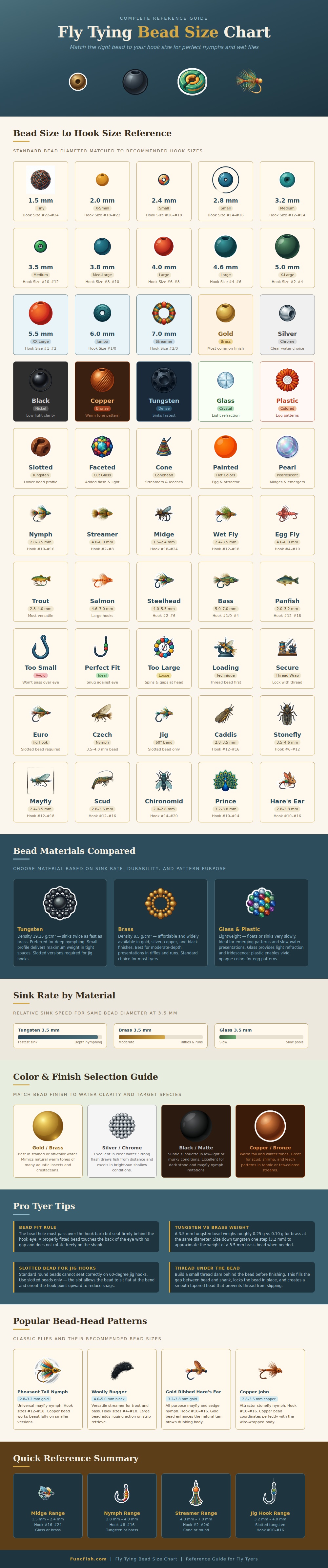
Choosing the correct size for the bead to use on a fly is an important part of the tie. Choosing the correct size for the bead will ensure that the fly will sink at the correct rate. Although many people may choose the size of the bead based off the availability of those specific bead, choosing the size of the bead based upon the diameter of the hook is more effective.
For instance, the size of the bead should match the size of the hook so that the weight of the bead is correctly positioned for the rest of the fly to appear natural when the fly is in the water. The chart display various sizes of beads and hooks that work best together. The size of the beads that are suggested for specific hooks rapidy change as the size of the hook changes.
How to Pick the Right Bead for Your Fly
For instance, the bead that fits best on a size twelve hook may be far too large for a size sixteen hook, and the same bead may be too small for a size six hook. The chart displays each of these suggestions so that the hook tie artist dont have to memorize the size of the beads for each size of hook. The weight of the bead is one of the main factor that will impact the performance of the tied fly.
The weight of the bead will determine the rate at which the fly will sink into the water. A heavier bead will allow the fly to sink at a faster rate allowing it to remain in the strike zone for a more longer period of time, but the bead has to appropriately fit the hook. Too large of a bead may cause it to slide or spin on the hook, while a bead that is too small will not provide the appropriate amount of weight to the fly.
The chart lays out these suggested weights for the beads to help prevent these issues. The material of the bead has an impact upon the performance of the bead. For instance, tungsten beads will sink at a faster rate than brass beads, which is beneficial for those who fish in deeper or faster-moving waters.
At the same time, brass is a more common material for the beads as it is more affordable and available in various finishes. Plastic and glass beads are used for adding color and flash to the fly but dont sink the fly as deeply as the metal beads. These materials are grouped together on the chart for comparison.
The color and the finish of the bead are also two factors that will impact the performance of the fly. Gold and brass colored beads are beneficial for those who fish in stained waters as they are the easiest to see in those waters. Silver colored beads are beneficial for clear waters as they provide flash to the fly.
Black colored beads are also beneficial, especially in low light waters, as they create a subtle silhouette of the fly and mimic the dark insect that are found in those waters. The infographic displays each of these colors and finishes to provide the artist with the information necessary to create a fly that matches the color and finish of the insects being targeted. The fit of the bead onto the hook is another area in which many new tie artist make mistakes.
The bead should be able to appropriately slide onto the hook but should not be too large relative to the size of the hook. If the bead is too large, the thread wraps will slip when the fly is being reeled in, and if the bead is too small the bead may distort the head of the fly. The artist can review these examples to ensure the fit of the bead to the hook.
The jig hooks require different type of beads than the standard hooks. The standard round beads do not sit correctly on the jig hooks angled shank. Instead, people use slotted beads with jig hooks as they allow the bead to rest flat against the hook’s bend.
If the incorrect type of bead is tied to a jig hook, the point of the hook may not allow for the same control over the hook when reeling the fly in. The chart displays the differences between standard and slotted beads to ensure that artists do not create these incorrect ties. Certain types of flies have specific ranges for the sizes of the beads that are to be used in their creation.
For instance, both pheasant tail and hare’s ear flies use beads of the middle size range. Woolly buggers and other streamers use larger beads to create the movement of the fly when being reeled in. For midges, smaller beads are used as the midge itself uses very small hooks and too large of a bead will create an incorrect silhouette of the bug for the target waters.
The chart displays these specific types of flies and the ranges of their sizes for the beads so that tie artists can create the correct size of beads for the specific types of flies. One of the benefits of using this chart is the removal of hesitation when tying flies. With this chart, tie artists will be able to create their flies without hesitation and will spend more time fishing their flies in the water.