
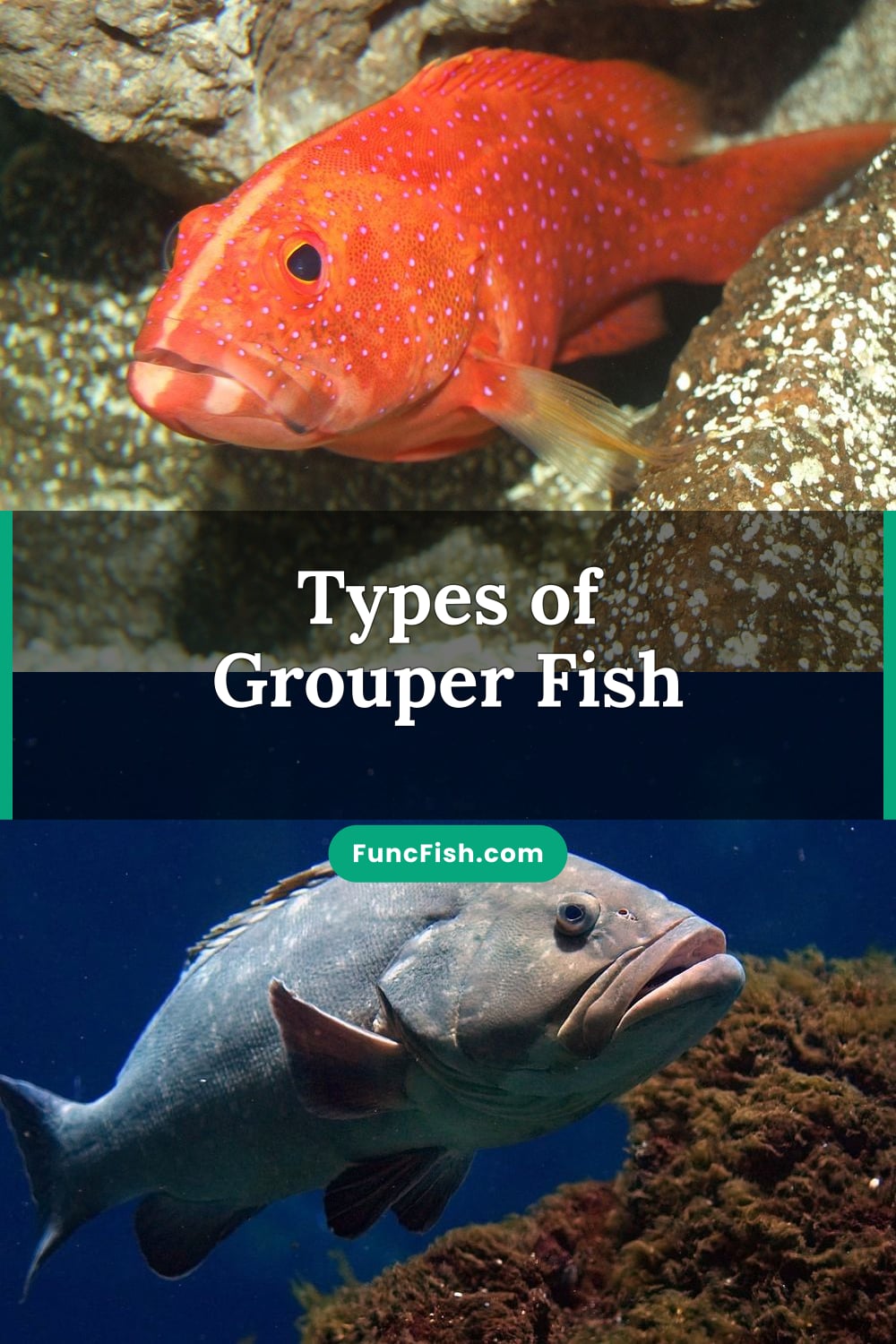
Groupers is a diverse family of fish, and each species of grouper require different fishing techniques due to an unique habitat and behaviors of each species. Understanding the different characteristics of each species of grouper is a necessity to anglers who wish to catching them using the appropriate fishing equipment. Black groupers are a common species of grouper, and their identifying features include charcoal bodies with white blotches.
These fish dwells in water between 30 and 100 feet deep and live near coral heads or ledges. Because groupers use jagged rocks to protect themselves, anglers must use a heavy leader and stout fishing tackle when fishing for black groupers. If not manage properly, the drag on the fishing line will cause the grouper to break the line.
Common Species Of Grouper Fish
1. Black Groupers
Red groupers have bodies that are brick red in color. These groupers lives near sandy or low-profile areas of the sea floor. Red groupers creates holes in the sea floor where they live and rest.
Anglers can locate red groupers by looking for these holes on a depth finder. When anglers catch red groupers, care must be taken when setting the fishs fishing hook. Because red groupers have soft mouth, setting the hook too hard will make the grouper fall off the hook.
The flesh of the red grouper is considered more delicate and sweet when cooked and makes for a good source of food.
2. Red Groupers
Nassau groupers live in the Caribbean area and have dark bars on their tan bodies. These groupers have become rare because they lives in large group and gather to spawn.
Many areas have established laws to protect the nasaw grouper during their spawning season. Once an angler hooks a nasaw grouper, it will swim quick toward a crevice in the sea floor. Anglers must be quick in fighting the nasaw grouper to prevent the grouper from reaching it’s shelter spot.
3. Nassau Groupers
Goliath groupers is the largest of the grouper species. These fish can weigh over 800 pounds. Goliath groupers have mottled brown bodies and live near artificial reef and shipwrecks.
Anglers must have great endurance to catch a goliath grouper. Because goliath groupers have high levels of mercury in their bodies, using a catch and release technique is the best method for these large fish.
4. Goliath Groupers
Yellowfin groupers has yellow fins and blue markings on their bodies and live in deeper waters.
Anglers must ride a longer distance from shore and use heavier tackle to catching yellowfin groupers. These fish are cautious and will eat live bait attached to a sinking sinker rig. When anglers catch yellowfin groupers, the fight between the fish and the angler are explosive as the fish jump out of the water during their fight.
5. Yellowfin Groupers
Snowy groupers live in the deepest waters in the sea and live between 400 and 800 feet deep. Because of the deep waters where these fish live, when they are brought to the surface the pressure change can rupture the swim bladder of the snowy grouper. To catch snowy groupers, anglers must use specialized electric reel and heavy braided fishing line.
These challenging fish to catch has white fillets that have a firm texture when cooked.
6. Snowy Groupers
Misty groupers are a smaller species of grouper than snowy groupers and live in the same areas. Misty groupers live between 10 and 25 pounds and use conventional fishing tackle.
These groupers can be caught accidently when other fish species is being targeted. However, misty groupers are a good source of food as the meat are sweet when cooked.
7. Misty Groupers
Scamp is a small species of grouper that weigh between 5 and 15 pounds.
These fish live between 100 and 200 feet deep in the ocean and feed on smaller fish and crustaceans. Because scamp eat crustaceans, its meat taste like lobster. However, scamp must be kept alive on ice as the skin of the scamp bruise easily.
Bruised scamp fish will produce meat with a lower quality flavor.