
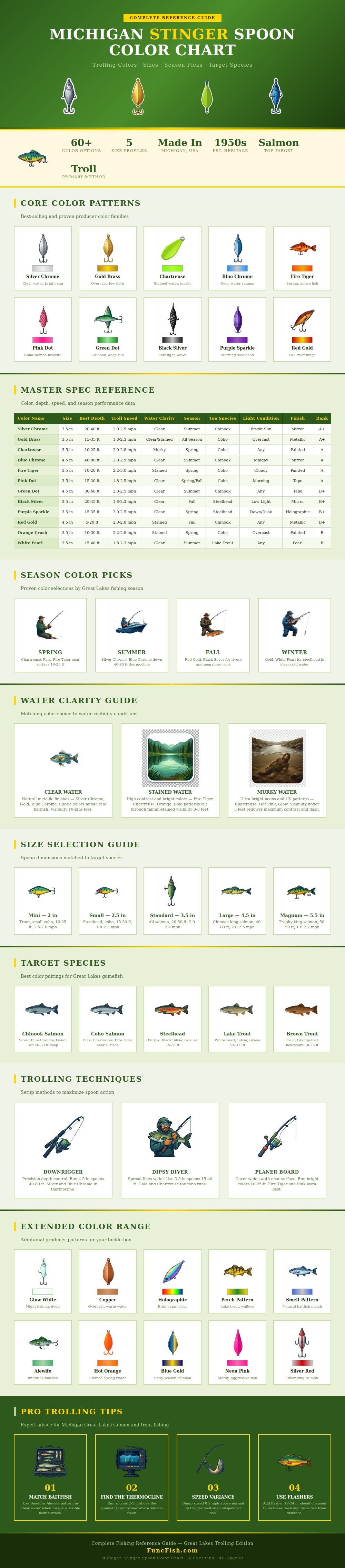
The Michigan Stinger spoon is a type of lure that angler use to fish in the Great Lakes. The Michigan Stinger spoon is designed to help anglers to match their lure to the conditions in the water and the behavior of the fish that lives in those waters. Color is one of the most important factor for anglers to consider when purchasing a Michigan Stinger spoon, and a color chart is provided to assist anglers in selecting the correct color for the current conditions in the Great lakes.
When the water is clear and the sun is bright, silver finishes will reflect the light in a manner that resembles the reflection of light off of baitfish, so silver finishes is effective in clear water conditions. However, if the water is cloudy, as it is common in the spring with the runoff of melted snow and rains, then silver finishes will reflect light in a manner that is difficult for the fish to see; in this case, the bright colors will help the fish to see the lure as it swim through the water. The color chart for the Michigan Stinger spoon helps to organize these different colors and conditions so that anglers need not guess at which color to select for the Michigan Stinger spoon while on the water.
How to Choose the Right Color and Size for a Michigan Stinger Spoon
The patterns on the color chart for the Michigan Stinger spoon is organize based off the specific conditions of the Great lakes, and each color on the chart is not selected at random. For instance, the Silver Chrome color is one of the color that is listed at the top of the color chart; this color is effective in conditions in which the light is able to penetrate deep into the water. The color Gold Brass is included adjacent to Silver Chrome; this color is effective on overcast days when there is less light that enters the water.
Chartreuse is included in the color chart because water in the lakes often stain the water, and the Chartreuse color remains visible to the fish even in stained water. Each color on the chart is paired with the conditions in which it will be effective so that anglers understands the reason for each color on the chart. Each season changes the colors of the Michigan Stinger spoons that are effective in the Great lakes; the seasons change in relationship to the temperature of the water and the position of the fish in the lake.
During the early part of the year, when the water temperatures are relatively low, the fish live higher in the water column. During these seasons, the fish tend to respond to colors that are visible against the glare of the sun when it reflect off the water. During the later part of the year, the fish begin to move deeper into the water column due to the thermocline; because of this movement of the fish, anglers must use metallic colors that are able to travel deeper into the water to locate these fish.
The color chart includes a representation of each of these season throughout the year so that anglers can determine which color finishes to use for each month of the year. The size of the Michigan Stinger spoon can also impact the effectiveness of the spoon while fishing. For instance, if the anglers select a smaller Michigan Stinger spoon, the spoon will have less weight than the larger Michigan Stinger spoons.
Because the smaller spoon has less weight, it will remain higher in the water column when trolling at a specific speed. Conversely, the larger Michigan Stinger spoon will have more weight than the smaller spoon; because of the increased weight of the larger spoon, it will sink at a more faster rate and travel to the depths of the Great lakes where mature fish live. These size differences for the Michigan Stinger spoon are illustrated on the color chart for anglers to make certain that the anglers choose the size of the spoon according to the type of fish that are targeted with the lure.
Each of the factor discussed above, including water clarity, contribute to the factor that determines which colors of Michigan Stinger spoons anglers should use to catch the fish in the Great lakes. Water clarity is one of the factors that changes the way in which the fish perceive the spoons that anglers are using. For instance, clear water requires anglers to use a type of metallic color that will reflect the light in a manner that mimic baitfish; however, cloudy water will cause those metallic colors to reflect light in a manner that is difficult for the fish to observe.
Therefore, anglers must adjust the color of the spoons that they use when fishing in waters of varying clarity.