
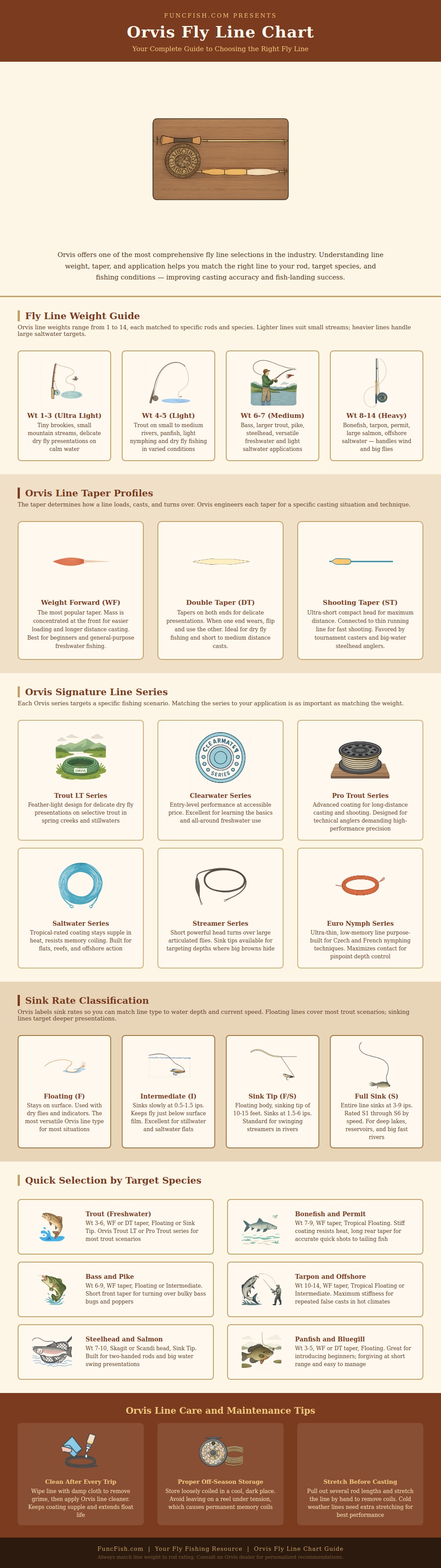
Matching teh weight of the fly line to the weight of the fly rod is necessity because the two lines must work together to ensure the fly line turns over correct and will prevent it from landing in an correct location. There is several categories for fly lines, such as weight, taper, and sink rate. The weight of the line can range from being light to heavy.
Light fly lines is used for light fly rods and for fishing for small fish. Using a light fly line allow the angler to present the fly in a delicate fashion to the water. Using a heavy fly line allows for the angler to fish with heavy fly rods for large fish and when casting in conditions like the wind or with large fly.
Match Your Fly Line to Your Rod and Care for It
Match the weight of the fly line to the weight of the rod to ensure the rod load properly when casting. The taper of the line refer to how the diameter of the line change from the head of the line to the end of the line. Weight forward taper allow for the line to turn over more easily when the angler casts the line.
Double taper allow for both ends of the line to be used if one end of the line wear down. Shooting taper have small heads and thin lines used when the angler wants to cast their line the most maximum distance. Orvis produce different type of fly lines for specific scenarios in fishing.
For instance, Orvis produce trout lines for those who fish for trout. These lines has a special coating that allow them to remain on the water’s surface. Saltwater lines is made for high temperature.
Streamer lines have aggressive heads that allow them to cast heavy fly into moving water. Nymphing lines are thin and cast easy for fishing with nymphs. The sink rate of the line determine where the flies and the line will sit in the water.
Floating lines remain on the water’s surface and is used for dry fly. Intermediate lines remain just below the water’s surface and are used for still and shallow water. Sink tip line have a part that floats and part that sink to allow the angler to fish for fish in the middle of the water column.
Full sinker line will sink to the bottom of the water and are used for those who are fishing for fish that live on the bottom of the water. It is necessary to maintain a fly line to ensure it lasts the angler for a long period of time. You should wipe the line down after each fishing trip to remove dirt and grime that may damage the lines coating.
It should be stored in a cool, shade area in a loose coil to prevent the development of memory curl. Finally, the angler should stretch the line before use to help ensure the line will travel straight through the air. By maintaining the line, it will function more smooth and will last the angler for longer period of time.