🎣 Pompano Rig Calculator
Build the perfect pompano surf rig — sinker weight, hook size, leader length & more
| Species | Hook Size | Hook Style | Leader Strength |
|---|---|---|---|
| Florida Pompano | #1 – 2/0 | Octopus / Circle | 15–20 lb |
| Permit | 2/0 – 4/0 | Circle / J-Hook | 20–30 lb |
| Whiting | #4 – #1 | Baitholder | 10–15 lb |
| Redfish | 1/0 – 3/0 | Circle | 20–30 lb |
| Snook | 2/0 – 4/0 | J-Hook / Circle | 25–40 lb |
| Sheepshead | #1 – 1/0 | Kahle / J-Hook | 15–20 lb |
| Condition | Leader Length (in) | Leader Length (cm) | Recommended Material |
|---|---|---|---|
| Clear, calm water | 18–30 | 45–76 | Fluorocarbon |
| Murky / stained water | 12–18 | 30–45 | Monofilament |
| Strong current | 12–18 | 30–45 | Fluorocarbon |
| Heavy surf | 18–24 | 45–61 | Monofilament |
| Pier / jetty | 24–36 | 61–91 | Fluorocarbon |
| Abrasion risk | 12–18 | 30–45 | Wire or Fluoro |
| Species | Avg Weight | Avg Length | Main Line |
|---|---|---|---|
| Florida Pompano | 1–4 lb (0.5–1.8 kg) | 12–18 in (30–45 cm) | 10–17 lb mono |
| Permit | 5–25 lb (2.3–11 kg) | 20–36 in (50–91 cm) | 15–30 lb mono/fluoro |
| Whiting | 0.5–1.5 lb (0.2–0.7 kg) | 8–14 in (20–35 cm) | 8–12 lb mono |
| Redfish | 3–15 lb (1.4–6.8 kg) | 18–30 in (45–76 cm) | 15–20 lb mono/braid |
| Snook | 4–20 lb (1.8–9 kg) | 20–36 in (50–91 cm) | 20–30 lb mono/braid |
| Sheepshead | 1–6 lb (0.5–2.7 kg) | 10–18 in (25–46 cm) | 12–17 lb mono |
| Material | Visibility | Abrasion Resist. | Best Use |
|---|---|---|---|
| Monofilament | Moderate | Good | All-around surf, budget |
| Fluorocarbon | Very Low | Excellent | Clear water, pressured fish |
| Wire Leader | High | Superior | Sharp-toothed species |
| Braided Line | High | Poor vs. rocks | Sensitivity, heavy cover |
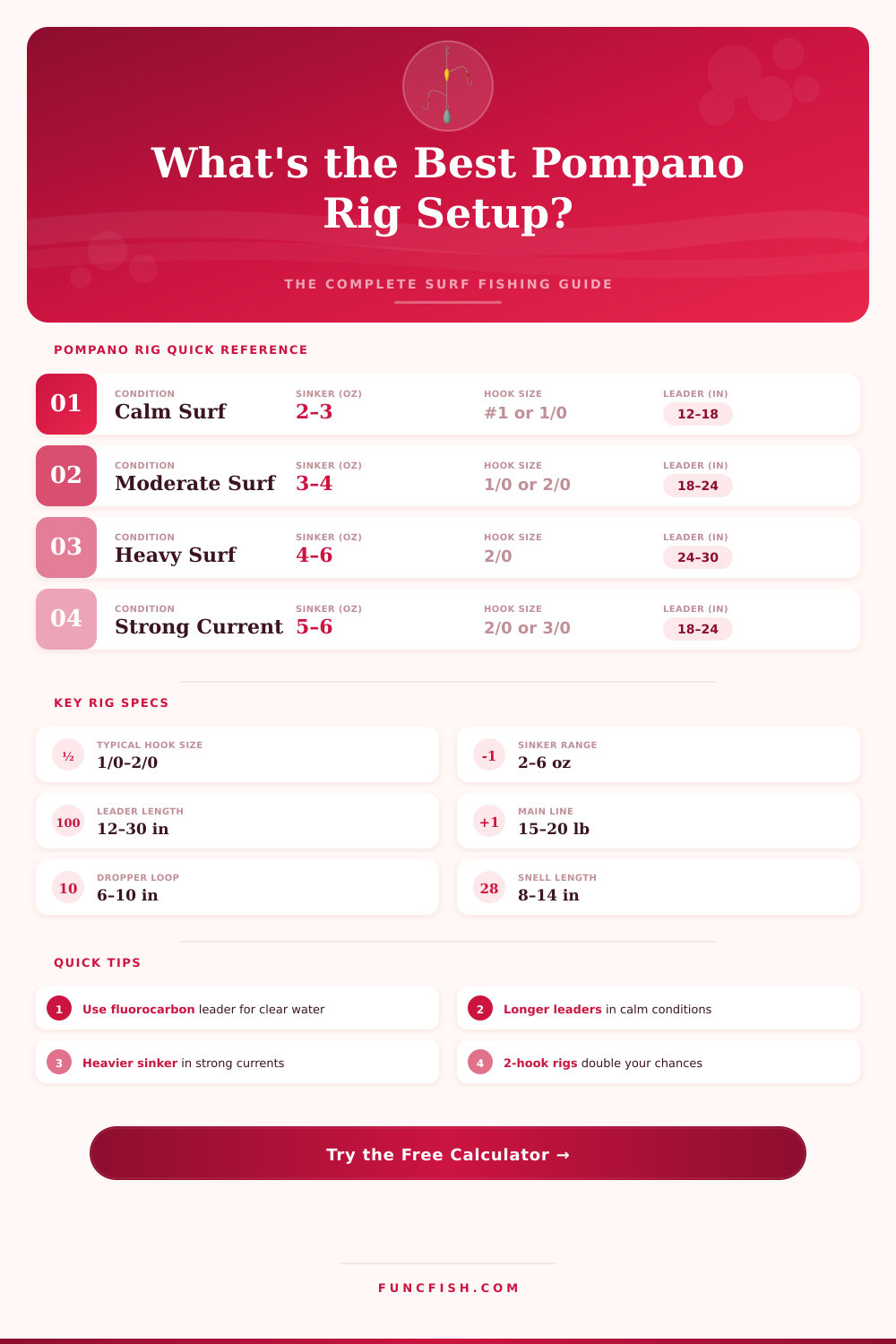
To catch pompano in a surf, you must find a way to create a fishing rig that maintain a specific position in the water. To do this, the fishing rig must be balanced in a way that allows the sinker to hold the bait in specific lane in the surf, while allowing the bait to move natural in the water. If the sinker is too light, the wave will move the fishing rig sideways before the bait can reach the ocean floor.
If the sinker is too heavy, it will be difficult to cast the fishing rig past the breakers, and the hook will become entangled with each surge of the waves. The depth of the trough and type of sands in the area will have an impact on the weight of the sinker that is selected for the fishing rig. If the trough is deeper and the sand is deeper, a heavier sinker will be required to allow the bait to reach an ocean floor.
How to Set Up a Surf Rig for Pompano
However, if the sand is shallow, then the sinker will be lighter. If the sand is hard packed, it will allow for a lighter sinker to hold in place. However, if the sand is loose, a heavier sinker will be required.
Additionally, wave height and current speed will have an impact upon the fishing rig. Higher waves and currents will place more tension upon the fishing rig then smaller waves. The length of the leader should be adjusted based off the clarity of the water and the type of bait that will be use.
In clear water, it is best to use a longer leader to allow the fish to see the bait as it drift towards the pompano. In dirty water with poor visibility, a shorter leader will allow the bait to be found more easy in the murk of the ocean floor. Additionally, the size of the bait will impact the setting of the fishing rig.
Small sand flea will use small hooks, while shrimp strip will require more space between the hooks to allow the bait to move natural in the water. In addition to the components of the fishing rig, beads and droppers also play a role in the movement of the bait in the water. Bait beads will provide control over the lift of the bait and the flash it will make in the water.
In choppy water, the beads will have tighter spacing to provide visual movement to the bait. Dropper gap will be set between 3 and 12 inch apart to allow the bait to ride the surge of each wave. It is also important to ensure that the sinker is weighted in a way that balance the surf rod to prevent it from experiencing any damage due to the force of the waves.
Preset configuration of baits and sinks can save fisherman the time and effort to create the fishing rig. For example, if a fisherman is fishing a calm sandbar area in shallow sand, he will use a lighter sinker and a leader that is approximately 16 inches in length. Areas with a side wash sweep in the surf will require a heavier sinker and a shorter leader to fight against the current.
Areas that experience dirty shorebreak will require a compact fishing rig with three hooks to fish these areas. Long-cast searches will require longer droppers to fish the deeper troughs during the surf. However, in winter months, when the pompano are generally more finicky about the types of bait they will eat, shorter fishing rig will catch more pompano.
The ability of the sinker to hold the bait in place is more important than the number of hook that are attached to the fishing rig. A sinker that does not hold the bait in place will result in the number of hooks on the fishing rig being irrelevant. The size of the hook should match the width of the bait being use.
Pompano will react to the silhouette of the bait instead of its weight in the water. Additionally, surf condition will change. Therefore, fishermen must be able to adjust their fishing rig to accommodate changes in the surf conditions such as changing water clarity or wave heights.