
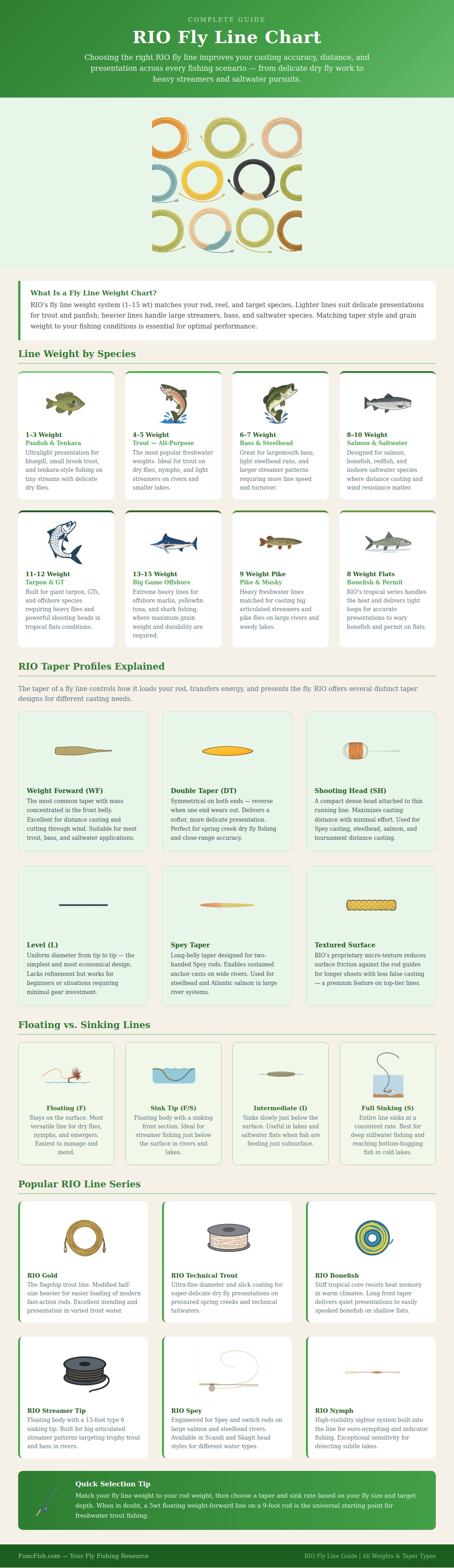
A fly line is used to get a fly to a specific location in the water. A fly line isnt just a string; it is the engine of the fishing rods that loads and delivers the fly. When selecting a fly line, there is several factors to consider.
First, you must choose a line based off the weight of your fishing rod and the type of fishes you are hoping to catch. Additionally, you must also choose a line based on the taper and the sink rate of the fly line. The first factor to consider when buying a line is the weight of the fly line.
How to Choose a Fly Line
If you are after small fish such as panfish or brook trout, you will want a more lighter fly line because it allows for more delicate fishing. For middle weights, you can catch trout in river environments by fishing for nymph and streamers. If you are after larger fish like bass or steelhead, you will need a heavier fly line to provide the backbone to cast bulky flies through the wind.
For offshore waters where marlin and tarpon lives, very heavy lines are needed to load the heavy fishing rod to catch these fish. Match the weight of the line to your fishing rod; otherwise, the line will not cast as far then you would like. The second factor to consider is the taper of the line.
Taper refers to the thickness of the fly line. Some lines has a weight forward taper for casting in the wind or for long distances. Double tapers allow for more delicate fishing because they have a gradual change in thickness for the entire length of the line.
Shooting head lines are for long distances and for spey casting across rivers. Match the taper of the line to your casting style and technique to ensure best results with the line. The third and last factor to consider is the sink rate of the line.
There are several types of sink rates for fly lines. Floating lines will remain on the surface of the water and are used for dry fly. Sink tip lines have a weight at the end to allow streamers to go under the water.
Intermediate lines will sink slow and are used for lakes. Full sink lines will rapidly go to the bottom of the water for deeper still water environments. Match your line to the depth where you want your fly to be in the water.
Many manufacturers has made specific types of lines for various types of fishing. For example, trout lines will be heavier in the front for better loading of fast action fishing rods. Other lines will be made for the tropics so they dont get kinked in the heat.
For streamer fishing, you want a floating head with a weighted tip. For nymph fishing, many lines will feature some type of visibility aid for when fish hit the fly. These specialized lines will make fishing for anglers more easier by eliminating the need to experiment with different lines.
You should always consider the type of fly rod you will use before you consider the taper of the line. If you are using a 9-foot 5-weight fly rod, use a floating weight-forward line. If you want to fish deeper, you can change to a sink tip line.
Never buy low quality lines because they may shed their outer coating or get kinked in the heat. Stick to higher quality lines that will last for multiple fishing season. The other factor to consider is weather and environmental conditions.
If it is windy, use a weight-forward line. If the water is calm, use a double taper line that allows for softness in the casting of the line. Use a stiff core line when the weather is cold so the line will not retain memory of where it was cast.
For warm weather, ensure that the line will be resistant to the heat so it does not coil as the angler fishes. Think about environmental conditions first, then the type of rod to use, and finally select the correct fly line.