Rod Tube Size Calculator
Estimate tube inside diameter, cut length, outside diameter, padding space, and packed rod clearance for storage or travel tubes.
📌Scenario presets
⚙Tube sizing inputs
Rod tube sizing result
Full breakdown
📋Tube material reference grid
Thin PVC
Sch 40 PVC
Aluminum
Composite
📐Rod tube sizing tables
| Tube ID | Typical rods | Metric ID | Use case |
|---|---|---|---|
| 1.5 in | 1 slim fly section | 38 mm | Short light rods |
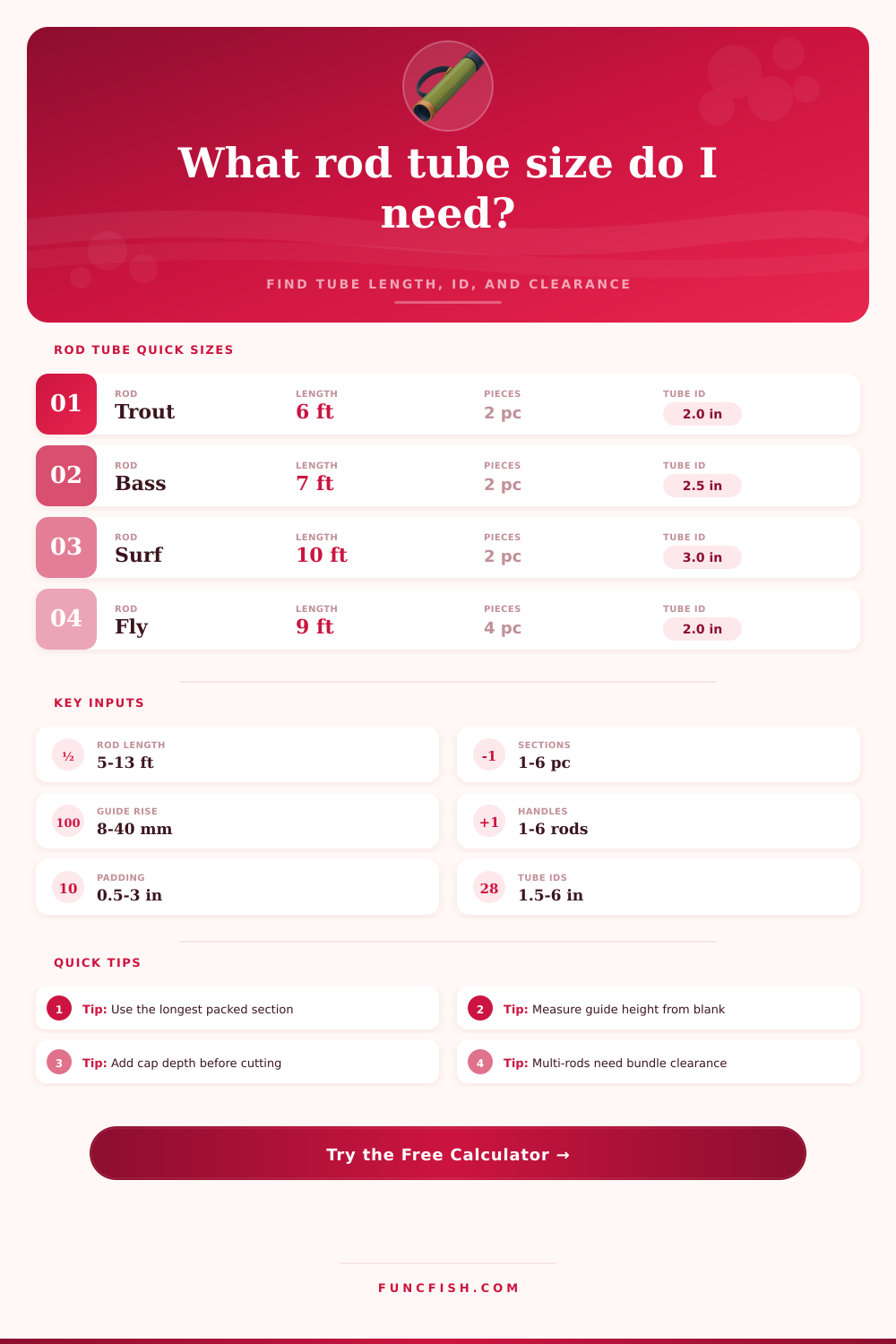
| 2.0 in | 1-2 light rods | 51 mm | Fly, trout, panfish |
| 2.5 in | 1 bass rod | 64 mm | Bass spinning or casting |
| 3.0 in | 1-2 larger rods | 76 mm | Surf, inshore, catfish |
| 4.0 in | 3-4 rods | 102 mm | Boat bundle or travel |
| 5.0 in | 4-6 rods | 127 mm | Multi-rod hard case |
| 6.0 in | 6-8 rods | 152 mm | Heavy bundle case |
| Rod family | Common length | Guide rise | Tube note |
|---|---|---|---|
| Ultralight trout | 5-7 ft | 8-16 mm | Small guides, slim handles |
| Bass spinning | 6.5-7.5 ft | 16-28 mm | First guide often drives ID |
| Bass casting | 6.5-8 ft | 10-20 mm | Trigger grip may drive ID |
| Surf rod | 9-13 ft | 25-45 mm | Long sections and tall guides |
| Fly rod | 7.5-10 ft | 8-18 mm | Four-piece rods pack short |
| Boat rod | 5.5-7 ft | 14-25 mm | Large grips need clearance |
| Protection setting | Extra length | Extra diameter | Best for |
|---|---|---|---|
| Light storage | 0.25 in | 0.00 in | Closet or garage |
| Truck or boat locker | 0.50 in | 0.10 in | Routine transport |
| Road travel | 0.75 in | 0.20 in | Long drives |
| Airline hard case | 1.25 in | 0.35 in | Rough handling |
💡Practical checks
Tip: If the rod has a tall stripper guide, measure from the blank centerline to the outer guide frame, then double that guide envelope before choosing tube ID.
Tip: For several rods in one tube, stagger handles and guides. The calculator estimates bundle space, but crossed guides can still need the next tube size.
Choosing a rod tube are important for protecting you’re fishing rods. If the rod tube is too short, the fishing rod may stick out of the rod tube. If the rod tube is too narrow, the walls of the rod tube may damage the fishing rod.
You must account for the part of the fishing rod that take up the most space in the rod tube, such as the guides and the handle. The length of the fishing rod isnt the only measurement of the fishing rod that you should consider when purchasing a rod tube. Fishing rods that break into two section will be shorter in each section than the total length of the fishing rod.
How to choose the right rod tube for your fishing rods
The first guide on the butt section of the fishing rod may rise away from the fishing rod in a way that take up additional space in the fishing rod. Additionally, if many rods are place into a single rod tube, the guides of the rods may not line up the same as the single fishing rod. The diameter of the bundle of rods will be larger than the diameter of the fishing rod alone.
Therefore, a calculator can help determine the proper diameter of the rod if these measurement are entered. The material of the rod tube will determine how light or heavy the rod tube is, as well as the type of protection that the rods will have within the rod tube. Thin wall PVC material is light in weight, but it can dent against object within a truck bed.
Schedule 40 PVC has thicker walls than thin wall PVC, but is also larger in outside diameter and in weight. Aluminum and composite material is more rigid than PVC materials. However, they can be of different weights and diameters then thin wall PVC or Schedule 40 PVC materials.
Additionally, the material will also impact how much space the end caps for the rod tube will take up. Finally, the protection level for the rods will also impact the design of the rod and rod tube. For example, if you transport the rod tubes on an airplane or stored on a boat, extra padding would of be require to protect the rods from rough storage.
The longest section of the fishing rod will help determine the length of the rod tube that is required. While it may appear that dividing the length of the fishing rod by the number of section of the fishing rod will provide the length of each section, the length of the longest section may be longer than that measurement. In this case, you should account for the depth of the end padding and the depth of the end caps of the fishing rods in the length of the rod section.
Finally, the protection level for the rods may require an additional length of the rod tube to provide the necessary protection for the rods. The tables provided on this page can be helpful in understanding the different lengths and diameters of the fishing rods and rod tubes. These tables provide reference point for the different types of fishing rods and their inside diameters.
These tables are not to be used as a replacement for measuring the length and diameter of your own fishing rods. Additionally, the tables also help to show how protection level can increase the length and width of the fishing rod to protect the rods during rough storage or transportation trips. Once you have the measurement, you can make a final test for the fishing rods and the rod tube.
You can place the fishing rods into the rod tube and move the handles of the rods to each of the different heights. The guides of the rods should be ensured to not cross each other so that the fishing rods will not be subjected to any pressure. If the fishing rods can be placed into the rod tube without any pressure on the rods, the rod will protect the fishing rods.
Additionally, if there is a small margin of space between the rods and the rod tube, it will help to protect the rods from any damage.