
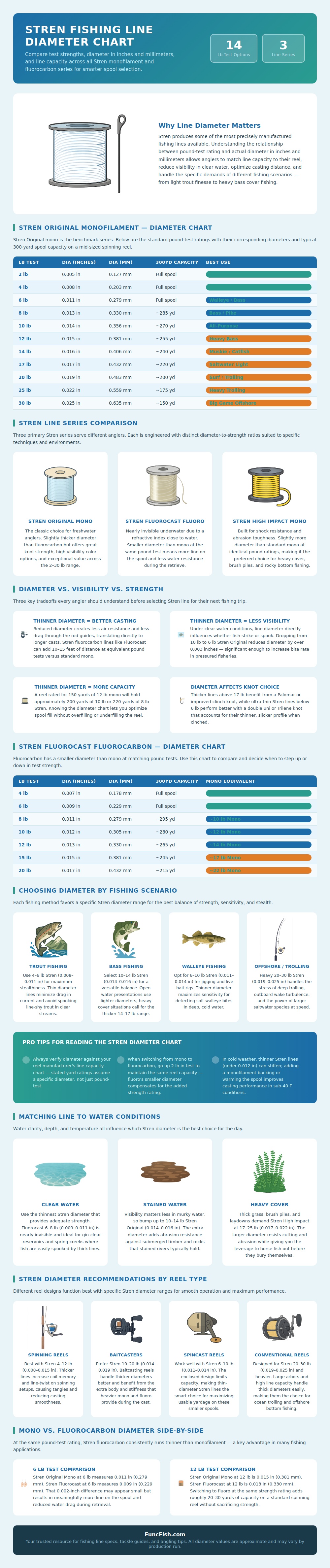
Fishing line diameters is an important factor in fishing. Line diameter impact the way that fishing line move through the water and interact with the fish. Using a fishing line that is too thick may make the line more visibl to the fish or may make it more difficult to cast the line.
Using a fishing line that is too thin may lead to the line break when the fish pull at the line. Knowing the diameter of fishing lines is a necessity for angler to find the correct fishing line for their needs. Stren line are a brand of fishing line that comes in various diameters.
How to Choose Fishing Line Thickness
One of the most common type of fishing line is monofilament line. Monofilament line tend to be thicker than other types of fishing lines. The additional stretch in monofilament line allow it to absorb the force that fish use when they take off in lunges.
Using monofilament line is ideal for lakes whose waters are murky, and where the fish may need to feel the bottom of the lake. Fluorocarbon line is another type of fishing line. Fluorocarbon line has a refractive index that is similar to that of water, making the line less visible to fish in clear water.
Fluorocarbon line is typically thinner than monofilament line of the same strength. Because fluorocarbon line is thinner, the reel can hold more yard of line. Additionally, because fluorocarbon fishing line is thinner, it is less likely to spook the fish when fishing in clear water.
The diameter of the fishing line also impact the functioning of the reel. Spinning reels tend to work better with thinner fishing lines. Thicker lines create air resistance that limit the distance that the line can be cast.
Baitcasting reels work better with thicker lines. The thick line is stiffer and can be more easily controlled when fishing in areas with heavy cover. The environment in which the fishing line is cast into the water will impact the diameter of the fishing line.
Fishing in clear water require thinner lines so that the fish do not see the line. Rivers that have rocks and logs may require a thicker line for abrasion resistance. Areas with heavy weeds require a heavy fishing line so that it can handle the force of a fish pulling out of the weed.
Offshore trolling for large fish require a heavy fishing line. Finesse fishing, on the other hand, require thin fishing lines. The temperature in which the fishing line is being used may also affect its function.
When the temperature is below freezing, thin lines may break more easy. In these conditions, a thicker line may be required. Additionally, the type of fishing line may impact the type of knot use with the fishing line.
Thin lines may require specialized knots, such as the double uni-knot. Thicker lines dont have to be as precise in their knots as thin lines; a simple clinch knot can be use. The type of reel that is used in fishing may also impact the diameter of the fishing line.
Spincast reels tend to work best with lines of the medium range in diameter. These lines are compatible with a small amount of space on the reels small spools. Conventional saltwater fishing reels are created to accommodate thick fishing lines.
Level winds evenly distribute the thick lines around the spool. Some of the choices that anglers must make with fishing lines involve trade-offs. Lines that are thinner allow for longer casts with the line and are less visible to the fish.
Lines that are thicker are more likely to stand up to the strength of the fish, and they provide more power to the movement of the fishing line. Each of these trade-off require anglers to understand the limits of the reel that is being used, and the conditions of the water in which the fishing line will be cast. You should of considered the water depth too.