
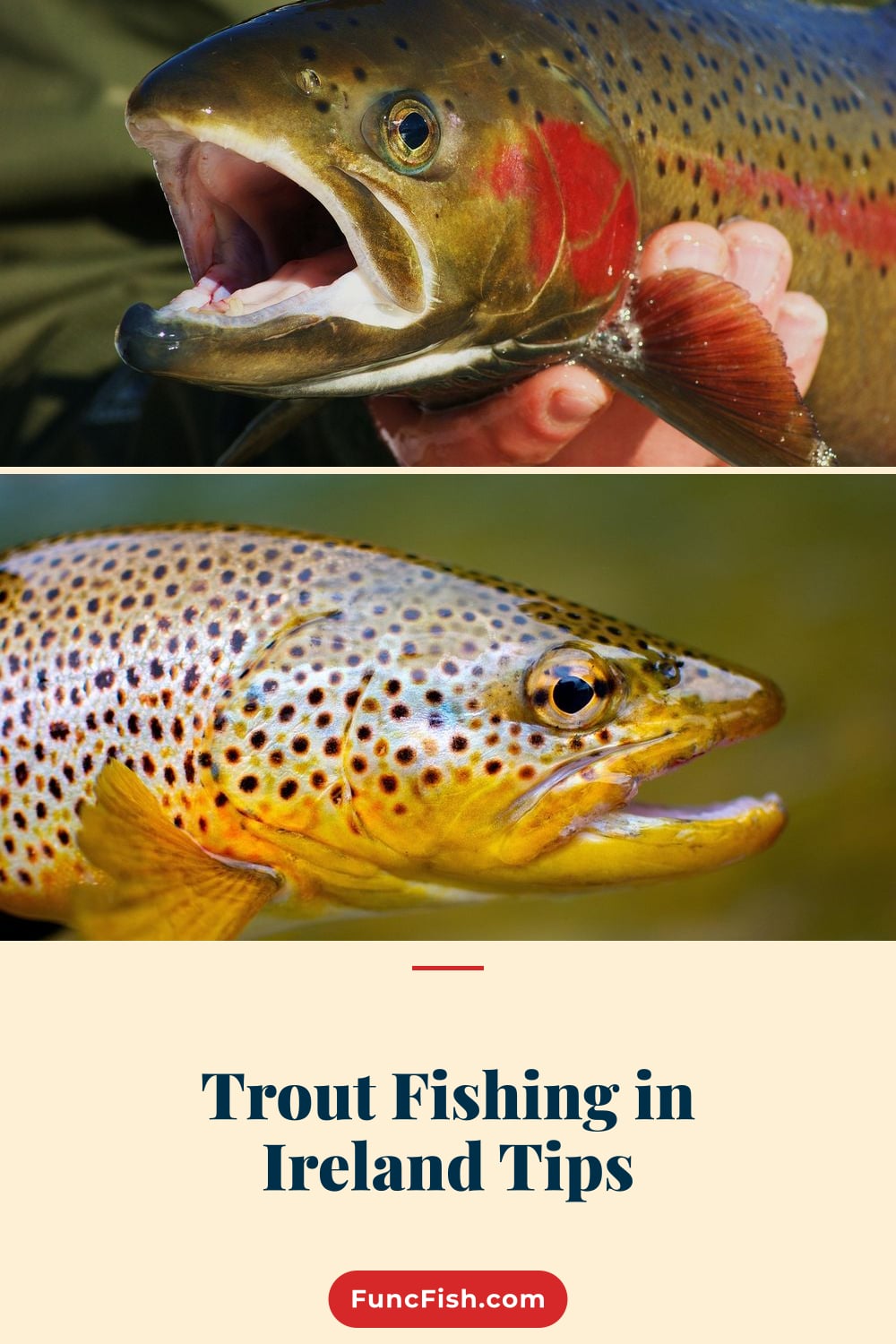
The rivers and loughs of Ireland hold a special quality for any person who finds themself with a desire to chase trout. The water in these rivers and loughs tend to be clear and cold, flowing over limestone and granite to form some of the most visually beautiful fish to ever live in Ireland. These physical qualities of the trout waters in Ireland leads the anglers to return to these locations season after season.
Whether you find yourself standing in the soft rain on the banks of the Moy river, or drifting your dry fly across Lough Corrib at the first light of dawn, these locations hold a timeless quality for the angler who visits them. Yet, to find success as an angler in these areas, one must know a few truths of the land and it’s fish. These truths is worthy of explanation.
The approaches that Irish trout anglers have used and tested over the years include strategies for almost every aspect of trout fishing in the region. From the choice of fly to the understanding of seasonal hatches, anglers have tested each of these approaches over time and found them to be successful. By learning these strategies, you can find success in your pursuits as an angler for trout in Ireland.
Essential Strategies For Successful Irish Trout Fishing
1. Selecting Appropriate Tackle
One of the first of these strategies is understanding the type of tackle that you should use based off the type of water that you are fishing. Ireland’s waters can be divided into two main categories: nutrient-rich (limestone) rivers and lakes, and the leaner, faster (freestone) streams that are found in the west and southern regions of Ireland. In areas like Lough Mask and Lough Sheelin, the fish are often of a larger size.
In these instances, anglers use a 10-foot fishing rod that is rated for a 7-weight fishing line. This allows anglers to efficiently cover the water while also having enough leverage to combat the wind that blows across these lakes. In contrast, flies and small rivers like the headwaters of the River Suir and the River Boyne, anglers use an 8-and-a-half-foot fishing rod that is rated for a 4-weight fishing line.
These lighter weights allow anglers to perform a more delicate cast into areas where the trout is known to eat tiny olives. Using the wrong type of fishing rod will result in frustration when fishing for these trout. The next truth that any aspiring Irish trout angler should of learned is understanding the importance of hatches.
2. Understanding Mayfly Seasons
Ireland’s mayfly season occurs between late May and early June. During this time, giant upwinged flies emerge from the loughs and trout begin to feed aggressively at the surface of the water. However, the mayfly season only last for a few weeks in any given location.
After the mayflies emerge from the loughs in Ireland, the trout become wary of fishing for them. To circumvent this problem, the best anglers show up one week prior to the mayfly season to fish for nymphs, and those anglers show up one week after the mayfly season to fish for spent gnats. Outside of mayflies, the small olive season occurs between March and October.
3. Fishing Small Olive Patterns
An olive fishing pattern that is between size 14 and 18 will result in the catching of more trout during this time of year than any other type of attractor fly. Knowing how to match the color of your flies to the hatches and the size of your flies to the size of the food that the trout are eating will ensure that your flies are targeted correctly. If you get either the size or color of the fly incorrect, the trout will not pursue your fly at all.
Another strategy that can be applied to success in angling for Irish trout is to learn how to correctly read the water. Trout often hold in areas of the water where the current slows. These locations may include seams in the riverbed, the tails of pools in the river, or shallow pools that form behind large rocks.