Snell Wrap Count by Hook Calculator
Estimate snell wraps from hook size, usable shank, leader diameter, material grip, bait load, and expected drag so the coil seats cleanly without crowding the eye or bend.
🎯Snell presets
⚙Hook and leader inputs
Snell wrap calculation
📏Current setup spec grid
📚Hook size and snell fit reference
| Hook size | Typical usable shank | Common snell range | Best matched leaders |
|---|---|---|---|
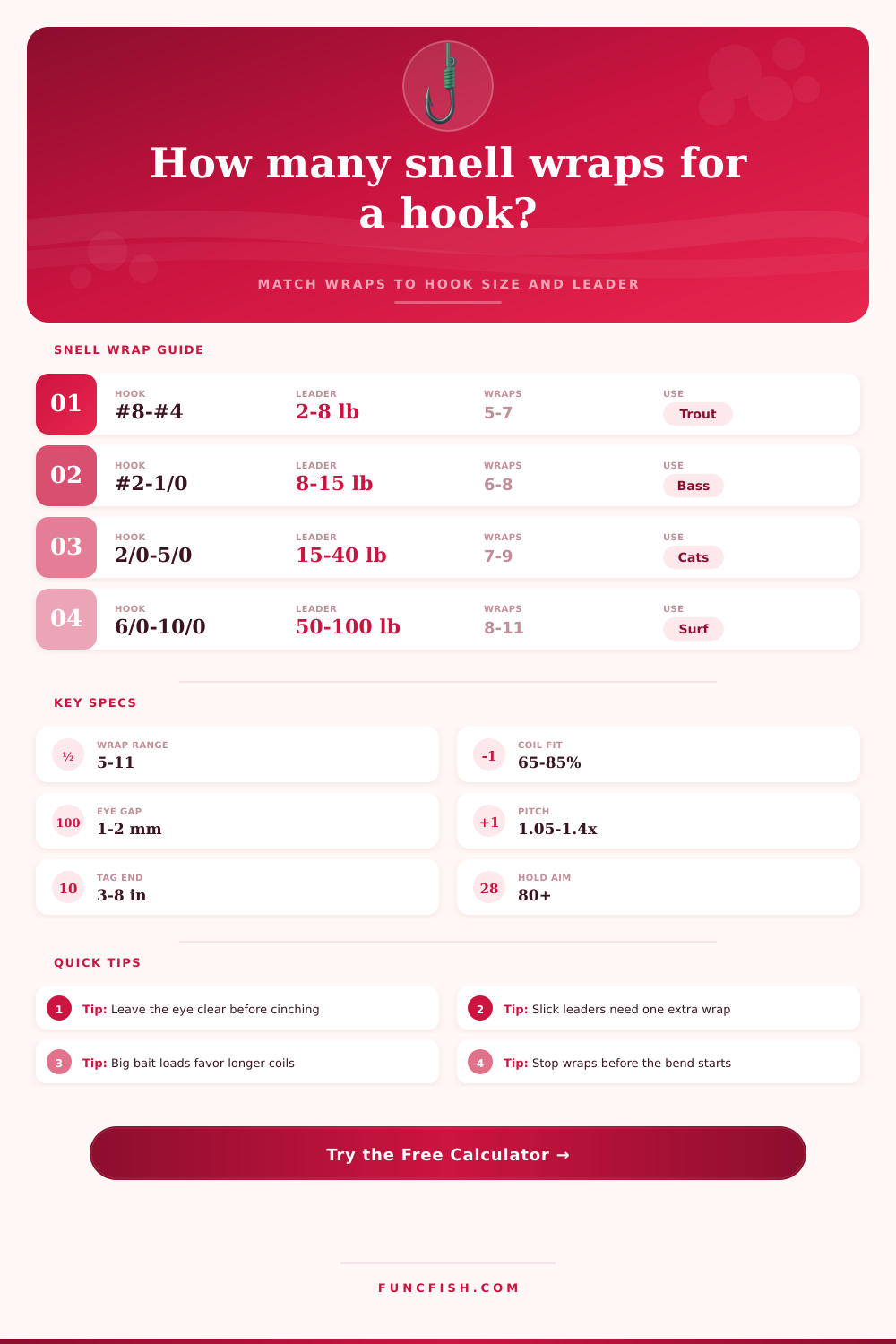
| #12 to #8 | 0.24-0.36 in / 6.1-9.1 mm | 5-7 compact wraps | 2-8 lb mono, fluoro, or fine copolymer |
| #6 to #2 | 0.40-0.58 in / 10.2-14.7 mm | 6-8 standard wraps | 6-15 lb leader for trout, walleye, bass, and bait rigs |
| #1 to 3/0 | 0.62-0.94 in / 15.7-23.9 mm | 7-9 wraps with room for an eye gap | 12-30 lb mono or fluoro; coated braid for hair rigs |
| 5/0 to 10/0 | 1.10-1.70 in / 27.9-43.2 mm | 8-11 heavy wraps | 30-100 lb mono, hard mono, fluoro, or soft wire |
🧵Leader material comparison
| Material | Grip behavior in a snell | Pitch factor | Wrap adjustment |
|---|---|---|---|
| Nylon monofilament | Good bite and moderate stretch after wet cinching | 1.18x diameter | Baseline wrap count |
| Fluorocarbon | Hard surface and stiffness need tidy stacked wraps | 1.24x diameter | Add about 1 wrap on small hooks |
| Copolymer leader | Good handling with slightly lower stretch than mono | 1.16x diameter | Usually baseline or minus 1 on long shanks |
| Braid direct | Very limp and slick; wrap pressure matters more | 1.08x diameter | Add 2 wraps if tied direct |
| Coated braid hooklink | Outer coating grips, stripped sections need more turns | 1.12x diameter | Add 1 wrap for hair rigs |
| Hard mono shock leader | Large diameter and springy coils limit tight stacking | 1.32x diameter | Use fewer, wider wraps if shank is short |
| Soft coated wire | Bulky coating can crowd hook eyes quickly | 1.40x diameter | Count by shank fit first |
🐟Species and rig comparison
| Species or rig | Hook style | Leader range | Practical wrap target |
|---|---|---|---|
| Bass Texas rig | EWG or straight-shank worm hook | 10-25 lb fluoro or mono | 7-8 wraps, eye clear for direct pull |
| Trout bait drift | Bait holder or octopus | 2-8 lb mono or fluoro | 5-7 neat wraps on small shanks |
| Catfish bottom rig | Circle or octopus circle | 20-60 lb mono or braid leader | 8-10 wraps with a strong reverse snell |
| Surf bait rig | Octopus, circle, or baitholder | 30-80 lb mono or fluoro | 8-11 wraps, checked against cast load |
| Salmon egg loop | Octopus or egg hook | 10-30 lb mono or fluoro | 8-10 wraps plus loop allowance |
| Carp hair rig | Wide gape or curve shank | 15-35 lb coated braid | 6-8 no-knot turns with hair exit set |
🔢Formula reference
| Output | Formula used | Why it matters | Good target |
|---|---|---|---|
| Physical max wraps | floor((usable shank - clearances) / (diameter x pitch)) | Prevents crowding the hook eye or rolling into the bend | At least 1 above recommended |
| Needed friction wraps | base + material + hook + load + drag + finish adjustments | Estimates how many turns are needed before the snell slips | Within the physical max |
| Coil length | wraps x leader diameter x pitch factor | Shows the footprint of the finished snell on the shank | 65-85% of usable straight shank |
| Holding index | 55 + wrap gain + material bite - drag and fit penalties | Quick comparison score for similar hook and leader choices | 80 or higher |
💡Snell calculation notes
These estimates are for sizing the wrap count and checking shank space. Always test-pull the finished knot with wet, fully seated wraps before fishing it.
If you’ve ever been frustrated that the snell slipped off the hook and left it hanging, then you’ll know how it feels. In an instant, the line rolls up into the hook bend or knots comes loose as the fish whips hard to the side. A hook calculator like this one help you prevent this heartbreak and turns guesswork into a little geometry.
There’s no bigger issue than balancing space versus friction with your line on a tiny piece of metal called a hook. Too few wraps and it will slide, too many wraps crowd the eye. This makes a weak spot that the leader chafes at or ruins profile of the hook. Once you pick out what leader you want to go with and what hook size you’re using, this calculator do the work for you. No more stressing over do I have six wraps? Or do I really have eight?
How to Use a Hook Calculator
And that’s where folks miss the key variable: The relationship between leader diameter vs. Shank length. Nylon monofilament has less stiffness and is much slicker than fluorocarbon, so it will hold a bit better on the shank. Fluorocarbon just won’t compress around the metal like softer lines does. So there needs to be tighter wrapping and often one or two additional wraps for same holding power. That’s why I included a chart on the page to show this.
A small trout hook with a heavy fluoro leader calls out for more wraps then a fine mono leader. And that’s important because many folks assume all leaders is alike in how well they grip. They’re not. Even braided line can be tricky, as it’s smooth and limp. Unless you give it lots of additional wraps, it’ll simply slide up off the shank. Oftentimes, you’re looking at two or three additional turns versus typical mono.
Several physical factors plays into this, including shank length, material stiffness, load conditions, and material condition. A number four hook can’t hold twenty wraps. The formula compares the coil footprint to amount of usable straight shank available before the bend starts. This ensures there is enough space between the bend and the eye.
People often make mistake of crowding the eye, which forms a severe angle and cuts into leader under strain. If you give it a millimeter or so behind the eye, the pull force lines up with axis of the shank instead of digging into the knot loop. This holds the hook point out of the way from the fish. That is why you tie a snell.
Similarly, what you’re throwing matters. You’ll have more of an impact when flipping big soft plastics or launching heavy surf baits. The force will loosen even wraps that seem solid and held fine on the workbench. To make up for expected tension, the tool increase the suggested number of turns for intense situations. For example, a light drift rig for trout doesn’t require same safety cushion as a bottom rig in a fight against structure. Knowing this lets you avoid overtightening fragile rigs without sacrificing grip power on heavy duty ones.
Small details can have a big impact. The condition of materials matter. Slicker stuff (fluorocarbon) knots better than rougher stuff (nylon). Wetting the material well before the final tighten helps the fibers slip into their tightest arrangement. Cinching while dry results in microscopic gaps that open up as line tension increases. For its basic calculations, the calculator presumes that the lines are clean and well-wetted. If yours are dry or dusty, tack on some mental insurance.
So there you have it, how to tie a snell. It’s all about understanding what happens when you put two pieces of material together. How much does too much friction matter? It does not matter very much if you can’t get the thing to penetrate the meaty part of the fish. But you also don’t want too little because then it won’t stay tight enough.
Snelling for catfish on a circle rig is no different than snelling for bass on an EWG hook. Know your line size. Understand how stiff it is. Know your shank size. And let the turns take care of business. Stack them up nicely leaving that tiny gap behind the eye and trust that the knot will hold.
You should of trusted that you won’t have to worry about it. Trust that you’ll be able to focus on the fish and not the knot. Snell stays, hook sticks, fish fights.