Ice Fishing Tungsten Jig Weight Calculator
Estimate tungsten jig weight from body size, shape, hook allowance, depth, line diameter, current, bait drag, and the drop control needed for hardwater fish.
📌Tungsten Jig Presets
⚙Jig Weight Inputs
Tungsten jig weight result
Use the cards below to match the physical jig estimate with the practical fishing recommendation.
Calculation breakdown
📊Tungsten Material Data
📐Reference Tables
| Body size | Round tungsten estimate | Common use | Line match | Hook range |
|---|---|---|---|---|
| 2.5 mm | 0.10-0.13 g | Shallow sight bluegill | 1-2 lb | 18-16 |
| 3.0 mm | 0.18-0.23 g | Finesse panfish | 1-3 lb | 16-14 |
| 4.0 mm | 0.42-0.55 g | Panfish and crappie | 2-4 lb | 14-12 |
| 5.0 mm | 0.82-1.05 g | Crappie and perch | 3-5 lb | 12-10 |
| 6.0 mm | 1.42-1.85 g | Deep perch basin | 4-6 lb | 10-8 |
| 7.0 mm | 2.25-2.90 g | Walleye finesse | 5-8 lb | 8-6 |
| 8.0 mm | 3.35-4.35 g | Walleye current | 6-10 lb | 6-4 |
| 10.0 mm | 6.60-8.55 g | Trout or heavy search | 8-12 lb | 4-2 |
| Ice scenario | Depth band | Preferred tungsten feel | Adjustment | What to watch |
|---|---|---|---|---|
| Clear shallow weeds | 3-10 ft | 0.12-0.45 g | Downsize for hover | Fish flaring and rejecting |
| Suspended crappie | 10-30 ft | 0.45-1.10 g | Upsize for quick return | Line coil slowing fall |
| Perch basin | 15-45 ft | 0.80-2.40 g | Add weight for search | Bottom contact accuracy |
| Walleye low light | 12-40 ft | 1.50-4.50 g | Match minnow head drag | Hook gap after tipping |
| River ice current | 8-30 ft | 2.50-6.00 g | Use compact heavy head | Line angle under hole |
| Deep whitefish | 35-90 ft | 2.80-8.00 g | Increase sonar return | Overpowering light bites |
🧊Practical Weight Notes
Compact weight: Tungsten is useful through ice because a small jig can still punch through line coil, slush, and deep-water drag while keeping a tiny profile.
Line drag: If the calculator recommends more weight than the body estimate, first try thinner line before jumping several jig sizes for finicky panfish.
Hook allowance: Paint, solder, hook shank, and collar style can move real finished weight slightly above or below the pure body estimate.
Drop goal: A fast sonar return often needs more mass than a natural sight-fishing hover, even when both use the same tungsten body size.
When you put that jig on the bottom, it doesn’t give up when you try to snap your wrist; you can tell your line has gone dead. You’re not battling a fish; you’re battling drag. If it’s not the bait, it’s probably not the technique. Almost 100 percent of the time it’s your tungsten head dragging down your monofilament. This affect everything about how you think you’re feeling down there with that thing in your hand.
Thirty feet underneath your boots You input your line class, hook and body size, then let the calculator do the math. You won’t have to guess about conversions and coefficients anymore. You get way more than just gram. It also give you the fall rate of that amount of weight in the water column considering current conditions and target depth.
How to Choose the Right Jig Weight
Anglers who choose jigs base it on diameter, but don’t consider hook size or drag from a live minnow. Those slight modifications makes a big difference in the rate it falls. A 3 millimeter ball adds bulk without adding density when you add a minnow head. This slow down the fall rate and alters the profile. The tool takes this extra drag into account and helps you select right weight to reach strike zone before the fish loses interest.
So why tungsten? Tungsten is dense, and packs nearly one and a half times mass of lead into a smaller footprint. Under ice, this means it have enough momentum to reach deep basins or break through slushy areas while remaining small and hard to see. Now a little micro jig will suffice when targeting bluegill in four feet of water. However, if they are suspended in clear water at twenty feet, then the same micro jig can take too long to get down. By the time it gets there, school has moved again. It needs just enough weight to fall naturaly but not so much that it scares them off.
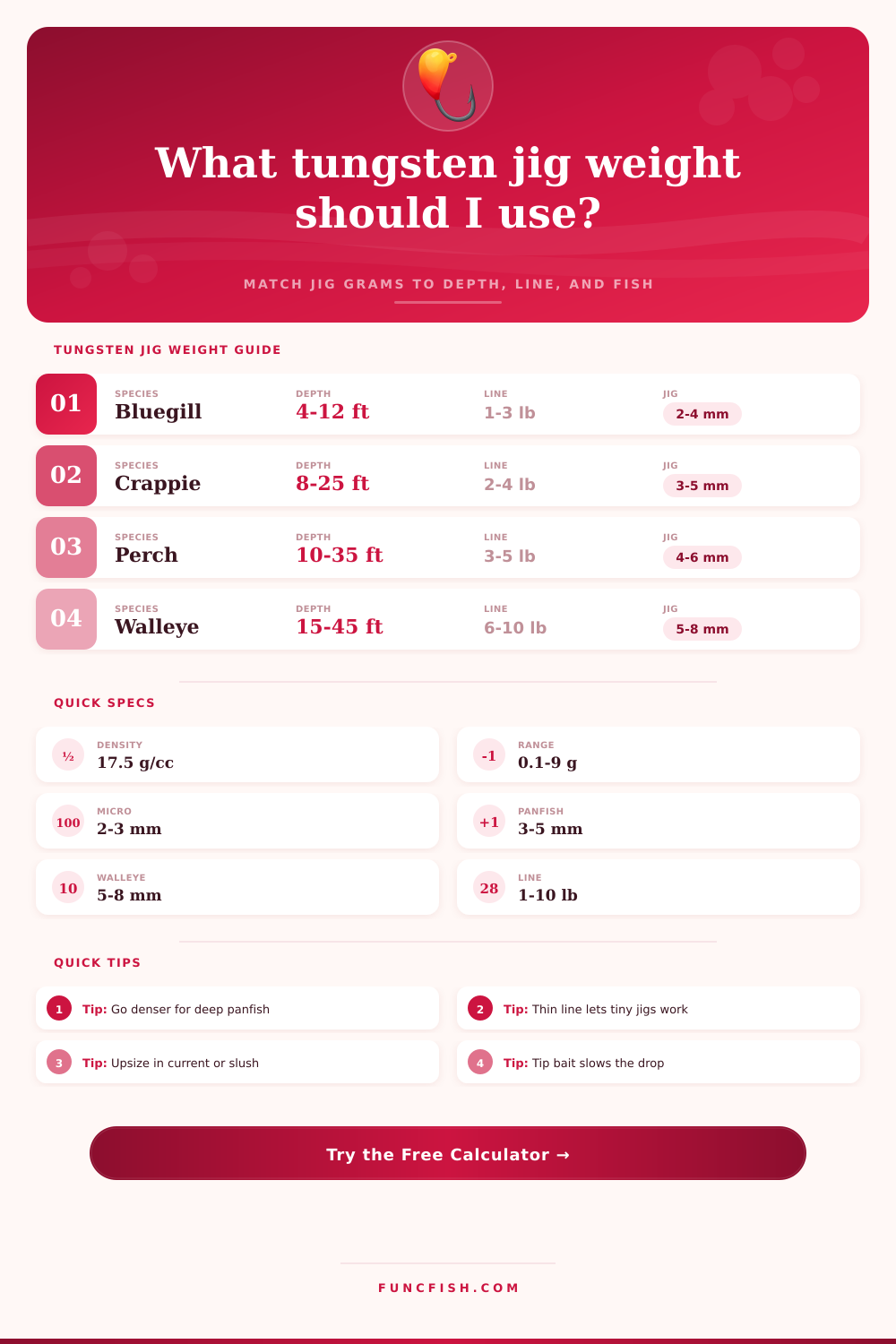
Here’s what that looks like in reference table of each species and their associated depth band with respect to line strength vs. This refers to jig mass. Thinner lines allows lighter jigs to work better because they reduce water resistance on the descent. Heavier heads is needed to get through the drag from a thick line such as a heavy fluorocarbon line used when targeting walleye. These factors can be matched up with help of calculator so the rig is balanced and not fighting against itself.
People tend to upsize when they aren’t getting bites. They think a heavier jig will get them back on the bottom, or make it descend faster. Not always. A lot of times downsizing weight and upsizing the finesse is what is necessary. Let it sink slowly. Give those wary fish time to look at something natural in clear water. Otherwise, let it skip right past strike zone if it is sinking too fast. The drop control output gives you an idea of how slow your bait will sink so you can plan your jigging rhythm before dropping it into the hole.
The second part of this equation is material grade. There is a very small difference in density between paint and plain alloy versions because of how they’re manufactured. This tool accounts for that variance so calculated weight matches what’s on your line. That comes into play when you’re fishing with panfish who can be finicky to say the least and turn their nose up at anything bigger than a grain of sand. For deep-water lake trout, it doesn’t matter as much. Sheer mass outweighs minute variation.
Presentation and patience define ice fishing. That’s where the appropriet jig weight comes in. The correct jig will bridge the gap between your hand and fish’s mouth, ensuring each twitch or move you make translates directly to action down below. Begin with the calculated recommendation, feel for the drop and then adjust accordingly. Lighten up if the line goes slack and is lifeless. Add a fraction more density if it bounces off the bottom before you could of even react. You’re not looking to hit the bottom hard. You want to hover just over it and be ready when the subtle bite tells you it’s time to set the hook.