
Within the first week of ownership, most new betta keepers do the exact same thing. They purchase a beautiful fish with flowing fins, grab whatever flake food is on sale, and start feeding that sucker until their tank water go cloudy. For about three days your fish look happy as can be. Then the decline begins. No, it’s not usually any kind of disease that kills your fish at first. Usualy it’s poor water quality (from overfeeding) or bloat. Did you know that your betta only has a stomach the size of its eye? This alone should of prevent you from pouring an entire tablespoon of food into the tank each morning.
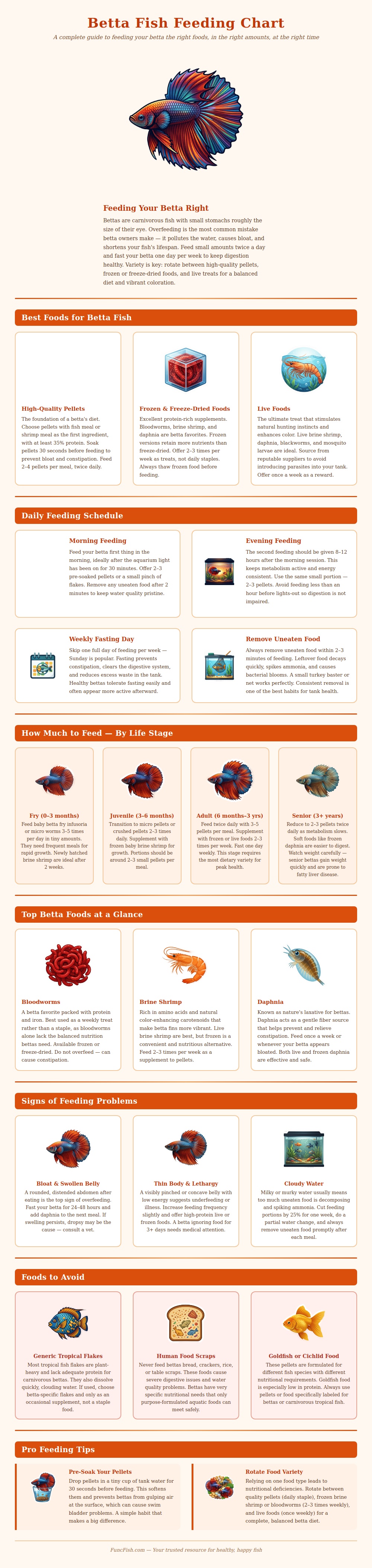
Check out this chart below which break down just how tiny those food portions truly are. It’s humbling if you’re used to feeding dogs and cat. Quality pellets is important because a solid pelleted diet is foundation of any healthy diet. While flakes are certainly handy, they’re usually not very protein-rich and have excessive amounts of plant material (not ideal for a carnivorous fish such as your betta). Look for a diet primarily made with ingredients like shrimp meal or fish meal.
How to Feed Your Betta Fish
Before putting those pellets into the tank, spend 30 seconds to soak them. This will ensure the food doesn’t expand in their stomach, which prevent any potential swim bladder problems down the road. Most people forget this because it sounds like one more hassle. It’s not. It’s protection.
More variety is better then more food, at least where color maintenance and overall good health are concerned. Live/frozen foods is like the vitamins; pellets are like the daily bread. Bloodworms are basically candy to bettas. Bettas LOVE ’em, but they don’t have to eat them every day. Introducing other food items such as daphnia or brine shrimp will add some variety to the nutritional profile.
Specificly, daphnia is a natural digestive aid. So if one of your fish is looking a little bloated, a daphnia meal will clear it up quicker than taking meds. It’s not about satisfying hunger, it’s about maintaining their internal health via external means.
It turns out that their feeding schedule are rather critical too. Most adults function best if fed twice per day. This maintains a consistent metabolic rate while keeping from overburdening their tiny guts. Bonus: this fits convenienty within our own routine (morning/evening). Just make sure to space these meals eight-12 hours apart. This allows them enough time to completeley process their food before recieveing another portion. There is no magic here… just basic biology.
Also note the post-meal behavior. Are there any uneaten foods remaining on the substrate after two minutes? No? Then it’s no longer food. It’s now waste. And that decaying protein speed up ammonia production at rates you can’t even imagine. Ammonia poisons the water. Ten seconds spent using a turkey baster or small net to remove excess saves hours of crazy-ass water changes later.
Also, do remember to fast them at least once a week. It may seem heartless if you’re fond of your betta, but they don’t have a wide variety of food at sunrise in the wild. By fasting a single day, it helps emulate their natural feeding patterns while emptying their digestive tract. They won’t die of starvation. In fact, they’ll swim better after fasting.
Adjust as your fish grow older. Remember, senior bettas aren’t the same than baby ones. They slow down. Their metabolism slows. Feed them less. Be alert for signs of distress such as sudden lethargy or a swollen belly. These are warning signs telling you to stop and re-evaluate. The goal is simplicity paired with consistency.
Keeping a healthy betta doesn’t require any exotic live foods that must be imported from overseas. All you really have to do is recognize them for what they are; little, carnivorous creatures with delicate systems. Stop guessing. If your water is staying clear and their fins remain fanned out, then congratulations, you’ve got it right.
Clarity = The Real Reward