
With your first betta purchase, you get home, open the bag, and read one thing but see something different. This happens with most of us. Your fish was bright and tiny in that bag but now it’s dull or just seems old in only weeks.
What most people don’t know is that fish has a stage in their life and where they are in it makes all the difference for bettas. From why they have ragged fins to whether or not they’re eating much at all, age play a major role in these tropical swimmers lives. Knowing their lifecycle helps eliminate the guessing game and prevents you from panic buying some medication because your fish is undergoing a perfectly normal growth process.
How Old Is Your Betta Fish?
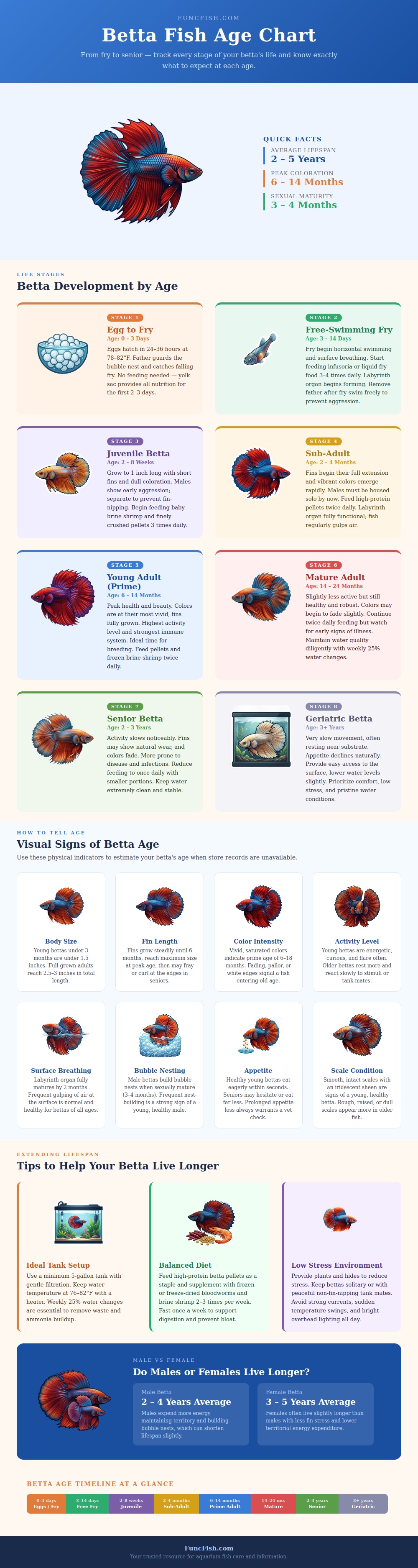
To help place those physical changes into perspective, I’ve put together an overview of the whole process, egg to senior, in visual guide up top.
If you got a new arrival that’s looking a little pale compared to pictures you see online or has short stubby fins, chances are you have a juvenile somewhere between two and eight weeks of age. Growth is rapid at this point but colors aren’t yet locked-in. It takes some time before the blues and reds really start to saturate those scales. This is where patience is the toughest test, but it will pay off big. The transformation by the time the fish reaches its prime months later tend to be dramatic.
The sub-adult stage lasts 2 to 4 months, and most hobbyists never see it. The real personality comes out here. The fins finally really extend. Males are frantically building their bubble nest which signals they’ve reached sexual maturity. Aggression also increases dramatically at this point so if you have multiple males, it’s time to separate them.
Also feeding changes here. You’ll go from frequent small meals to two large meals per day. Get this part right and you’re on your way to good health. Overfeeding during the growth spurt makes things go wrong: water quality crashes, constipation, etc. All of this cuts short their life span.
Six to fourteen months: Your betta is in peak form during this period. Coloration will be best and it’s the time for maximum activity (hence the chart showing this as the optimum breeding period). While most people simply enjoy their flaring display at a reflection with such joy, many also becomes quite active around potential mates. Their immune system is at its best and they can withstand slight variations in water parameters better. They seem to have endless energy, darting everywhere for food and investigating every inch of their habitat. When you look back years later, that’s what you recall about those days with your fish.
And then there’s the gradual descent into old age and seniority. By roughly year two you’ll see a noticeable drop in activity. You might also notice fraying or curling of fins along the edges. This can be alarming, but it is frequently nothing more than normal wear and not a sign of any disease. Appetite also decreases, so feeding smaller amounts ensures that food doesn’t accumulate in the water. Senior fish tend to rest more along the bottom or toward the top, and their coloration will also becomes softer in tone. Don’t get me wrong, it’s not tragic. It’s simply life going on. To treat them as babies now is to do them a disservice. Provide stable clean water and don’t stress them out…that’s what they really need more than anything else.
If you have no records from the store, then visual clues can also give you an idea of age. First, examine their fin length. If they have short fins, they’re likely young; if their fins flow like veils, then it’s probably adult. Next, inspect their colors. Bright saturated colors mean good health. Faded colors with white tips often mean they is old. Their activity level can also speak volumes. If they continually dart about and flare, chances are they’re young. Older fish will be slower to respond to things. Additionally, the maturing labyrinth organ change how they breathe. Combine all this and you’ll get a pretty solid image of what stage in life your fish is at.
The key isn’t some exotic tip; it’s the regular routine. Stick to the basics: keep them in a five gallon tank with mild filtration where they can explore but not exhaust themselves in currents. Maintain temperature stability (78-82 degrees) which helps avoid immune weakening. Change the water regularly to eliminate the silent buildup of toxins.
Don’t forget diet: feed high protein pellets; offer frozen food once in awhile too. Let them fast one day each week (it helps digestion). Generally females live longer then males… Why? Less territorial stress.
Bottom line: A stable betta is a happy betta. You’ll be rewarded quietly when you watch your little guys go from fry to senior citizens.