
So you buy bag of guppies from the pet shop and they are small. They are realy small. Weeks go by and you’re still wondering why your fish don’t seem to be growing all that quickly, then you realize they just appear as little colorful objects swimming around in the tank. Perhaps you got some fancy show varieties with long flowing tails but instead they remains stubbornly small. That’s where the confusion typicaly arises…you don’t know what normal growth should of look like for these fish.
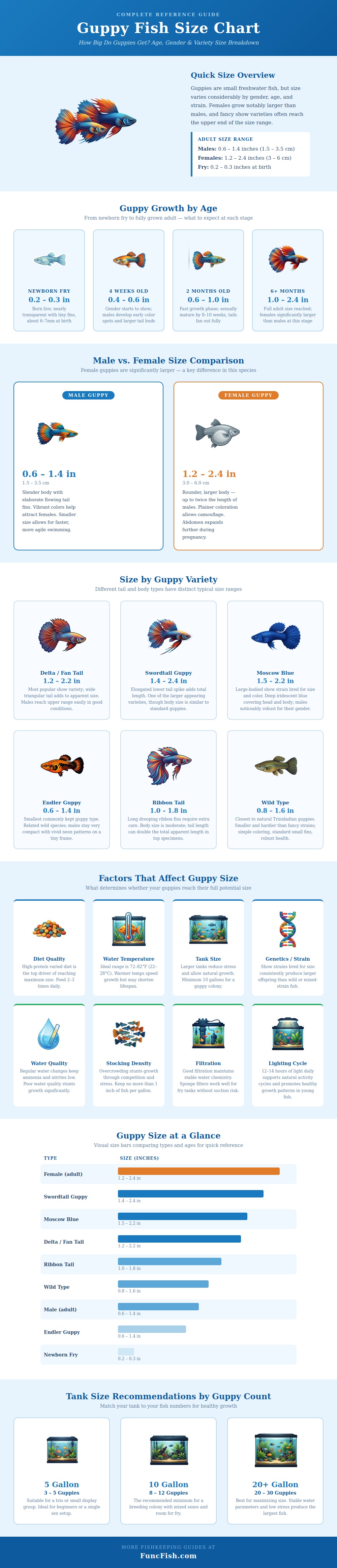
Most new fish keepers overlook actual size ranges of each gender (see graphic above). Females is much larger than males. While females will often reach upwards of 2 1/2″ in length, males hardly reaches more than an inch and a half at best. And it’s not just for looks. Their physical makeup also show their different life functions. Females have bigger, rounder bodies to hold brood of live fry. Males are slender and designed for quick movement and agile maneuvering during mate pursuit.
How Big Do Guppies Grow?
So if you can’t distinguish between your male and female guppies based off size, chances are good they’re not sexually mature. However, it doesn’t always follow a straight line of progression. It’s more like phases of growth. Your fry are born as tiny babies at perhaps a quarter inch long but already full grown (just really small). They grows quickly over the next few weeks if fed well and will double in length within first month. In their second month of life they enter a fast growth phase.
They begin to resemble adults with their shape showing through. The males begins to develop all of those crazy tail fins that make guppies guppy. Females becomes wider and fuller. You’ll notice their genetics beginning to show themselves in their appearance. It’s not just the size, it’s also the variety. If you keep wild type guppies, then you have a relatively small fish with an even smaller ceiling for growth. The original ancestor of guppies was much smaller, and they are pretty close to that size now. Many fancy strains (such as Swordtails and Moscow Blues) is selected for color and size; when placed in the proper environment, these fish can absorbs much larger (they have a higher ceiling for growth). Some strains of fancy guppies might appear huge because they have long tails with hanging fins, known as ribbon tails, but actual body length is frequently moderate. Knowing what strain of fish you’re keeping will help set your expectations on how large they’ll grow.
The other major factor that will impact your fish’s ultimate size are environment. Just because you have some guppies doesn’t mean you can keep them in a five gallon bowl and expect them to reach their maximum size. To be healthy and big, guppies require space (to swim) and stable water conditions. While a ten gallon tank is generally considered the minimum for keeping a small group of guppies, the bigger the better since it will result in cleaner water with less effort. Stress from overcrowding immediately stunt growth. When fish are hiding from aggression or fighting over resources, they won’t put on any length or weight.
There’s no negotiating on water quality. Poor water quality stops development faster then bad genes, ammonia spikes, or nitrites. Partial water changes regularly help balance out the chemistry so their immune system can concentrate on growing instead of just surviving. Feeding also matters. Early juvenile weeks with a high protein diet realy make a difference on adult size. After maturity, overfeeding poses the threat of creating pollution instead of growth.
Metabolism is also affected by temperature. Their biology speed up in warmer water. This makes them grow more rapidly, though they may not live as long. The best compromise between length of life and vigor seems to be maintaining the tank at a relatively constant temperature in the mid seventies. Light cycles support natural rhythms, helping regulate feeding times and activity levels. Lighting cycles help regulate when they are active and thus feed.
In conclusion, though, guppy keeping isn’t so much genetics as it is condition and patience. In other words, even your finest breeding stock won’t thrive if kept in a dirty cramped tank. Feed them properly, give them sufficient room, and keep the water clean, watch how fast those tiny neon dots turn into beautiful adult fish that show off all of their luxurios beauty.