
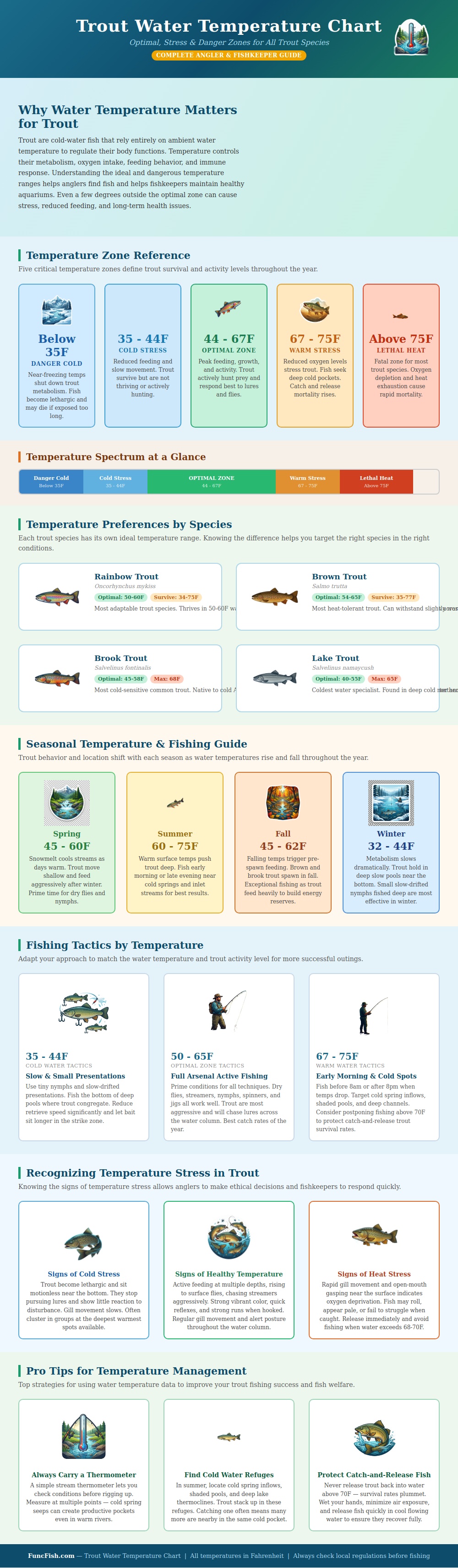
You can disturb the wildlife or catch trout. That’s determined by temperature. A calm-looking water has a heat level that determines trout survival, appetite, and energy use. Knowing how temperature affects fish behavior remove the guesswork of where trout hide. Then it’s not about guessing. It becomes knowing why they’re there.
The graphic above shows those thermal zones in terms we can manage. It tells us when trout will be aggressive feeders versus when their only goal is staying alive. By nature trout are cold-water specialists. It’s in their DNA. They were built to thrive in alpine springs and glacial runoff. Cool temps and high oxygen levels prevails.
How Water Temperature Affects Trout
Near freezing temps, they turn off. They become lethargic and hang near the bottoms of deep pool. It’s a necessity of their system, not a strategic choice. On the other hand, warm water has low oxygen content. This poses a threat for oxygen-hungry fish. Danger zones appears on either end as illustrated in the infographic.
Sweet spots occur in the lower sixties or upper forties. In these ranges, trout is active predators. They’ll pursue lures and come up to take insects from surface. It makes all the difference whether you’re fishing a willing eater different than an exhausted survivor.
Fish respond differently to heat. Each species vary in its ability to handle warming temperatures. For instance, brown trout are tough. They can handles higher temperatures then other species. They’ll often position deep in summertime where others moves back upstream. On the opposite end of the spectrum are brook trout; they is highly temperature-sensitive, require cold, pristine water and dissapears when stream temperatures rise. More than being a target for hunters, brook trout are an indicator of environmental health.
In the middle of this spectrum sits rainbow trout. Because they’re adaptable, they’re the most widely stocked fish throughout North America. Knowing the species in your local waters will give you a good idea of where to find them. Find some browns in shady spots if it’s July and the water’s warm. Expect to find brookies holding shallow riffles if it’s spring with cold snowmelt.
Your tactics should of follow seasonal changes as closely as they do daily temperature fluctuations. When the snow melts in the spring, the water rises and cools, triggering an increase in action. As waters rise and cool from melting snow, trout move into shallower areas to feed on emerging insect. Dry fly fishing dominates this period.
In the summer, it’s all about stealth and patience. The key is to target early mornings or late evenings when surface temperatures drop slightly. Throughout the heat of the day, look for shady overhangs, spring fed tributaries, or deep channel ledges that serve as trout shelters from sun. Here, they find cooler water and safety during the dog days of summer.
Fall finds another feeding spree triggered by either spawning movements or getting ready for winter dormancy. Because the water continues to cool down gradualy, it expands the window of best action. Winter requires a whole new set of rules. Metabolisms slow way down, so it’s vital to slow your retrieve speed to almost stand still. Slowly drifting tiny nymphs right along the bottom frequently outshine flashy surface offerings.
It’s not just about reading the water; it’s also about reading the fish. If your method is helping, healthy trout will have good reflexes and stay put in the current. They’ll be sure-footed and comfortabley with their body position. If it’s hurting them, they’ll display stress signals like fast-moving gills or leaning to one side when hooked. Those are red flags. Time to change things up because the thermal conditions has grown unfavorable.
Releasing a stressed trout back into warm water often leads to post-release mortality, defeating the purpose of catch-and-release conservation. It’s counterproductive to the whole idea behind catch-and-release angling. To increase survival odds, keep hands submerged, avoid removing them from the water for long periods, and set fish free in cooler running water. You can confirm water temperatures beforehand using a basic stream thermometer. Checking water temperature only requires 10 seconds and will save you hours of heartache. It also keeps you from hurting the fishery unnecessarily.
The goal is not just to catch trout but to keep them healthy enough to grow and reproduce. It’s also about keeping those trout alive so they can live long enough to be big enough to spawn and livig on. Keeping within their thermal limits protects streams from damage so the fishery continues to be productive season after season. That’s why you return year after year. Because the fish are still there. And they love the water that nature made them like for eons.